
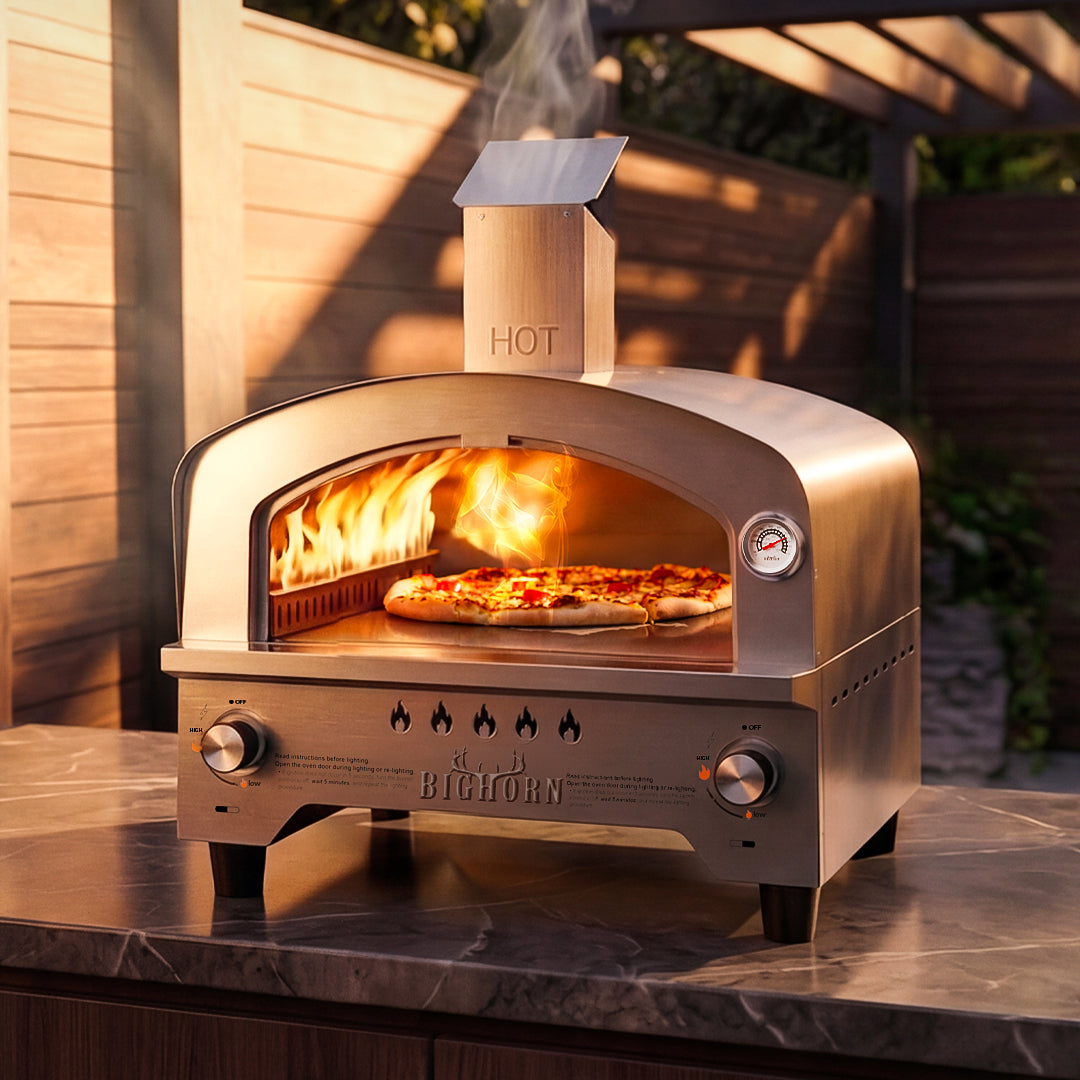



A soggy pizza crust is a moisture and heat problem: watery sauce or wet toppings release liquid into the dough, a stone that is not hot enough lets the base absorb that liquid instead of crisping it, and sitting too long before baking lets the sauce soak in. The fix is a dry, thin sauce layer, pre-cooked and drained wet toppings, a fully preheated stone, and baking right away. This guide walks through the causes and the specific fix for each.
These are the standard fixes for home and high-heat pizza ovens; a fully preheated stone matters most in a dedicated pizza oven like the Big Horn lineup.
What actually matters for this decision
Three things cause a soggy crust: too much or watery sauce, wet toppings (fresh mozzarella, mushrooms, peppers), and not enough heat from the stone. The dough itself is usually fine — the problem is what the dough absorbs before and during the bake. Fix the moisture sources and the heat, and the crust crisps.
Understanding heat mapping before you decide
In a pizza oven the stone bakes the base, so a hot stone is the difference between a crisp base and a steamed one. A fully preheated stone (about 750–850°F / 400–450°C, checked with an infrared thermometer) turns the dough’s surface moisture into steam instantly and sets the base before liquid from the sauce can soak in. A cool stone bakes the base slowly, and that is when moisture wins.
The key factors, ranked
| Cause | What happens | Fix |
|---|---|---|
| Too much / watery sauce | Liquid seeps into the raw dough | Use a thin, even layer; use a thicker or reduced sauce |
| Wet toppings | Vegetables and fresh mozzarella release water | Pre-cook and drain; pat mozzarella dry |
| Stone not hot enough | Base steams instead of crisping | Preheat fully; check the stone, not the air |
| Pizza sits before baking | Sauce soaks in while it waits | Dress quickly and bake right away |
| Cooled on a flat plate | Steam re-wets the bottom | Cool on a wire rack |
Matching the choice to your situation
If the crust is soggy in the middle but fine at the edges, the usual culprits are sauce pooling or wet toppings in the center — thin the sauce layer and pre-cook the wet ingredients. If the whole base is soft, the stone is the problem — preheat it fully. If the pizza was dressed and left before baking, bake it immediately next time. Match the fix to where the sogginess appears.
What the experts look for
Experienced bakers look for three things before launching: a stone that holds temperature (checked with an infrared thermometer), a sauce layer that is thin and even, and toppings that will not release a pool of liquid mid-bake. They also bake immediately after dressing — every minute the dressed pizza sits is a minute the sauce works into the dough.
Common mistakes and how to avoid them
- Pooling sauce in the center. Spread a thin, even layer and let the edges of the dough stay saucy-free.
- Using wet mozzarella as-is. Pat fresh mozzarella dry (or pre-drain it) so it does not release milk onto the crust.
- Adding raw watery vegetables. Sauté mushrooms, peppers, or spinach first to cook off the water.
- Launching on a cool stone. Preheat the stone fully; a cool base steams.
- Cooling on a flat plate. Steam condenses on the bottom; cool on a wire rack.
Realistic expectations and results
A soggy crust is one of the easiest pizza problems to fix because the causes are mechanical: remove the moisture sources and the heat problem, and the base crisps. The fixes are immediate — less sauce, drier toppings, a hotter stone, bake right away, cool on a rack — and they work in the same session. Expect the next bake to be noticeably crisper once you change the moisture and heat balance.
The takeaway in one paragraph
A soggy pizza crust comes from moisture and heat: watery sauce, wet toppings, a stone that is not hot enough, or a pizza that sat before baking. Fix it with a thin sauce layer, pre-cooked and drained toppings, a fully preheated stone, an immediate bake, and a wire-rack cool-down. Attack the moisture sources and the heat, and the crust goes from soggy to crisp.
See the oven and the dough and troubleshooting hub. 12-inch pellet pizza oven · signature dough recipe
FAQ
How to fix a soggy pizza crust?
Fix a soggy crust by removing the moisture sources and adding heat: use a thin, even sauce layer, pre-cook and drain wet toppings, preheat the stone fully, bake immediately after dressing, and cool on a wire rack.
How do I make my pizza crust more crispy?
Make the crust crispier with a hotter stone (check it with an infrared thermometer), a drier dough surface, less sauce, and drier toppings. In a dedicated pizza oven, a fully preheated stone — about 750–850°F — sets the base in the same seconds the top blisters.
How to keep pizza dough from getting soggy?
Keep the dough from getting soggy by limiting what touches it: a thin sauce layer, pre-cooked drained toppings, no raw watery vegetables, and an immediate bake on a fully preheated stone. Dress the pizza right before it goes in, not ahead of time.
Why is my pizza crust not fluffy?
A flat, not-fluffy crust usually means the dough did not ferment or proof enough (a longer cold ferment builds the gas that puffs the rim) or the heat was not high enough to puff it fast. A hot stone and a well-fermented dough together produce the puffed rim.