A stainless steel pizza oven is a portable outdoor oven built with a heavy-gauge steel body, an insulated dome, and a baking stone, engineered to preheat in minutes, resist weather, and bake a pizza in 60–90 seconds. It is the practical middle ground between a brick oven and a cheap backyard grill: faster than masonry, sturdier than thin steel, and sized for a patio. This guide covers what stainless steel actually changes, the design details that make one oven better than another, and the realities of ownership — heat tint, soot, and the trade-off of fast heat against residual heat.
This is a rewrite of a Big Horn Outdoors knowledge article, updated to the consumer-focused standard: verifiable specifications and no unverifiable market or competitor claims.
What a stainless steel pizza oven is
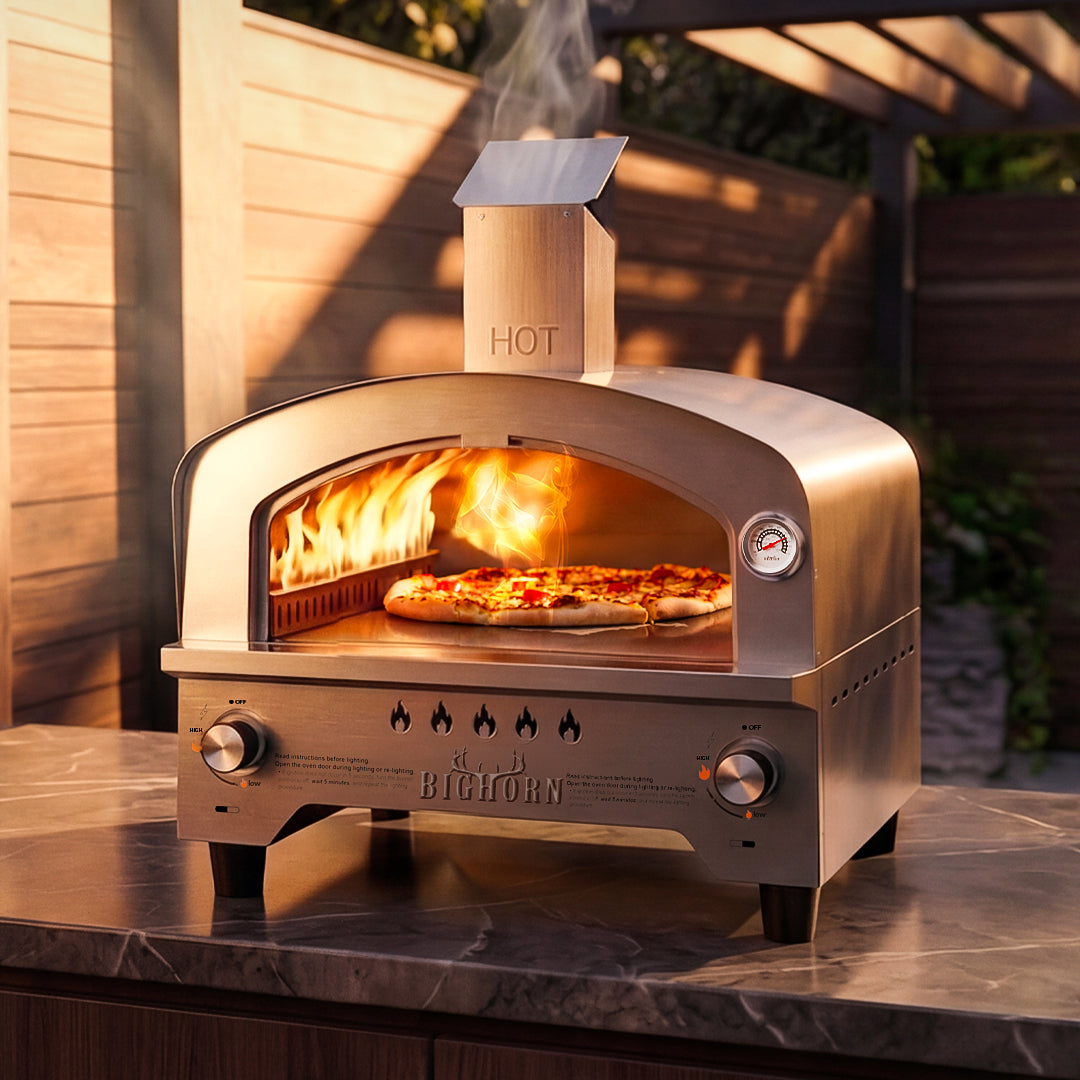
A stainless steel pizza oven uses a steel body and dome with internal insulation to trap high heat around a baking stone. The steel conducts heat quickly and radiates it onto the stone, so the oven reaches baking temperature in 15–30 minutes instead of the hours a brick oven needs, and the insulated shell keeps the outside safer to touch while holding high heat inside. The result is a portable, weather-resistant oven that bakes a Neapolitan-style pizza in 60–90 seconds at a high stone temperature.
Why steel beats brick and cast iron for most backyards
Brick and masonry ovens store heat superbly but need a permanent heavy footprint and hours of preheating. Cast iron holds heat but is heavy, brittle, and rust-prone without care. Stainless steel combines fast preheat, responsive heat control, and corrosion resistance in a portable package — the practical compromise for a backyard that wants artisan-style pizza without a construction project. The trade is thermal mass: steel sheds heat faster than brick when the fuel is off, so it is not built for multi-hour residual baking.
The design details that matter most
- Insulation. The layer between the steel shell and the cooking chamber decides recovery between pies; well-insulated ovens hold high heat through back-to-back bakes.
- Stone quality. A thick ceramic or cordierite stone stores and releases heat evenly; check what the oven ships with.
- Heat control. Dial or flame control plus a way to read the stone (an infrared thermometer or built-in check) removes guesswork from preheat.
- Weather resistance. Food-grade, thick-gauge stainless resists rust and outdoor wear better than thin or low-grade metal.
- Fuel type. Propane, pellet, wood, or electric — each changes preheat, flavor, and venting.
What to look for in real use
In practice, the oven that performs is the one with the right insulation, a stone that recovers heat between pies, and controls that match your fuel and space. Check the oven’s opening and stone size against your pizza and peel, confirm the fuel setup (propane connection and leak test for gas; dry storage for pellets), and verify the included pieces — stone, peels, or a cover — so the real cost matches the sticker. Fit and fuel matter more than the peak temperature claim.
Realities of ownership: heat tint, soot, and cleanup
Two things surprise new stainless steel owners. First, heat tint: at very high internal temperatures, the steel naturally develops a golden, bronze, or iridescent sheen over time — a normal cosmetic reaction, not damage, and it does not affect performance. Second, soot: wood and pellet ovens produce soot around the mouth and chimney; a damp cloth wipes it off, but a zero-maintenance owner may prefer propane or electric. Steel also cools faster than brick once the heat is off, which is ideal for portability and a limit for slow residual baking.
Matching the choice to your backyard
Match the oven to how often you cook and where it will live. A propane or electric stainless oven suits a cook who wants fast, consistent bakes; a pellet or wood-fired stainless model adds smoke and flavor at the cost of fire management. For a small patio, a compact 12–16 inch deck fits; for frequent parties, a larger deck with better recovery serves the flow. The scenario decides the format, not the other way around.
The takeaway in one paragraph
A stainless steel pizza oven delivers the practical benefits — fast preheat, weather resistance, portability, and 60–90 second bakes — when the insulation, stone, and fuel match how you cook. Expect heat tint over time and soot on wood models as normal ownership details, and know that steel sheds heat faster than brick. Choose by insulation, stone, fit, and fuel rather than peak temperature, and the stainless oven becomes the reliable centerpiece of a backyard pizza setup.
See the stainless pizza oven range and current prices. pizza oven collection · stainless options
FAQ
Is a stainless steel pizza oven good?
Yes — stainless steel combines fast preheat, weather resistance, and portability with high-heat baking in a patio-sized footprint. The trade is lower thermal mass than brick, so it cools faster after the heat is off; for quick, high-heat pizza it is an excellent backyard tool.
How hot does a stainless steel pizza oven get?
A high-quality stainless oven can hold a baking stone in the high range needed for Neapolitan-style pizza — Big Horn’s 16-inch propane model reaches about 932°F in about 15 minutes, and pellet models reach similar high heat — but the right target is the 750–900°F stone window that produces a 60–90 second bake, not the peak alone.
Does stainless steel affect the flavor?
No — the steel itself does not flavor the food; the fuel does. A pellet or wood-fired stainless oven adds smoke character; a propane or electric stainless oven bakes clean with no added smoke. The material affects heat and durability; the fuel affects flavor.
How long does a stainless steel pizza oven last?
With care — cleaning, a fitted cover, and dry storage — a stainless steel pizza oven lasts many years out of doors. Food-grade, thick-gauge steel resists rust and weather far better than thin or coated metal, while the stone remains the main wear item to inspect for thermal-shock cracks.