The outdoor cooking landscape has experienced a massive paradigm shift. Backyard pizza oven adoption has surged as home chefs transition from basic grilling to professional-grade, high-performance outdoor kitchens. Achieving an authentic, restaurant-quality Neapolitan pizza requires specialized cooking systems that reach extreme temperatures between 350°C and 600°C (660°F to 1112°F). These high-heat environments utilize a combination of heavy insulation and specialized refractory stones to transfer heat instantly, dropping cook times down to a blistering 60 to 90 seconds for thin-crust pies. Today's marketplace bridges the gap between historical brick kilns and modern suburban patios by offering versatile portable pellet setups, hybrid multi-fuel systems, and high-performance indoor countertop electric solutions.
Core Operational Mechanics: How High-Heat Ovens Work
To unlock the full potential of wood-fired cooking, an oven must master thermodynamic heat transfer across three distinct channels:
-
Direct contact heat transfer. The cooking floor—engineered from high-density, heat-conducting cordierite pizza stones—absorbs intense thermal energy and flashes moisture out of the dough instantly, creating the iconic crisp, blistered under-crust.
-
Circulating hot air. Big Horn Outdoors' unique flame circulation design forces super-heated air and rolling flames over the top of the pizza, melting cheeses uniformly and cooking toppings at the exact same rate as the base.
-
Radiant energy storage. Heavy insulation layers wrapped in structural stainless steel retain massive heat loads, radiating constant energy back down onto the cooking surface even when the oven door is opened or removed.
The Big Horn Outdoors Modular Product Ecosystem
The ideal setup depends entirely on your cooking lifestyle, hosting capacity, and fuel environment. The lineup ranges from lightweight travel companion units to advanced, multi-fuel patio platforms:
-
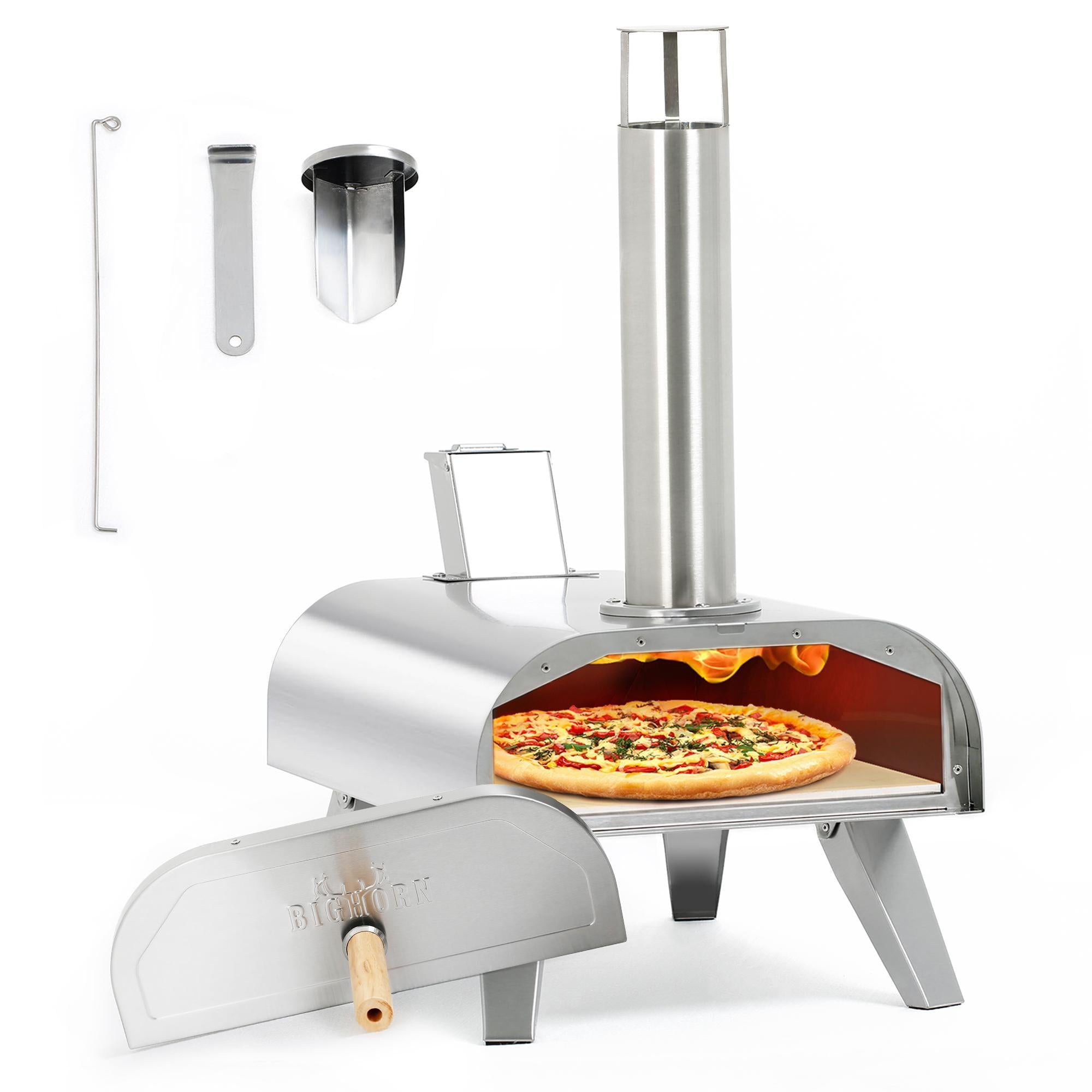
12-Inch Wood Pellet Pizza Oven: Engineered for portability and high efficiency. Weighing just 24.9 pounds and featuring convenient foldable legs, this unit preheats in 18 to 20 minutes and hits up to 475°C (887°F) using hardwood pellets. It acts as a modular foundation, compatible with custom gas burner and electric heater accessories (sold separately).
-
16-Inch Wood Pellet Pizza Oven: Built for heavy volume and premium cooking control. This heavy-duty backyard unit boasts an expansive cooking area that accommodates full-sized 16-inch pies. It packs extreme heating power, hitting up to 600°C (1112°F) with a rapid 15-minute preheat. Advanced features include an integrated viewing window, front-facing thermometer, and an adjustable air intake.
-
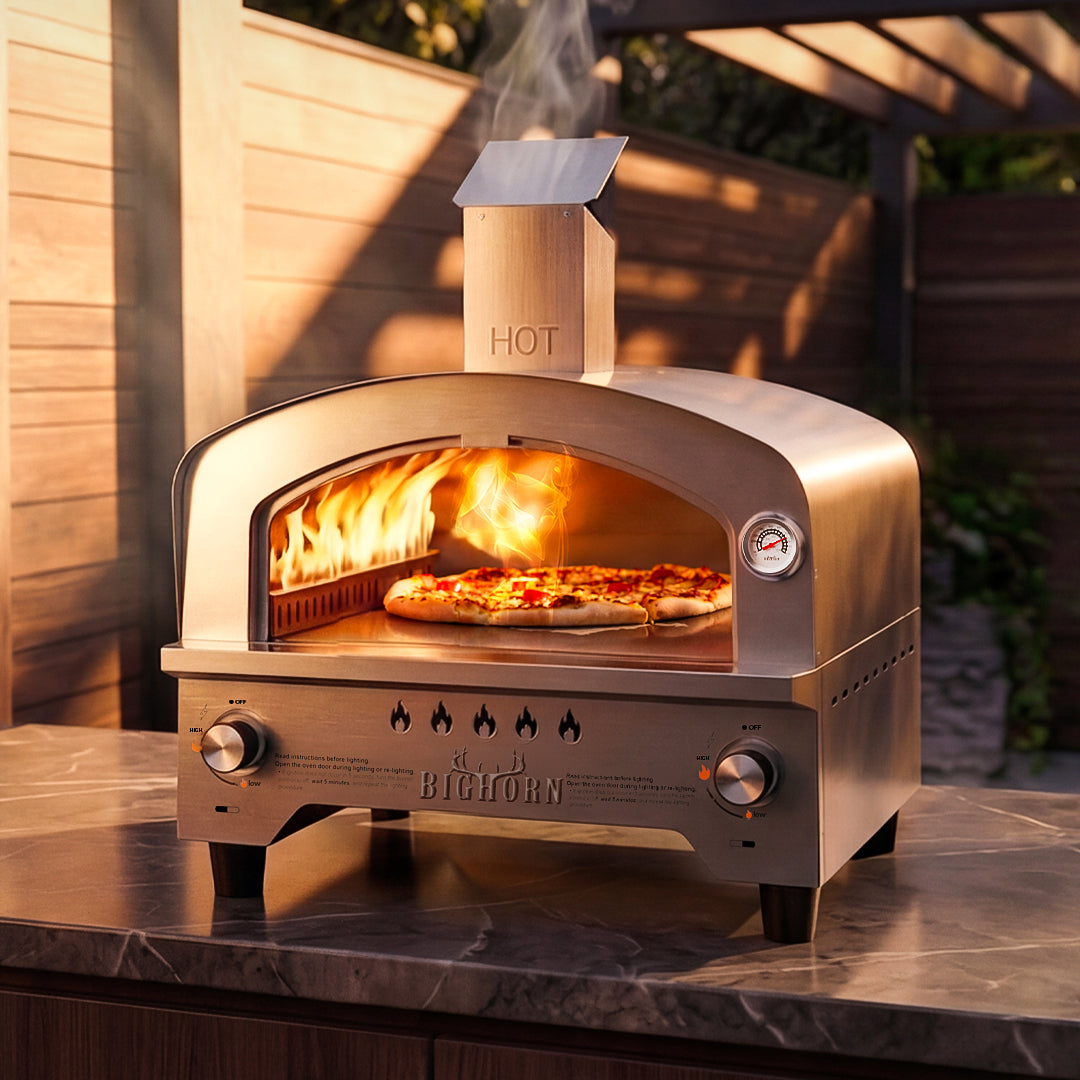
Hybrid Multi-Fuel Systems (Pellet & Gas / Pellet & Electric): Designed for tool-free flexibility. The Pellet & Gas hybrid model allows chefs to instantly switch between rich wood smoke and immediate propane precision. The Pellet & Electric hybrid model integrates an 1850W heating element, combining timeless wood-fired cooking with modern electrical efficiency on a patio or balcony.
-
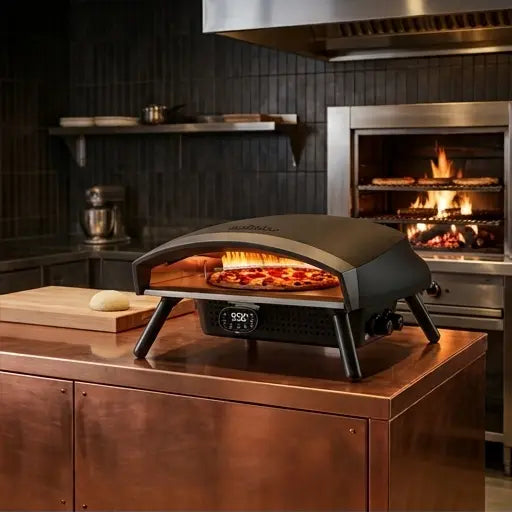
14-Inch Indoor Electric Countertop Pizza Oven: Engineered for indoor kitchens and space-constrained areas. Operating via dual high-efficiency heating tubes, it reaches up to 800°F (425°C) in 20 to 30 minutes. It features three precise analog control knobs and 6 pre-set baking modes (including frozen, wood-fired, New York, Margherita, thin & crispy, and Flammkuchen).
Fuel Dynamics & Sensory Engineering
Choosing a fuel configuration directly alters your cooking workflow, heat curves, and final flavor profiles:
-
100% Food-Grade Hardwood Pellets: The benchmark for wood-fired purists. Using premium kiln-dried oak, hickory, or maple pellets yields high caloric output and a classic smoky profile while avoiding harmful softwoods or additives.
-
Liquid Propane Gas (LPG): Driven by specialized gas burner attachments with integrated regulators and hoses. Propane offers ultimate convenience, lightning-fast preheating, and highly predictable temperature adjustments.
-
Electrical Elements: Leveraging high-wattage power supplies (such as 1500W or 1850W elements with adjustable thermostats). Ideal for apartment balconies, indoor countertops, or regions facing strict open-flame restrictions.
Buyer Pain Points & Strategic Solutions
Navigating the high-performance pizza oven market requires balancing structural tradeoffs:
-
Thermal Retention vs. Warm-up Speed: Lightweight 12-inch portable models heat up quickly and travel effortlessly but require closer fuel management between bakes. The larger 16-inch models feature thick stainless steel walls and massive cordierite stones that take slightly longer to saturate but retain heat flawlessly during continuous hosting sessions.
-
Fuel Switching Complexity: Standard hybrid setups often require extensive tool usage. Big Horn Outdoors re-engineered this process with modular, tool-free swaps—such as sliding in a propane burner attachment or hooking up an adjustable 1500W electric heating element directly to the firebox framework.
-
Material Durability and Weatherproofing: Outdoor cooking equipment must survive elemental exposure. Utilizing premium stainless steel construction coupled with wrinkle oil-resistant, fingerprint-resistant black paint finishes ensures lasting exterior durability and simple wipe-down cleaning.
Official Product Specification Matrix
| Feature / Model | 12" Wood Pellet Pizza Oven | 16" Wood Pellet Pizza Oven | 12" Pellet & Gas Hybrid | 14" Indoor Electric Countertop |
| Primary Placement | Mobile Outdoor / Camping | Dedicated Backyard Patio | Flexible Outdoor Cooking | Indoor Kitchen Countertop |
| Max Temperature | 475°C (887°F) | 600°C (1112°F) | 350°C–450°C+ (Up to 850°F) | 425°C (800°F) |
| Preheat Duration | 18–20 Minutes | 15 Minutes | 20 Minutes (on Gas) | 20–30 Minutes |
| Bake Time (Per Pie) | 90 Seconds or less | 60–90 Seconds | 90–120 Seconds | 180 Seconds |
| Unit Weight | 24.9 lbs (11.3 kg) | 42 lbs (19 kg) | ~28 lbs | Compact, space-saving footprint |
| Unique Hardware | Foldable legs, lightweight shell | Glass window, front thermometer, adjustable air intake | Wooden handle, tool-free burner swap | Dual heating tubes, 3 control knobs, 6 preset modes |
| Fuel Configurations | Pellets (Gas/Electric modules optional) | Hardwood Pellets | Wood Pellets or Propane Gas | 100% Electric (1850W equivalent) |
Step-by-Step Technical Guide: Setup, Ignition, and Baking
Step 1: Precision Placement & Clearance
Position your outdoor oven on a stable, level, non-combustible surface, such as a specialized steel outdoor grill cart or pizza oven workstation table. Ensure a minimum 3-foot clearance from overhangs, vinyl siding, or vegetation. For indoor electric models, place the unit on a clear, flat countertop with rear ventilation clearance.
Step 2: Component Inspection
Examine the interior cooking chamber. Ensure the cordierite pizza stone is perfectly dry, clean, and seated flatly to prevent peel snagging during a launch. Verify that the chimney dampener (on wood-burning models) and rear fuel grates are cleared of residual ash from previous cooks.
Step 3: Layered Ignition Sequence (Pellet Mode)
Load food-grade hardwood pellets into the rear firebox assembly. Place a natural, chemical-free firelighter starter inside, ignite, and slide the fuel grate back in place. Leave the main oven door slightly ajar to maximize oxygen intake, which helps establish a strong, clean-burning flame base.
Step 4: Fuel Management & Thermal Heat-Up
Once a fierce flame is established, add pellets to fill the gravity-fed hopper. As the fuel burns down into glowing embers, it will feed itself automatically to maintain a steady thermal baseline. For gas models, simply connect the regulator to your propane tank, turn the control valve, and ignite using the built-in piezo starter.
Step 5: The Readiness Assessment
Verify cooking readiness using two independent metrics:
-
On pellet models, the internal dome walls will transition from black soot accumulation back to a clean, white-hot appearance as surface temperatures cross 350°C.
-
Aim an infrared laser thermometer directly at the center of the cordierite stone floor. Do not launch your dough until the stone substrate registers a minimum surface temperature of 400°C (752°F) to ensure an instant crust flash.
Step 6: Baking Execution & Temperature Maintenance
Place your prepared dough onto a perforated pizza peel dusted lightly with flour, add toppings, and slide it directly onto the center of the preheated stone. Close the door to trap ambient convection currents. Because radiant temperatures are intense, use a 7-inch round turning peel to rotate the pizza 180 degrees every 15 to 30 seconds to prevent localized scorching. Remove once the outer crust shows beautiful leopard-spotting blistering and toppings are completely melted.
Real-World Lifestyle Scenarios: Before vs. After
Scenario A: The Friday Night Family Gathering
-
Using a standard indoor kitchen oven equipped with a domestic baking steel maxes out around 250°C. Pizzas require a long 8 to 12-minute bake time, resulting in dehydrated toppings, dried-out cheese, and a dense, cracker-like crust lacking authentic rise.
-
Utilizing the 16-inch Wood Pellet Oven produces a rapid, high-rising puffy crust with delicate interior air pockets and gorgeous char spotting in 60 to 90 seconds. Dinner production is fast, interactive, and perfectly replicates an elite Italian pizzeria.
Weekend Tailgating & Remote Camping
-
Standard campfires or portable iron camp stoves lack uniform thermal distribution. Pizza dough burns instantly on the bottom while cheese remains cold and raw on top.
-
Packing the ultra-portable 24.9 lb 12-inch Wood Pellet Oven brings gourmet capabilities to any campsite. Within 20 minutes of setup, you can turn out artisan flatbreads, sear premium steaks, or bake stone-crust pizzas effortlessly anywhere off the grid.
The Multi-Functional Kitchen Integration
-
Bad weather or balcony flame restrictions completely shut down wood-fired cooking options, forcing you to abandon artisan pizza making during winter months.
-
Integrating the 14-inch Indoor Electric Countertop Pizza Oven into your kitchen array bypasses seasonal limitations entirely. Running on clean, precise dual-tube electric heat, it delivers identical 800°F stone-baked performance indoors without any smoke or open-flame hazards.
Deep-Dive Expert FAQ
What are the definitive temperature thresholds for these ovens?
The structural stainless-steel housings are engineered to hit extreme peak temperatures up to 600°C (1112°F) on top-tier 16-inch pellet units. For a traditional Neapolitan bake, the ideal operational sweet spot is an ambient air temperature of roughly 450°C accompanied by a stone floor temperature reading of 400°C.
How long does the preheating cycle take across different models?
Preheat times are dictated entirely by structural engineering and fuel choice. The 16-inch pellet oven uses a high-powered draft layout to hit readiness in 15 minutes. The 12-inch models require 18 to 20 minutes on pellets or gas, while the 14-inch indoor electric countertop unit saturates its dense stone completely in 20 to 30 minutes.
Can I prepare secondary dishes besides pizza inside these units?
Yes. These systems are highly versatile thermal engines. Once the initial high-intensity flames subside, the massive stored thermal energy is perfect for searing steaks, fish, lamb chops, or burgers inside heavy cast-iron skillets, roasting seasonal root vegetables with a delicious char, or baking high-hydration artisanal bread loaves as the oven slowly cools down.
What are the long-term maintenance and ash clearing requirements?
Always let the oven cool down completely for a minimum of 2 to 3 hours before attempting any cleanup. Once cold, use a dedicated natural-bristle stone brush to scrape off residual flour or food debris (never use water or soap on a porous cordierite stone, as moisture absorption will cause it to crack during the next heat cycle). Safely sweep out residual ash from the rear firebox assembly into a heat-resistant metal container for disposal, and protect the exterior housing with a fitted, heavy-duty oxford fabric waterproof cover.