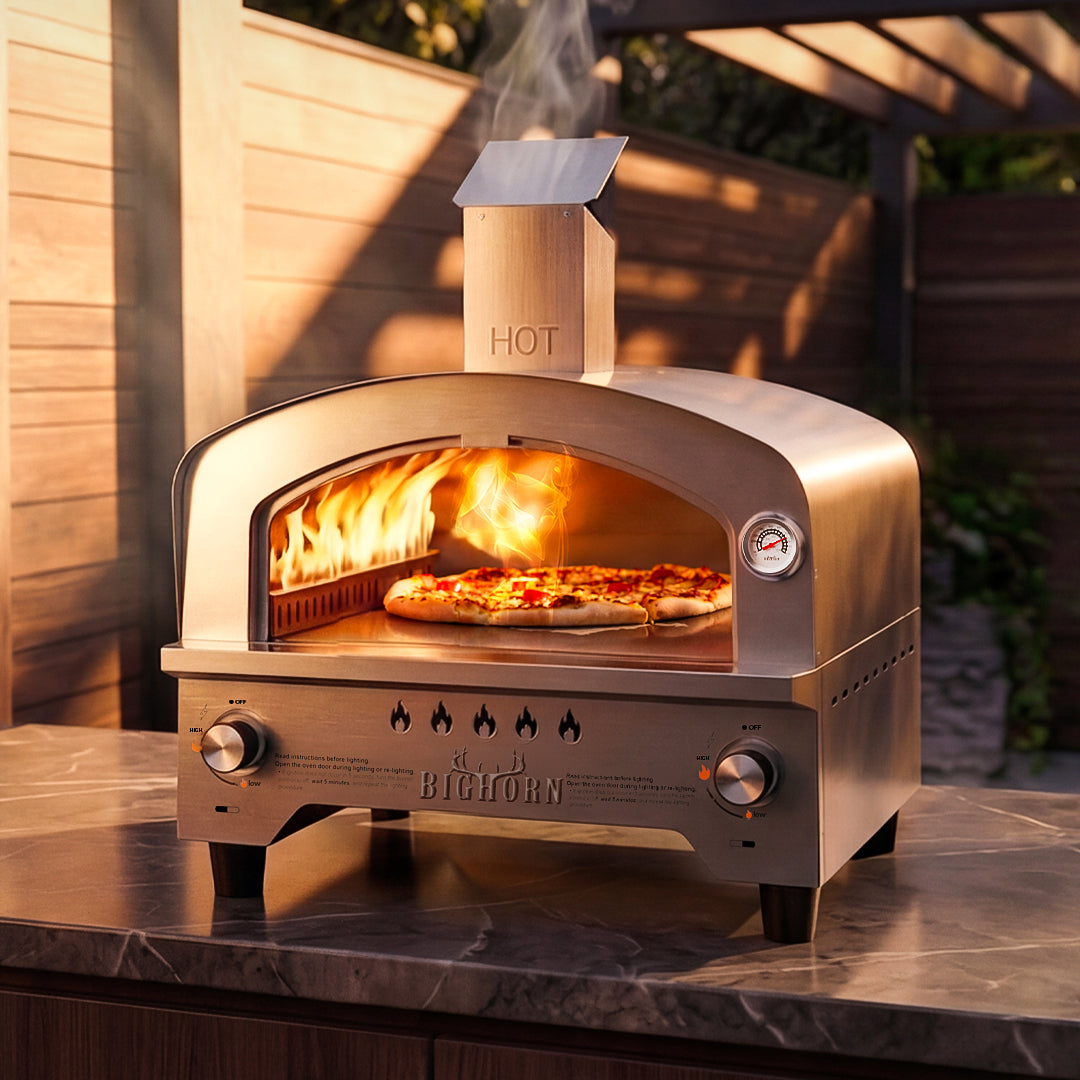
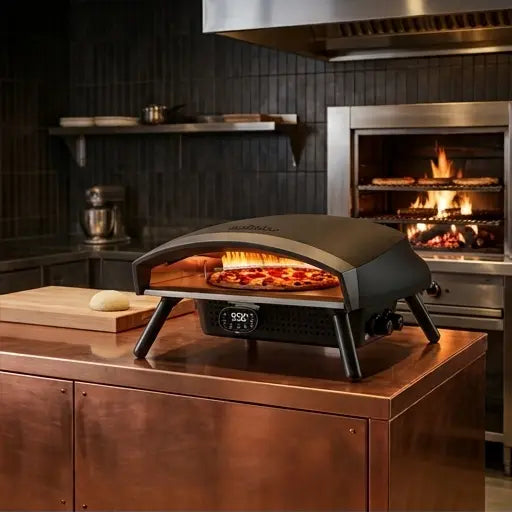
A Big Horn wood pellet pizza oven turns hardwood pellets into the live-fire environment that produces Neapolitan-style crusts in your backyard. The 12-inch model reaches about 887 °F (475 °C) after an 18–20 minute preheat, and the 16-inch model reaches about 1112 °F (600 °C) after roughly 15 minutes; both bake a pizza in 60–90 seconds. This guide focuses on the decision between the two sizes and the differences that matter before you buy; if you already own the 12-inch model and need the day-to-day operating steps, the dedicated 12-inch pellet pizza oven how-to guide covers setup, ignition, baking, and cleaning in full.
How does a wood pellet pizza oven work?
A pellet pizza oven burns compressed hardwood pellets in a rear combustion chamber and routes the flame and hot gases across the domed ceiling before they exit the chimney. The stone underneath conducts heat into the dough while the overhead flame radiates heat onto the toppings, so the base crisps and the top browns at nearly the same time — the balance that keeps a 60–90 second bake from burning one side before the other finishes.
Pellet fuel matters. Feed the oven 100% food-grade hardwood cooking pellets kept dry; damp pellets jam the feed and burn weak, and industrial heating pellets may contain softwoods or binders that create off flavors and smoke. The oven’s stainless-steel shell and hinged/flame-dome design help hold cavity temperature so ambient wind and temperature swings affect the bake less than they would on a thin-walled unit.
The real specs of the two pellet ovens
The two models differ in capacity, peak temperature, and preheat profile, and those differences drive the buying decision more than brand marketing.
| Spec | 12-inch model | 16-inch model |
|---|---|---|
| Pizza capacity | Up to 12 inches | Up to 16 inches |
| Peak temperature | ~887°F (475°C) | ~1112°F (600°C) |
| Preheat time | 18–20 minutes | ~15 minutes |
| Bake time per pizza | 60–90 seconds | 60–90 seconds |
| Fuel | Hardwood pellets; gas/electric burner attachments sold separately | Hardwood pellets; gas burner upgrade sold separately |
| Warranty | 12 months | Check product page |
Both formats are designed for outdoor use only, in an open, ventilated area. The 12-inch unit is lighter and more mobile; the 16-inch unit gives you more deck space to maneuver the pizza away from the firebox edge, which reduces the risk of burning the back edge during rotation.
Choosing between the 12-inch and 16-inch models
Choose the 12-inch model if you primarily bake personal pizzas for one or two people, want a lighter unit for camping or patio rearrangement, and accept a smaller deck and slightly longer preheat. Choose the 16-inch model if you regularly bake for a family or a group, want the higher peak heat and faster preheat, or want more turning room even when you bake 12-inch pies.
The 16-inch chamber also matters for technique: with more space, you can rotate the pizza without sliding it to the back edge where the flame is strongest. That makes consistent leopard-spotting easier for less experienced bakers. If raw floor space and mobility are priorities, the 12-inch unit is the right trade; if the oven lives on a patio and serves groups, the 16-inch is the more capable choice.
What preheat and fire management look like in practice
Both models share the same preheat discipline: load dry food-grade pellets, light per the manual, and wait until the stone reaches baking temperature before the first launch — 18–20 minutes on the 12-inch, about 15 minutes on the 16-inch. The 16-inch’s higher peak heat and faster warm-up shorten the wait on busy nights, while the 12-inch’s smaller chamber uses less fuel for small batches.
Fire management is the skill both sizes demand: add pellets as the manual directs, keep the fire steady, and let the stone recover between pies. Because bake times run 60–90 seconds, a cold stone or weak fire shows up instantly as a pale, chewy base. The day-to-day routine — ignition, baking steps, and cleanup — is the same across the lineup, so the dedicated operating guide for the 12-inch model applies to anyone learning the workflow, and the same principles transfer to the 16-inch.

How the 60-to-90-second bake shapes your choice
At these bake times, technique matters more than minor spec differences, which is why the size decision is really about capacity and turning room. A 16-inch deck lets you rotate the pizza without pulling it to the firebox edge; the 12-inch deck demands a little more care with placement. Both produce blistered, leopard-spotted crusts in roughly the same window when the stone is fully preheated.
For the actual steps — dough prep, launching, rotation, and doneness cues — see the 12-inch pellet pizza oven how-to guide. Dough fundamentals that hold up at 887–1112 °F live in the signature dough recipe; neither belongs in a size-comparison article.
Can the pellet oven do more than pizza?
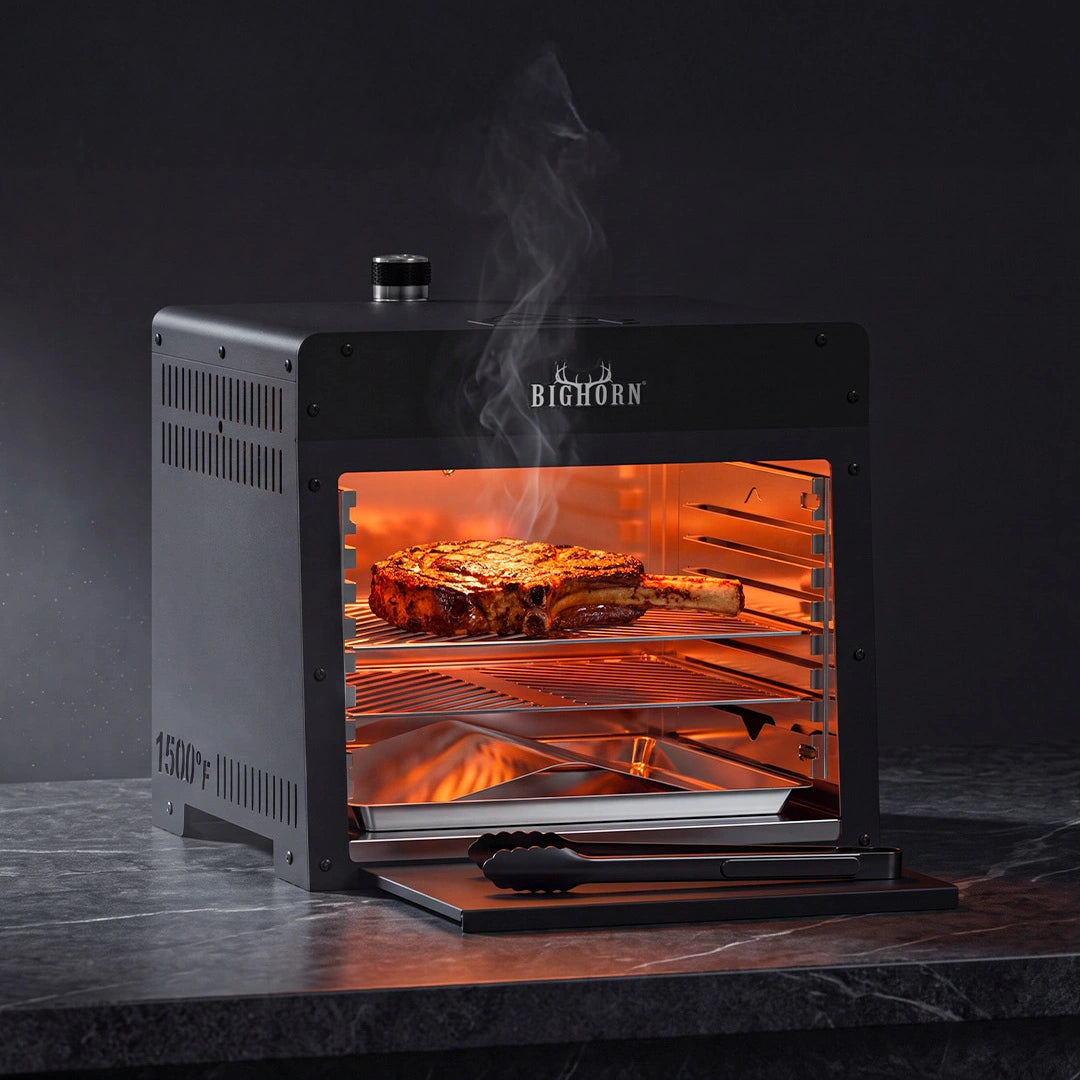
Beyond pizza, the same radiant heat suits steaks, fish, lamb chops, burgers, vegetables, and flatbreads. The workflow is identical to pizza: preheat fully, choose a rack or pan suited to the food, and watch closely because cooking times stay short.
When the menu moves beyond pizza, keep drippings off the deck: cook saucy or juicy foods in a pan or tray and use a thermometer to check meat and seafood doneness. Both sizes also support optional gas/electric burner attachments sold separately, but only the components listed for the exact model; mixing fuels or fitting unapproved parts is not supported.
Setup and safety rules that apply
Operate the oven only outdoors in an open, well-ventilated area, on a stable, heat-resistant surface with clearance from walls, overhangs, and flammable materials. Never use a pellet oven in a garage, tent, camper, or enclosed balcony; burning pellets produce carbon monoxide. Keep the firebox and hopper free of ash buildup, wait for full cooling before cleaning or storing, and never transport a warm oven, stone, or ash container.
Before each cook, confirm the hopper is loaded with dry cooking pellets, the chimney is clear, and the legs are locked. If the oven fails to ignite, stop and follow the manual’s troubleshooting sequence instead of repeatedly forcing ignition or adding accelerants.
Maintenance expectations for both sizes
Maintenance is identical across the 12-inch and 16-inch models: cool completely, empty ash into a metal container, brush the stone without soap, wipe the shell, and keep both the oven and the pellets dry between cooks. Damp pellets cause poor ignition, weak heat, and jams — the most common avoidable failure on either size.
Storage footprint is the size difference that matters here: the 12-inch unit stores and transports more easily, while the 16-inch needs a bit more space and is better treated as a patio fixture. The step-by-step care routine belongs in the 12-inch how-to guide; this page only covers the differences that affect your buying decision.
Wood pellet pizza oven FAQs
Can I use standard heating pellets?
No. Use 100% food-grade hardwood cooking pellets only. Industrial heating pellets can contain softwoods, binders, or treated wood that produce toxic smoke and off flavors.
How do wind and cold affect preheat?
Cold and windy conditions pull heat out of the shell and can stretch preheat beyond the stated times. Position the oven in a sheltered spot that is out of the wind, keep it protected from drafts during warm-up, and confirm the stone temperature with a thermometer before baking rather than relying on the clock.
Should I buy the 12-inch or 16-inch model?
Choose 12-inch for personal pizzas, lighter portability, and smaller gatherings; choose 16-inch for family baking, higher peak heat, faster preheat, and more turning room. Your oven location and the number of guests you regularly feed decide it.
Does the 16-inch model really need more fuel than the 12-inch?
In general, a larger chamber and higher peak heat consume pellets faster, especially during preheat. If fuel economy for small batches is your priority, the 12-inch is the better match; if you cook for a group, the 16-inch’s higher throughput usually outweighs its higher fuel use.
Can I use a gas burner with a pellet oven?
Only if the burner is the compatible attachment sold separately for that exact model. Each oven’s product page lists supported accessories; never mix fuels or fit unapproved parts.
To decide between the 12-inch pellet pizza oven and the 16-inch wood pellet pizza oven, verify the current specs and included accessories on the product pages, then review the full pizza oven range if you are weighing pellet against gas or electric formats. Contact Big Horn Outdoors for help matching an oven to your cooking routine.