







Parties & Seasonal Cooking
Oven space is the real Thanksgiving bottleneck. Learning how to cook a turkey on a gas grill with indirect heat frees the kitchen for sides while the bird picks up gentle outdoor flavor.
The non-negotiable is safety: cook turkey to a minimum internal temperature of 165°F, checked with a food thermometer in the innermost thigh, innermost wing, and thickest breast, per USDA FSIS turkey basics and the safe minimum internal temperature chart.
Whole vs spatchcocked turkey on a grill
A whole bird looks classic on the platter and needs steady indirect heat so the breast does not dry while the thighs finish. Spatchcocking—removing the backbone and flattening the bird—shortens cook time and exposes more skin to even heat, which suits smaller grills.
Choose whole if you want traditional presentation and have grate space plus a lid tall enough for the breast. Choose spatchcocked if your grill is compact, you want faster, more even cooking, or you are nervous about thick thigh joints lagging behind. Either way, thaw completely in the refrigerator before it hits the grate, following USDA thawing guidance on the turkey roasting pages such as Let’s Talk Turkey.

Sizing your bird to your grill
Match bird weight to grate area and lid height, not to ambition. A 12 to 14 lb turkey fits many family four-burner carts on indirect heat. Larger birds need wider grates or a spatchcock so the lid can close without pressing the breast.
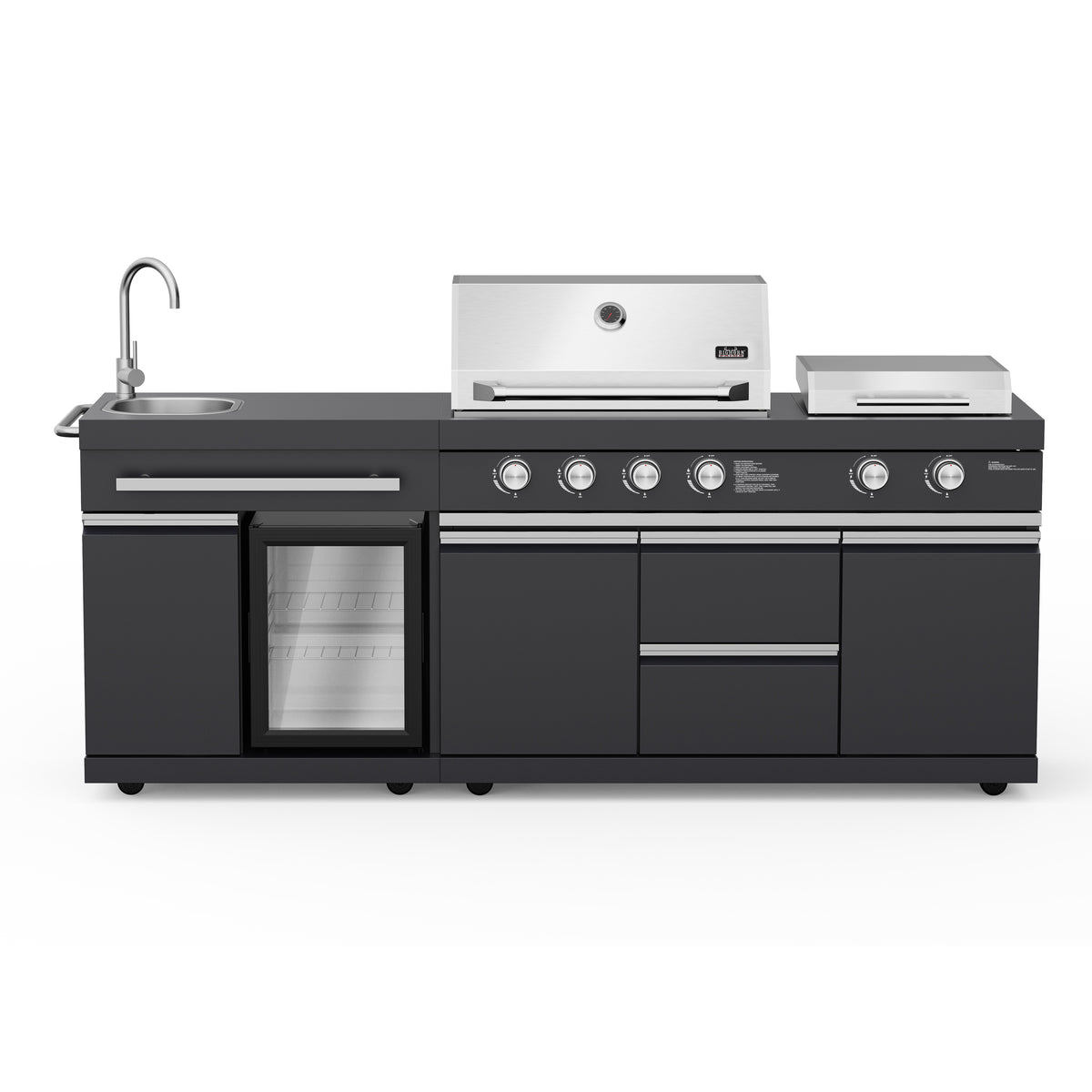
Leave space around the bird for air to move. If the turkey touches the lid or crowds the walls, heat will be uneven. Measure with the lid open and visualize a drip pan under the unlit zone. If your patio station is an island with more room, browse layouts in the outdoor kitchen island collection; if you cook on a standard cart, stay within the grills and griddles size you already trust for large roasts.
Indirect heat setup and burner layout
Indirect heat means the burners under the turkey stay off while burners on the sides (or opposite side) run to heat the chamber. Close the lid so the grill behaves like an oven.
On a four-burner grill, a common pattern is outer burners on and center burners off, with the turkey over the center above a drip pan. On a two-burner, light one side and cook on the other. Preheat with the lid closed until the grill thermometer settles in a roasting range—many cooks aim near a medium oven feel, often discussed around 325°F to 350°F for turkey, consistent with USDA advice not to roast below 325°F in an oven context on the roasting guide. Use your grill’s lid thermometer as a guide, then trust the meat thermometer for doneness.
Keep a spray bottle of water for minor flare-ups, and never leave the grill unattended for long stretches. Outdoor cooking fire safety reminders from the NFPA apply on holidays just as on weeknights.
Time and temperature table by weight
Clock times are estimates for planning sides. The bird is done only when it reaches 165°F in the proper spots. USDA emphasizes thermometer checks over color or pop-up timers alone.
| Turkey weight (unstuffed) | Approx. grill time at steady indirect heat | Target internal temp |
|---|---|---|
| 8–12 lb | ~1¾–3 hours | 165°F in thigh, wing, breast |
| 12–14 lb | ~2¼–3¼ hours | 165°F |
| 14–18 lb | ~2¾–4 hours | 165°F |
| Spatchcocked 10–14 lb | Often shorter than whole; start checking early | 165°F |
Wind, lid openings, and burner strength stretch or shorten these windows. Start checking temperatures earlier than you think, especially on spatchcocked birds. For stuffing, USDA prefers cooking dressing in a casserole; if you stuff the bird, the center of the stuffing must also reach 165°F.
Brine, rub and butter options
A simple salt brine or dry brine seasons the meat and helps the breast stay juicy through a long indirect cook. Pat the skin dry before oil or butter so it can brown. Herb butter under the skin is optional flavor, not a safety step.
Keep raw turkey juices away from ready-to-eat sides. Use separate cutting boards and wash hands and tools, following the clean/separate habits reinforced in USDA poultry guidance. If you add wood chips for a light smoke, keep them modest so the bird does not turn bitter during a multi-hour cook.
Resting, carving and drippings
Rest the turkey about 20 minutes before carving so juices settle, as USDA roasting guidance suggests for quality. Tent loosely with foil if the patio is windy, without wrapping so tightly that the skin steams soft.
Carve on a clean board. Make gravy from drippings only if they were collected in a clean pan and you bring the gravy to a full simmer; when in doubt, make broth-based gravy indoors. Leftovers should be refrigerated promptly—USDA holiday guidance stresses the two-hour rule for perishable foods and reheating leftovers to 165°F. For more outdoor recipes after the holiday, browse the Big Horn recipes hub.
Safety checks (propane, thermometer)
Before the bird goes on, weigh or gauge the propane tank so you do not run out mid-roast. Keep a spare cylinder outdoors upright. Inspect the hose and connections, light with the lid open per your manual, then close the lid for preheat.
Use a digital thermometer you trust. Check innermost thigh, innermost wing, and thickest breast without touching bone. If any spot is under 165°F, keep cooking on indirect heat and retest. Household fire readiness tips from Ready.gov and consumer education from the CPSC are worth a quick review when the patio is crowded with guests and trays.
Conclusion
Cook turkey on a gas grill with indirect heat, a drip pan, and a closed lid, and trust 165°F on a thermometer over the clock. Size the bird to your grate, keep a spare propane tank handy, and rest before you carve.
Need more grate space for holiday hosting? Explore Big Horn Outdoors grills and griddles before the next feast.
FAQ
How long does it take a turkey to cook on a gas grill?
Plan roughly 11 to 13 minutes per pound as a loose starting point for an unstuffed bird on steady indirect heat, then start temperature checks early. A 12 to 14 lb turkey often lands around two to three-plus hours, but wind and lid openings change the pace. The turkey is done only when it reaches 165°F in the thigh, wing, and breast.
How long should I grill a whole turkey on a gas grill?
Whole birds need enough time for the thickest joints to reach 165°F without burning the breast skin. Use indirect heat, keep the lid closed as much as possible, and begin checking temperatures before the end of your estimated window. Spatchcocked turkeys usually finish faster than the same weight cooked whole.
Do you cover turkey with foil when grilling?
You do not need to wrap the whole bird in foil for the entire cook if indirect heat and a closed lid are working. A loose foil tent can shield the breast if it browns too quickly, similar to oven roasting tips. During the rest after cooking, a loose tent helps hold heat without steaming the skin soft.
Should you smoke a turkey in a pan or directly on the grill?
A drip pan under the turkey on the unlit zone catches juices and reduces flare-ups, which is the safer default for most gas-grill cooks. Setting the bird on the grate over that pan still allows heat circulation. Heavy smoking is optional; keep wood additions light on a multi-hour cook so flavors stay balanced.
Explore more in the Gas Grilling Guides.
More to Read
 Ssausage Dogs
Big Horn Outdoors® Recipe
Smoky, cheesy, and packed with big flavor — these Sausage Dogs are a quick and easy favorite, made rig...
 Jalapeño Cheese Pizza Recipe
Big Horn Outdoors® Recipe
Cranberry-jalapeño spread, double cheese, and crispy bacon on a blistered crust — sweet heat meets piz...
Sourdough Pizza Dough Recipe (Active Starter or Discard Paths)
Sourdough pizza dough recipe: sourdough pizza dough with active starter or discard paths, hydration guidance, timelines, and outdoor oven bake notes.
