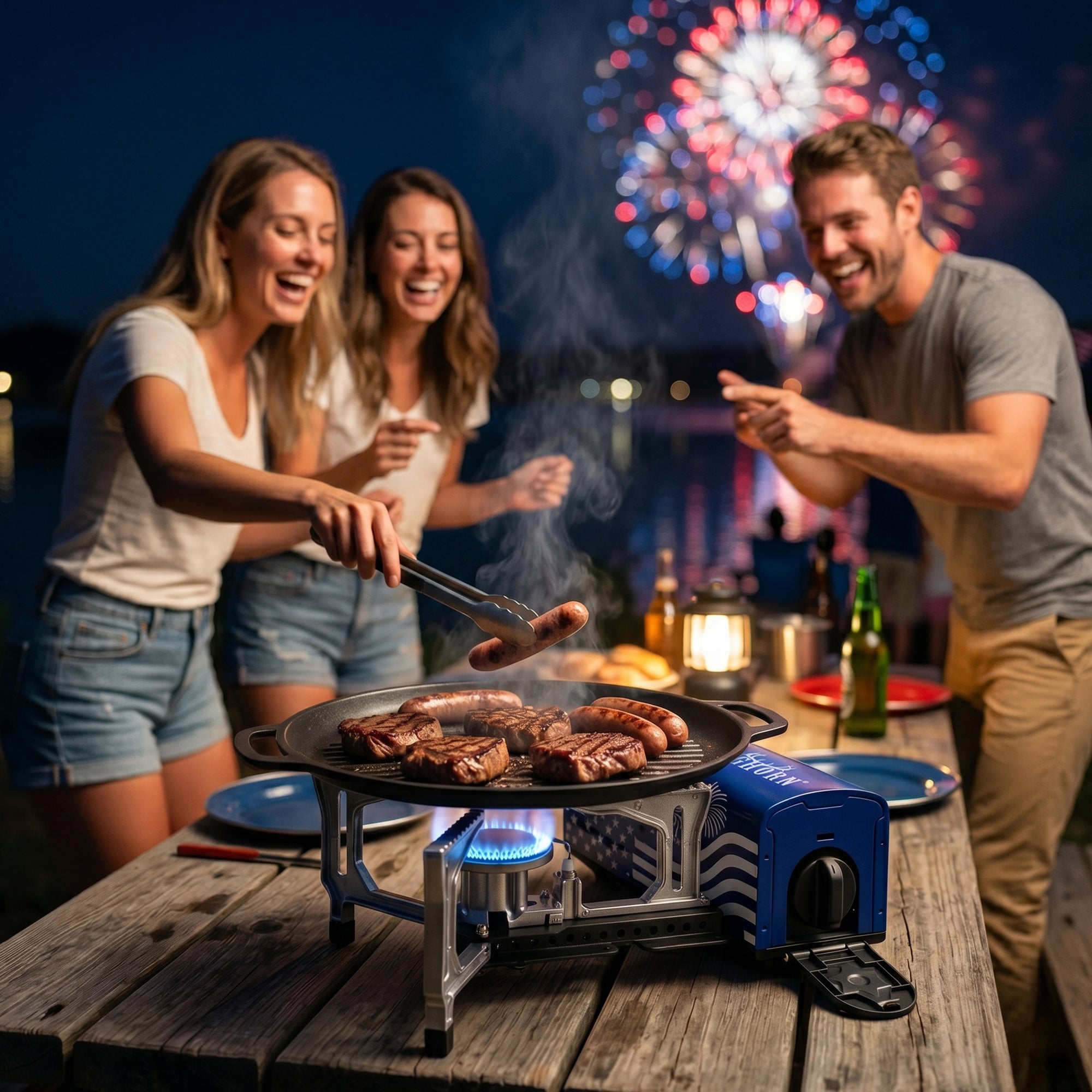
Build a Reliable Routine Around a Folding Camping Stove
The main benefit of a folding stove appears during transport, but its reliability depends on what
happens before and after cooking. A good routine protects the movable parts in the vehicle, confirms
that every support is fully deployed, keeps the fuel system clear, and leaves enough time for cooling
before the stove returns to its compact form.
Movement Check
Open the stove without forcing it. Examine hinges, folding panels, feet, trivets, handles, and latches for damage, binding, or loose hardware before adding cookware.
Operating-Position Check
Verify that each support reaches its intended stop and that the stove sits level without rocking. The compact transport position is not the cooking position.
Fuel-Clearance Check
Use only the approved fuel and specified connection method. Keep movable parts, cookware, and packed gear from blocking controls, connectors, ventilation, or required clearances.
Return-to-Storage Check
Confirm shutdown, full cooling, cleaning, and dryness before folding. Hot components and trapped food residue can damage the stove or nearby gear.
Load the Stove Where It Will Not Be Crushed
Place the closed stove in a stable part of the vehicle or gear system where heavy coolers, water
containers, cast iron cookware, and shifting cargo cannot press against the body. Secure the handle or
latch as designed, protect exposed controls, and keep approved fuel stored and transported according
to its instructions and applicable rules.
Use the Same Deployment Sequence Every Time
- Choose a permitted outdoor location with a level, stable, heat-resistant surface.
- Remove the stove from the packed area and inspect it before opening any fuel supply.
- Deploy feet, trivets, panels, or the case in the order stated in the exact product instructions.
- Press gently at the corners to confirm that the platform does not rock or collapse inward.
- Position compatible cookware while the stove is off to check centering, balance, and clearance.
- Install the specified fuel and complete the required checks before ignition.
Choose Cookware That Respects the Folding Structure
A stove may feel solid when empty but behave differently under a filled pot or loaded griddle. Stay
within the cookware dimensions and weight limits in the instructions. Keep the load centered, avoid
pans that overhang controls or fuel areas, and do not use a folding panel as an extra shelf unless it
is designed for that purpose.
Plan the Meal Around Burner Count
For a single burner, prepare ingredients before ignition and arrange the menu in a sequence: heat
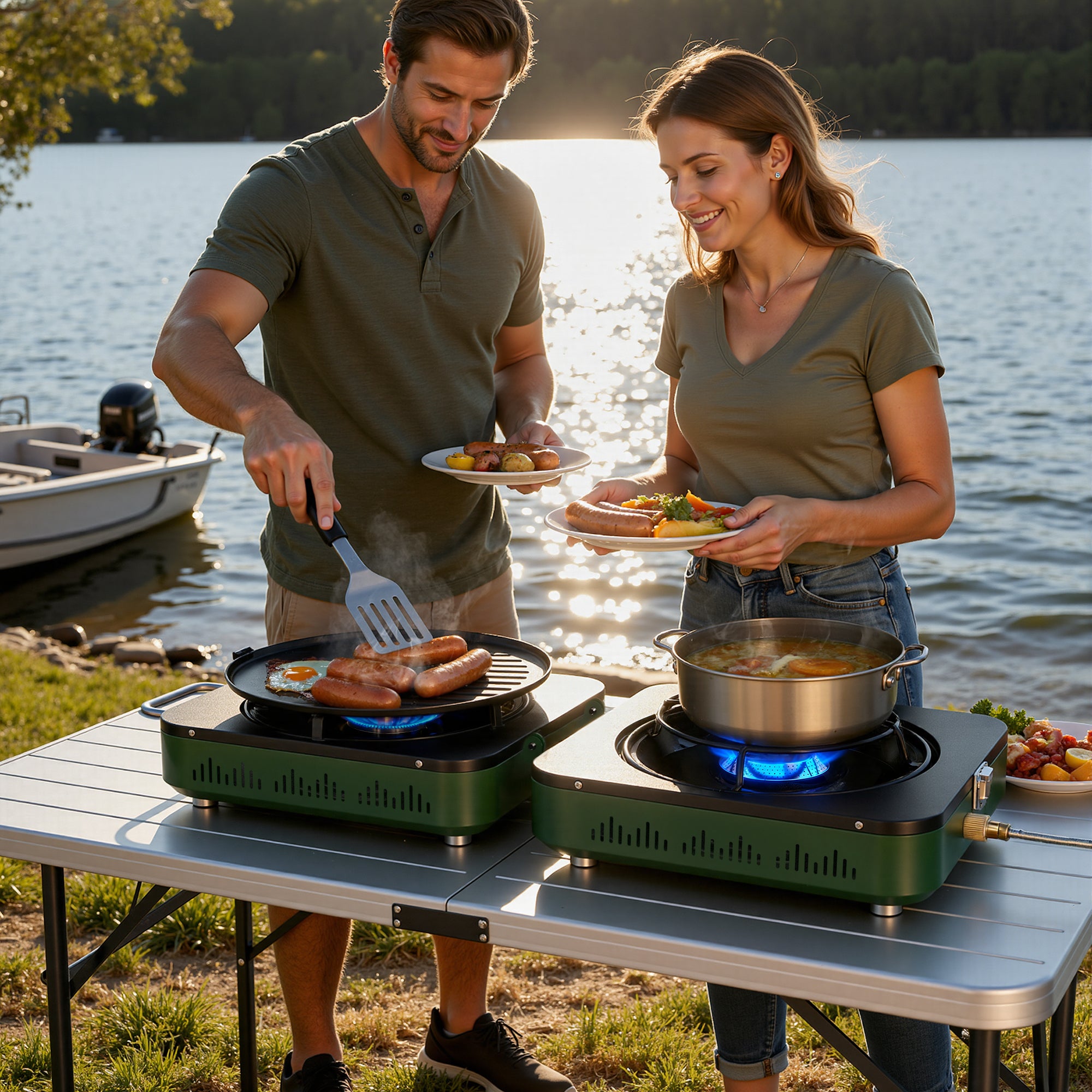
water, cook the main pot, then finish quick items. With a two-burner or griddle setup, assign each zone
a role and keep raw-food utensils separate from cooked-food tools. This reduces unnecessary movement
around the stove and prevents a compact cooking area from becoming cluttered.
Keep the Fold Line Away from Grease and Debris
- Wipe spills after shutdown and full cooling so residue does not harden around hinges or latches.
- Do not pour water into the stove body, ignition system, burner, or fuel area unless the manual instructs it.
- Use the removable grease-management parts as designed and empty them before transport.
- Check that small stones, sand, food, and packaging are not trapped before closing the stove.
- Dry all cleaned surfaces to reduce odor, corrosion, and moisture transfer to surrounding gear.
Do Not Let Compact Size Encourage Indoor Use
A portable stove still produces flame, heat, and combustion gases. Never move it into a tent, vehicle,
cabin, garage, or enclosed shelter because of rain, cold, or wind. If conditions become unsafe, follow
the shutdown instructions and wait for a suitable outdoor location rather than improvising a cover
that could trap heat or block ventilation.
Allow Cooling Time in the Trip Schedule
Work backward from departure. Stop cooking early enough to shut down the stove correctly, remove food
residue after cooling, and verify that the burner, supports, griddle, body, cookware, and fuel area are
safe to handle. Folding a hot stove can place heated surfaces close together and transfer heat to the
case, vehicle, or surrounding equipment.
Close the Stove Without Forcing the Mechanism
- Complete fuel shutdown and separation exactly as directed for the model.
- Wait until every component is cool enough for cleaning and handling.
- Remove or secure any detachable griddle, support, tray, or accessory.
- Clear the hinge path and fold each section in the correct order.
- Engage the latch or transport closure without compressing misplaced parts.
- Store the stove in a dry, protected position and inspect it again before the next trip.
Compare the Two Folding Formats
Compact Butane Format
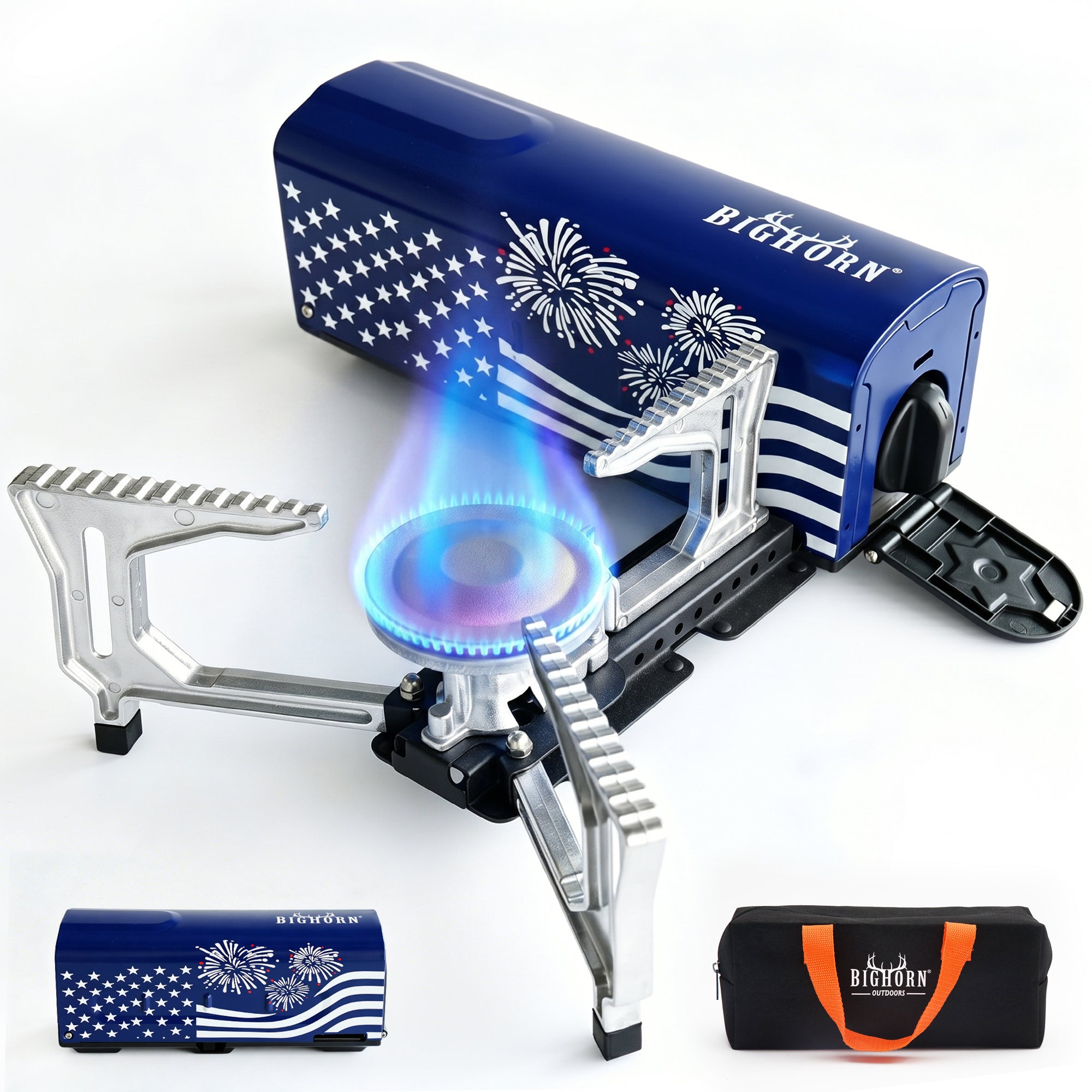
Review the bucket-style single burner when small packed size, adjustable flame, and simple pot or pan cooking are priorities.
View butane stove
Handled Propane Case
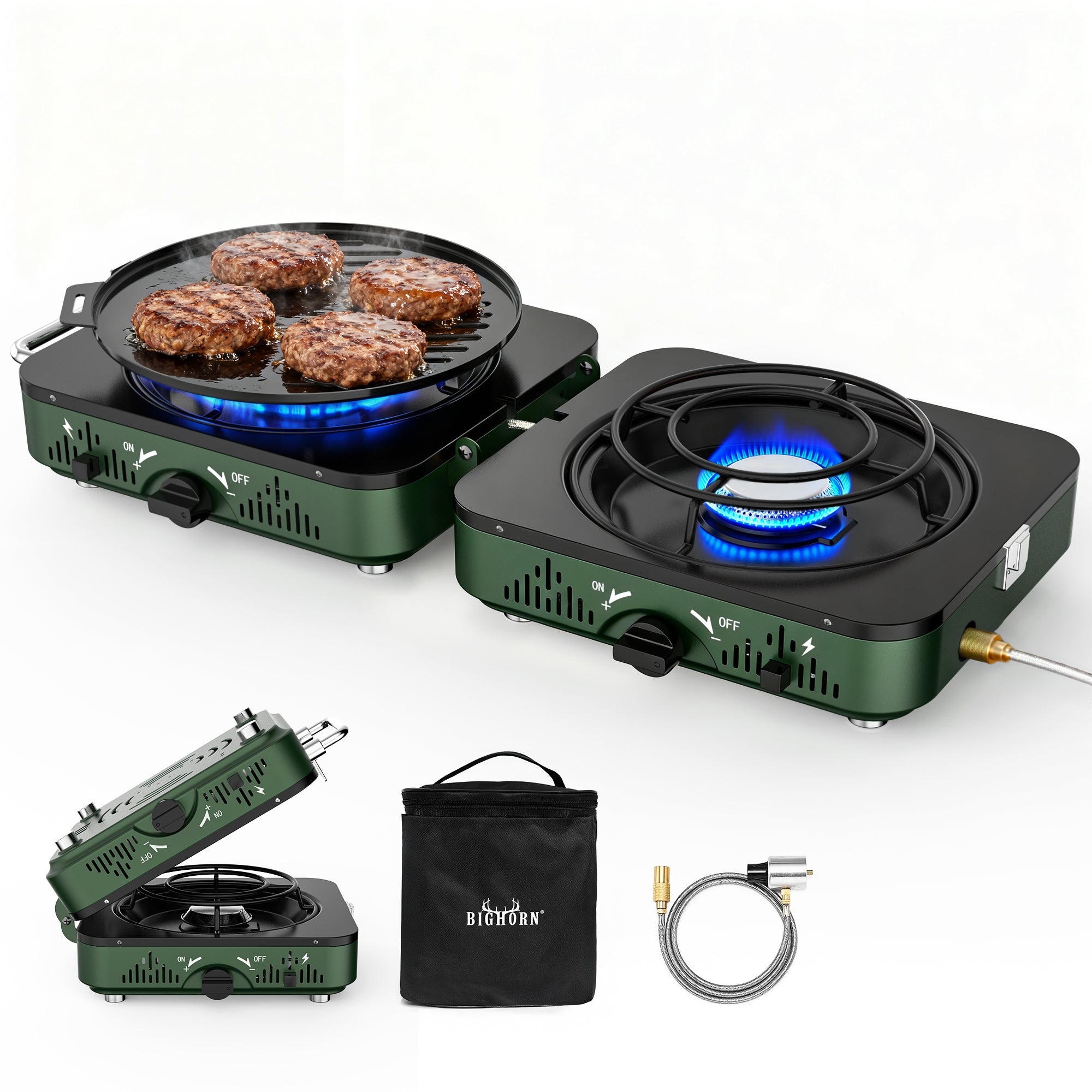
Review the foldable two-burner model when you want more output, a secure closing case, and a removable reversible griddle.
View propane stove
All Camping Stoves
Compare folding options with the broader portable-stove range when fuel, cooking layout, and trip style matter more than one feature.
Explore camping stoves
Make the Fold Part of the Checklist
Treat opening, inspection, cooling, cleaning, and closing as part of cooking—not as packing chores
to rush through. The best folding camping stove is the one whose transport shape, operating layout,
fuel system, and meal capacity all fit the way you actually travel.