Guides & Tips
Pellet Pizza Oven vs Gas Pizza Oven: Which Is Better for Beginner Campers?
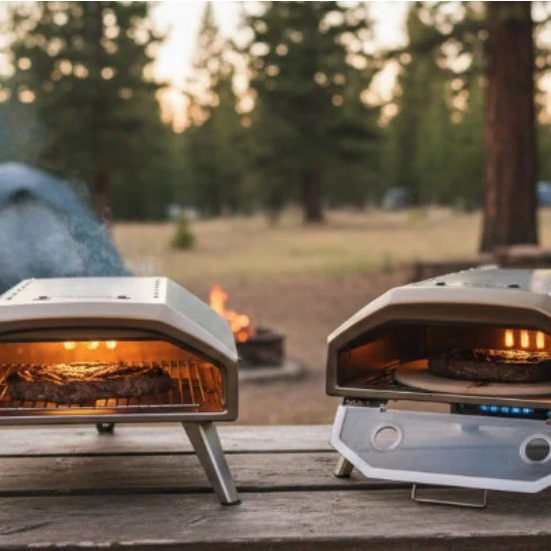
If you are new to the camping pizza-making game, you’re likely stuck on the big debate: pellet vs. gas. Both have their merits, but choosing the right one seems to be quite complex. As a beginner, which one should you choose? And what are their respective benefits?
Let’s dive in to find your perfect match.
Pellet pizza ovens and gas pizza ovens differ primarily in the fuel types they use:
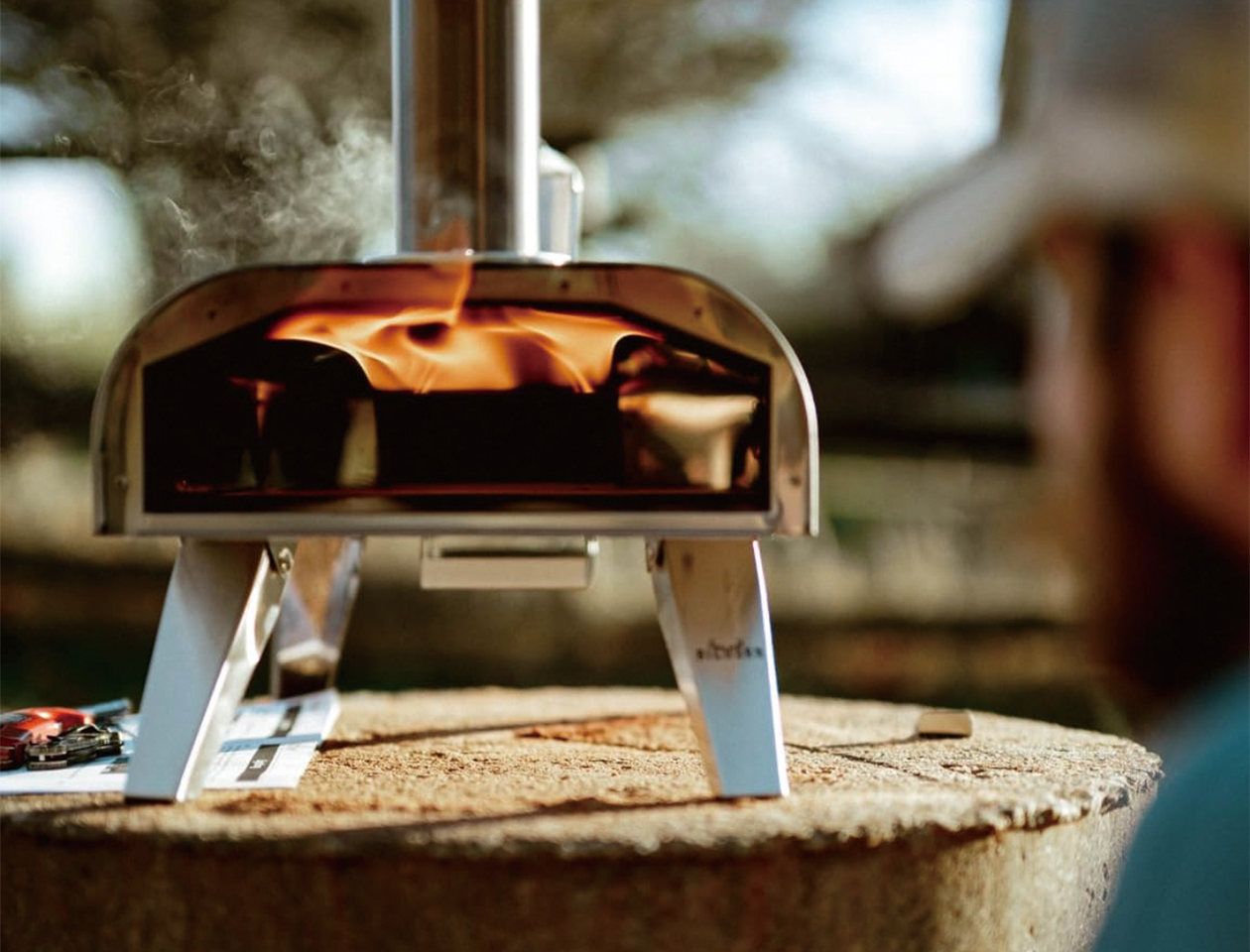
Pellet pizza ovens use small wood pellets for fuel. They work like traditional wood ovens. The flames pass over the top to cook your pizza toppings while the stone cooks the bottom crust. You need to watch and control the fire yourself.

Gas pizza ovens run on propane, just like a regular grill. You control the heat with a simple dial. Turn it up or down. Much easier to use.
Both types can get super hot (over 900°F) to make perfect pizza. But the cooking process and how you should maintain them are quite different. Here's a more detailed comparison:
| Feature | Pellet Pizza Oven | Gas Pizza Oven |
| Fuel Type | Wood pellets | Propane or natural gas |
| Temperature Control | More manual, depends on pellet flow | Easy control with adjustable knobs |
| Taste & Flavor | Wood-fired flavor, smoky taste | Less smoky, cleaner taste |
| Heating Speed | Slower to heat up | Faster heating |
| Cost | Generally higher initial cost | Lower initial cost |
| Portability | Less portable, requires more setup | More portable, easy to move |
| Maintenance | Higher maintenance (wood storage, cleaning) | Easier to maintain and clean |
| Environmental Impact | More eco-friendly (renewable fuel) | Fossil fuel usage (gas emissions) |
If you value ease of use above all else, gas is often the winner. For beginner campers who might be intimidated by managing a live fire, a gas model simplifies the process.
With a Big Horn® gas pizza oven, for instance, you simply connect your propane tank, turn the ignition knob, and you have instant flames. There is no need to carry fire starters, manage airflow, or constantly feed a hopper. This consistency allows you to focus entirely on prepping your pizza rather than tending to the heat.
Furthermore, temperature control is precise. If the stone gets too hot, you can dial the flame down instantly. For families or groups who want to churn out multiple pizzas back-to-back without downtime, a portable gas pizza oven is incredibly efficient. Some models can reach baking temperatures in just 15 minutes, meaning you spend less time waiting and more time eating.
While gas offers convenience, it can’t quite replicate the romantic allure and flavor profile of a wood fire. This is where the pellet pizza oven outdoor shines.
Cooking with pellets infuses your pizza with a subtle, woody aroma that gas ovens simply cannot match. If you are chasing that authentic, restaurant-quality "wood-fired" taste, pellets are the secret ingredient. The high heat generated by burning hardwood creates a rolling flame that licks over the pizza, caramelizing the cheese and blistering the crust in a way that feels artisanal.
For the camping purist, the ritual of lighting the pellets and maintaining the fire is part of the fun. It transforms dinner into an event.
When packing for a camping trip, space and weight are premium commodities. Here is how the two stack up as the best portable pizza oven candidates.
Your decision ultimately comes down to your outdoor cooking preferences and how you like to cook. Here's a breakdown:
For beginner campers, a gas pizza oven is generally the better choice.
It’s easier to start, heats up faster, offers simpler temperature control, and requires less cleanup and fire‑management skill—making it more beginner‑friendly. Pellet ovens give great flavor but demand more hands‑on fire handling and patience, which can be challenging for first‑time outdoor cooks.
Explore the full range of Big Horn Outdoors® pizza ovens and find the one that fits your adventure.
No, you should not put wood pellets inside a dedicated gas burner system as it can damage the components. But some manufacturers offer versatile solutions, and some models or setups allow you to switch between fuel types if you have the correct attachments. Always check your specific model's manual.
Generally, propane is more cost-effective per cook, especially if you use a larger refillable tank. Wood pellets can be more expensive in exchange for that special flavor, depending on the brand and wood type.
Gas models typically reach optimal baking temperatures (around 900°F) in 15–20 minutes. Pellet ovens may take a similar amount of time but require active management to keep the fire roaring during the preheat phase.
Not necessarily, but it requires more steps than gas ovens. You will need to empty the ash from the burn pot after the oven has completely cooled. Other than that, the high heat tends to burn off spilled food, so the stone usually just needs a quick brush or wipe.
 Red Wine Mushroom Gravy Beef Tips on Infrared Grill
Master steakhouse-quality beef tips at home! Marinated for flavor, seared fast on an infrared grill, and topped with a rich red wine mushroom gravy.
Red Wine Mushroom Gravy Beef Tips on Infrared Grill
Master steakhouse-quality beef tips at home! Marinated for flavor, seared fast on an infrared grill, and topped with a rich red wine mushroom gravy.
 Pro Tips: Grilling Thick-Cut Steak for Maximum Flavor
Master grilling thick-cut steaks at home. Learn essential prep, resting tips, and how to use 1500℉ infrared heat for a flawless, restaurant-quality...
Pro Tips: Grilling Thick-Cut Steak for Maximum Flavor
Master grilling thick-cut steaks at home. Learn essential prep, resting tips, and how to use 1500℉ infrared heat for a flawless, restaurant-quality...
 How to Make a Smash Burger on an Infrared Grill
Standard grills ruin beef by losing flavor. Use a cast iron plate on an infrared grill to lock in moisture and make the perfect smash burger crispy...
How to Make a Smash Burger on an Infrared Grill
Standard grills ruin beef by losing flavor. Use a cast iron plate on an infrared grill to lock in moisture and make the perfect smash burger crispy...