Pizza Stone vs. Pizza Steel in High-Heat Ovens: Which Wins?

Stop guessing which surface makes the best pizza crust. Use pizza steel in most home ovens and switch to pizza stone above 575F for perfect results.
Steel wins in most home ovens. Stone wins in the hottest ones. Nearly every comparison article online skips that distinction and calls it a day. The real answer depends on one thing: the maximum temperature your oven or outdoor cooker actually reaches. Get that right, and the choice becomes straightforward.
Related product: Shop Pizza Stone.

Both surfaces do the same job: absorb heat and transfer it into the base of your pizza. The difference is how fast they do it, and that gap changes everything.
Pizza stones are made from ceramic or cordierite (a heat-resistant mineral commonly used in pizza stones and kiln furniture), both porous materials that absorb heat slowly and release it in a steady, even pattern.
Pizza steels are solid plates of carbon steel, far denser than stone, and they conduct heat roughly 18 times faster. That single difference in conductivity drives every other comparison that follows.
When raw dough hits a preheated stone, the stone releases stored heat gradually and consistently across the base. The bake is thorough, but it takes longer to get there.
When dough hits a preheated steel, heat transfers fast and aggressively from the surface into the dough. The base gets a sharp burst of energy in the first 60 seconds, producing a crispier bottom and a stronger rise in the crust edge.
A useful question is: at what temperature does each surface actually perform best?
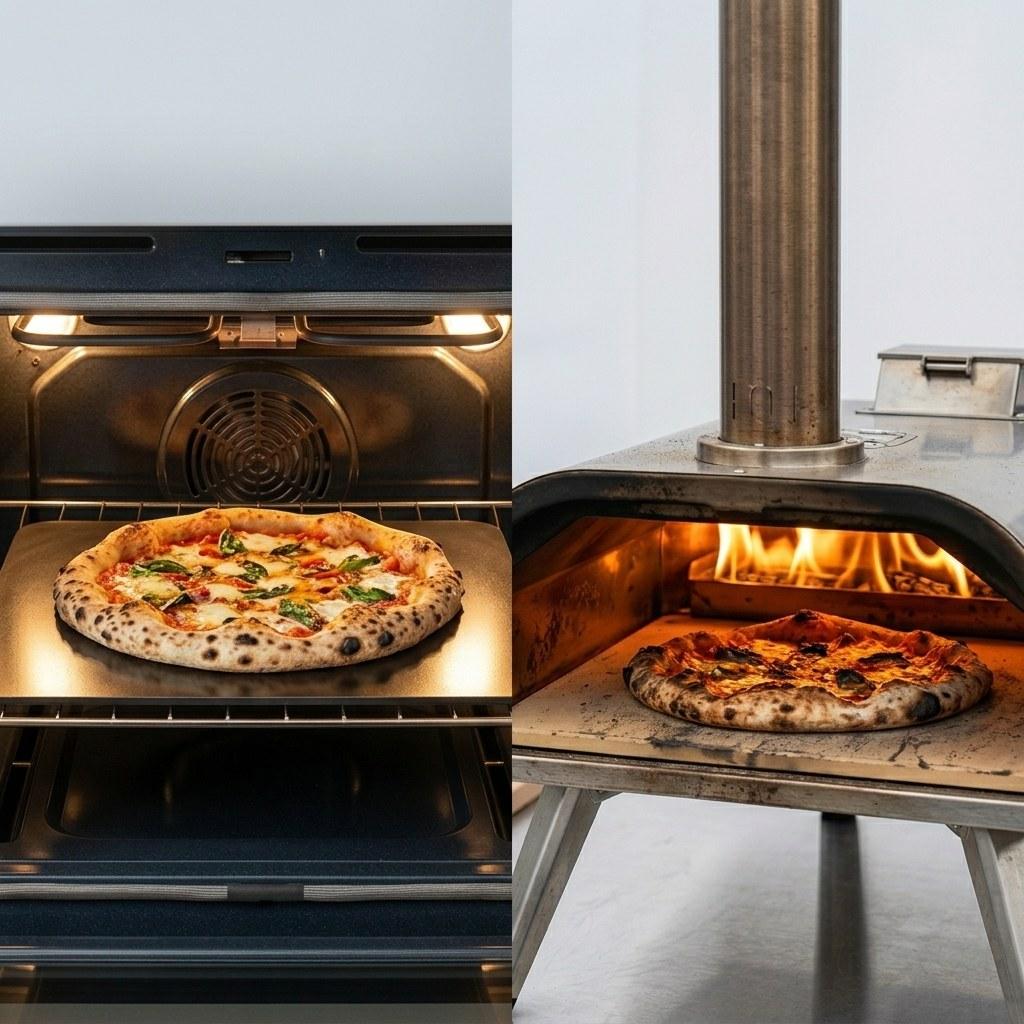
Most home ovens cap out around 500°F. At this range, the stone cannot transfer heat fast enough to properly crisp the base before the top overcooks. Steel closes that gap. At 500°F, steel transfers heat so efficiently that it mimics what a stone floor does inside a 900°F wood-fired oven.
Steel bake time in this range runs 4-6 minutes. Stone bake time runs 8-10 minutes.
With a broiler assist or a high-output oven, stone starts closing the gap. Both surfaces produce solid results here. Steel's main remaining edge is faster heat recovery between pizzas: 2-3 minutes versus 10 or more for stone.
That recovery time matters if you are baking three or four pizzas back to back.
At extreme temperatures, steel stops being an advantage and becomes a problem. Heat transfers so fast into the dough that the base burns before the top has time to finish. It is why virtually every dedicated outdoor pizza oven and professional wood-fired oven uses a stone floor, not a steel one.
At 700°F or above, stone gives you a controlled, even bake. Steel at that temperature risks scorching the base before the toppings have time to finish.
Steel is the stronger tool for standard home ovens. Stone earns its place at the high end of the heat spectrum.
| Feature | Pizza Steel | Pizza Stone |
| Heat conductivity | ~18x faster | Slower, more even |
| Preheat time | 45-60 minutes | 45-60 minutes |
| Recovery time between pizzas | 2-3 minutes | 10+ minutes |
| Bake time at 500°F | 4-6 minutes | 8-10 minutes |
| Best temperature range | 450-575°F | Below 450°F or above 575°F |
| Crust result | Crispy, charred base | Even bake, softer bottom |
| Durability | Highly durable, will not crack | Can crack from thermal shock |
| Price range | $100-150 | $30-80 |
| Versatility | Pizza, bread, burgers, stovetop use | Pizza and bread only |
| Cleaning | Scrape clean, lightly oil | No soap, dry brush only |

At 500°F, steel produces noticeably more rise in the crust edge, giving you that puffy, airy rim you want on a good pizza. Stone at the same temperature delivers a denser base with less char.
At 700°F and above, that advantage reverses. Stone handles extreme heat without burning the base, producing a thin, evenly baked crust with a proper char pattern.
Stone cracks when moisture hits a hot surface, or when it is moved carelessly while still hot. Steel does not crack. It can rust if left wet, but a light coat of oil after each session prevents that entirely.
Cleaning stone means no soap, ever. The porous surface absorbs whatever it contacts. Steel gets scraped clean with a metal tool, then wiped with a thin layer of oil before storing — the same basic care you would give a cast iron pan.
Your answer depends less on personal preference and more on how your oven actually performs.
| Your Setup | Best Choice | Reason |
| Standard home oven (under 500°F) | Steel | Steel's higher conductivity compensates for lower oven temps, delivering crispier crust and faster recovery between bakes |
| Broiler mode or oven exceeds 500°F | Steel (middle rack) | Steel still wins, but direct top heat is intense. A middle rack position prevents the base from outpacing the top |
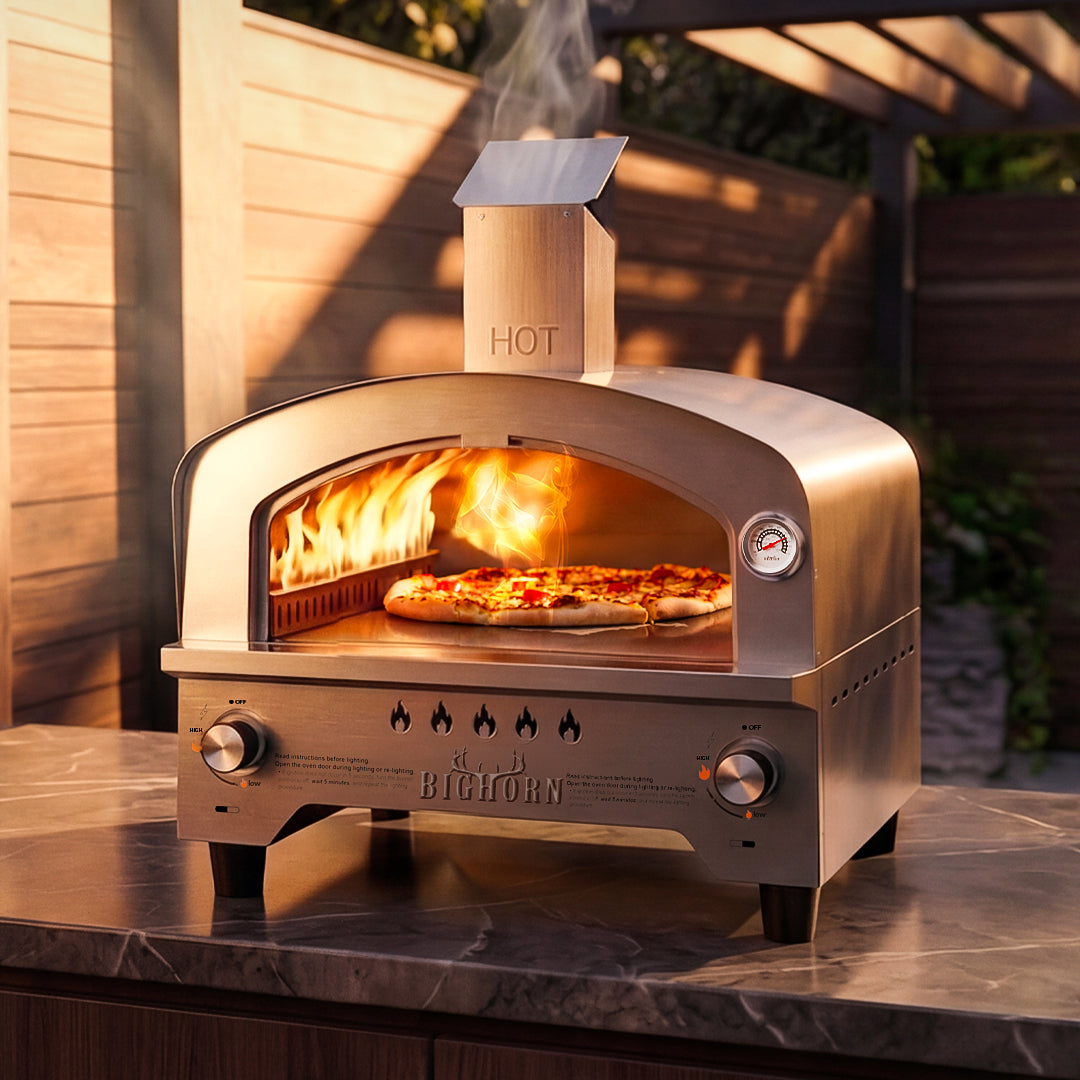
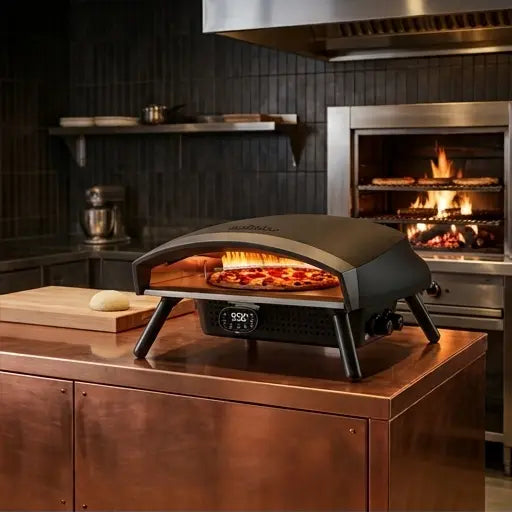
| Dedicated outdoor pizza oven (700°F+) | Stone | At extreme temps, steel transfers heat too aggressively and burns the base; stone was built for exactly this environment |
| Occasional use, budget-conscious | Cordierite stone | Won't outperform steel in a standard oven, but handles the job well enough and lasts for years when handled carefully |

Steel wins in standard home ovens running under 575°F. It is faster, tougher, and more versatile. Stone becomes the safer, smarter choice above 575°F. That is why outdoor pizza ovens are built with stone floors. Match the surface to your actual heat source, and you will get consistent results every time. Cooking at high heat outdoors? Big Horn Outdoors builds a full range of pizza ovens designed to hit the temperatures where stone performs at its best.
Yes, and it is the recommended option. Outdoor pizza ovens typically run 700-900°F, which is exactly where stone performs best. Most outdoor units come with a stone floor built in for this reason.
A thicker steel stores more heat and recovers faster between bakes, but the difference on the first pizza is minimal. Extra thickness above 1/4 inch mainly benefits cooks making three or more pizzas in a single session.
Yes. Some home bakers place steel on a lower rack and stone on an upper rack to balance bottom and top heat. It is not necessary for most setups, but it is a legitimate technique for getting more even results.
Explore more in the Pizza Dough & Crust Guides.
 Big Horn Outdoors® Expands Retail Presence with New Experience at Piedmont Outfitters
Big Horn Outdoors® is excited to announce a new retail destination for outdoor cooking enthusiasts. Customers can now experience the brand's popula...
Big Horn Outdoors® Expands Retail Presence with New Experience at Piedmont Outfitters
Big Horn Outdoors® is excited to announce a new retail destination for outdoor cooking enthusiasts. Customers can now experience the brand's popula...