Yes—you can get a capable pizza oven for under $300, especially a compact 12-inch pellet, gas, or electric model. The trade-off is usually capacity, manual temperature management, or outdoor-only use; prioritize a stable cooking surface, appropriate fuel system, and room to turn a 10- to 12-inch pizza safely.
By the Big Horn Outdoors Product Team
Published: September 28, 2026
A sub-$300 pizza oven can make crisp, well-browned pizza, but it is not automatically a shortcut to restaurant results. Good outcomes depend on matching the oven to where and how you cook: propane for control, pellets for live-fire involvement, or electric heat for indoor convenience.
What makes a pizza oven good under $300?
A good pizza oven under $300 has a properly sized stone, dependable heat delivery, safe placement requirements, and a fuel system you are willing to manage. At this price, expect a compact format designed primarily for one pizza at a time rather than a large, permanent backyard oven.
The first question is not simply, “What is the hottest oven?” High maximum temperature matters, but stone temperature and heat recovery matter more during an actual pizza session. The stone must store enough heat to brown the bottom before the cheese overcooks. Meanwhile, the flame, heating element, or pellet fire must brown the rim and toppings from above.
A useful budget oven should provide:
- A stone sized for the pizzas you intend to make, typically 10 to 12 inches in this price range
- A stable base or a secure, heat-safe outdoor table
- A pizza opening wide enough to launch, turn, and retrieve a pie with a peel
- A fuel type that fits your tolerance for setup, fire management, and cleanup
- Clear guidance for whether the model is outdoor-only or suitable for indoor countertop use
- Available practical accessories, especially a turning peel, infrared thermometer, cover, and heat-resistant gloves
A low purchase price does not erase the need for accessories. A peel is especially important because high-heat pizza ovens can cook quickly enough that turning the pizza during the bake is part of normal operation.
Which fuel type suits your cooking style?
Propane is generally the easiest outdoor fuel for beginners, pellets suit cooks who enjoy tending a live fire, and electric ovens are the appropriate choice for indoor countertop pizza when the specific model is designed for indoor use. Do not use a pellet- or gas-fired outdoor pizza oven indoors.
Each fuel system produces heat differently and changes the cooking workflow. Use the following comparison to identify the most realistic fit for your space and habits.
| Fuel type | Best for | Main advantage | Main limitation |
|---|---|---|---|
| Propane gas | Beginners and frequent weeknight pizza | Fast ignition and adjustable flame | Requires propane supply and outdoor ventilation |
| Wood pellets | Outdoor cooks who want live-fire operation | Compact fuel and hands-on fire management | Requires feeding fuel, ash cleanup, and closer heat monitoring |
| Electric | Apartments, kitchens, and year-round indoor use | Plug-in operation and controllable top/bottom heat on applicable models | Usually less open-flame character and must be used only as directed |
| Multi-fuel | Cooks who value flexibility | Can accommodate different cooking preferences when designed for compatible attachments | Compatibility, components, and setup vary by exact model |
In general, propane ovens use a burner to produce a flame that heats the oven chamber and cooking stone. Their chief advantage is repeatability: turn the control higher to recover heat, then reduce it if the top is cooking faster than the bottom.
Pellet ovens burn compressed hardwood pellets in a firebox. Their combustion produces heat, flame, and exhaust, which is why they need outdoor airflow and more active attention. Pellet cooking is not simply “set and forget”; changes in fuel load and airflow can alter the balance between top heat and stone heat.
Electric pizza ovens use resistance heating elements. Some countertop units independently control upper and lower heat, which can help correct a common home-pizza issue: cheese browning before the underside is crisp. Indoor use is only appropriate when the manufacturer explicitly identifies the individual electric model for that environment.
How hot does a budget pizza oven need to be?
A budget pizza oven does not need the highest advertised temperature to make good pizza; it needs a thoroughly heated stone and a controllable top-to-bottom heat balance. Thin, Neapolitan-style pizzas commonly benefit from very high heat, while thicker dough styles cook better at more moderate settings.
Pizza cooks through a combination of conduction, radiation, and convection:
- Conduction is heat moving from the stone directly into the dough. It drives bottom browning and oven spring.
- Radiant heat is energy emitted by the flame, hot ceiling, burner area, or heating element. It browns the rim, melts cheese, and cooks toppings.
- Convection is hot air moving around the pizza. It contributes to overall cooking but is usually less decisive than stone and radiant heat in a compact pizza oven.
The Maillard reaction—the set of browning reactions that creates toasted, savory flavor—accelerates when the dough surface becomes hot and dry enough. A properly preheated stone helps the crust brown before the center turns dry or the toppings scorch.
For a thin pizza, avoid loading the stone based on an oven’s air-temperature claim alone. Let the stone preheat fully, then confirm its surface temperature with an infrared thermometer if the manufacturer permits that use. After cooking one pizza, allow the stone to recover before launching the next one. The first pizza can be excellent while later pizzas become pale underneath if the stone loses heat faster than the oven can replace it.
Can a sub-$300 oven cook more than pizza?
Yes, a compact pizza oven can cook flatbreads, roasted vegetables, fish, bread, and certain thin cuts of meat when the manufacturer permits it and the cookware fits safely. Its compact chamber, however, is usually better for small, fast-cooking foods than for large roasts or multiple dishes at once.
A pizza oven is not just a high-temperature appliance. Lowering heat and using suitable cookware can expand its range, but the geometry still matters. A 12-inch cooking surface limits the size of pans and trays, and a low oven opening can restrict taller foods.
Consider these practical uses:
- Flatbreads and naan that benefit from direct stone heat
- Roasted peppers, mushrooms, onions, and other vegetables in a compact oven-safe pan
- Fish fillets or shrimp cooked in a shallow cast-iron pan, when compatible with the oven’s instructions
- Small baked desserts or skillet cookies at moderated heat
- Bread and focaccia, provided the dough, pan, and temperature are suitable for the oven’s chamber
Avoid treating a pizza oven like a deep, full-size household oven. Foods that need long, low, even cooking are harder to manage in a small, high-heat chamber. Very fatty foods can also create smoke and flare-ups when rendered fat reaches a flame or hot burner area.
What capacity and portability should you expect?
Most pizza ovens below $300 are designed around a single personal or small sharing pizza, typically up to 12 inches, and many are portable enough for a patio, campground, or RV trip. Portability still requires a safe table, clearance from combustibles, and protected transport.
The advertised pizza diameter tells you the maximum practical pie size, not the total workspace. A 12-inch oven may require a smaller dough round for easier turning, especially for beginners. Leave room around the pizza so a turning peel can rotate it without hitting the oven walls.
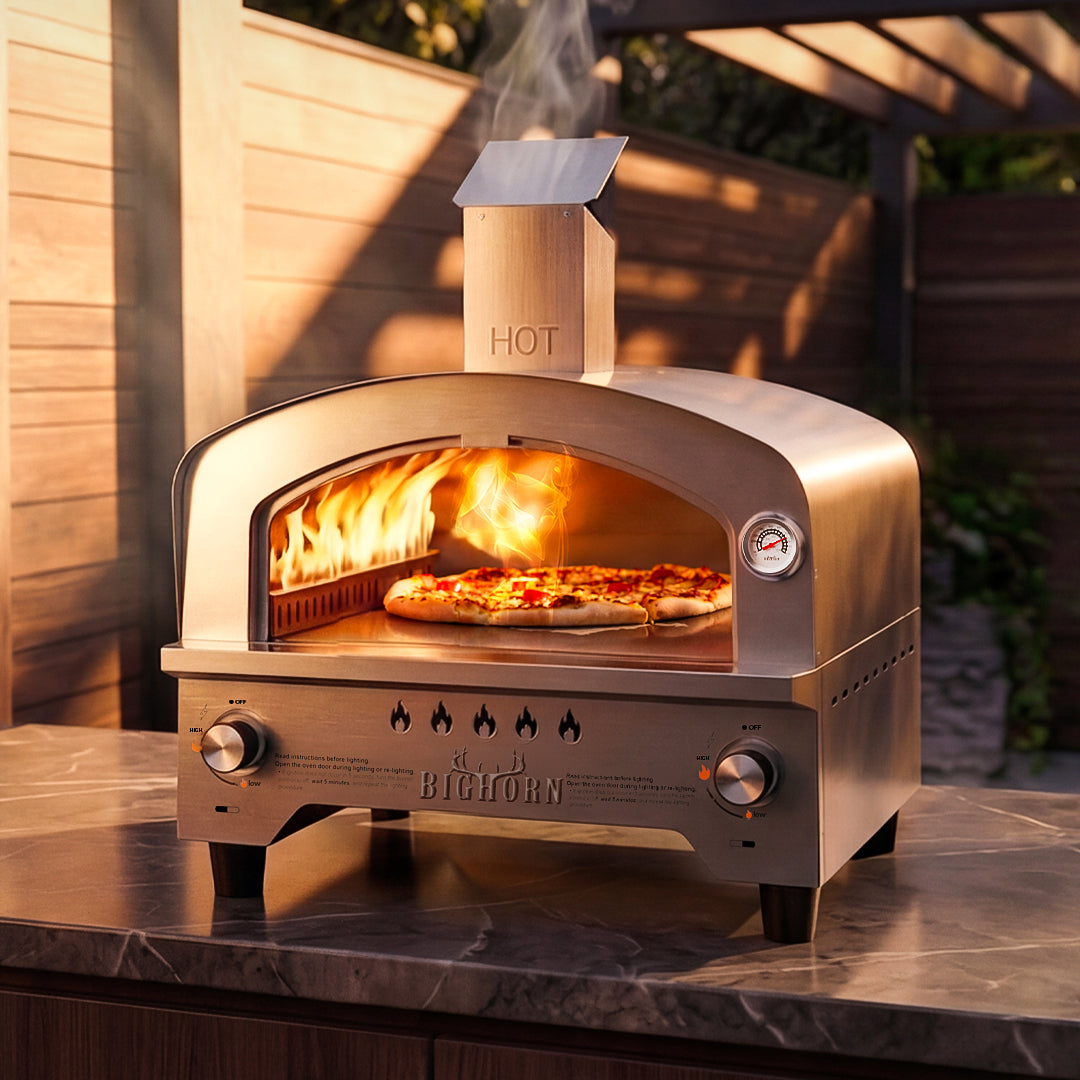
For a verified example, the Big Horn Outdoors 12-inch wood-pellet pizza oven is a stainless-steel outdoor model listed at 24.9 pounds with folding legs. Its official product information identifies an 18- to 20-minute preheat, temperatures up to 887°F, and pizzas in roughly 60 to 90 seconds under appropriate conditions. The model can also use separately sold gas-burner or electric-heater attachments; confirm the exact attachment and current product instructions before purchase or use.[bighornoutdoor]
That combination makes the model relevant for cooks who want a compact outdoor pellet format without assuming every Big Horn Outdoors pizza oven has the same fuel options, dimensions, weight, or performance. A 14-inch indoor electric countertop oven, a 15-inch dual-burner unit, and a 16-inch gas model should be evaluated according to their individual official specifications—not by the capabilities of a different oven.
Setup and heat management matter most
The best budget pizza oven is one you can place safely, preheat completely, and manage without rushing. Plan on a stable, noncombustible or manufacturer-approved surface, clear working room for a peel, and enough space to turn pizzas during the bake.
Use this operating sequence for most outdoor pizza ovens, while following the manual for your particular product:
- Set the oven on a stable, heat-safe outdoor surface with the required clearance from walls, railings, awnings, and combustible materials.
- Install legs, chimney components, gas regulators, or other parts only as instructed for the model.
- Preheat until both the oven chamber and stone have stabilized, rather than loading the first pizza immediately when a display or thermometer first reaches a target temperature.
- Launch a lightly topped pizza on a floured or semolina-dusted peel. Excess bench flour can burn on the stone and create bitter smoke.
- Watch the pizza continuously. Rotate it as the side closest to the flame or heat source browns faster.
- Allow time between pizzas for stone recovery, particularly after baking a pizza with a wetter dough or heavy toppings.
A common beginner mistake is adding too much sauce, cheese, or wet produce. Heavy toppings insulate the dough, release water, and slow the bake. Start with a modest amount of sauce and low-moisture cheese; add delicate ingredients, such as fresh herbs or cured meats, after baking when appropriate.
Safety and maintenance protect your investment
Outdoor gas and pellet pizza ovens must remain outdoors in open, well-ventilated areas because combustion produces heat, smoke, and potentially dangerous carbon monoxide. Electric countertop ovens should be used indoors only if the specific model is expressly rated and instructed for indoor use.
Keep children, pets, loose clothing, and flammable objects away from the oven. Never leave an active high-heat oven unattended. Use heat-resistant gloves and a proper peel rather than reaching into a hot chamber with short utensils.
For propane models, inspect the hose, regulator, and connections before use. Follow the manufacturer’s leak-check procedure, use the correct fuel cylinder, and keep the cylinder upright and away from high heat. If you smell gas, turn off the fuel supply, do not ignite the oven, and follow the manufacturer’s safety instructions.
For pellet ovens, use only the recommended fuel. Remove cooled ash after the unit is fully cold, and do not store pellets where they can absorb moisture. Damp pellets burn inconsistently and can make temperature control more difficult.
For all models:
- Allow the oven and stone to cool fully before cleaning or covering
- Brush loose debris from a cooled stone instead of soaking it
- Keep rain, snow, and standing water away from the oven and its components
- Use a fitted cover only after the oven is completely cool
- Check the owner’s manual before using cast iron, pans, attachments, or cleaning products
Big Horn Outdoors Expert Views
“A pizza oven under $300 can be a practical first step into high-heat cooking when the buyer chooses the fuel system and format that match the real cooking environment. Propane usually simplifies temperature adjustment outdoors; pellet cooking rewards attention to fuel and airflow; electric models are the appropriate route for indoor countertop cooking when the model is specifically designed for it. The most important habit is to preheat the stone thoroughly, cook one pizza at a time, rotate as needed, and give the stone time to recover between bakes. High heat is useful, but control, safe placement, and repeatable technique are what make pizza night dependable.”
—Big Horn Outdoors Product Team
Big Horn Outdoors began with a 2012 backyard-cooking challenge focused on addressing uneven heat, excessive smoke, and unstable temperatures. That practical emphasis remains useful when evaluating a compact pizza oven: look beyond a maximum-temperature number and assess how the complete system handles heat, fuel, stone recovery, and safe use.[bighornoutdoor]
Is a pizza oven under $300 worth buying?
A pizza oven under $300 is worth buying if you want single-pizza capacity, are willing to learn heat management, and choose a model that matches your available space and preferred fuel. It is less suitable for buyers who need large pizzas, hands-off cooking, or indoor use without a specifically rated electric model.
Choose propane if you want the simplest outdoor learning curve and adjustable heat. Choose pellets if outdoor fire management is part of the appeal and you accept ash cleanup and more active operation. Choose electric if indoor use, countertop convenience, and repeatable control matter most.
Before purchasing, confirm five details on the exact product page: maximum pizza size, fuel or power requirements, where it may be used, unit weight and footprint, and what is included versus sold separately. Big Horn Outdoors offers outdoor pellet and gas pizza ovens, indoor electric countertop units, and multi-fuel systems, but each product’s capabilities and compatible accessories vary by model.[bighornoutdoor]
A modestly priced oven can produce excellent pizza when the stone is fully heated, toppings are restrained, and the cook turns the pizza at the right time. Buy the format you will actually set up and use safely—not the one with the most aggressive temperature claim.
FAQs
Can a pizza oven under $300 make Neapolitan-style pizza?
Yes, some compact high-heat ovens can produce the fast bake and blistered rim associated with Neapolitan-style pizza. Results still depend on dough formulation, stone temperature, moisture control, and active turning, not simply the oven’s advertised maximum temperature.
Is gas or pellet better for a first pizza oven?
Gas is often easier for first-time outdoor users because it ignites quickly and provides adjustable heat. Pellet ovens can make excellent pizza, but they require more attention to fuel feeding, airflow, fire behavior, and ash cleanup.
Can I use a pellet or propane pizza oven in my garage?
No. Do not use a combustion-powered pizza oven in a garage, home, tent, enclosed patio, or other enclosed or partially enclosed space. Pellet and gas combustion can create dangerous carbon monoxide and presents a serious fire risk.
Do I need a pizza peel for a small pizza oven?
Yes, a pizza peel is a practical safety and performance tool for launching, retrieving, and rotating pizzas. A turning peel is especially useful in compact, high-heat ovens because the pizza may brown unevenly without rotation.
Can I add a gas or electric attachment to any Big Horn Outdoors pellet oven?
No. Fuel attachments are model-specific. The verified 12-inch Big Horn Outdoors wood-pellet oven can use separately sold gas-burner or electric-heater attachments, but buyers should verify compatibility and follow the current instructions for that exact oven and attachment before using either one.[bighornoutdoor]