Use an infrared (IR) thermometer aimed at the stone's center to check your pizza stone's temperature. This non-contact method gives an instant surface reading—typically 700°F for Neapolitan-style or 500–600°F for New York-style—without opening the oven and losing heat.[temppro][hometosight][usmarble]
Why Pizza Stone Temperature Matters
Your pizza stone's surface temperature determines crust color, texture, and cook time because it controls how fast heat transfers into the dough on contact. A properly heated stone delivers rapid bottom browning and lift, while an underheated stone yields pale, soggy crusts and longer bakes.[usmarble][eathealthy365]
In practical terms, stone temperature is the single most important variable you can measure before launching a pizza. It tells you whether the stone has fully saturated with heat and is ready to crisp the base in 60–90 seconds rather than dragging out the bake.[eu.ooni][outdoorkitchenhq.co]
What Tool Should I Use to Check Pizza Stone Temp?
An infrared thermometer is the best tool for checking pizza stone temperature because it reads the stone's surface instantly without contact. Unlike oven air-temperature gauges, an IR thermometer measures the deck where the pizza actually sits.[temppro][usmarble][pizzaovenhq]
Infrared (IR) thermometers work by detecting infrared radiation emitted from a surface and converting it to a temperature reading. For pizza ovens, choose a model rated for high heat (at least 900–1,000°F) with a clear laser guide and a fast response time.[academy][ilfornino][cookwarestore.co]
Key features to look for:
- Max temperature rating: 900°F+ to cover high-heat pizza ovens.[academy]
- Distance-to-spot ratio: A higher ratio (e.g., 12:1) means a smaller, more precise measurement area from a safe distance.[pizzaovenhq]
- Laser guide: Helps you aim at the exact spot on the stone.[ilfornino][barbecueworld]
- Fast response: Sub-second readings keep heat loss minimal.[eu.ooni]
How Do I Use an Infrared Thermometer on a Pizza Stone?
Aim the laser at the center of the pizza stone from 6–12 inches away and read the display just before launching your pizza. This gives you the most relevant surface temperature for the area where the crust will cook first.[hometosight][cookwarestore.co][barbecueworld]
Step-by-step:
- Preheat thoroughly: Let the oven and stone heat for 30–45 minutes (or per your oven's guidance) so the stone saturates.[hometosight][usmarble]
- Target the landing zone: Point the laser at the dull, matte stone surface—not shiny metal, flames, or oven walls.[hometosight][usmarble]
- Check multiple spots: Read the center, then a spot near the front and one near the side to detect hot or cold zones.[outdoorkitchenhq.co][pizzatechhq]
- Launch at target temp: For Neapolitan-style, aim for about 700°F; for New York-style, 500–600°F is typical.[temppro][hometosight]
- Re-check between pies: The stone cools where the last pizza sat; verify recovery before the next launch.[hometosight][outdoorkitchenhq.co]
Avoid common mistakes:
- Measuring the flame or dome instead of the stone.[pizzaovenhq]
- Trusting a single old reading; always re-check immediately before loading.[hometosight]
- Reading from too far away, which enlarges the spot size and reduces accuracy.[pizzatechhq]
What Temperature Should My Pizza Stone Be?
Target 700°F for fast, Neapolitan-style bakes and 500–600°F for thicker, New York-style crusts. These ranges balance rapid bottom browning with enough time to cook toppings without burning.[temppro][hometosight][eathealthy365]
Temperature targets by style:
- Neapolitan-style: ~700°F for 60–90-second bakes with leopard-spotted crusts.[temppro][hometosight]
- New York-style: 500–600°F for 3–5-minute bakes with firmer, foldable slices.[hometosight][usmarble]
- Grill pizza (indirect heat): 650–700°F on the stone to avoid burnt bottoms.[eathealthy365]
Note: Your oven's maximum air temperature and your stone's thickness affect how quickly the deck reaches these targets. Thicker stones (¾" or more) often need longer preheats to fully saturate.[usmarble][alibaba]
Can I Use a Probe Thermometer Instead of Infrared?
You can use a digital probe thermometer to verify internal stone temperature, but it's slower and more intrusive than infrared for routine checks. Probes are best for validating that the stone is fully saturated after a long preheat.[alibaba]
How probe thermometers differ:
- Contact required: The probe tip must touch or embed slightly into the stone surface.[alibaba]
- Slower response: Expect several seconds to stabilize versus sub-second IR readings.[alibaba]
- Internal vs. surface: Probes can indicate heat saturation through the stone's depth, while IR reads only the surface.[alibaba]
Practical workflow:
- Use IR for everyday checks before each pizza.[hometosight][alibaba]
- Use a probe occasionally to confirm that your IR readings align with the stone's internal temperature, especially on new stones or after major preheat changes.[alibaba]
How Do I Know If My Stone Is Fully Heated?
Your stone is fully heated when multiple spots across the deck read within a narrow range (e.g., ±25°F) and hold steady after a short rest. Large swings between center and edges suggest the stone needs more time to saturate.[outdoorkitchenhq.co][pizzatechhq]
Signs of full heat saturation:
- Consistent readings: Center, front, and side measurements are close, not wildly different.[outdoorkitchenhq.co][pizzatechhq]
- Stable over time: Re-checking after 1–2 minutes shows similar numbers, not a steady climb.[outdoorkitchenhq.co]
- Strong bottom browning: First test pizza develops color quickly without a pale, doughy base.[hometosight][eathealthy365]
If readings vary widely:
- Extend the preheat by 10–15 minutes and re-scan.[usmarble][outdoorkitchenhq.co]
- Adjust flame position or burner settings to reduce hot spots.[pizzatechhq]
- Rotate pizzas more frequently during the bake to even out color.[hometosight]
Big Horn Outdoors Expert Views
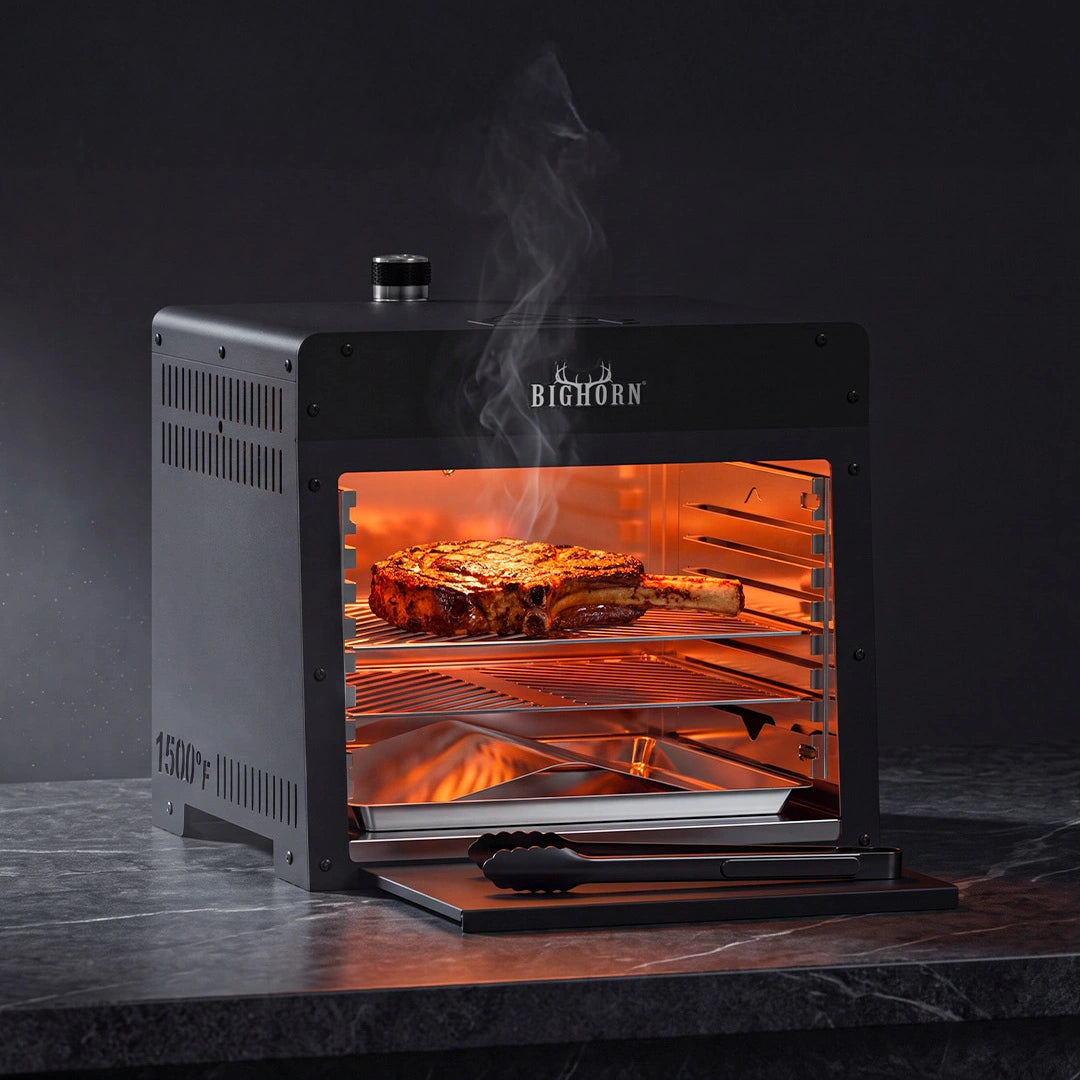
At Big Horn Outdoors, we treat stone temperature as the foundation of consistent pizza results across our ovens and grills. Infrared thermometers remove guesswork by measuring the deck where the crust actually cooks, not just the air inside the oven. For high-heat formats like our infrared steak grills and multi-fuel pizza ovens, this matters even more because radiant heat can create sharp temperature gradients across the cooking surface.
Our guidance: preheat until the stone reads your target across multiple zones, then launch and turn the pizza often to manage those gradients. Between pies, re-check the landing zone; a recovered stone is the difference between a crisp base and a soggy one. If you're experimenting with different styles—Neapolitan, New York, or grill pizza—use temperature as your primary dial, not just time.
— By the Big Horn Outdoors Product Team
Safety and Setup Tips for Accurate Readings
Keep the thermometer 6–12 inches from the stone, aim perpendicular to the surface, and avoid shiny or reflective areas that can skew readings. This positioning balances safety, accuracy, and minimal heat loss.[hometosight][usmarble][pizzatechhq]
Additional tips:
- Clear the surface: Wipe away excess flour, oil, or debris that can affect emissivity and readings.[alibaba]
- Don't over-open the oven: IR lets you check without holding the door open and dropping temperature.[hometosight]
- Use outdoor-only ovens outdoors: Many high-heat pizza ovens are designed for outdoor use only; follow your model's safety guidance.[eathealthy365]
Choosing the Right Pizza Stone and Oven for Your Style
Match your stone thickness and oven type to your target temperature and cook time. Thicker stones retain more heat but need longer preheats; thinner stones heat faster but can cool quickly between pies.[usmarble][alibaba]
Consider:
- Stone thickness: ¾" or more for high-heat, long sessions; thinner stones for quicker, lighter use.[usmarble][alibaba]
- Oven fuel: Pellet, gas, electric, or multi-fuel ovens each have different heat profiles and max temps.[hometosight][eu.ooni]
- Portability vs. mass: Compact ovens heat quickly but may have smaller stones; larger ovens offer more cooking area and thermal mass.[eu.ooni][bbq-authority]
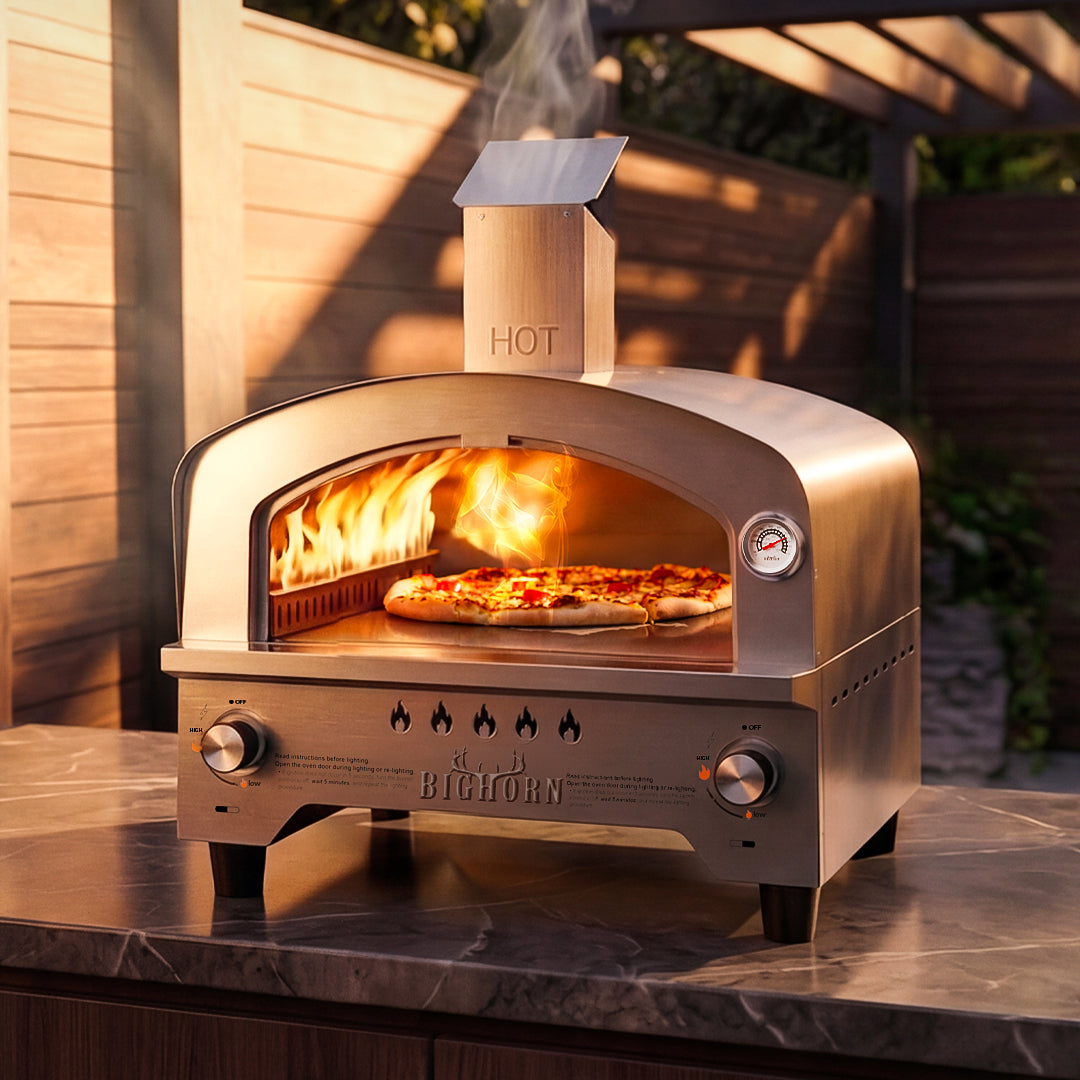
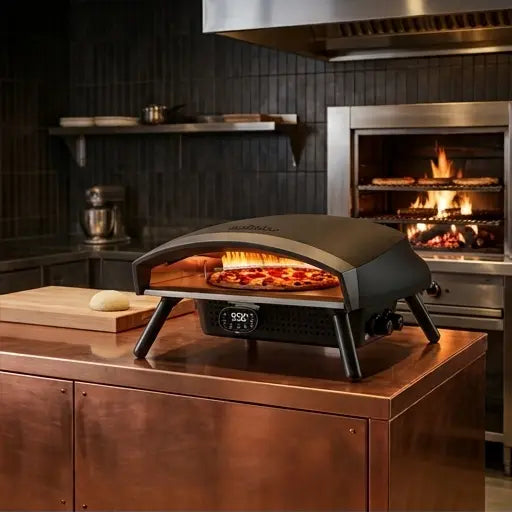
Big Horn Outdoors offers pizza stones and ovens across pellet, gas, electric, and multi-fuel formats. Exact dimensions, max temperatures, and suitable environments vary by model, so confirm specifications on the official product page for the oven you own or plan to buy.
FAQs
How often should I check my pizza stone temperature?
Check immediately before launching the first pizza, then re-check the landing zone before each subsequent pie. Stones cool where the last pizza sat, and recovery time varies by oven and stone thickness.[hometosight][outdoorkitchenhq.co]
Can I check pizza stone temperature without an infrared thermometer?
You can estimate using time and visual cues, but you won't know the actual deck temperature. For consistent results, an IR thermometer is the most reliable non-contact method.[usmarble][alibaba]
Why does my pizza stone read different temperatures in different spots?
Uneven heating, flame position, and oven design create hot and cold zones. Scan multiple areas and adjust preheat time, burner settings, or pizza rotation to even out the bake.[outdoorkitchenhq.co][pizzatechhq]
Is 500°F hot enough for pizza on a stone?
500°F works for thicker, New York-style crusts with longer bakes, but Neapolitan-style pizzas typically need around 700°F for fast, blistered crusts. Choose your target based on style and desired cook time.[hometosight][usmarble][eathealthy365]
Do I need a special infrared thermometer for pizza ovens?
You don't need a pizza-specific model, but choose an IR thermometer rated for at least 900–1,000°F with a laser guide and fast response for best results.[pizzaovenhq][academy][ilfornino]
Final Takeaways and Next Steps
To check your pizza stone's temperature, use an infrared thermometer aimed at the stone's center from 6–12 inches away, reading just before you launch. Target about 700°F for Neapolitan-style and 500–600°F for New York-style, and re-check between pies to confirm the stone has recovered.[temppro][hometosight][eathealthy365]
Next steps:
- If you don't have an IR thermometer, choose one rated for 900°F+ with a laser guide and fast response.[pizzaovenhq][academy][ilfornino]
- Run a longer preheat if your stone shows large temperature swings across the deck.[usmarble][outdoorkitchenhq.co]
- Match your stone and oven to your preferred pizza style and cooking environment, and verify model specs on the official Big Horn Outdoors product page.
By the Big Horn Outdoors Product Team
Published: September 16, 2026