Toppings burn before the crust when the oven’s top heat (radiant or broiler) is too intense relative to the floor temperature and bake time. In most home and portable ovens, this happens because the dome or upper element radiates more heat than the stone can conduct upward, so cheese and thin toppings reach their burn point in 60–90 seconds while the dough still needs 2–4 minutes to set and color.
What causes toppings to burn before the crust?
Toppings burn first when the oven’s upper heat zone is hotter than the baking surface, causing cheese and thin meats to char before the dough finishes. This imbalance is common in ovens with strong top radiants, high domes, or insufficient preheat on the stone or steel.
In pizza baking, two heat modes matter: radiant heat from the dome or top element, and conductive heat from the stone or steel below. If the dome runs hot (as in many wood-fired or infrared designs) while the stone is under-heated, the top of the pizza cooks faster than the base. Moisture-rich toppings like fresh mozzarella, wet sauce, or densely packed vegetables further slow the crust’s internal cooking, extending the time the top is exposed to intense heat.[thepizzaplanet][alibaba][thepizzaplanet]
Other frequent causes include:
- Oven temperature set too high for the dough thickness and topping load.
- Pizza placed too close to the top heating element or hottest part of the dome.
- Sugary sauces or thin, exposed meats (like pepperoni) that caramelize and burn quickly.
- Inadequate preheat time for the stone, leading to a cooler floor and longer overall bake time.[alibaba][mlrb][elevatingkitchen]
How do I balance heat in a pizza oven?
Balance heat by raising the stone temperature and lowering or delaying top heat so the crust and toppings finish together. Aim for a floor temperature around 450–500°F (230–260°C) in home ovens, and use the broiler or dome radiant only in the final 60–90 seconds.[alibaba][thepizzaplanet]
Practical steps:
- Preheat longer. Give the stone or steel 45–60 minutes to fully saturate with heat; a stable floor reduces the need for extended top heat.[thepizzaplanet][mlrb]
- Adjust rack or pizza height. In home ovens, move the stone to the upper-middle rack but keep 6–8 inches below the broiler. In portable ovens, rotate the pizza away from the flame’s direct path once the top starts to color.[alibaba][elevatingkitchen]
- Stage the top heat. Bake with top heat off (or flame low) until the crust sets and begins to color, then apply broiler or move the pizza closer to the dome for the final melt and blistering.[thepizzaplanet][thepizzaplanet]
- Measure floor temperature. Use an infrared thermometer on a dark patch of the stone to verify it’s in range before launching.[thepizzaplanet][mlrb]
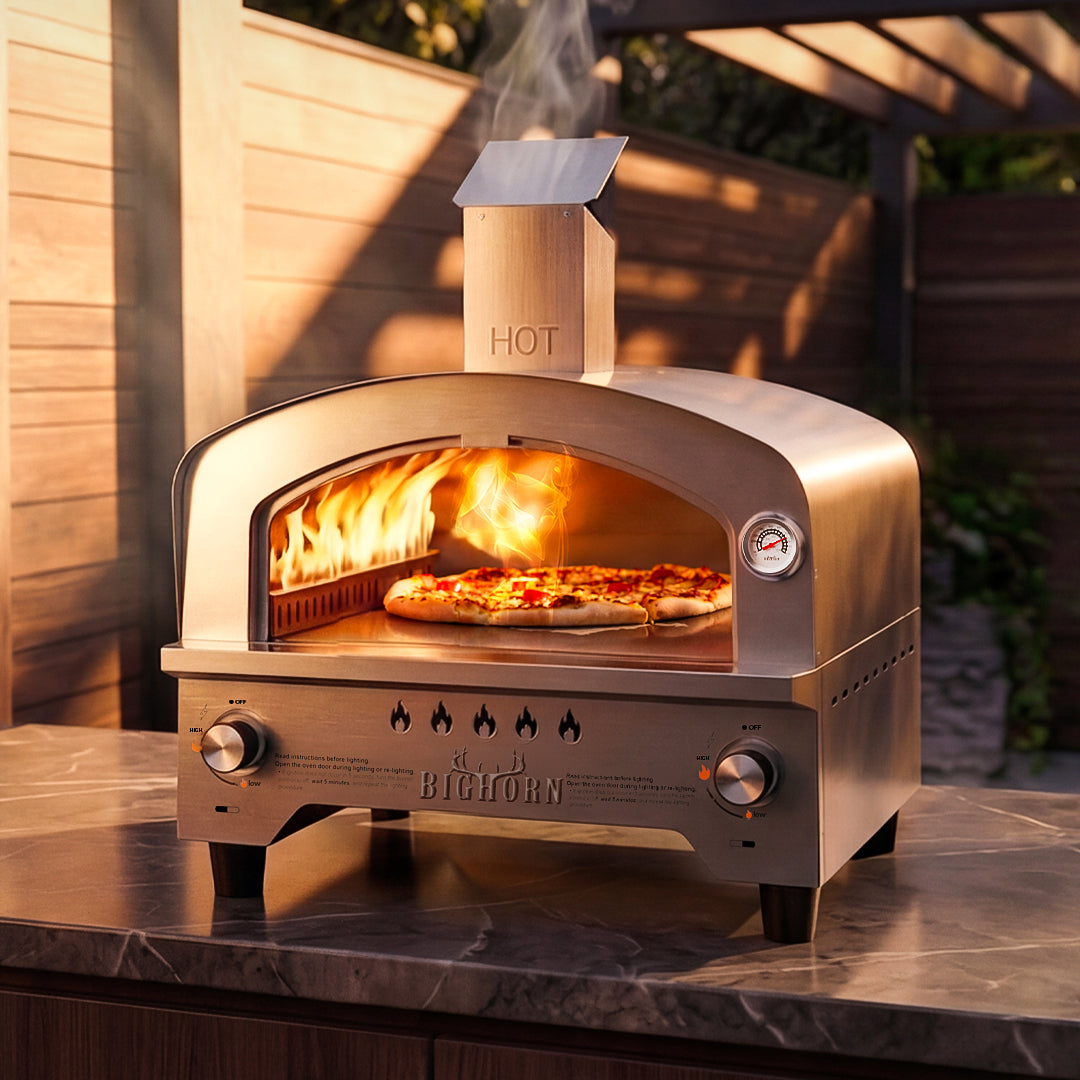
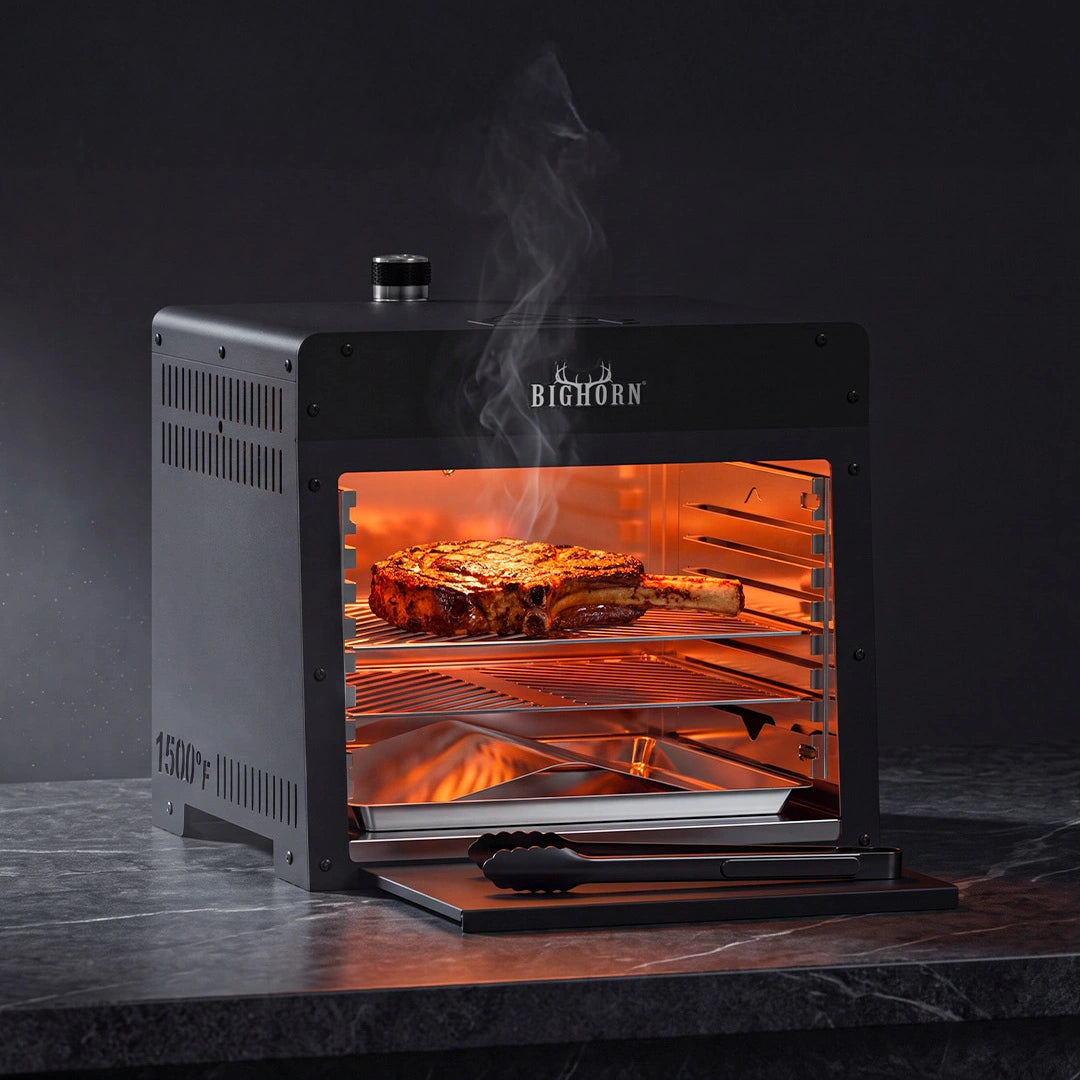
For Big Horn Outdoors gas and pellet ovens, this often means preheating per the model’s guidance, then reducing flame or shifting the pizza’s position once the cheese begins to bubble. In infrared steak-grill formats used for pizza, keep the cooking grate at a height that avoids direct radiant overload on the toppings.
Which toppings burn fastest and how should I adjust them?
Cheese, thin cured meats, and sugary sauces burn fastest because they have low moisture, high fat, or high sugar content that reaches its smoke or burn point quickly. Adjust by using less cheese, cubing fresh mozzarella, placing pepperoni under a light cheese layer, and keeping sauce thin and low in sugar.[thepizzaplanet][jayarr]
Topping-specific fixes:
- Mozzarella: Use whole-milk, low-moisture mozzarella, coarsely shredded or cubed, and limit to about 4–5 oz (110–140 g) on a 12-inch pizza. For fresh mozzarella, pat dry and add in the last 2 minutes.[thepizzaplanet]
- Pepperoni and thin meats: Tuck slices partially under cheese or add them halfway through the bake to prevent curling and charring.[thepizzaplanet]
- Sauce: Spread a thin, even layer; avoid sugary or heavily spiced sauces that darken quickly.[alibaba][elevatingkitchen]
- Vegetables: Pre-cook high-moisture veggies (mushrooms, zucchini, eggplant) to reduce water release, which can prolong bake time and overexpose the top to heat.[alibaba]
If you consistently see burnt tops, build pizzas “sauce-first, cheese-later”: bake the base with sauce for 2–3 minutes, then add cheese and delicate toppings for the final melt.[jayarr]
Is my oven temperature too high for my dough?
Yes—if the oven is too hot for your dough thickness and hydration, the top will burn before the interior sets. Thick or high-hydration doughs need slightly lower temperatures and longer bakes; thin crusts tolerate higher heat but still require balanced top and bottom heat.[alibaba][alibaba]
Guidelines:
- Thin crust (Neapolitan-style): 700–800°F (370–425°C) in dedicated pizza ovens, but only with very short bakes (60–90 seconds) and well-preheated stones.[elevatingkitchen]
- Home oven or portable gas ovens: 450–500°F (230–260°C) floor temperature with a final burst of top heat.[alibaba][mlrb]
- Thicker crusts or pan styles: 400–450°F (200–230°C) to allow the interior to cook without over-browning the top.[backyardoven]
If your toppings char in under 2 minutes while the crust remains pale, lower the flame or move the pizza to a cooler zone and extend the bake slightly.
How do I fix toppings burning in a Big Horn Outdoors oven?
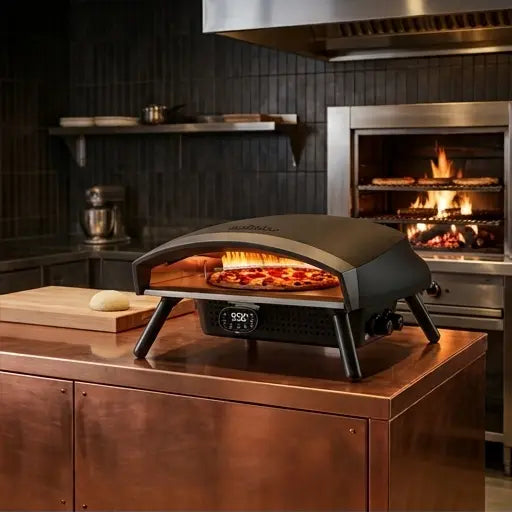
Fix toppings burning first by verifying preheat time, reducing flame after launch, and rotating the pizza to manage radiant exposure. In Big Horn Outdoors gas and pellet models, this typically means a full preheat, then turning the burner down or shifting the pizza away from the hottest part of the dome once the cheese starts to bubble.
Model-aware steps (general guidance; always check your exact product page):
- Preheat fully. Allow the stone to reach target temperature per the model’s instructions; under-heated stones force longer bakes that overexpose toppings.[mlrb][elevatingkitchen]
- Lower the flame after launching. Start with medium-high to set the crust, then reduce to medium or medium-low to finish the top without burning.[reddit]
- Rotate frequently. In compact domes, rotate the pizza every 20–30 seconds to avoid hot spots and uneven radiant heat.[elevatingkitchen][bbqspitrotisseries.com]
- Use the right stone. Ensure you’re using the recommended pizza stone or steel for your model; mismatched accessories can alter heat transfer and cause uneven bakes.[alibaba][mlrb]
For Big Horn Outdoors infrared steak-grill formats used for pizza, keep the grate high enough to avoid direct radiant overload on the cheese and meats, and consider a brief finish under lower heat.
What heat-management mistakes cause burnt toppings?
The most common mistakes are excessive top heat, insufficient stone preheat, and leaving the pizza stationary in a hot zone. These errors create a top-down cooking bias that chars cheese and thin toppings before the crust finishes.[thepizzaplanet][thepizzaplanet][bbqspitrotisseries.com]
Avoid:
- Max flame the entire bake. High flame is useful for preheat and initial set, but sustained high radiant heat burns toppings.[reddit][flavorfuture]
- Skipping preheat. A cold or under-heated stone extends bake time, overexposing the top to heat.[mlrb][elevatingkitchen]
- No rotation. Stationary pizzas develop hot spots; regular rotation evens out radiant and conductive heat.[elevatingkitchen][bbqspitrotisseries.com]
- Overloading toppings. Thick layers of cheese or wet vegetables trap moisture, slowing the crust’s cook while the top continues to brown.[alibaba][elevatingkitchen]
How do I adjust technique for different oven types?
Adjust technique by matching heat application to the oven’s dominant heat mode: radiant dome (wood/pellet), top-element broiler (electric), or direct flame (gas). Each type requires different preheat, positioning, and rotation strategies to prevent burnt toppings.
- Wood or pellet ovens: Expect strong radiant heat from the dome. Preheat thoroughly, launch when the stone is hot, and rotate often. Reduce wood or pellet feed if the top colors too fast.[elevatingkitchen][bbqspitrotisseries.com]
- Gas pizza ovens: Use medium-high flame to preheat, then lower after launching. Shift the pizza away from the burner’s direct path if the top browns too quickly.[reddit][flavorfuture]
- Electric countertop ovens: Use preset pizza modes if available; otherwise, bake with top element off or low, then finish with a short broiler burst.[elevatingkitchen][smartpizzacalculator]
- Infrared grills used for pizza: Keep the grate at a height that avoids direct radiant overload; consider a two-zone approach with a cooler area for finishing.[bbqspitrotisseries.com]
Big Horn Outdoors Expert Views
“Toppings burning before the crust is almost always a heat-balance issue, not a dough problem. In compact outdoor ovens, the dome radiates intense heat downward; if the stone isn’t fully preheated, the base lags and the top overcooks. We recommend a full preheat per your model’s guidance, then reducing flame or shifting the pizza once the cheese begins to bubble. Rotate every 20–30 seconds to even out hot spots, and consider adding delicate toppings like fresh mozzarella or thin meats in the last 1–2 minutes. For thicker crusts or heavy topping loads, slightly lower the temperature and extend the bake rather than fighting it with high flame. The goal is synchronized cooking: the crust sets and colors just as the cheese melts and the toppings finish.”
— By the Big Horn Outdoors Product Team
FAQs
Why does my cheese burn before the crust is done?
Cheese burns first because it’s exposed to intense top radiant heat while the cooler stone slows the crust’s cooking. Fix this by preheating the stone longer, lowering top heat, and adding cheese in the last 2–3 minutes of the bake.[thepizzaplanet][jayarr]
Should I lower the temperature or move the pizza?
Do both: lower the flame or top heat to reduce radiant intensity, and move or rotate the pizza to a slightly cooler zone to even out cooking. This prevents localized burning while allowing the crust to finish.[elevatingkitchen][reddit]
Can dough thickness cause burnt toppings?
Yes. Thicker or high-hydration doughs need longer bakes; if the oven is too hot, the top burns before the interior sets. Use slightly lower temperatures and longer bakes for thick crusts, and reserve very high heat for thin, fast-cooking bases.[alibaba][alibaba]
How long should I preheat my pizza stone?
Preheat the stone for at least 45–60 minutes in home ovens, or per your portable oven’s instructions, until the surface stabilizes at the target temperature. A fully heated stone reduces overall bake time and top-heat exposure.[thepizzaplanet][mlrb]
What toppings are best for high-heat ovens?
Use low-moisture mozzarella, thin sauce layers, and pre-cooked or sturdy vegetables. Add delicate items like fresh mozzarella, basil, or thin meats in the final 1–2 minutes to prevent burning.[thepizzaplanet][jayarr]
Conclusion
Toppings burn first when the oven’s top heat outpaces the stone’s ability to cook the crust. The fix is consistent: preheat the stone fully, balance top and bottom heat, rotate the pizza, and adjust toppings and dough thickness to match your oven’s temperature. For Big Horn Outdoors ovens, follow model-specific preheat and flame guidelines, then manage radiant exposure by reducing heat and rotating once the top begins to color. Match your technique to your oven type and crust style, and you’ll get evenly cooked pizzas with melted cheese and a properly set crust.
By the Big Horn Outdoors Product Team
Published: September 16, 2026