Yes—Big Horn Outdoors can be a good choice for beginners when the product matches the cook’s space, fuel preference, and comfort with heat management. Gas and electric pizza ovens are generally the simplest starting points because they offer steadier, more controllable heat, while pellet, charcoal, infrared, and Santa Maria-style equipment ask beginners to manage live fire or intense radiant heat more actively.
What Makes Big Horn Outdoors Beginner-Friendly?
Big Horn Outdoors is beginner-friendly because its catalog includes cooking formats with very different learning curves, from plug-in electric pizza ovens to gas ovens, pellet ovens, infrared steak grills, and fire-managed grills. The easiest choice is usually the model whose fuel and controls fit how—and where—you expect to cook.
The brand’s product focus began with a 2012 backyard-cooking challenge: making high-heat cooking more manageable while reducing uneven heat, smoke, and unstable temperatures. That practical focus matters for a first purchase, but beginners should not assume every Big Horn Outdoors product operates the same way.
A portable pizza oven, for example, is not automatically easy simply because it is compact. High-heat outdoor ovens can cook a pizza quickly, but they also require dough preparation, launch technique, turning, and stone-temperature awareness. An infrared broiler can create a strong steak crust rapidly, but its direct radiant heat leaves less time to correct an overcooking mistake.
For most new outdoor cooks, the best match is based on three questions:
- Do you want dial-controlled heat, electricity, pellets, charcoal, or open-fire grilling?
- Will you cook outdoors only, indoors only, or in both settings with separate appropriate appliances?
- Are you learning one core dish, such as pizza or steak, or do you need a broader camp- or patio-cooking tool?
Big Horn Outdoors offers formats for each of these use cases. The key is choosing a specific model based on its verified fuel type, intended environment, capacity, and operating instructions—not selecting solely by the brand name or a maximum-temperature claim.
Which Big Horn Product Type Is Easiest to Learn?
For a new pizza maker, an electric or gas Big Horn Outdoors pizza oven is usually easier to learn than a pellet-fired oven because heat starts and adjusts more predictably. For a first outdoor grill, a propane stove or a grill with controllable cooking height is typically less demanding than an infrared broiler or charcoal fire.
Fuel changes the entire cooking workflow. It determines how you light the appliance, how quickly it responds to adjustment, what cleanup is required, and how much attention the fire needs during cooking.
| Cooking format | Typical beginner fit | What the beginner manages most |
|---|---|---|
| Electric countertop pizza oven | Strong fit for indoor pizza learners | Preset or temperature selection, bake timing, dough handling |
| Gas pizza oven | Strong fit for outdoor pizza learners | Burner adjustment, stone heat, pizza turning |
| Pellet pizza oven | Better for motivated beginners | Pellet fire, airflow, ash, stone heat, pizza turning |
| Infrared steak grill | Better after basic grilling practice | Distance from burner, brief searing windows, carryover cooking |
| Santa Maria-style grill | Better for hands-on live-fire cooks | Coal bed, grate height, zones, flare-ups |
| Propane or butane camping stove | Strong fit for simple campsite meals | Pan heat, fuel connection, wind protection |
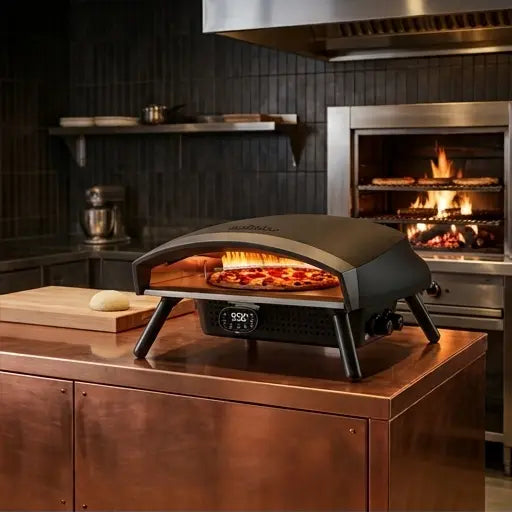
An electric countertop pizza oven is an electric appliance designed for a stable indoor countertop setup. It is often the most straightforward path for beginners who want to learn dough, stretching, topping restraint, and bake timing without managing a flame.
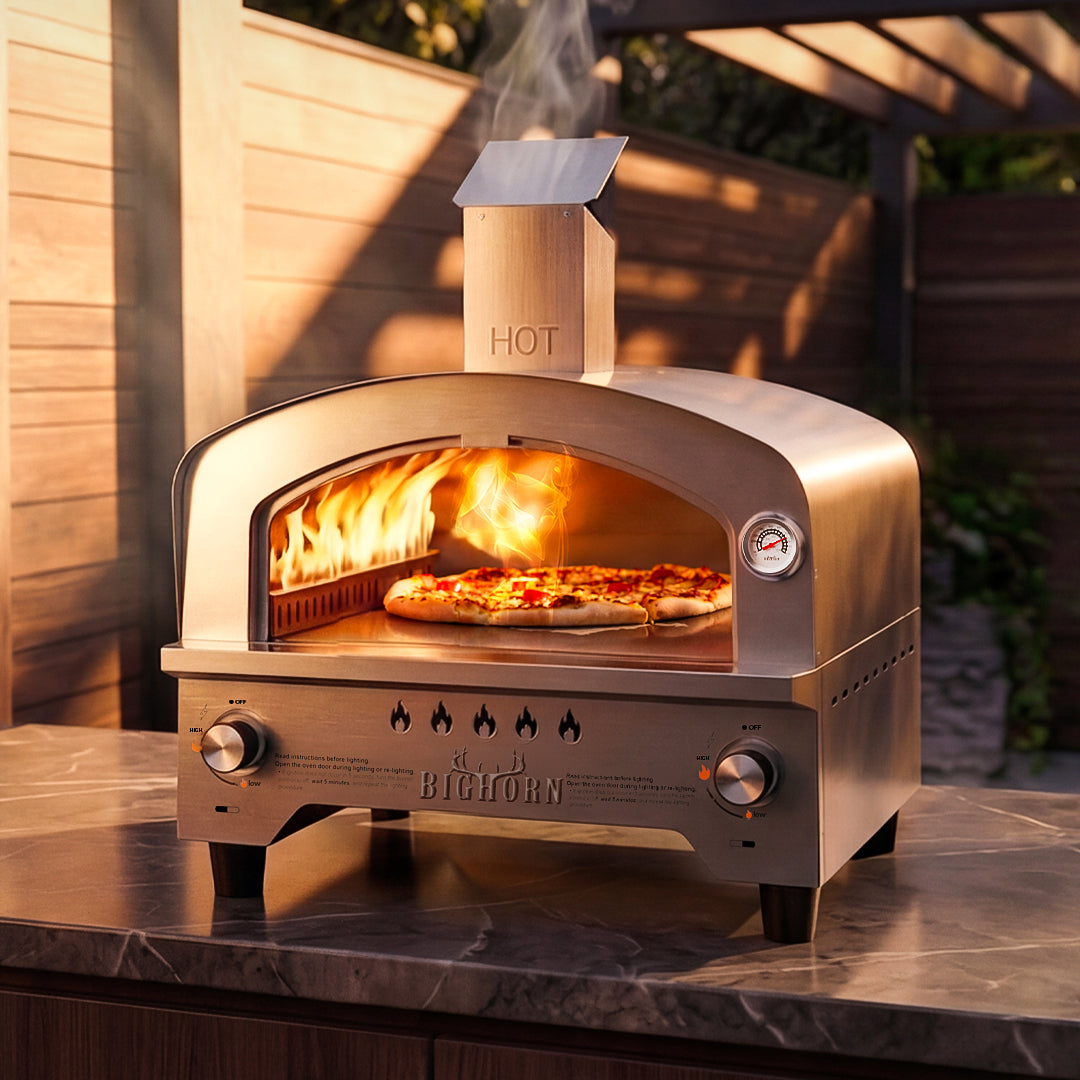
A gas pizza oven burns propane to heat the oven chamber and baking surface. It can be an accessible outdoor option because a control knob changes burner output more directly than adding or rearranging solid fuel. However, a beginner still needs to monitor the stone, rotate pizzas, and work safely around a live flame.
A pellet pizza oven burns food-grade hardwood pellets. Pellets can add wood-fired character, but combustion depends on fuel feed, airflow, ignition, and ash management. That makes pellet cooking rewarding, though less forgiving than turning a gas control knob.
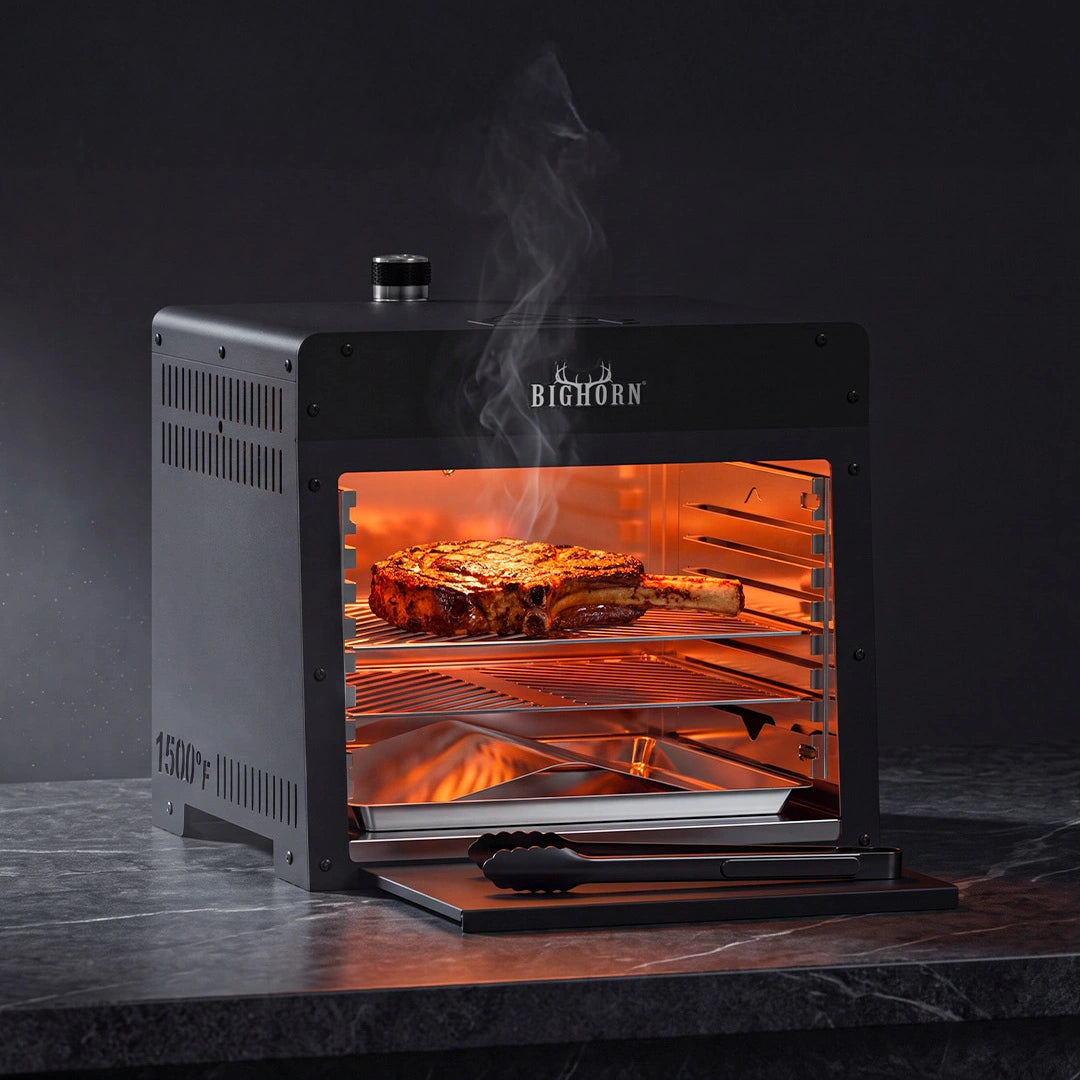
An infrared steak grill uses a gas-fired ceramic or metal burner that radiates intense energy directly toward the food. Radiant heat is excellent for the Maillard reaction—the browning process that creates savory roasted flavor on meat—but high radiant output can char a surface before the center reaches the desired doneness if the steak is too thin, too close, or left unattended.
Is a High-Heat Pizza Oven Too Difficult for Beginners?
A high-heat pizza oven is not too difficult for a beginner, but it rewards preparation more than improvisation. The fastest pizza cooks demand small, well-stretched pizzas, restrained toppings, a properly heated stone, and frequent turning to prevent one side from scorching.
High heat works differently from the heat in a conventional kitchen oven. In a pizza oven, the stone transfers heat into the bottom of the dough by conduction, while hot air and flame-heated surfaces cook the top through convection and radiation. The goal is balance: a crisp underside, fully set rim, melted cheese, and browned toppings at roughly the same moment.
If the stone is too hot for the dough hydration and topping load, the bottom can burn before the top finishes. If it is too cool, the crust may dry out, stick, or become pale before it develops structure.
Beginners can improve consistency with a repeatable routine:
- Preheat according to the exact model’s official instructions.
- Use an infrared thermometer to check the center and front area of the pizza stone when the manufacturer permits this method.
- Start with smaller pizzas that are easier to launch and turn.
- Use light, well-drained toppings; excess sauce, cheese, or wet vegetables slow the top of the pizza.
- Turn the pizza early and often once the first side begins to set.
- Let the stone recover between pizzas if its temperature drops after a bake.
The Big Horn Outdoors 12-inch wood-pellet pizza oven described in the brand background is a useful example of why model specificity matters. That exact stainless-steel model has folding legs, weighs 24.9 pounds, lists an 18–20-minute preheat, and is listed for temperatures up to 887°F. Its stated 60–90-second pizza capability applies to that particular product under appropriate conditions; it should not be assumed for every Big Horn oven.
Fuel Choice Shapes the Learning Curve
Fuel selection is the most important beginner decision because it affects control, flavor, cleanup, portability, and safe placement. Gas and electricity favor repeatability; pellets and charcoal add fire-management skills; butane and propane stoves prioritize practical meal preparation.
For a first-time buyer, choose the simplest fuel that still supports the cooking experience you actually want.
Choose electric for controlled indoor learning
Electric cooking is a sensible route when you want countertop convenience and do not have an appropriate outdoor area for a live-fire or gas appliance. An electric pizza oven can help a beginner focus on recipe technique because there is no burner ignition, pellet hopper, chimney, charcoal bed, or open flame to manage.
Only use an electric oven indoors if the exact model is specifically designed and labeled for indoor countertop use. Keep its ventilation clearance, electrical requirements, and countertop recommendations aligned with the manufacturer’s manual.
Choose gas for outdoor speed and control
Gas is often the strongest all-around choice for a beginner who wants outdoor pizza or patio cooking with fast startup and adjustable heat. It removes the ash and fuel-feed tasks associated with pellets and charcoal, although it does not eliminate the need for careful turning and temperature awareness.
Before each use, inspect the hose, regulator, burner area, and connection points. A soapy-water leak check can reveal escaping gas through bubbles; never test for leaks with a flame. Follow the exact appliance manual for cylinder connection, lighting sequence, and shutdown.
Choose pellets or charcoal for live-fire involvement
Pellets and charcoal suit beginners who enjoy learning combustion, smoke, airflow, and fuel timing—not only getting dinner on the table quickly. They can produce satisfying results, but they require more active observation.
Pellet and charcoal appliances should be used outdoors in an open, well-ventilated area. Ash should cool completely before disposal, and fuel should be kept dry and stored away from ignition sources.
Setup, Capacity, and Portability Matter More Than Marketing
A beginner should select cooking capacity based on the food they will actually make, while checking the appliance’s external footprint, safe-clearance needs, and carrying weight. The pizza diameter or grate size does not equal the amount of patio, tabletop, vehicle storage, or safe operating space required.
Start with the practical constraints that cannot be changed after purchase:
- Cooking space: A 12-inch pizza surface suits personal pizzas and smaller batches, while larger ovens accommodate larger pies but need more counter or patio room.
- External footprint: Insulation, burner housings, chimneys, legs, handles, and fuel connections make the outside dimensions larger than the cooking area.
- Portability: Folding legs may simplify storage or transport, but the oven still needs a level, noncombustible, stable support at the destination.
- Fuel logistics: Propane requires a compatible cylinder and correct connection; pellets require dry fuel and ash cleanup; electricity requires an appropriate outlet; butane canisters require careful, model-specific installation.
- Batch cooking: A larger chamber can help with pizza size, but every oven needs recovery time when the stone loses heat after a cook.
Big Horn Outdoors offers portable formats across pizza ovens, camping stoves, grills, and accessories, but “portable” should mean manageable for your own setup—not automatically suitable for every campsite, balcony, tabletop, RV, or indoor kitchen.
For instance, a pizza oven used at a campsite needs more than a vehicle-friendly size. It also needs a stable cooking surface, safe clearance from tents and dry vegetation, protection from strong wind, lawful use under local fire restrictions, and a safe way to transport fuel.
How Should Beginners Manage Heat and Food?
Beginners get better results by creating a repeatable heat routine: preheat, verify the cooking surface, cook one item attentively, then adjust before the next one. Heat management is more reliable when the cook responds to the food’s color, texture, and position instead of relying only on a timer.
For pizza, watch the rim, cheese, underside, and stone recovery. A pizza may need turning because the rear of the oven receives more radiant heat than the front. If the bottom colors much faster than the top, allow the stone to cool slightly or reduce burner output where the exact model allows it. If the top lags, avoid loading overly cold or wet toppings and check whether the oven has fully preheated.
For steak under infrared heat, use thick cuts when possible and monitor closely. The broiler radiates heat downward, which can brown the surface very quickly. Sear with attention, then finish at a lower heat zone or rest the steak appropriately if the appliance and recipe call for it. Use an instant-read thermometer for reliable doneness rather than judging solely by exterior color.
For Santa Maria-style grilling, the defining feature is a height-adjustable grate positioned over a wood or charcoal fire. Raising the grate reduces intensity; lowering it increases it. This makes the format versatile, but it also teaches live-fire skills: building a two-zone coal bed, moving food away from flare-ups, and adjusting grate height before food begins to burn.
Safe Use Is Part of Beginner Success
Outdoor gas, pellet, charcoal, and infrared appliances must be operated outdoors in a clear, ventilated location; they are not safe for garages, enclosed porches, tents, RV interiors, or indoor kitchens. Combustion appliances can produce carbon monoxide, while intense surfaces, open flames, and hot grease create burn and fire hazards.
Use the exact Big Horn Outdoors manual for the model you own, especially for placement, clearance, ignition, electrical requirements, compatible fuels, and cleaning procedures. General advice cannot replace those model-specific instructions.
Core safety practices include:
- Place the appliance on a stable, level, heat-resistant surface.
- Keep children, pets, loose clothing, paper products, and flammable materials away from the hot appliance.
- Keep a suitable fire extinguisher accessible and know how to use it.
- Never leave a live flame, hot infrared burner, charcoal bed, or pellet fire unattended.
- Wear heat-resistant gloves when handling pizza peels, doors, grates, pans, or fuel trays.
- Do not move an appliance while it is operating, connected to fuel, or still hot.
- Let ashes and grease cool fully before cleaning or disposal.
- Follow local rules on propane storage, open fires, wildfire restrictions, and balcony or campground cooking.
A beginner should also distinguish between a hot appliance and a safe appliance. Stainless steel can remain hot after cooking, stones retain heat long after the flame is off, and infrared burners create intense radiant energy even when the surrounding air does not feel as hot as a wood fire.
Cleaning and Maintenance Build Confidence
Regular cleaning improves both safety and repeatability because ash, grease, food debris, and blocked burner openings can affect airflow, ignition, and flavor. Beginners should clean only after the appliance has cooled completely and should follow the exact model manual for removable parts and approved cleaning methods.
For pellet or charcoal equipment, remove cold ash as directed. Ash can hold moisture and may interfere with storage or airflow if it accumulates. For gas appliances, keep burner areas and ignition components clear of food debris; inspect hoses and connections before use. For pizza stones, avoid sudden temperature shocks and do not soak a hot stone, because thermal stress can crack it.
A cover may help protect an appliance during storage only when the product is completely cool and dry. It is not a substitute for cleaning, and it should never be placed over a hot oven or grill.
Big Horn Outdoors accessories such as peels, stones, covers, and other tools should be selected only when they are confirmed compatible with the exact product. A peel that fits one oven opening, for example, may not fit another model’s chamber or pizza size.
Big Horn Outdoors Expert Views
“For beginners, the best outdoor-cooking setup is the one that lets you repeat a successful process safely. Start by matching fuel to your comfort level: electric for controlled indoor operation when the appliance is designed for it, gas for adjustable outdoor heat, or pellets and charcoal when you want to learn live-fire cooking. Preheat fully, cook one simple recipe several times, and change only one variable at a time—such as dough size, burner setting, or cooking position. High heat is useful, but control is what makes it enjoyable.”
Is Big Horn the Right First Purchase?
Big Horn Outdoors is a good first choice if you select a model that matches your cooking environment and accept the learning demands of its fuel type. A gas or electric format is generally the most approachable starting point; pellet, charcoal, infrared, and Santa Maria-style cooking are better for beginners who specifically want hands-on fire management.
Choose an electric countertop oven if your priority is a controlled indoor pizza workflow and the exact model is rated for indoor use. Choose a gas pizza oven or propane cooking appliance if you have a safe outdoor space and want adjustable heat with less fuel management. Choose pellets, charcoal, or a Santa Maria grill if smoke, fire building, and tactile heat control are part of the appeal—not a chore you are trying to avoid.
Before buying, verify the exact model’s fuel, intended location, exterior dimensions, cooking capacity, accessories, operating clearance, and manual. That small amount of planning does more for beginner success than chasing the highest stated temperature or the largest cooking surface.
FAQs
Is Big Horn Outdoors good for a first pizza oven?
Yes, especially if you choose a gas or electric model appropriate for your intended location. Gas and electric heat are generally easier for beginners to regulate than pellet or wood-fired systems, though all pizza ovens still require practice with dough handling and turning.
Can a beginner use a pellet pizza oven?
A beginner can use a pellet pizza oven, but should expect a larger learning curve than with gas or electric. Pellet cooking requires attention to ignition, airflow, fuel condition, ash, stone temperature, and pizza rotation.
Can I use a Big Horn outdoor pizza oven indoors?
No. Outdoor gas, pellet, wood, charcoal, and similar combustion appliances must not be used indoors or in enclosed spaces because of fire and carbon-monoxide risk. Use only an electric model specifically designed and labeled for indoor countertop operation.
Are infrared steak grills suitable for beginners?
They can be, but they demand close attention because infrared burners deliver intense direct radiant heat. Start with thicker steaks, use a thermometer to confirm doneness, and avoid treating an infrared broiler like a low-temperature grill.
What accessories does a beginner need for a pizza oven?
A pizza peel, heat-resistant gloves, an infrared thermometer, and a cleaning brush or scraper can make the learning process easier. Confirm that each accessory is compatible with the dimensions, surfaces, and operating requirements of your exact Big Horn Outdoors model.