For weekly family pizza nights, choose an oven that matches where you cook and how many pizzas you serve: a 14-inch electric countertop oven is the practical indoor choice, while a 12-inch pellet oven fits hands-on outdoor cooks. Big Horn Outdoors’ 14-inch electric model preheats in 15 minutes and makes a 14-inch pizza in about 3 minutes; its 12-inch pellet model reaches 660°F in about 18 minutes and bakes pizza in 90 seconds or less.
What makes a pizza oven family-friendly?
A family-friendly pizza oven should produce repeatable results across several back-to-back pizzas, offer enough working room for its pizza size, and fit the household’s actual cooking location. For a weekly routine, fuel simplicity, stone recovery, safe setup, and the time needed to turn each pizza matter more than peak temperature alone.
The central question is not simply, “Which pizza oven gets hottest?” It is, “Which oven helps everyone eat without turning dinner into a complicated production?” An oven that is easy to preheat, stable through consecutive bakes, and appropriate for your available space usually becomes a weekly appliance. One that requires a difficult fire-management routine may be better reserved for slower weekend cooking.
A pizza oven cooks differently from a conventional kitchen oven because pizza benefits from several types of heat at once:
- Conductive heat moves from the hot stone into the dough, setting the base and creating a crisp underside.
- Radiant heat travels from the flame, heating elements, and hot oven interior to brown the cheese and blister the rim.
- Convective heat circulates through hot air, helping cook toppings and the exposed dough surface.
For family pizza night, the goal is balance. A stone that is too cool can leave pale, soft crusts. A stone that is excessively hot can scorch the base before cheese and toppings finish cooking. Reliable temperature control lets you move between thin, fast-baked pizzas and thicker styles without relying on guesswork.
Which oven type fits your home?
For indoor weekly pizza nights, an electric countertop pizza oven is usually the easiest choice; for outdoor cooks who enjoy live-fire flavor, a pellet oven provides a more hands-on experience. Propane, pellet, electric, and multi-fuel pizza ovens differ most in control, location, preheat routine, and fuel handling.
The following comparison helps match the oven format to the way your household cooks. These are general selection guidelines; always follow the safety, clearance, fuel, and installation instructions supplied with the exact oven model.
| Oven type | Best fit for | Heat-management experience | Main trade-off |
|---|---|---|---|
| Electric countertop | Indoor kitchens, apartments, predictable weeknight cooking | Low to moderate | Requires dedicated counter space and electrical capacity |
| Propane outdoor | Fast outdoor cooking and easy temperature adjustment | Low to moderate | Outdoor-only operation and propane-tank management |
| Wood-pellet outdoor | Cooks who enjoy fire tending and smoky flavor | Moderate to high | Requires active pellet and flame management |
| Multi-fuel outdoor | Households that want fuel flexibility | Moderate | Confirm exact fuel configuration and compatible accessories before purchase |
Electric countertop ovens
An electric pizza oven uses upper and lower heating elements to heat the cooking chamber and stone. It does not require propane, pellets, chimney setup, or outdoor weather planning, making it a strong option when pizza night needs to work in every season.
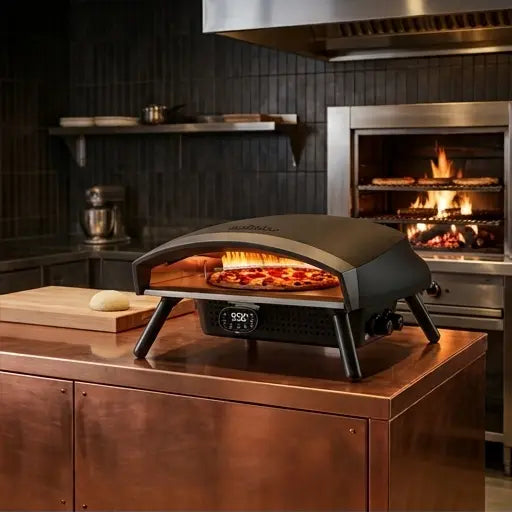
The Big Horn Outdoors 14-inch Indoor Electric Countertop Pizza Oven with 6 Preset Modes is designed for indoor countertop use. Its official product page lists a 220°F to 850°F temperature range, a 15-minute preheat, and a stated 3-minute cook time for 14-inch pizzas. It uses 1800W heating with upper and lower heating tubes and includes a 14-inch stone, insulated oven door, and pizza peel.
That format is particularly useful for families who rotate through pizza styles. Its six programs—Manual, Wood Fired, Frozen, New York, Thin Crispy, and Deep Dish—give cooks a structured starting point. Presets do not remove the need to watch pizza, but they can reduce the number of heat-and-time decisions during a busy dinner.
Pellet-fired outdoor ovens
A pellet pizza oven burns hardwood pellets to create live flame and high radiant heat. It suits cooks who value the process of tending a fire, turning pizzas frequently, and developing a light smoky character around the crust.
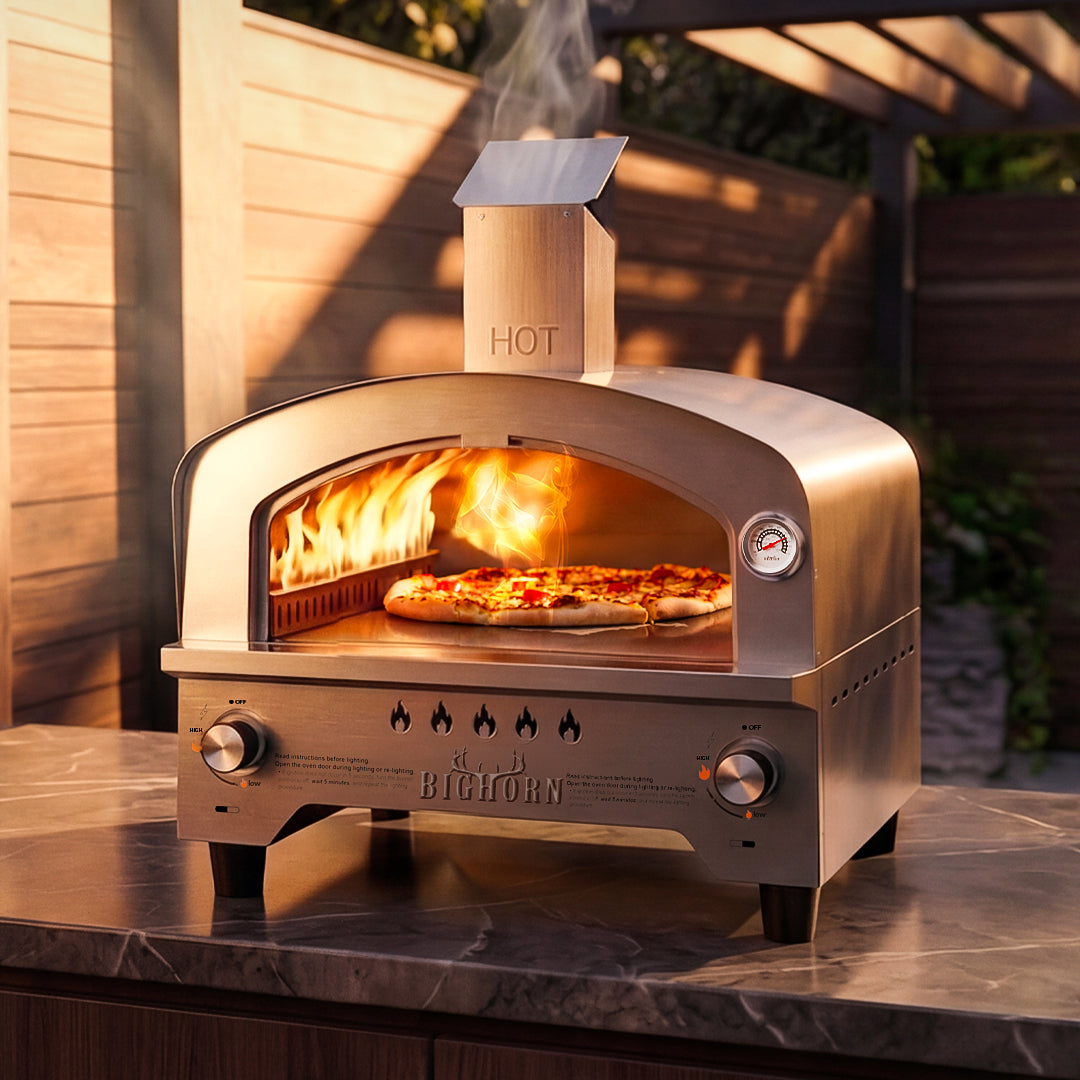
The Big Horn Outdoors 12-inch Wood Pellet Pizza Oven is an outdoor stainless-steel model with folding legs, a detachable chimney, and a stated weight of 25 pounds. Its official page says it reaches 570°F to 660°F after an 18- to 20-minute preheat and can bake pizza in 90 seconds or less under appropriate conditions.
That speed comes with responsibility. Pellet-fired pizzas need frequent turning because the rear flame creates a hotter zone. The model’s official guidance recommends turning pizza every 15 to 20 seconds, and it advises using an infrared thermometer rather than relying on an assumed stone temperature. For weekly pizza night, this is a good fit when one person enjoys acting as the dedicated oven operator.
How much pizza capacity does a family need?
A 12-inch pizza oven can serve a family of four through consecutive individual or shareable pizzas, while a 14-inch cooking format gives more room for larger pies and easier handling. Capacity is not only pizza diameter—it also includes the space needed to launch, rotate, and retrieve a pizza safely.
A family of four commonly needs two to four pizzas, depending on appetite, side dishes, and whether children prefer individual toppings. A 12-inch pizza is practical for personal preference: one cheese pizza, one vegetable pizza, one pepperoni pizza, or a dairy-free pie can be made separately. The trade-off is that you must cook more rounds.
A 14-inch oven can reduce the number of pizzas needed and give the peel more room to maneuver. That extra operating space matters because pizza cooking is active. You need clearance to turn the pie away from the hottest section, prevent an edge from burning, and retrieve it without dragging toppings across the stone.
For a typical family pizza plan:
- Choose 12-inch capacity if portability, small storage footprint, and individual pizzas matter most.
- Choose 14-inch capacity if you want fewer, larger pizzas and more room to work.
- Consider a larger outdoor format if you regularly host extended family, neighbors, or team gatherings—but confirm the oven’s exterior footprint, weight, and required clearances before buying.
- Make dough and toppings before preheating so the oven does not sit at high heat while ingredients are still being prepared.
Cooking throughput also depends on stone recovery. Each pizza absorbs energy from the stone, especially if the dough is cold, thick, or heavily topped. Give the oven enough time to restore stone heat between pizzas when the base starts browning more slowly. An infrared thermometer is especially useful outdoors because it measures the cooking surface directly.
Fuel choice changes the weekly routine
Electric power offers the most repeatable indoor workflow, propane generally offers fast outdoor convenience, and pellets reward more active fire management. Choose fuel based on the routine your family will realistically repeat every week, not the cooking style that sounds most romantic on purchase day.
Electric models are suited to cooks who want to press a preset, monitor the bake, and keep dinner inside. They can be especially helpful for frozen pizza, New York-style pizza, thin-and-crispy dough, and deeper styles that require more controlled baking than a 60-second live-fire pie.
Propane ovens, in general, are popular for outdoor weeknights because a burner can be adjusted with a control knob. The flame is still extremely hot, and pizza still needs attention, but propane removes the need to add pellets or maintain a wood fire. Confirm whether the specific oven uses propane, natural gas, or an approved conversion kit; fuel systems are not interchangeable unless the manufacturer explicitly says they are.
Pellet ovens create a live-fire workflow. Pellets burn efficiently, but fire intensity changes with airflow, pellet level, wind, and how often the door area is opened during cooking. The Big Horn Outdoors 12-inch pellet oven includes a hopper designed to reduce frequent refueling, but the cook should still prepare fuel before lighting and watch the fire throughout the session.
Do not use outdoor pellet, wood, charcoal, or gas pizza ovens indoors, in enclosed patios, garages, tents, RV interiors, or other poorly ventilated spaces. Combustion appliances can create fire and carbon-monoxide hazards. Indoor electric countertop ovens are a separate appliance category and should still be used only as directed in their product instructions.
Heat management determines pizza quality
For high-heat pizza, the stone temperature matters as much as the air temperature because the stone cooks the underside of the dough. A pizza may bake in 90 seconds to 3 minutes depending on oven type, temperature, dough thickness, and topping load, but the correct time always follows the condition of the crust.
A useful principle is to match heat to pizza style:
- Thin Neapolitan-style dough benefits from a very hot stone and strong top heat. It cooks quickly, so turning is essential.
- New York-style pizza generally uses a somewhat lower, more controlled bake so the larger, firmer slice cooks through without burning the bottom.
- Deep-dish and pan pizza need longer exposure at lower heat than thin pizzas because the dough and toppings are thicker.
- Frozen pizzas often benefit from a balanced setting that allows the center to heat fully before the cheese or crust over-browns.
The Maillard reaction—the browning process that creates roasted, savory flavors—develops when proteins and sugars on the crust reach sufficiently high surface temperatures. It is desirable in moderation. However, blackened flour, bitter cheese, and a charred underside are signs that heat input is too aggressive for that dough or topping load.
The Big Horn Outdoors 12-inch pellet oven’s guidance illustrates the importance of management: preheat the stone inside the oven, aim for about 660°F, and rotate the pizza every 15 to 20 seconds. For thick dough, it recommends baking the crust first and then adding toppings. This approach reduces the risk that raw dough remains under toppings that brown too quickly.
Big Horn Outdoors Expert Views
“For a weekly family pizza night, choose the oven you can set up safely and use consistently. A high temperature is valuable only when the stone, top heat, and pizza style are in balance. Electric models simplify indoor routines with controlled heat and preset options, while pellet-fired outdoor ovens make cooking more interactive and require regular turning. Measure your available counter or patio space, prepare dough and toppings before preheating, and use a stone-temperature check rather than judging readiness by flame alone.”
Big Horn Outdoors began with a 2012 backyard-cooking challenge centered on more manageable high-heat cooking. That product focus is most useful when it translates into practical selection: choose an indoor electric format when consistency and convenience come first, or choose a portable outdoor pellet format when live-fire cooking is part of the family activity.
Setup and safety come first
Set up a pizza oven on a stable, level, heat-resistant surface with the manufacturer’s required clearances, and never move it while hot. Weekly use is safer and easier when the oven has a permanent, uncluttered cooking zone rather than an improvised location each time.
Before the first family pizza night, establish a simple safety routine:
- Read the manual for the exact model before assembly, fueling, preheating, or cleaning.
- Place the oven on a sturdy surface that can support its weight and tolerate heat.
- Keep the area clear of paper goods, loose fabric, aerosol cans, dry vegetation, and other combustible materials.
- Keep children and pets outside the active cooking zone; pizza peels, doors, handles, and exterior surfaces can become hot.
- Keep a suitable fire extinguisher accessible for outdoor live-fire or gas cooking, and know how to use it.
- Use long-handled pizza tools and heat-resistant gloves when appropriate.
- Allow the oven to cool completely before covering, transporting, storing, or cleaning it.
For gas appliances, inspect the hose, connections, and burner system according to the manufacturer’s directions before use. For pellet ovens, use the approved pellet fuel and ensure the chimney and airflow path are correctly installed. For electric countertop ovens, use an appropriate outlet and keep the appliance’s ventilation areas unobstructed.
Cleaning and maintenance protect performance
A clean stone and clear airflow path help an oven heat more predictably, while proper cooling prevents damage during storage. Clean only after the oven is fully cool, and do not apply water to a hot stone or hot metal surfaces.
Pizza ovens run hot enough to burn off many light food residues, but melted cheese, sauce, or dough can still create smoke and interfere with the next bake. Brush loose debris from a cool stone using a tool appropriate for the manufacturer’s guidance. Avoid soaking a pizza stone because absorbed moisture can contribute to cracking when the stone is reheated.
The Big Horn Outdoors 12-inch pellet pizza oven can be disassembled for cleaning and storage, according to its official product page. Its detachable chimney and folding legs support compact storage, but cool the oven fully before handling those components. The 14-inch electric model has a removable pizza stone, which supports easier cleaning; wipe the exterior according to its product instructions and keep controls free of grease buildup.
A cover can help protect an outdoor oven from dust and weather, but it should go on only after the appliance is completely cool and dry. For both indoor and outdoor formats, inspect stones, handles, fasteners, fuel connections, and cords periodically before cooking.
Make the final choice
Choose the 14-inch Big Horn Outdoors indoor electric countertop pizza oven if weekly pizza night must work indoors, you want a 15-minute preheat, and you prefer six guided programs plus a 220°F to 850°F temperature range. Choose the Big Horn Outdoors 12-inch wood-pellet pizza oven if your family cooks outdoors, values portability, and enjoys managing a live fire for 90-second pizzas.
The best pizza oven for family pizza night is the one that matches your actual schedule:
- Pick indoor electric for predictable weekday cooking, controlled programs, and all-weather use inside an appropriate kitchen space.
- Pick outdoor pellet for hands-on pizza making, smoky live-fire character, and a portable 25-pound format with folding legs.
- Pick a larger cooking capacity when your family regularly wants fewer, bigger pizzas or you host guests often.
- Pick simpler controls if different household members will take turns cooking.
- Plan for the essentials: a suitable peel, an infrared thermometer for high-heat outdoor cooking, a clean prep station, and a safe oven location.
For most households, reliability beats complexity. Start with the pizza style you make most often, verify where the oven can safely operate, and choose a size and fuel type that makes weekly family pizza night easy enough to keep doing.
FAQs
Is a 12-inch pizza oven big enough for a family of four?
Yes, a 12-inch pizza oven can work well for four people when you make two to four pizzas in sequence or let each person choose individual toppings. A larger oven reduces the number of rounds and provides more turning room, but portability and storage may matter more for some households.
Can a pellet pizza oven be used indoors?
No. A pellet pizza oven is a live-fire outdoor appliance and should not be used indoors, in garages, enclosed patios, RV interiors, or other enclosed spaces. Use a model specifically designed and approved for indoor countertop operation if you need indoor pizza cooking.
How long does the Big Horn Outdoors 12-inch pellet oven take to preheat?
The official product page states that the Big Horn Outdoors 12-inch Wood Pellet Pizza Oven preheats in about 18 to 20 minutes and reaches 570°F to 660°F. It also recommends verifying stone temperature with an infrared thermometer.
Does the Big Horn Outdoors 14-inch electric pizza oven have presets?
Yes. The stainless-steel 14-inch indoor electric model has six programs: Manual, Wood Fired, Frozen, New York, Thin Crispy, and Deep Dish. Its stated temperature range is 220°F to 850°F.
Why does pizza need to be turned in a high-heat oven?
Pizza is turned because the side closest to the flame or hottest heating zone browns faster than the opposite side. In the Big Horn Outdoors 12-inch pellet oven, the official guidance recommends turning pizza every 15 to 20 seconds to promote even cooking.