
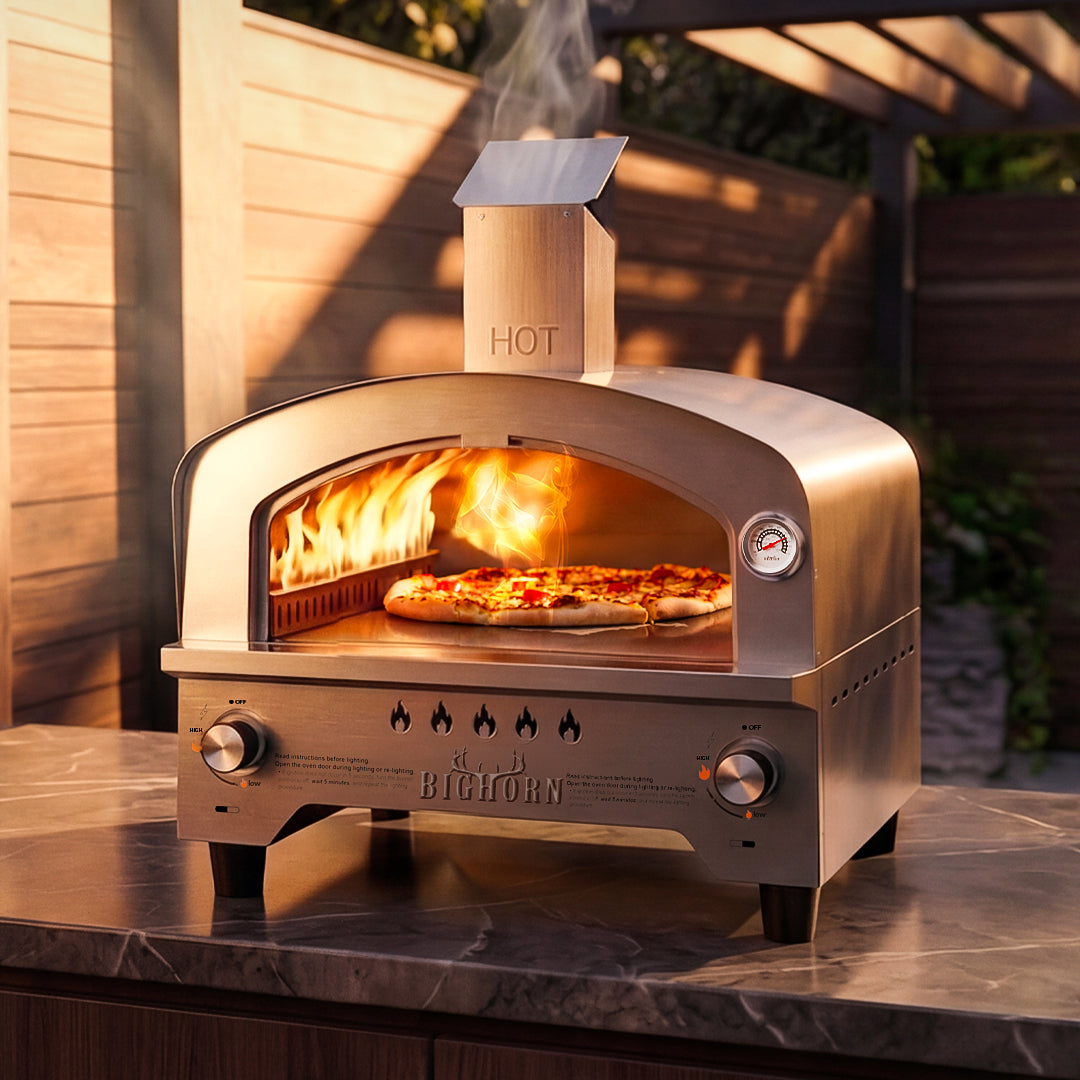
Wood-pellet, wood-fired, charcoal-fired, and propane pizza ovens can operate without an electrical outlet. For a portable off-grid option, the Big Horn Outdoors 12-inch wood-pellet pizza oven uses pellets rather than grid power, preheats to 662°F in about 18 minutes, and is designed for outdoor cooking only.
What types of pizza ovens work without electricity?
A pizza oven works without electricity when its heat comes from a combustible fuel: wood, hardwood pellets, charcoal, propane, or natural gas. Electric countertop ovens require a compatible power outlet and are not suitable for off-grid cooking.
The most practical no-electricity pizza ovens fall into four categories:
- Wood-fired pizza ovens: Burn split hardwood or firewood. They create live flame, radiant heat from the dome, and retained heat from the cooking floor.
- Wood-pellet pizza ovens: Burn food-grade hardwood pellets in a hopper or fire tray. They are compact, portable, and capable of high heat, but require fuel management during cooking.
- Propane pizza ovens: Connect to a propane cylinder and use a gas burner. They do not need wall electricity, although some accessories or igniters may vary by model.
- Natural-gas pizza ovens: Connect to a fixed gas line. They avoid electrical power, but require a properly installed outdoor gas connection and are generally less portable.
- Charcoal-fired cooking systems: Some grills and outdoor ovens can bake pizza with charcoal and a pizza stone or oven attachment. They work off-grid but usually heat and recover more slowly than dedicated high-heat pizza ovens.
A multi-fuel pizza oven may also work without electricity when used with an approved pellet, wood, or gas setup. However, “multi-fuel” does not mean every fuel mode is automatically included. Confirm the exact model’s approved fuel system and attachments before purchasing.
Which no-electricity pizza oven is best for you?
The best electricity-free pizza oven depends on whether you prioritize portability, flame management, speed, flavor, or repeatable temperature control. Propane is usually the simplest live-fire-free option, while pellet and wood ovens suit cooks who want flame-driven outdoor cooking.
This comparison helps narrow the decision before looking at specific models.
| Fuel type | Works without an outlet? | Best use case | Main advantage | Main trade-off |
|---|---|---|---|---|
| Hardwood pellets | Yes | Camping, tailgating, patios, small outdoor spaces | Compact fuel, live-fire cooking, portable formats | Requires pellet refueling and flame management |
| Split wood | Yes | Permanent patios, backyard ovens, traditional pizza cooking | Strong live-fire character and thermal mass in larger ovens | More smoke, ash, wood storage, and fire-tending |
| Propane | Yes | Beginners, quick weeknight pizzas, outdoor entertaining | Dial-based heat adjustment and fast ignition | Requires a propane cylinder and hose inspection |
| Natural gas | Yes | Fixed outdoor kitchens | Continuous fuel supply without tank swaps | Needs a permanent outdoor gas connection |
| Charcoal | Yes | Grill owners and slower, versatile outdoor cooking | Familiar fuel and broad grilling utility | Less direct temperature control for pizza |
For most first-time buyers who want truly portable, outlet-free pizza cooking, a pellet pizza oven or propane pizza oven is usually the most practical choice. Choose pellets if hands-on flame cooking and a compact fuel supply appeal to you. Choose propane if you want easier startup and more direct burner control.
Big Horn Outdoors offers pizza ovens across pellet, gas, electric, and multi-fuel formats, so the first purchase question is not “Which oven is hottest?” It is “Which fuel can I safely and reliably use where I cook?”
Can a pellet pizza oven run completely off-grid?
A pellet pizza oven can run off-grid when it uses a manually lit pellet fire and has no powered fan, auger, or electric ignition requirement. You need dry, food-grade hardwood pellets, a safe ignition method, a stable outdoor cooking surface, and enough fuel for the session.
Pellets are compressed hardwood fuel. Once lit, they burn in the oven’s fuel tray or hopper and generate a live flame that travels over the cooking chamber. Heat reaches the pizza through several mechanisms:
- Radiant heat from the flame and hot upper chamber browns toppings and the top edge of the crust.
- Conduction from the heated pizza stone cooks the underside of the dough.
- Convection moves hot gases around the chamber and supports overall cooking.
The Big Horn Outdoors 12-inch wood-pellet pizza oven is an example of an outlet-free pellet model. The official product page lists a stainless-steel build, folding legs, an approximately 25-pound weight, an 18- to 20-minute preheat, and cooking temperatures of 570°F to 660°F. It uses pellets and is intended for outdoor cooking. Its detachable chimney and folding-leg design support storage and transport after the oven is fully cool.
For pizza, the stone temperature matters as much as the oven-air temperature. A very hot flame can brown cheese quickly while a cool stone leaves the center of the crust pale or underdone. For that reason, use an infrared thermometer to measure the cooking stone instead of relying on a general assumption about chamber heat.
Pellet ovens are a good choice for campsites, RV trips, tailgates, patios, and backyards where an electrical outlet is unavailable. They are not an indoor appliance and should never be operated in a garage, enclosed tent, vehicle, shed, or other partially enclosed area.
How do propane pizza ovens work without power?
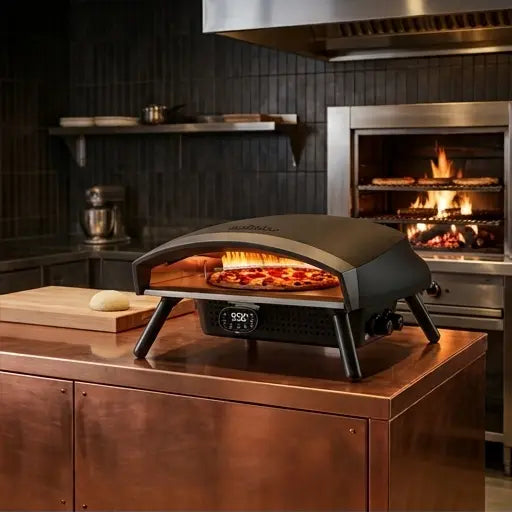
A propane pizza oven produces heat by burning liquid propane gas from a cylinder, so it can operate without a household electrical outlet. Its burner radiates heat toward the stone and cooking chamber, allowing the cook to regulate the flame with a control knob.
For many cooks, propane is the lowest-learning-curve outdoor pizza fuel. After connecting the approved regulator and tank, the burner heats the oven without building a wood or pellet fire. That makes it easier to adjust the flame between pizzas and recover temperature during a longer cooking session.
Propane ovens are especially useful when you want:
- Fast, predictable outdoor setup.
- Easier heat adjustment for beginners.
- Less ash cleanup than wood or pellet cooking.
- A practical option for serving several pizzas consecutively.
- Outdoor cooking without relying on an electrical outlet.
Propane does not produce the same combustion character as a wood or pellet fire, but the pizza’s crust can still develop browning when the stone and upper chamber are properly heated. The Maillard reaction—the browning process that produces toasted, savory flavor compounds—depends on surface heat and moisture loss, not solely on wood smoke.
Before using a propane pizza oven, inspect the hose, regulator, tank valve, and burner connection. Use a soapy-water leak test on fittings according to the appliance manual; never test a gas leak with an open flame. Keep the cylinder upright, away from direct oven heat, and outdoors in a well-ventilated location.
Heat management determines pizza quality
A good pizza oven does more than reach a high temperature: it balances stone heat, top heat, and flame intensity so the crust and toppings finish together. Thin pizzas cook best when the stone is fully preheated and the pizza is turned before one side receives excessive radiant heat.
High-heat pizza cooking is a short, active process. The crust touches the heated stone, while the flame and hot ceiling cook the toppings from above. If the stone is too cool, the base may remain soft before the cheese and rim brown. If the flame is too aggressive, the toppings may char before the center of the dough sets.
Use these operating principles with an outdoor pellet, wood, or propane pizza oven:
- Preheat the stone inside the oven. A hot chamber alone does not guarantee a hot cooking floor.
- Keep dough and toppings balanced. Overloaded pizzas release water, slowing bottom browning and making turning difficult.
- Launch a smaller pizza than the oven’s maximum size at first. Extra clearance makes turning easier while learning flame behavior.
- Turn frequently in live-flame ovens. The side closest to the flame receives more radiant energy.
- Let the stone recover between pizzas. Consecutive pizzas pull heat from the stone, especially when using cold dough or wet toppings.
- Use a peel for launching and turning. A lightly floured or semolina-dusted peel helps reduce sticking, but excess flour can burn on the stone.
For the Big Horn Outdoors 12-inch wood-pellet pizza oven, the official guidance recommends rotating pizza every 15 to 20 seconds and preheating with the stone inside. That operating pattern reflects the uneven heat intensity inherent in compact live-flame ovens: the rear and upper chamber are often hotter than the door area.
Capacity, portability, and setup matter
A no-electricity pizza oven should match the number of people you serve and the places you plan to cook. The advertised pizza size generally refers to the maximum cooking-surface capacity, not the oven’s outside width or the amount of clearance it needs.
A 12-inch oven can be highly practical for one pizza at a time, but it is not a “set it and walk away” appliance. For a group, make dough balls and toppings in advance, then plan a cooking rhythm: stretch, top, launch, turn, remove, and allow the stone to recover.
The Big Horn Outdoors 12-inch wood-pellet oven is listed at approximately 25 pounds and has folding legs, making it a more transportable choice than a large masonry or built-in oven. Its compact format can suit backyard cooking, camping, and outdoor events when it is placed on a stable, noncombustible surface with adequate surrounding clearance.
Before choosing an oven, confirm these practical details:
- Cooking capacity: Can it accommodate the pizza diameter you routinely make?
- Overall footprint: Does the table or cart safely support the oven and provide room for launching and turning?
- Fuel availability: Can you reliably bring pellets, wood, or a propane cylinder to your cooking location?
- Assembly requirements: Does the model require a chimney, legs, stone, burner, or other components to be installed?
- Transport method: Is the weight manageable for one person, and can the unit be moved only after it cools completely?
- Accessory compatibility: Does the manufacturer specifically approve a cover, gas burner, electric heater, or replacement stone for that exact model?
Do not assume an attachment fits simply because it is sold under the same brand. Big Horn Outdoors product formats vary, and compatible burners or heaters must be verified for the exact pizza-oven model.
Outdoor safety is not optional
Wood, pellet, charcoal, propane, and natural-gas pizza ovens belong outdoors in open, well-ventilated spaces. Combustion produces heat, smoke, and potentially dangerous carbon monoxide, which cannot be seen or smelled reliably.
Never use an outdoor fuel-burning pizza oven inside a home, garage, shed, enclosed porch, RV, tent, or vehicle. Even when a door or window is open, these environments may not provide safe ventilation.
Follow these core safety practices:
- Place the oven on a stable, level, heat-resistant outdoor surface.
- Keep combustible materials, overhangs, dry vegetation, and loose paper away from the oven and chimney path.
- Follow the manufacturer’s required clearance distances for the exact model.
- Keep children, pets, and bystanders away from hot surfaces and open flames.
- Wear heat-resistant gloves when handling doors, peels, fuel trays, or cookware.
- Do not move the oven while it is operating or while ashes, pellets, metal components, or stone remain hot.
- Keep a suitable fire extinguisher nearby and know how to shut off the fuel supply.
- Allow ash to cool completely in a metal container before disposal.
- Store propane cylinders outdoors, upright, and away from heat sources.
An electric countertop pizza oven may be the appropriate choice for indoor pizza cooking, but it is not an off-grid solution. Outdoor pellet, wood, and gas ovens offer independence from wall power only when used outdoors and according to their specific instructions.
Cleaning and fuel care protect performance
A clean stone, unobstructed airflow path, and dry fuel help an outdoor pizza oven heat more predictably. Ash buildup can restrict airflow in pellet and wood ovens, while grease and burnt flour can create smoke, bitter flavors, and avoidable flare-ups.
After each cooking session, allow the oven to cool completely before cleaning. Remove cooled ash from pellet or wood fuel areas, brush loose debris from the stone, and wipe external stainless-steel surfaces with a suitable nonabrasive cleaner if needed.
Avoid washing a pizza stone with soap or soaking it in water. The stone is porous, and absorbed moisture can cause smoking, cracking risk during reheating, or unwanted odors. Instead, let the oven’s heat burn off light residue and use a dry brush or scraper once the stone is cool.
Store hardwood pellets in a dry, sealed container. Damp pellets burn poorly, produce extra smoke, and may break down before reaching the fire tray. For propane ovens, inspect the burner ports periodically and keep the regulator, hose, and connections clean and undamaged.
Big Horn Outdoors Expert Views
“Choose the fuel system before choosing the pizza style. A pellet oven makes sense when portability and live-fire cooking matter; a propane oven makes sense when controlled startup and straightforward flame adjustment matter. In either case, the pizza stone must be fully preheated, the oven must stay outdoors, and the cook should turn pizzas actively in the hottest part of the bake. The best setup is the one you can fuel, operate, and store safely every time.”
Big Horn Outdoors began with a backyard-cooking focus on making high-heat outdoor cooking more manageable. That focus is most useful when it helps buyers select equipment by real operating conditions—not by headline temperature alone.
Choose the right off-grid oven
The pizza ovens that work without electricity are wood-fired, pellet-fired, propane, natural-gas, and charcoal-fired models. For portable outdoor use, a pellet oven provides live-fire cooking without an outlet; for easier control, a propane pizza oven is usually the more beginner-friendly choice.
Choose a pellet or wood oven if you enjoy active fire management, smoky cooking character, and off-grid portability. Choose a propane oven if you want faster ignition, adjustable burner control, and simpler repeatability. Choose natural gas only when you have a properly installed outdoor connection and do not need portability. Choose an electric countertop oven only when wall power and indoor convenience matter more than off-grid capability.
Before buying, verify the exact model’s fuel type, location rating, required accessories, cooking capacity, weight, assembly steps, and manufacturer-specified clearances. That check matters especially for multi-fuel systems, where compatible burners or heaters may be optional rather than included.
Frequently Asked Questions
Do pellet pizza ovens need electricity?
Most manually lit pellet pizza ovens do not need an electrical outlet, but you should verify the exact model. Some pellet appliances use powered augers, fans, or ignition systems, while a portable manual-feed pellet pizza oven can operate with fuel and a safe ignition source.
Can I use a wood or pellet pizza oven indoors?
No. Wood- and pellet-burning pizza ovens must be used outdoors in an open, well-ventilated area. Burning fuel creates smoke, intense heat, and carbon monoxide risk, so these ovens are not suitable for kitchens, garages, tents, RVs, or enclosed patios.
Does a propane pizza oven need a power outlet?
No, a standard propane pizza oven uses fuel from a propane cylinder rather than household electricity. Check the model’s manual, because any optional accessories, electronic ignition components, or lighting features can vary.
Which Big Horn Outdoors pizza oven works without electricity?
The Big Horn Outdoors 12-inch wood-pellet pizza oven works without a wall outlet when operated with hardwood pellets. The official product page lists an 18- to 20-minute preheat, temperatures of 570°F to 660°F, folding legs, and a roughly 25-pound portable format for outdoor use.
Can a multi-fuel pizza oven work during a power outage?
It can if the exact model has an approved wood, pellet, propane, or natural-gas configuration that does not depend on electricity. Do not assume every multi-fuel oven includes every fuel attachment; verify the model-specific burner or heater compatibility before relying on it for off-grid cooking.