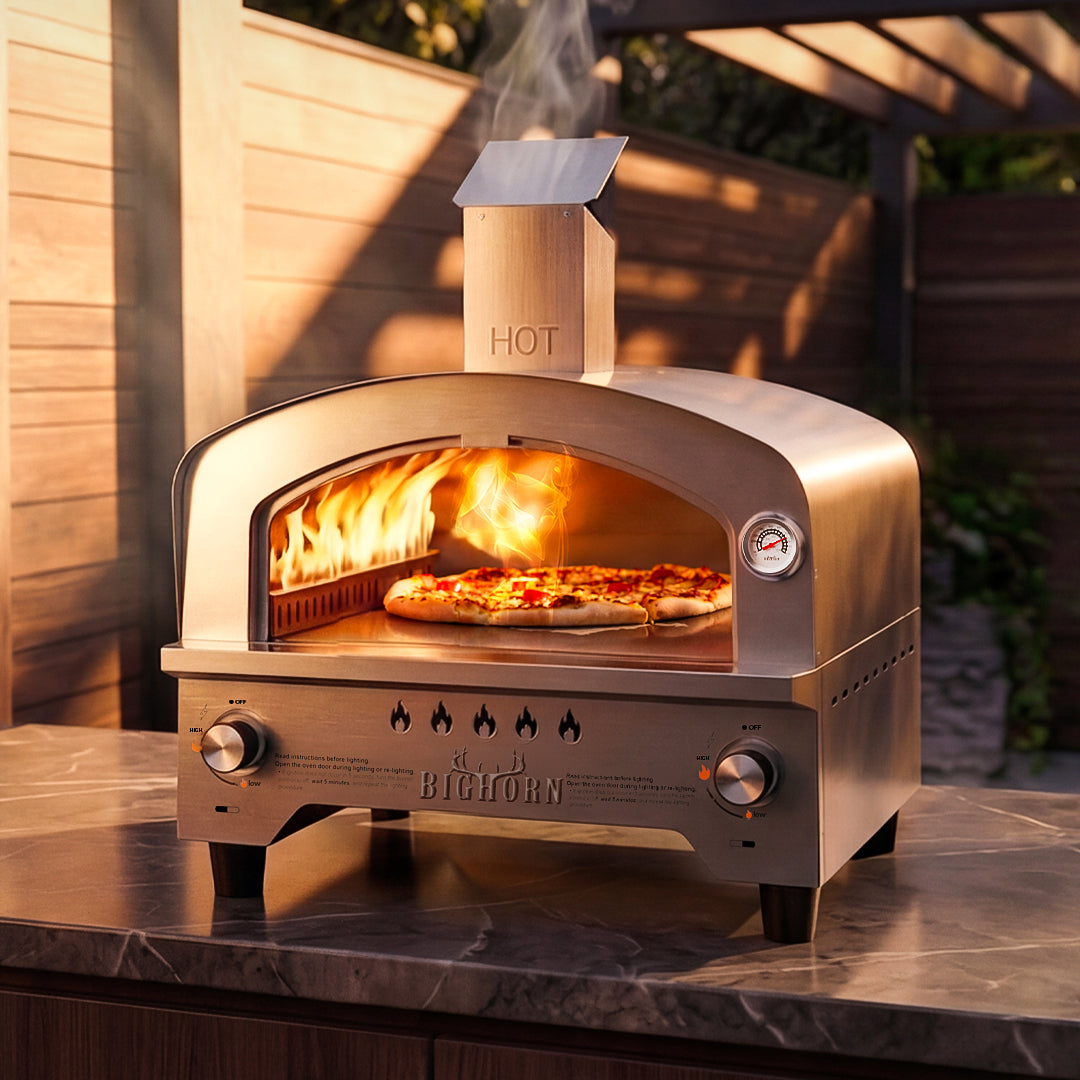
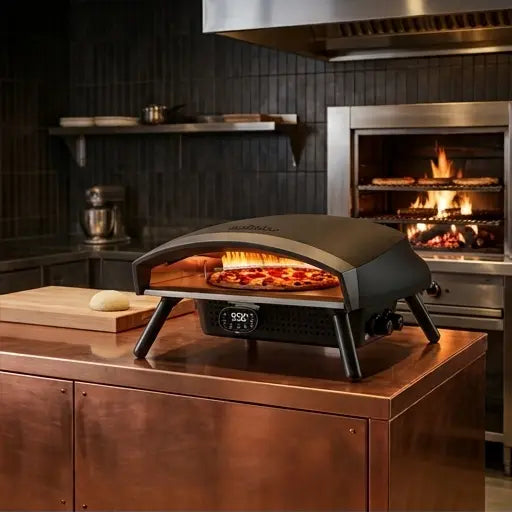
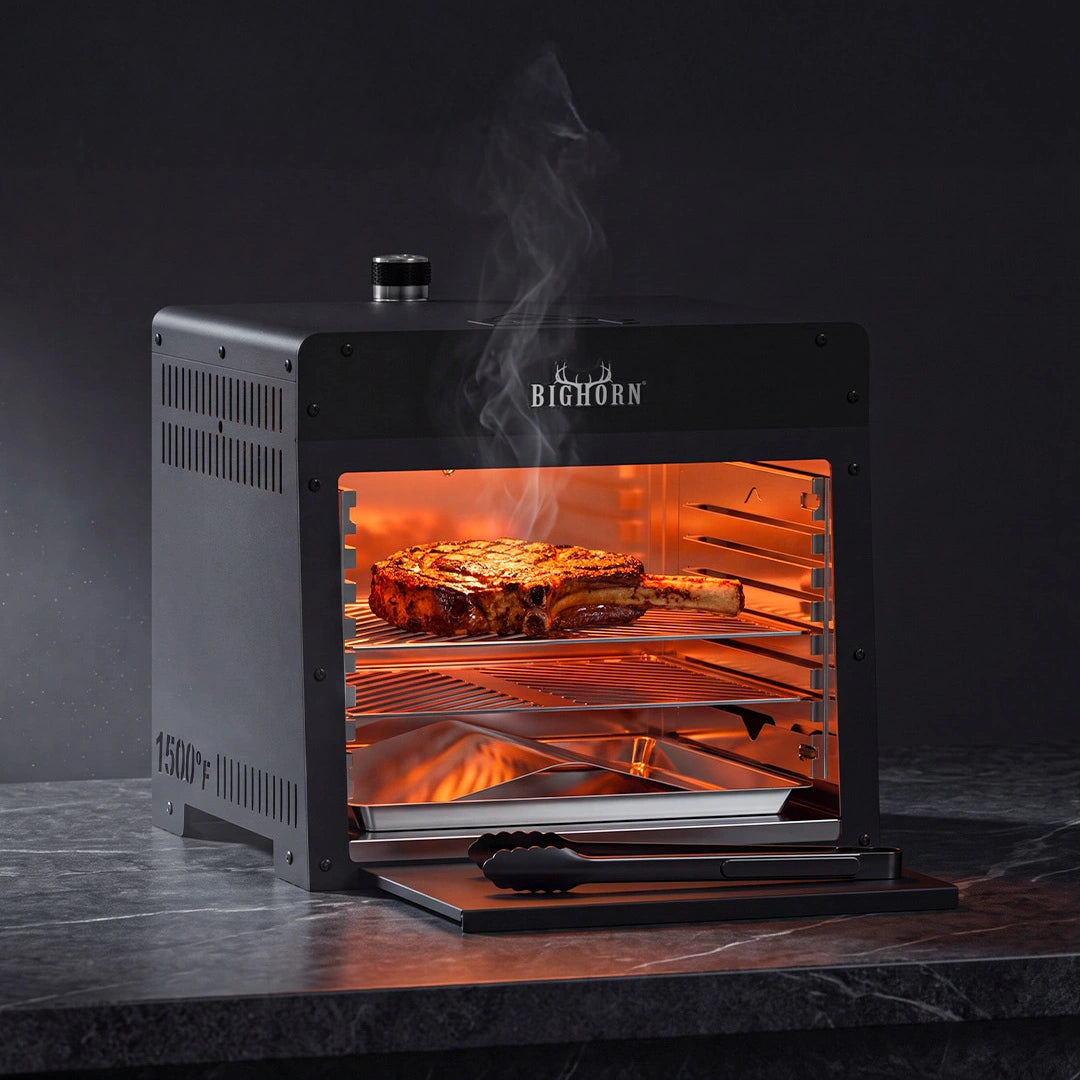
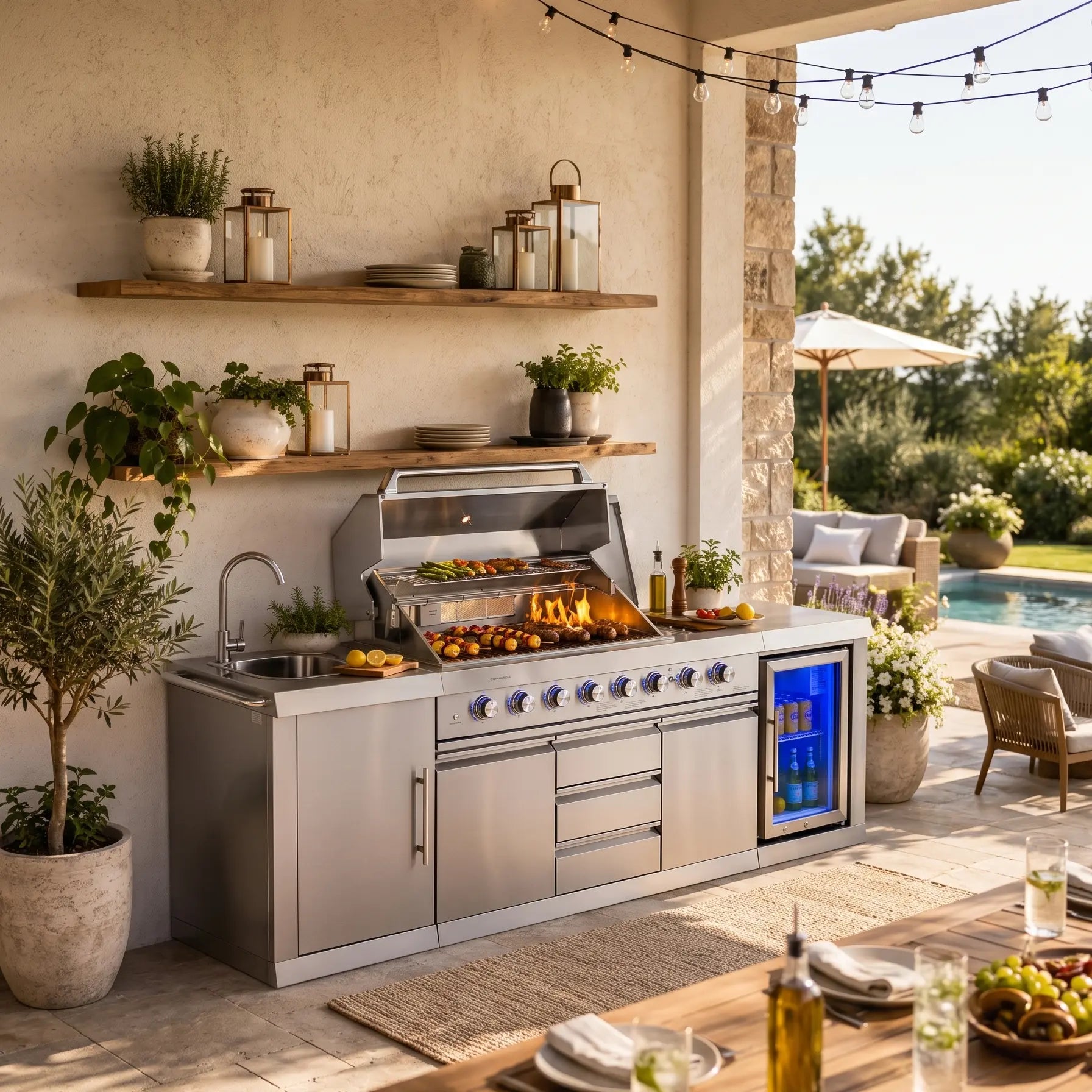
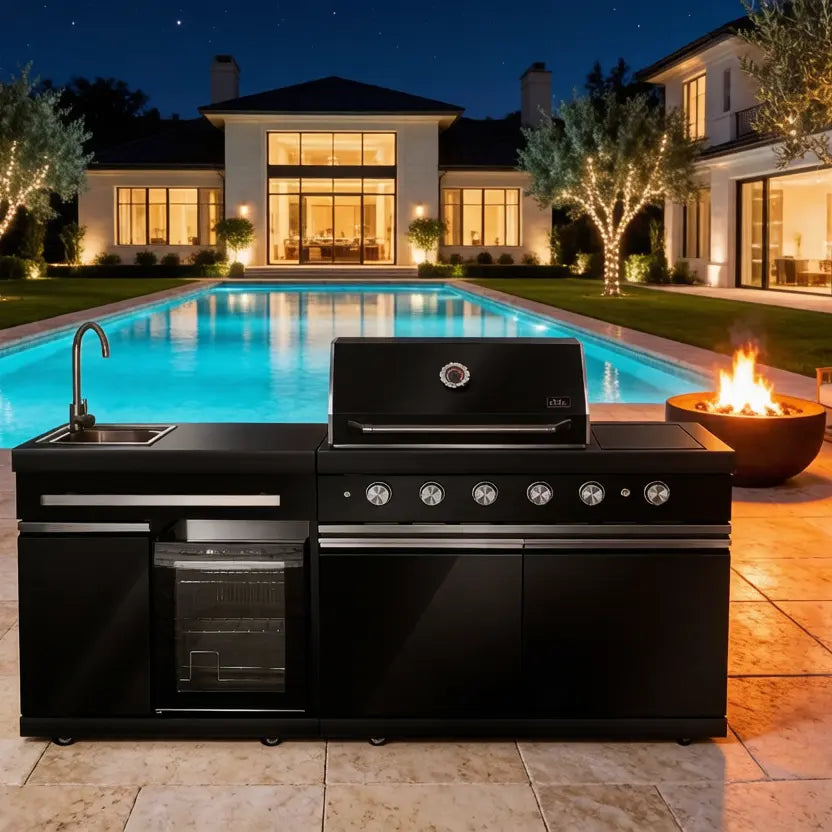
A pizza oven table should have a non-combustible, heat-resistant top, a stable level frame, and a rated load capacity greater than the fully assembled oven plus cookware and food. For most portable outdoor ovens, a purpose-built stainless-steel table or a masonry, stone, tile, or concrete counter is the safest choice; avoid glass and plastic surfaces.[ooni][bighornoutdoor]
What type of table is safe for a pizza oven?
A safe pizza oven table has a heat-resistant tabletop, a broad and stable base, and enough load capacity for the oven, fuel, cookware, and handling forces. Stainless steel, stone, concrete, brick, and properly designed tile countertops are generally the most suitable materials for outdoor pizza-oven setups.[ooni][palapizza]
The correct table is not simply one that can hold the oven’s weight while it is cold. It must remain steady while you launch pizzas, rotate them with a peel, refuel a pellet hopper, open a hot oven door, and work around a high-heat cooking chamber.
For a portable pizza oven, choose a table or fixed counter that meets these baseline requirements:
- A non-combustible or manufacturer-approved heat-resistant surface.
- A stated load capacity that exceeds the total operating load.
- A tabletop large enough to support every oven foot fully, without overhang.
- A level surface that does not rock, flex, or roll unexpectedly.
- Adequate clearance around the oven’s opening, sides, rear, and chimney, following the oven manual.
- Outdoor durability if the setup will remain exposed to weather.
A dedicated pizza oven stand is often the simplest option because it is designed to address weight, stability, ventilation, and working height together. Powder-coated steel and stainless-steel tables are common choices, while masonry counters are well suited to permanent outdoor kitchens.[ooni]
Which table materials should you choose or avoid?
Stainless steel, stone, concrete, brick, and heat-rated tile are strong choices because they resist heat better than ordinary patio furniture. Avoid glass, plastic, and thin or unfinished wood unless the pizza-oven manufacturer expressly approves that exact surface and installation.[ooni][palapizza]
The table material matters because pizza ovens produce more than hot air. Heat can radiate from the cooking chamber, travel through metal legs, escape from a front opening, or accumulate beneath and around the oven during a long cooking session.
| Tabletop material | Suitable for a pizza oven? | Practical reason |
|---|---|---|
| Stainless steel | Yes | Non-combustible, durable, easy to clean, and common in purpose-built pizza oven tables |
| Stone or granite | Yes | Stable, heat-tolerant, and suitable for permanent outdoor counters when properly supported |
| Concrete or brick | Yes | Non-combustible, heavy, and well suited to fixed outdoor-kitchen installations |
| Heat-rated tile over a stable base | Often | Can work when the substrate, grout, and support structure are designed for heat and weight |
| Powder-coated metal table | Often | A viable option when its load rating, tabletop size, and heat guidance match the oven |
| Wood table | Use caution | Wood is combustible and can scorch, dry, crack, or ignite if heat exposure is excessive |
| Glass-top patio table | No | Glass may crack or shatter under heat or concentrated loading |
| Plastic folding table | No | Plastic can soften, deform, or become a fire risk when exposed to sustained radiant heat |
A metal table is not automatically safe merely because it is metal. Thin sheet metal can flex, a narrow rolling cart can tip, and a painted finish may deteriorate if it receives repeated high heat. Check the actual load rating, tabletop dimensions, frame construction, wheel locks, and the pizza oven manufacturer’s placement instructions.
Wood deserves special caution. Some pizza ovens are engineered with insulated bases or elevated feet, and their manuals may permit a wood surface under specified conditions. That does not mean every wood table is suitable. If the manual does not explicitly allow it, use a purpose-built non-combustible stand or a manufacturer-approved heat barrier rather than relying on a cutting board, baking sheet, or improvised spacer.[ooni]
How strong and large should a pizza oven table be?
The table should be rated above the oven’s full operating load and should support the entire oven footprint with room for safe pizza handling. A practical target is a tabletop at least several inches wider and deeper than the oven footprint, plus a safety margin for a peel and hot cookware.
Start with the oven’s assembled weight, then account for the items that may be on the station while cooking:
- The oven itself.
- Fuel, such as pellets, a connected gas cylinder placed according to the manual, or accessories.
- Pizza stone, door, burner attachment, or other included components.
- Pizza peels, pans, cast-iron cookware, and ingredients.
- Downward and sideways forces from launching and turning pizzas.
For example, the Big Horn Outdoors 12-inch Wood Pellet Pizza Oven is listed at 24.9 pounds and measures 21.6 × 14 × 28 inches when assembled. It has folding legs and stainless-steel construction, so its supporting surface must fully accommodate the leg placement and remain stable while the user works at the oven opening.[bighornoutdoor][bighornoutdoor]
Do not select a table based on oven weight alone. A narrow table might technically carry 25 pounds but still become unsafe if the oven is near an edge, the legs are not fully supported, or a pizza peel pushes the setup backward during use.
A practical sizing checklist
Before buying or using a table, measure:
- The oven’s footprint, not just its cooking-stone size.
- The distance between the oven feet or support rails.
- The space required behind, beside, and above the oven.
- The clearance needed to use a peel without striking walls, railings, furniture, or people.
- The table’s stated load capacity and whether that rating applies to the top shelf alone.
A table with an undershelf is useful for storage, but do not place combustible fuel, paper packaging, spare pellets, towels, or propane cylinders where heat from the oven could reach them. Keep fuel storage and preparation surfaces separated from the hot zone.
What height and setup make pizza cooking safer?
A pizza oven table should place the oven opening at a comfortable working height, allowing you to launch, turn, and retrieve pizza without excessive bending or lifting. The table must stand level on firm ground, and wheels should be locked before preheating begins.[palapizza]
There is no universal “best” table height because oven height varies. Instead, evaluate the height of the cooking opening, not merely the tabletop. You should be able to see the pizza, control the peel, and move your hands away from the heat path quickly.
A good setup reduces common risks:
- Bending too far toward a hot opening.
- Pulling a peel upward into the oven roof or chimney.
- Overreaching across the fire side of a pellet or gas oven.
- Tipping a lightweight table while loading a pizza.
- Rolling a cart accidentally while managing live flame or a hot stone.
Set up outdoors on a hard, level, non-combustible or otherwise manufacturer-approved surface. Avoid slopes, loose gravel, soft lawn, decks with questionable heat resistance, crowded walkways, and areas where children or pets can pass directly in front of the oven.
For cart-style tables, lock both wheels before lighting the oven. If the cart wobbles when you press lightly on the tabletop, it is not ready for cooking.
Does fuel type change the table you need?
Fuel type changes where heat, flame, smoke, and combustion gases travel, so it can affect clearance and setup requirements. Wood-pellet, wood-fired, propane, natural-gas, and multi-fuel pizza ovens should be used outdoors unless the exact model is specifically rated and instructed for indoor use.[fontanaforniusa]
A pellet pizza oven typically burns fuel in a rear or side combustion area and channels hot gases through the cooking chamber. A gas pizza oven uses a burner to create flame and radiant heat; its hose, regulator, and cylinder positioning require extra attention. Electric countertop ovens do not produce combustion gases, but they still need a heat-safe counter, clearance, and a correctly rated electrical circuit.
The Big Horn Outdoors 12-inch Wood Pellet Pizza Oven is listed as compatible with separately sold gas-burner and electric-heater accessories. That compatibility applies to the specified model and matching accessories; it does not mean every pizza oven can be converted among fuel types or placed in the same environment.[bighornoutdoor]
Use these fuel-specific considerations:
- Wood pellets: Keep pellets dry and away from the oven’s hot surfaces. Ash and embers require controlled cleanup only after the oven is completely cool.
- Propane or gas: Follow the manufacturer’s hose-routing and cylinder-placement instructions. Inspect hoses and connections before lighting, and never route a hose through a doorway, under a hot oven, or where people can trip over it.
- Electric: Use the power supply, outlet type, and clearance stated in the manual. Do not use extension cords unless the manufacturer permits them and the cord is correctly rated.
- Multi-fuel systems: Follow the instructions for the specific installed configuration, because clearance, components, ignition steps, and ventilation needs may differ by fuel source.
Heat management protects the table and cook
A pizza oven can heat the table through conduction, radiant heat, and hot exhaust, even when its exterior seems manageable at the start of a cook. Treat the manufacturer’s stated clearances as the controlling safety requirement, not a general rule of thumb.[fontanaforniusa]
Three forms of heat are relevant:
- Conduction is heat transferred by direct contact. It can travel from oven feet or a hot base into a tabletop.
- Radiant heat travels outward from hot metal, flame, and an oven opening. It can heat nearby surfaces without touching them.
- Convection is heat carried by moving air and exhaust. It can concentrate beneath covers, low roofs, eaves, or enclosed patios.
A pizza stone absorbs and stores thermal energy. That stored heat is what helps crisp the pizza base quickly, while radiant heat from the flame or hot dome browns the toppings and crust edge. The same high-heat environment makes clearance and a stable table essential.
Never assume that a low exterior temperature means a setup is safe indefinitely. Heat exposure can build over a 30- to 60-minute cooking session, especially if a table traps hot air beneath the oven or backs it against a wall.
Big Horn Outdoors Expert Views
“A pizza oven table is part of the cooking system, not an afterthought. Select the table by checking the oven’s full footprint, operating weight, fuel arrangement, and manufacturer-required clearances before the first preheat. A non-combustible, level surface with a stable frame gives the cook better control of the peel, protects nearby materials from sustained heat, and makes high-temperature cooking easier to manage. For any Big Horn Outdoors model, use the instructions for that exact oven and accessory combination as the final authority.”
Big Horn Outdoors began with a 2012 backyard-cooking challenge centered on making high-heat outdoor cooking more manageable. That practical focus is why the work surface, clearance zone, and fuel arrangement deserve the same attention as the oven itself.
How should you maintain a pizza oven table?
Inspect the table before every cook, clean it after the oven cools, and protect it from weather according to its material. A stable, corrosion-free table is safer than one with loose fasteners, warped shelves, damaged wheels, or a deteriorating tabletop.
For stainless steel or powder-coated metal, remove grease, flour, ash, and moisture after the equipment has cooled. Check bolts, wheel locks, shelf brackets, and handle fasteners periodically. Surface rust, peeling coatings, or bent metal can indicate that a table is no longer dependable under load.
For stone, concrete, and tile counters, inspect for cracks, loose grout, and movement in the supporting base. Heat-resistant materials still need sound structural support; a cracked countertop can shift or fail under a heavy oven.
Do not cover a hot pizza oven or place a weather cover over a recently used table until every component has cooled fully. Covering a hot appliance can trap heat and moisture, potentially damaging the equipment and creating avoidable risk.
Choose your table by cooking style
Choose a purpose-built stainless-steel cart for portability, a fixed masonry or stone counter for a permanent outdoor kitchen, and an indoor-rated counter only for an oven explicitly designed and approved for indoor use. The safest option is the one that meets the exact oven manual’s weight, footprint, clearance, ventilation, and fuel requirements.
A portable setup suits patios, campsites, RV travel, and cooks who store the oven between sessions. Look for a rigid metal table with a heat-resistant top, locking wheels if mobile, and enough room for preparation without crowding the oven.
A permanent setup suits frequent backyard cooking. Stone, concrete, brick, or a professionally constructed outdoor kitchen counter can offer excellent stability, but the design must still preserve clearance around the oven and avoid trapping heat under roofs or inside cabinetry.
For buyers considering Big Horn Outdoors, verify the current official page for the exact pizza oven before selecting a stand. The brand’s lineup includes pellet, gas, electric countertop, and multi-fuel formats, so a table appropriate for a 24.9-pound folding-leg pellet oven may not be appropriate for a larger gas, dual-burner, or indoor electric model.[bighornoutdoor][bighornoutdoor]
The decisive rule is simple: buy the oven first or confirm its exact model, then match the table to its installation instructions rather than trying to make a convenient household table fit a high-heat appliance.
Frequently asked questions
Can I put a pizza oven on a wood table?
Only if the manufacturer of your exact oven explicitly permits a wood surface and you follow its clearance and heat-protection instructions. In general, wood can scorch, dry out, or ignite when exposed to sustained radiant or conducted heat, so a non-combustible table is the safer default.[ooni]
Can I use a glass patio table for a pizza oven?
No. Glass tabletops can crack or shatter from concentrated heat, weight, or thermal stress, including tempered glass. Choose a purpose-built metal stand or a stable stone, concrete, brick, or heat-rated tile surface instead.[ooni]
Can a folding plastic table hold a portable pizza oven?
A plastic folding table is not a reliable choice for a high-heat pizza oven because plastic can soften, deform, or fail as heat accumulates. Use a rigid, heat-resistant table with a verified load rating and a top that fully supports the oven’s feet.[ooni]
How much weight should a pizza oven table hold?
The table’s rated capacity should exceed the combined weight of the oven, accessories, fuel where applicable, cookware, and food. The exact margin depends on the manufacturer’s instructions and table design, but a higher rated capacity does not replace the need for a stable, level, heat-safe surface.
Do I need a pizza oven table, or can I use a countertop?
A fixed countertop can work when it is structurally sound, heat-resistant, large enough for the oven footprint, and installed with the required clearances. Stainless steel, stone, concrete, brick, and suitable tile counters are common options; always follow the oven manufacturer’s instructions first.[palapizza]
Final takeaway
The safest pizza oven table is a stable, level, non-combustible or manufacturer-approved surface with a load rating above the complete operating weight of the oven and enough workspace to cook without crowding. Choose stainless steel for a portable, weather-resistant station; choose stone, concrete, brick, or heat-rated tile for a permanent outdoor kitchen; and avoid glass or plastic.
Match the table to your fuel type, oven footprint, cooking frequency, available space, and portability needs. Most importantly, use the instructions for your exact pizza oven—including any Big Horn Outdoors model or compatible accessory—as the final standard for surface suitability, ventilation, and clearance.