



Bavette — also sold as flap steak or sirloin flap — is a thin, open-grained cut that browns beautifully when it is dry, and chews badly when you slice it with the grain. On an infrared grill the useful work is a thorough dry-off, a short, watched sear, and a bias slice. It is not a second version of the site’s flank-or-skirt method, even though the two habits sit next to each other at the butcher counter.
Stay here for this cut’s dry-off and slice. For flank or skirt, use the existing flank or skirt steak on an infrared grill guide.
The short answer: treat bavette like a thin, open-grained steak that dries and slices on a bias
Treat bavette like a thin, open-grained steak: pat it dry, give it a short sear on a fully preheated infrared grill, and slice it on a bias against the grain. A wet marinade left on the surface will steam and dull the crust. Cook beef steaks to 145°F with a three-minute rest.
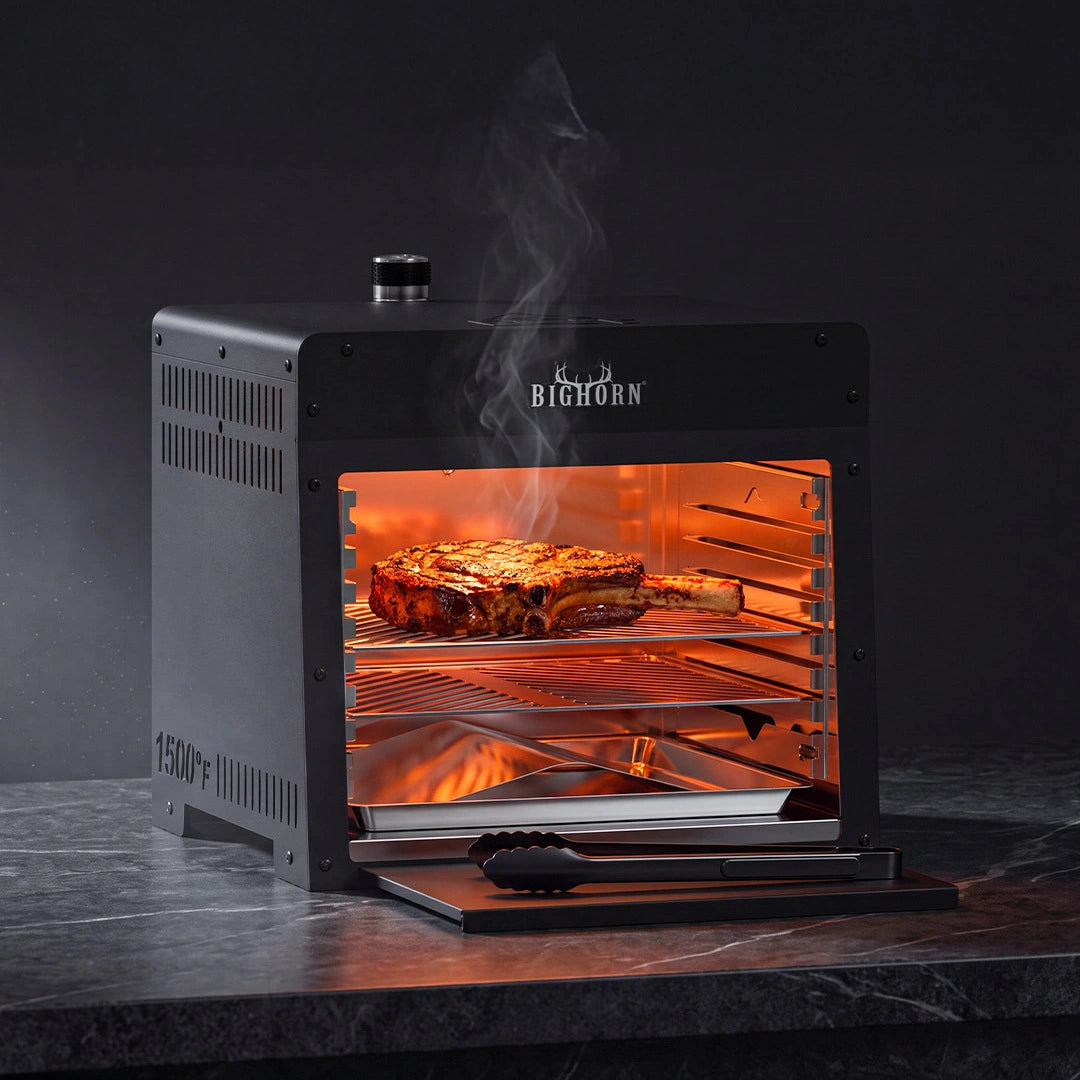
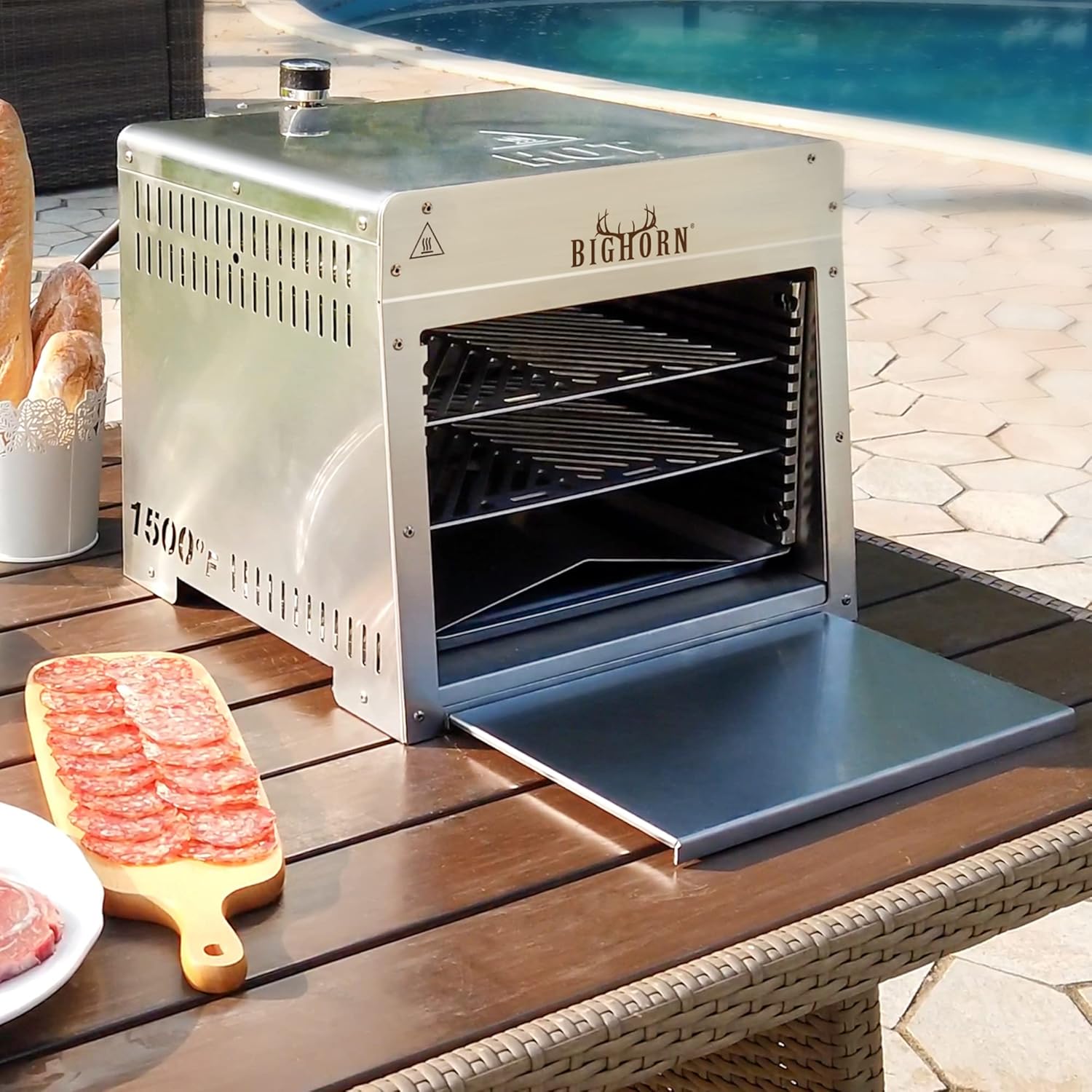
A 16-inch portable infrared steak grill will brown a dry bavette quickly. That speed is why a wet surface fails.
Bavette, flap and sirloin flap: what the label may mean at the counter
In French butchery, bavette often points to a flap-like, coarse-grained steak from the sirloin or bottom sirloin family. In many U.S. cases you will see “flap steak,” “sirloin flap,” or “bavette” used in overlapping ways. Ask to see the grain and the thickness. If the steak is a long, thin, clearly different muscle labeled flank or skirt, it may not be the cut this page is about. If it is a wider, slightly looser-grained flap with long fibers running in one visible direction, you are in the right neighborhood. This page will not pretend every label is standardized.
How it differs from the site’s flank-or-skirt infrared method
Flank and skirt are their own muscles, with their own thickness patterns and their own existing method on this site. Bavette is often a little wider and can be slightly more forgiving in the middle, but it still has long fibers and a surface that loves to steam if it is wet. Do not copy a skirt’s “even thinner, even faster” clock onto a thicker flap, and do not treat bavette as a thick roast that wants a long reverse-sear on an infrared grill. The shared habit is: high heat, a dry face, and a slice that shortens the fibers. The distinct habit here is the dry-off after a marinade and a bias slice on this particular grain.

Marinade dry-off and a short infrared window
A marinade can flavor bavette, but the liquid should not go on the emitter. Lift the steak, wipe or pat it until the surface looks dry, and only then set it on a fully preheated grate. A thin coat of spice that actually stuck to the meat is enough. The infrared window is short: you want color on both sides before the thin edge dries out. If one end is much thinner, keep that end off the closest face once it has color.
A small table: thickness versus a starting two-side plan
| What you have | Starting two-side plan | Watch closely |
|---|---|---|
| A thinner flap | A very short, fully preheated sear on each side | A thin edge that races; a wet surface that steams |
| A thicker bavette that still lies flat | A short sear on each side; measure the thickest muscle | Do not “give it more time” the way you would a roast |
| A steak with a wet marinade still on it | Dry it first, then use the same short plan | A grey, steamed crust |
Slice on a bias against the grain
Look at the raw steak and find the long fibers. After a brief rest, slice across those fibers, on a bias, so each piece is wider than it is long in the fiber direction. A straight cut with the grain leaves chewy ribbons no matter how good the crust was. If the grain shifts slightly across the steak, turn the steak or change your knife angle and keep cutting across the fibers in front of you.
Common failures: a steamed surface and long, chewy fibers
A grey, steamed surface is almost always a wet marinade or a grate that was not fully hot. Long, chewy fibers are a slicing problem, not a reason to cook the steak into leather. Stay with the cooker. NFPA grilling safety starts with a clean grill, clearance from the house, and a fire you do not leave. CPSC gas-grill advice says not to use a gas grill in a garage, breezeway, carport, or porch.
Tacos, a board sauce or a simple salt finish
Sliced bavette is a natural taco filling, and it also sits well on a board with a sharp salsa or a simple herb sauce. A heavy sweet glaze is not required. Salt is enough if the marinade already carried flavor. For a broader high-heat list around this cooker, see what to cook on an infrared grill: the high-heat menu.
When a parrilla is the more traditional path
If you want a little more distance and a rising grate for a thicker flap, an Argentine Santa Maria-style parrilla is often calmer than a close infrared face. Use infrared when the steak is dry, thin enough, and you can slice it properly. Use the crank when you want to start higher and finish lower without racing a compact emitter. Confirm a current listing in the infrared steak grill collection if you are buying the searing cooker for weeknight flap steaks.
Leftovers: FoodSafety.gov lists 145°F with a three-minute rest for beef steaks. USDA leftover guidance and FDA safe food handling say to refrigerate within two hours — one hour if it is over 90°F — and to reheat leftovers to 165°F.
If you are searing bavette or flap steak on a compact cooker, confirm the current 16-inch 1500°F portable infrared steak grill with pizza stone listing, dry the surface, and slice on a bias against the grain.
FAQ
How long to cook a steak on an infrared grill?
There is no single minute for bavette. It is often thinner and more open-grained than a ribeye, so the window is short. Dry the surface, sear on a fully preheated cooker, and use a thermometer. FoodSafety.gov lists 145°F with a three-minute rest for beef steaks.
Does flank steak grill well?
Yes, and this site already has a flank-or-skirt infrared method for that cut. Bavette or sirloin flap is a related, open-grained steak, but it is not automatically the same piece or the same thickness. Dry it off, keep the sear short, and slice it on a bias against the grain.
What temperature for bavette steak?
FoodSafety.gov lists 145°F with a three-minute rest as the safe minimum for beef steaks. Many cooks pull bavette a little earlier for a pinker center; that is a quality preference, not the official safety number. Measure the thickest muscle, not a thin corner.
What are common mistakes that ruin a grilled steak?
On bavette, the usual infrared mistakes are a wet, undried marinade, a long blast that dries the thin end, and slicing with the grain so the fibers stay long and chewy. Preheat fully, dry the surface, sear short, rest briefly, and slice on a bias against the grain.