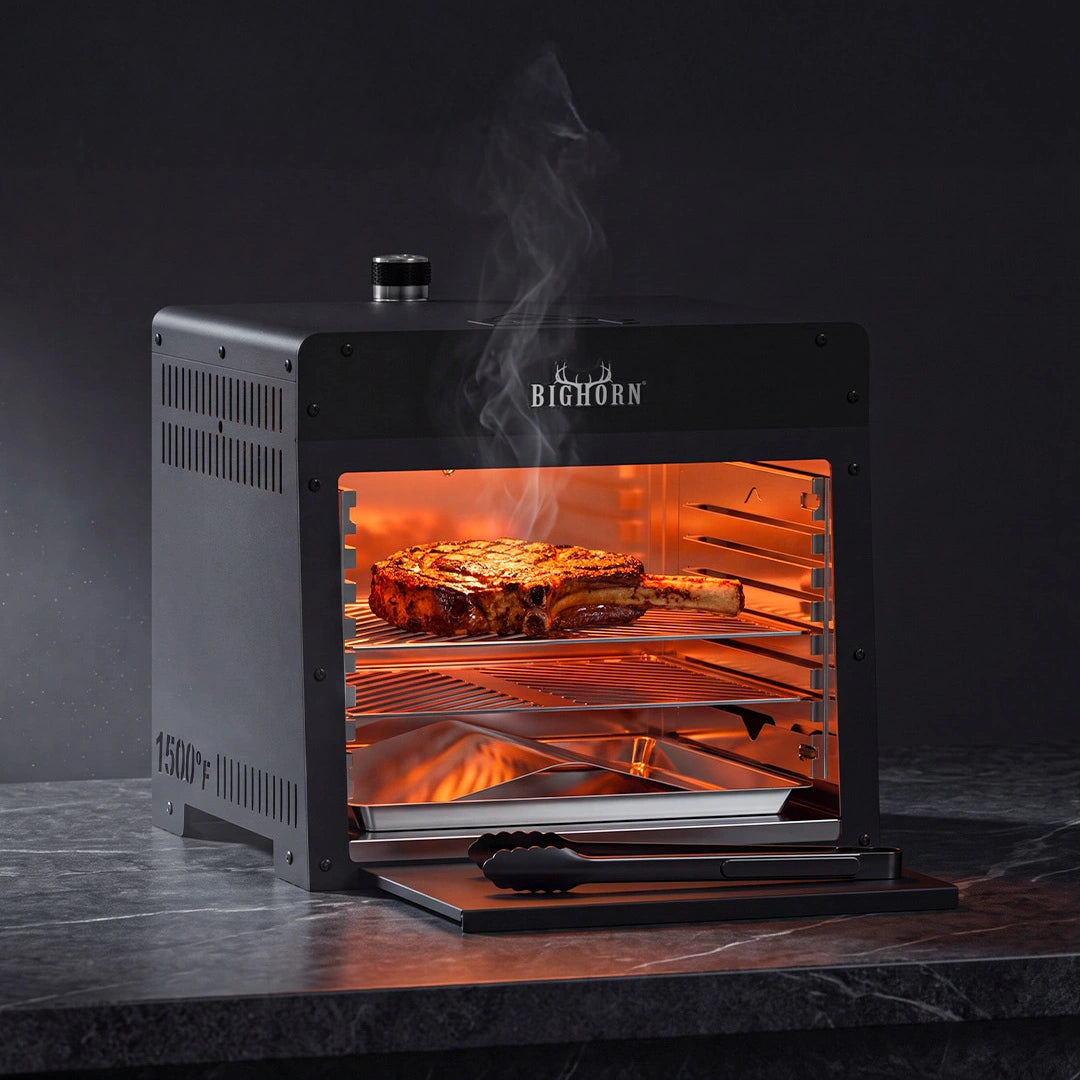
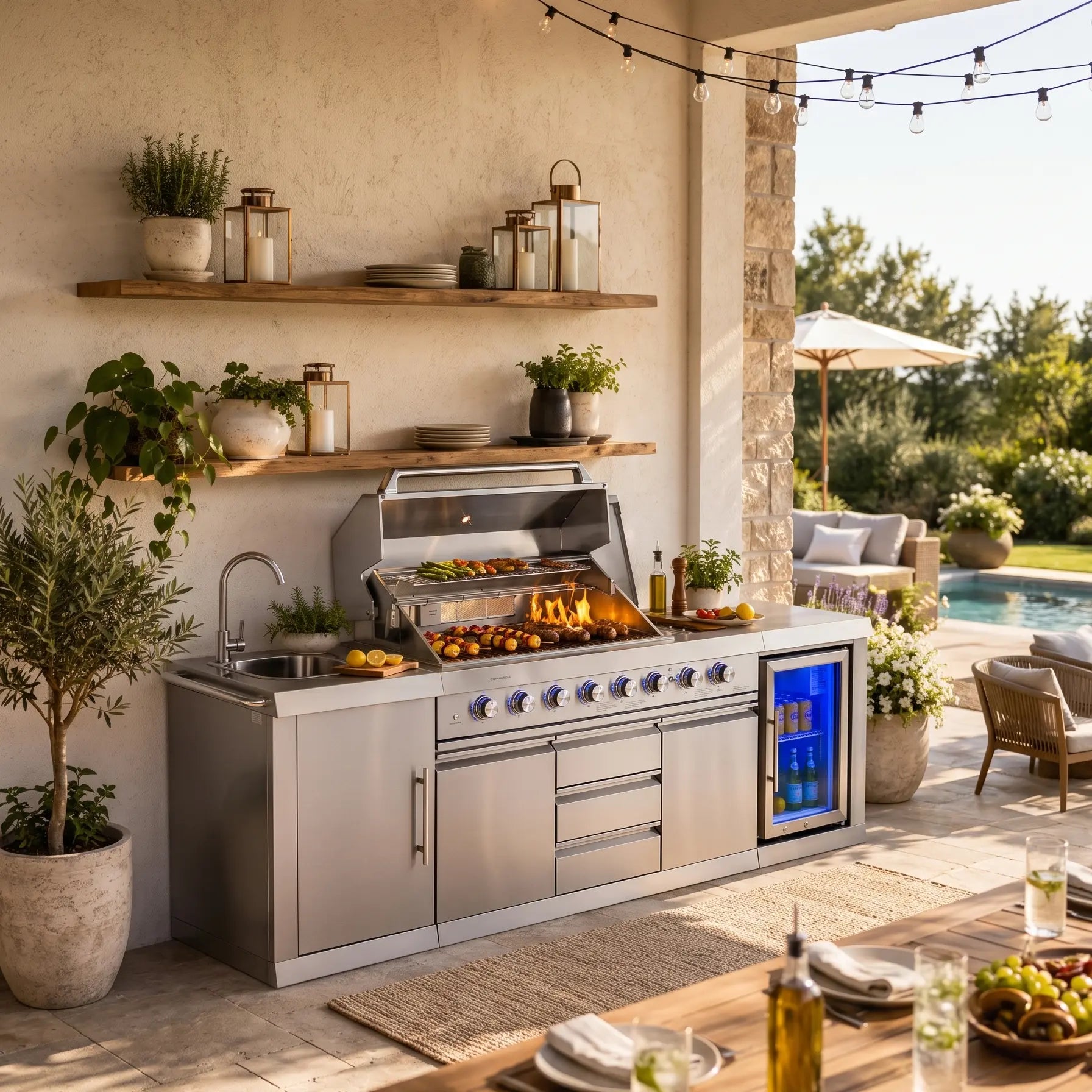
An infrared grill cooks what fast, intense radiant heat does best: steaks, chops, burgers, seafood, and vegetables that want a hard sear and a quick, dry finish — plus small pizzas and flatbreads on the included stone. The infrared heat builds a deep crust in tens of seconds, so the menu is foods that thrive at 1500°F-class searing, not low-and-slow cooks. This guide covers the foods that work, the technique, and what to leave to another grill.
These are general infrared grilling menu ideas for a grill like the Big Horn 16-inch portable broiler; use a probe for doneness.
What actually matters for this menu
- Sear-first foods. Steaks, chops, burgers, and seafood build a crust fast on the hot zone.
- Short, dry cooks. Infrared shines at high-heat quick cooking, not long, moist cooks.
- The lower zone. A ~450°F rack finishes or holds food without charring; use it for the second stage.
- Stone bakes. The included pizza stone adds small pizzas and flatbreads.
Understanding the heat before you decide
An infrared grill sears with intense radiant heat — the Big Horn 16-inch model reaches about 1500°F (815°C) on a 19,000 BTU ceramic burner — so the surface browns in tens of seconds while the interior stays controlled. That profile favors foods that want a deep crust: thick steaks, chops, burgers, and seafood, finished at the lower ~450°F zone. It also bakes small pizzas on the stone. Foods that need long, low, moist cooks — brisket, ribs for hours, stews — belong on another grill or smoker.
The high-heat menu, by food
| Food | Technique | Pull |
|---|---|---|
| Steaks (1–1.5 in) | Sear on the hot zone, finish lower | 130–135°F med-rare |
| Burgers | Sear hot, flip once | 160°F |
| Seafood | Short, careful, middle racks | 145°F fish |
| Vegetables | Dry, quick, at a gentle position | Tender, lightly charred |
| Small pizza / flatbread | On the stone | 60–90 s |
Matching the menu to your situation
For a steak night, infrared is the tool: sear a 1–1.5 inch steak on the hot zone for a crust, finish at the lower zone, and pull at 130–135°F for medium-rare. For burgers, sear hot and flip once to 160°F. For seafood and vegetables, use the middle or lower racks for a short, careful cook. With the stone, add small pizzas and flatbreads. Each food fits the intense, fast heat — the menu is the crust, not the long smoke.
What the experts look for
Experienced infrared cooks pick foods by their fit with the heat: thick, marbled cuts that use the sear window, seafood that cooks in minutes, and vegetables that char without drying. They also use the probe and the lower zone — searing a crust and finishing at ~450°F prevents the burnt-outside, raw-inside failure. The foods that “work” on infrared are the ones the heat profile was built for: fast, dry, high-heat.
Common mistakes and how to avoid them
- Long, low cooks on the hot zone. Infrared is for fast searing, not brisket or hour-long ribs; use a smoker.
- Thin cuts left on max heat. They overcook in seconds; use the middle racks or shorter time.
- Ignoring the probe. At 1500°F, the thermometer decides doneness, not the timer.
- Overcrowding the grate. A portable broiler has a compact surface; cook in batches.
- Forgetting the stone. The included pizza stone adds pizzas and flatbreads — a second menu.
Realistic expectations and results
An infrared grill delivers a fast, deep crust on the foods it is built for — steaks, burgers, seafood, vegetables, and small pies from the stone — with the lower zone for a controlled finish. Expect the menu to be sear-first and quick, not low-and-slow, and the probe to be the referee. The foods that fit the heat are the ones you cook best on it.
The takeaway in one paragraph
On an infrared grill, cook what the fast, intense heat does best: steaks, chops, burgers, seafood, and vegetables that want a hard sear and a quick finish, plus small pizzas and flatbreads from the stone. Use the hot zone for the crust, the lower ~450°F zone for finishing, and the probe for doneness. Save the long, low, moist cooks for a smoker or conventional grill — infrared is the crust tool, and that is its menu.
See the infrared grill and the steak chart. Big Horn portable infrared broiler · infrared grill collection
FAQ
Is an infrared grill worth it?
Yes for cooks who will use the high-heat searing mode: fast preheat, hard crust, and fewer flare-ups justify the price for steak-heavy cooking. If you mostly smoke or slow-cook, a smoker or conventional grill is the better buy.
Is cooking with infrared healthy?
There is no established evidence that infrared grilling is harmful as a cooking method. As with any high-heat grilling, cook to a safe internal temperature and limit heavy charring; the radiant heat itself is not shown to be a health concern.
What are some recipes I can make on my Big Horn infrared grill?
Sear-first foods work best: reverse-sear ribeye or strip, burgers, salmon and shrimp, charred vegetables, and small pizzas or flatbreads on the stone. Sear on the hot zone, finish at the lower ~450°F zone, and use a probe for doneness.
What's the difference between an infrared grill and a regular grill?
An infrared grill radiates intense heat directly onto the food from a ceramic emitter, searing in seconds at 1500°F-class heat; a regular gas grill heats the air and grates more gently. Infrared sears harder and faster but is a specialist tool for high-heat cooks.