







Wet softwood turns a cozy backyard fire into a smoke screen. Choosing the best wood to burn in a fire pit comes down to two things you can check before you light a match: hardwood density and dryness.
Dry hardwood burns hotter, lasts longer, and throws less smoke than green pine or scrap lumber. That matters whether you are toasting marshmallows or cooking over coals on a corten steel fire pit with a grill grate.
What makes good fire pit wood: hardwood and dryness
Good fire pit wood is dense hardwood that has been dried until the moisture is low enough to burn cleanly. Soft, wet wood wastes heat evaporating water and sends thick smoke into your seating circle.
Hardwoods such as oak, maple, ash, and birch pack more energy per log. They form lasting coals that are better for cooking. Softwoods light fast but burn out quickly and often spark more.
Dryness beats species. A dry softwood stick can outperform a soaking-wet oak round for a clean start. The U.S. EPA Burn Wise program emphasizes dry, seasoned wood and clean burning habits for outdoor fires.
Hardwood comparison table (oak, maple, ash, birch)
Not every hardwood behaves the same once it is dry. Use the table as a backyard shopping guide, then buy what your local yard actually keeps well seasoned.
| Wood | Heat / coals | Smoke / aroma | Notes |
|---|---|---|---|
| Oak | High, long coals | Mild, classic | Excellent all-purpose fire-pit fuel when dry |
| Maple | High, steady | Mild-sweet | Good evening fires and cooking coals |
| Ash | High, even | Clean when dry | Splits easily; popular campfire hardwood |
| Birch | Medium-high | Pleasant bark aroma | Lights well; burns faster than oak |
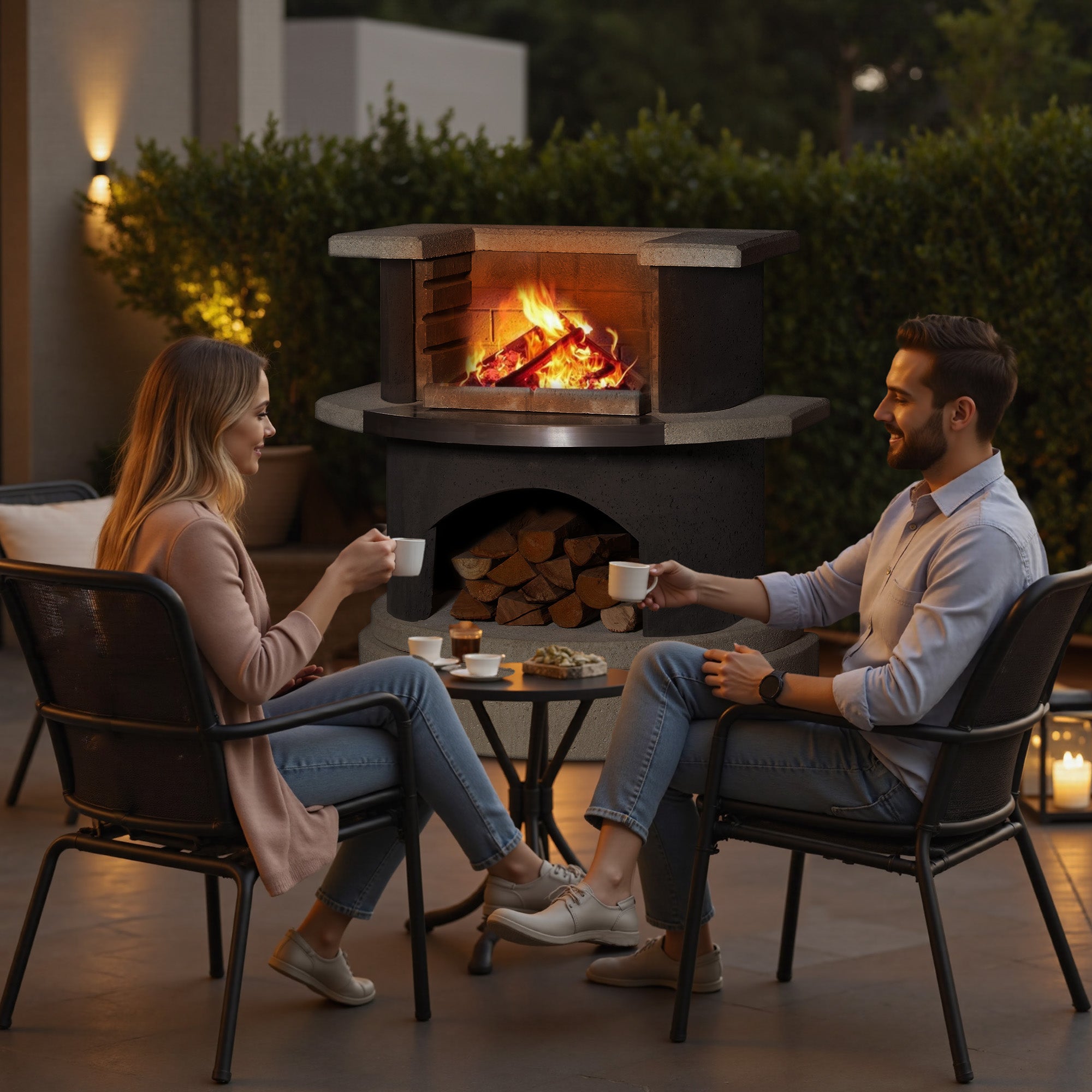
Local availability matters more than chasing a perfect species list. Ask the seller when the wood was cut and how it was stored. For cooking setups that combine fire and a grate, browse a concrete outdoor fireplace with grill if you want a chimney-style fire feature instead of an open bowl.
Seasoned vs kiln-dried
Seasoned wood dried outdoors for many months until moisture dropped. Kiln-dried wood was heated in a kiln to remove moisture faster and more evenly.
Both can burn cleanly when truly dry. Seasoned wood is often cheaper by the cord but quality varies by how it was stacked and covered. Kiln-dried packs are more consistent for small purchases—handy when you want predictable fires without a huge woodpile.
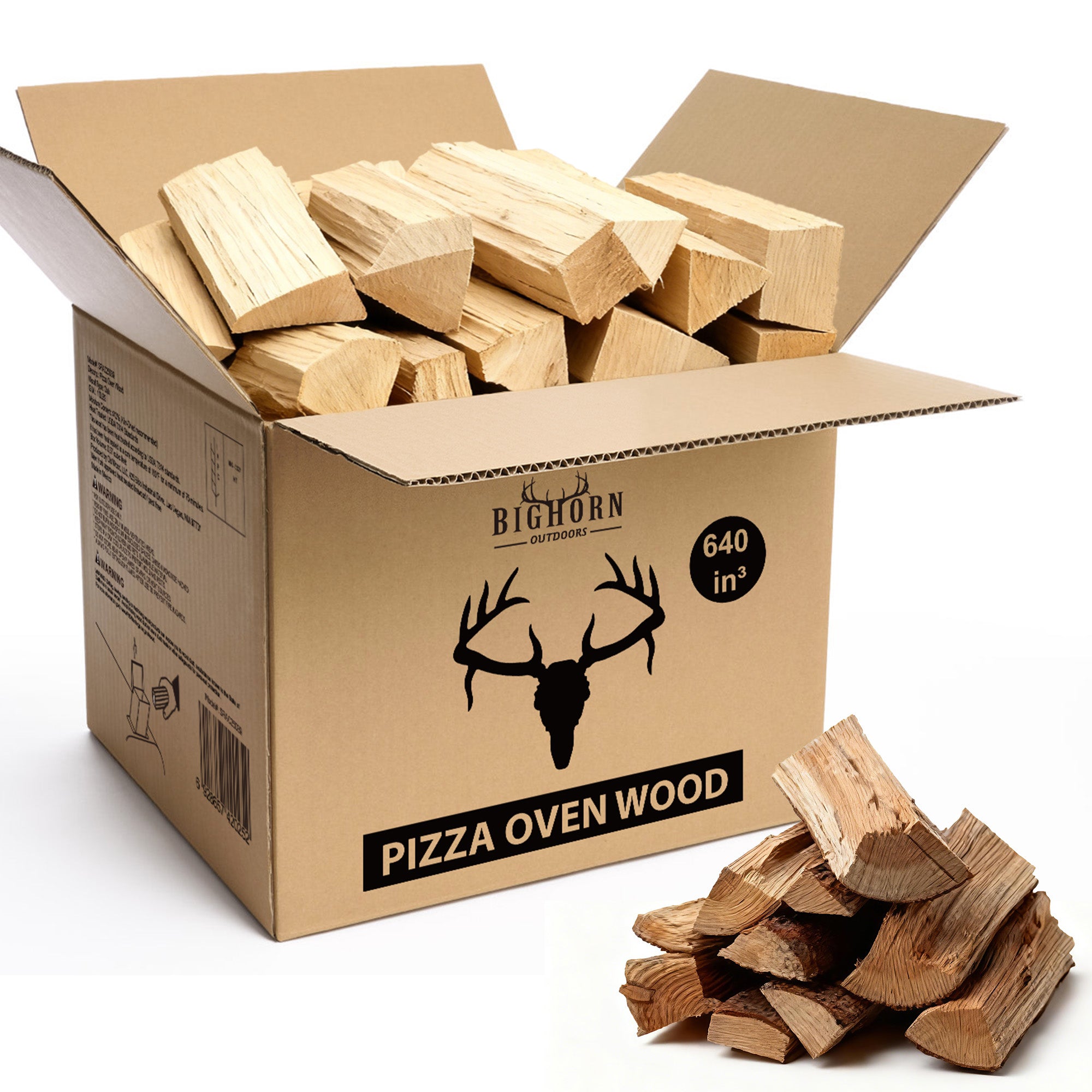
Tap two pieces together: a sharp, hollow sound usually beats a dull thud. Check ends for cracks and look for dry weight versus greasy, cool dampness. Products sold as kiln-dried oak for pizza ovens can illustrate dryness, but confirm the packaging use case before treating them as general fire-pit fuel.
Woods and fuels to avoid
Skip anything that was painted, stained, pressure-treated, glued, or plastic-coated. Those materials can release toxic fumes and leave hazardous ash.
Avoid green (freshly cut) wood, driftwood that may hold salt, and piles of leaves or yard waste that smolder. Do not burn trash, cardboard with inks, or construction scraps such as painted 2x4s.
Softwood with heavy pitch can spark and pop toward seating. If your local burn rules limit open fires on windy days, follow them—Ready.gov wildfire guidance and land-agency alerts exist for a reason.
How to store firewood
Store wood off the ground, under a cover that sheds rain while leaving the sides open for air. A tarp draped to the soil traps moisture and undoes months of seasoning.
Keep the stack a safe distance from the house and deck. Rotate older wood to the front so you burn the driest pieces first. Bring only what you need for the evening to the fire ring; leave the main pile farther away.
In damp climates, a simple rack and roof do more for clean burns than buying a “better” species. The EPA best wood-burning practices page is a solid checklist for fuel prep and cleaner burns.
Burning technique to cut smoke
Smoke is usually unfinished combustion: wet fuel, a cold start, or a pile that smothers itself. Build a fire that gets oxygen and heat working together quickly.
Use a small amount of dry kindling to establish flame, then add progressively larger splits. Leave gaps between logs. Once you have coals, feed the fire from the side rather than dumping wood on top of a dying pile.
Seat guests upwind when you can, and never use gasoline or other accelerants. Campfire safety basics from Smokey Bear still apply in a suburban backyard: a supervised fire, a water source nearby, and a full extinguish before you walk away.
Cooking over wood: flavor notes
Cooking heat comes from coals more than leaping yellow flames. Let the wood burn down, spread a bed of coals, then set your grate or foil packets where the heat is even.
Oak and maple give a mild smoke that works with chicken, sausages, and vegetables. Stronger woods can overpower delicate fish. Keep a cool zone so food can finish without charring.
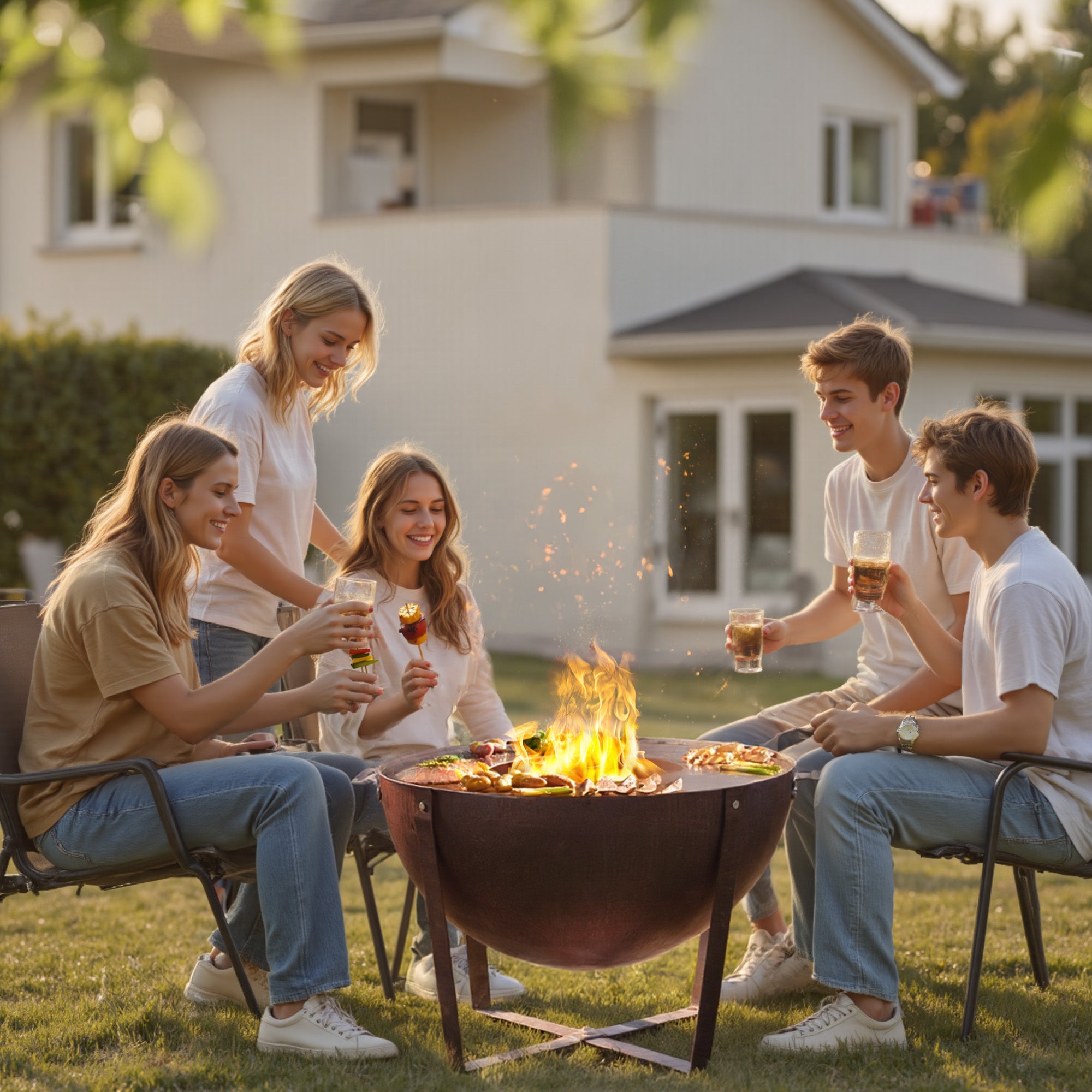
If you prefer wood flavor without managing a full log fire every night, a dual-mode fire pit with grill lets you switch between open fire and grilling once the coals are ready. For pizza-oven fuel questions, stick to the appliance manual rather than treating fire-pit advice as oven advice.
What type of firewood burns the cleanest?
Dry hardwood burns the cleanest.
Low-moisture oak, maple, ash, or similar hardwoods produce less smoke and more usable heat than green softwood or trash fuels, especially with good airflow.
Clean burning still needs technique. A dry oak log in a smothered heap will smoke; a smaller dry split with air gaps will flare cleanly. Local hardwood that has been stored correctly usually beats an exotic species shipped wet. When smoke persists after the fire is hot, revisit fuel moisture and layout before blaming the fire pit itself. Outdoor fire safety reminders from the NFPA home fire safety hub are worth a yearly reread before peak season.
Conclusion
Buy dry hardwood, store it so it stays dry, and build fires that can breathe. Avoid treated lumber and trash fuels, and cook over coals rather than restless flames. That combination gives you longer evenings, better flavor, and fewer smoke complaints from the patio.
Looking for a durable backyard fire feature? See the Big Horn Outdoors 32" corten steel fire pit with grill and matching outdoor fireplace options.
FAQ
What wood not to burn in a fire pit?
Do not burn painted, stained, pressure-treated, or glued lumber, trash, plastic, cardboard with heavy inks, or green wet wood. Those fuels can release harmful fumes, create excessive smoke, and leave unsafe ash. Stick to dry, untreated firewood and follow local burn restrictions on windy or drought days.
What is best to burn on a fire pit?
Dry hardwood such as oak, maple, ash, or birch is the best everyday choice for most backyard fire pits. It burns hotter and longer than softwood and makes better cooking coals. Seasoned or kiln-dried wood with low moisture content will smoke less than freshly cut rounds.
Can I use 2x4 for a fire pit?
Only if the lumber is clean, untreated, and free of paint, stain, glue, or fasteners—and even then it is a poor fuel compared with real firewood. Construction scraps are often treated or coated. When in doubt, skip scrap lumber and buy properly seasoned firewood instead.
What type of firewood burns the cleanest?
Well-dried hardwood burns cleanest when the fire has enough air. Moisture content and how you stack the wood matter as much as the species name on the tag. Avoid green softwood and anything chemically treated if you want a low-smoke evening.
Explore more in the Fire Pit Cooking & Safety Guides.
