







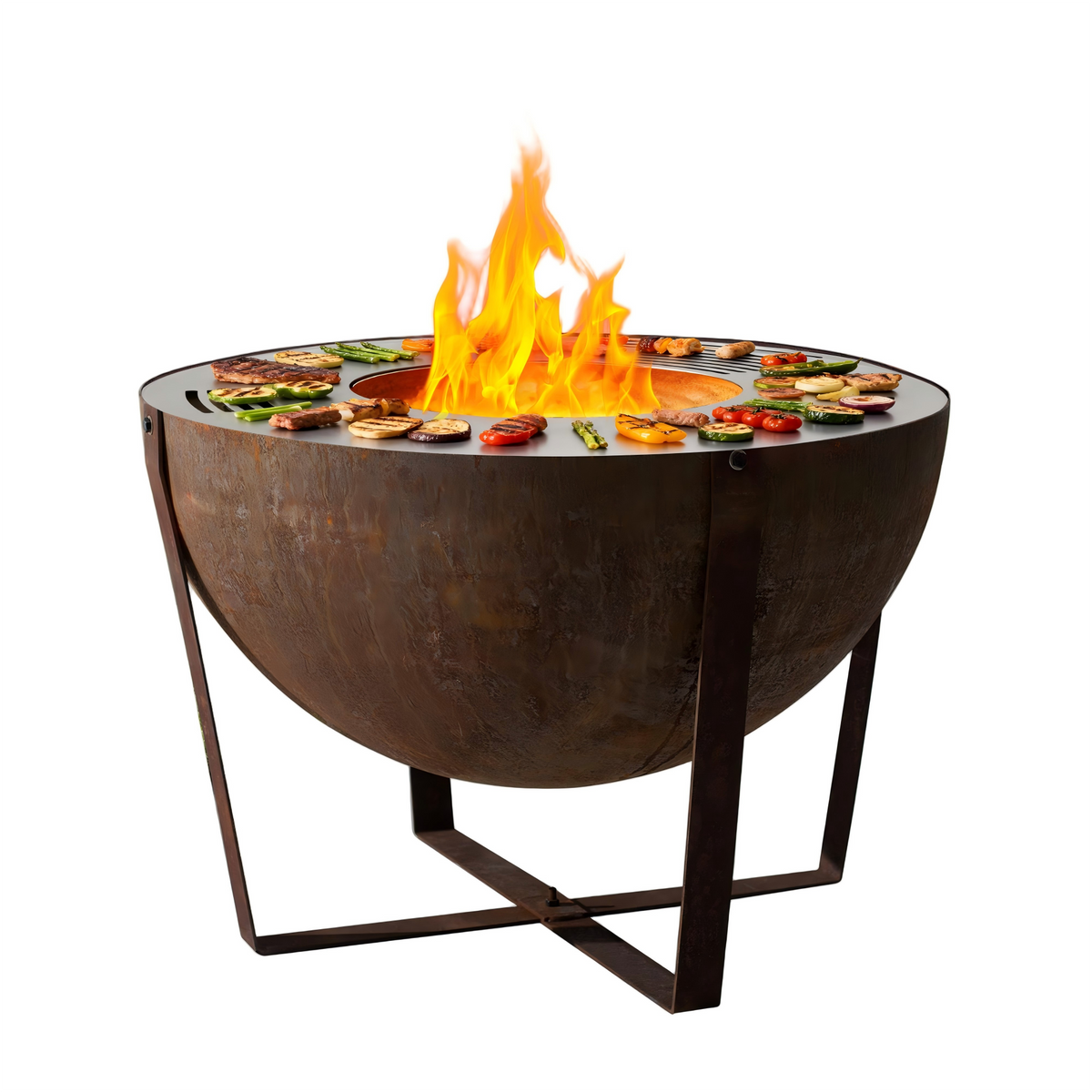
Cooking around a fire pit, outdoor fireplace, or chiminea starts with confirming that the specific feature and its accessories are intended for the task. Seating, fuel, cookware, food preparation, and the path people use through the area all need consideration. These guides connect that planning with practical cooking and care questions. Start with the appliance instructions and current local restrictions, then choose the topic that matches your setup. A good-looking patio arrangement is not proof that the same layout is suitable for operating a fire feature.
Related product: Shop Corten Steel Fire Pit with Grill.
Select a topic below, then open a guide to read the full article.
Explore more in Outdoor Kitchen Guides.
More Fire Pit Cooking & Safety Guides
- Outdoor Fireplace, Fire Pit or Chiminea: Which One Fits Your Patio?
- Propane Fire Pit Safety: Placement, Tank Rules and Patio Use
- Concrete Outdoor Fireplaces With Grills: Placement, Clearance and Care
- How to Cook on an Outdoor Fireplace Grill
- Chiminea or Fire Pit: How to Use and Maintain Each
View more (6)
- Corten Steel Fire Pits: Why They Rust on Purpose and How to Care for Them
- Chiminea vs Fire Pit: Heat, Smoke, and the Fit for Your Patio
- Concrete Outdoor Fireplace: Material, Build, and the Facts
- Cooking on an Outdoor Fireplace Grill: Fire, Grate, and the Basics
- Corten Steel Fire Pit: The Rust-That-Protects, Care, and Longevity
- Fireplace vs Fire Pit vs Chiminea: Which Outdoor Fire Fits
- Propane Fire Pit Safety: Placement, Gas Checks, and Smart Use
- Chiminea Cooking Grate Setup: Build a Stable, Controllable Cook Zone
- Fire Pit Cooking After Rain: Pass Every Safety Gate First
- Fire Pit Cooking Fuel Selection: Match Fuel to the Approved Appliance
- Fire Pit Cooking Grease Control: Keep Drips Out of the Flame Path
View more (6)
- Fire Pit Grill Two-Zone Fire: Create a Real Escape Zone
- Fire Pit Grill Cast Iron Cookware Guide: Control Weight and Heat
- Corten Fire Pit Drainage and Placement: Design Three Water Paths
- Fire Pit Cooking Wind Safety: Decide Before You Ignite
- Fire Pit Grill Party Safety Perimeter: Design Five Working Zones
- Wood-Burning vs Propane Fire Pit: Heat, Cost, Cleanup and Rules Compared
- Outdoor Kitchen and Fire Pit Together: Patio Layouts, Clearances and Traffic Flow
- How Far Should a Fire Pit Be from the House, Fence or Trees?
- Can You Put a Fire Pit on a Deck, Pavers or Grass? Surfaces and Heat Shields
- Best Wood to Burn in a Fire Pit: Hardwoods, Seasoning and What to Avoid
- How to Stop a Fire Pit from Smoking: Fuel, Airflow and Fire-Building Fixes
PRACTICAL GUIDANCE
Plan Fire-Feature Cooking Before Lighting the Fire

Confirm That the Feature Is Intended for Cooking
Identify the exact fire feature and check which uses and accessories the manufacturer permits. A grate that appears to fit does not establish that it is suitable for the appliance. Keep a cooking setup distinct from a decorative fire arrangement and do not infer approval from a photograph of another product.
Check the intended fuel, support surface, and operating requirements together. If you are comparing a fire pit, fireplace, and chiminea, evaluate their actual instructions rather than treating the names as interchangeable. A useful selection begins with the task you want to perform and the requirements of the equipment that will perform it.
Check the Location and Current Restrictions
Confirm applicable local rules and any current restrictions before planning a fire. A previous session or a neighbor's arrangement does not establish what is permitted today. Read the specific feature instructions for location, surroundings, support, and required clearances instead of substituting a generic distance from an unrelated product.
Consider the full area in use, not only where the feature itself sits. Identify seating, access routes, work surfaces, and anything that needs to remain outside its operating area. If the location cannot meet the actual requirements, change the plan before use. Do not let an intended gathering become a reason to work around a restriction or unsuitable condition.
Choose a Menu That Fits the Permitted Setup
Plan the food and cookware around what the approved equipment arrangement can support. Read the recipes for preparation and handling needs rather than assuming that a familiar meal can be transferred unchanged to a fire feature. Confirm any accessory compatibility and handling instructions before purchasing tools or supplies for the menu.
Begin with a modest, familiar meal while learning the arrangement. Keep ingredients and serving items organized before cooking starts. If several foods need attention simultaneously, simplify the menu or assign tasks clearly. A manageable sequence allows you to notice practical problems before scaling the gathering or introducing additional unfamiliar cookware.
Keep Guest Movement Separate From Cooking Tasks
Map the routes people will take to seating, food, and other parts of the patio. A spot that seems convenient for serving may compete with the operating area or the path used by the person cooking. Check the arrangement against the equipment guidance rather than fitting all other activities around the smallest apparent gap.
Give preparation, tools, and finished food clear places. If someone else is serving, establish a handoff that does not require constant crowding around the feature. A group meal needs a plan for used dishes and waste too. Improving those routes can make the session easier without adding more equipment or expanding the menu.
Use Conditions as a Reason to Reassess
Review the actual conditions and the equipment instructions before the session. Do not assume a plan made for a different day remains suitable without checking. If a restriction or operating requirement cannot be met, choose another way to serve the meal rather than treating the original menu as a commitment that must be completed.
When a cooking result disappoints, keep the observation specific. Describe the food, cookware, permitted arrangement, and point in the session when the problem occurred. Separate recipe or handling questions from an equipment concern. General technique advice cannot authorize operating a feature outside its instructions or override local restrictions.
Plan Shutdown, Cleanup, and the Next Use
Read the shutdown, cooling, debris-handling, and storage instructions before the first session. Identify the equipment and tasks required afterward rather than leaving them to whoever is still nearby when guests leave. Do not assume all fire features or fuel types use the same cleanup procedure.
Inspect and maintain the components identified by the manufacturer, and record any damage or change in behavior before the next use. Keep the model information accessible when asking for advice. A clear record of the arrangement, fuel, operating stage, and symptom is more useful than a guess about which replacement part is needed. Resolve unsafe conditions before cooking again.
Safety reference: EPA: backyard recreational fires and local restrictions
COMMON QUESTIONS
Plan Your Next Step
Can I cook on a fire pit by adding any grate?
Confirm that the exact fire feature and accessory are intended and approved for that cooking arrangement. A physical fit or an image of another setup is not proof of compatibility. Check the fuel, support, handling, and other requirements together before use.
Which clearance rule should I use?
Use the instructions for the exact feature alongside applicable local requirements and current restrictions. Do not substitute a distance taken from a different product or another location. If the proposed space cannot meet the requirements, choose a different arrangement before use.
How should I plan a fire-pit meal for guests?
Keep the menu manageable and organize preparation, cooking, and serving as separate tasks. Plan guest routes and the handling of used dishes as well as the food itself. A successful small session gives more useful information than an ambitious first gathering.
What should I do when conditions change?
Reassess the plan against current restrictions and the equipment instructions. If the planned use is unsuitable, serve the meal another way. A preparation schedule or a group of waiting guests is not a reason to bypass an operating requirement.
