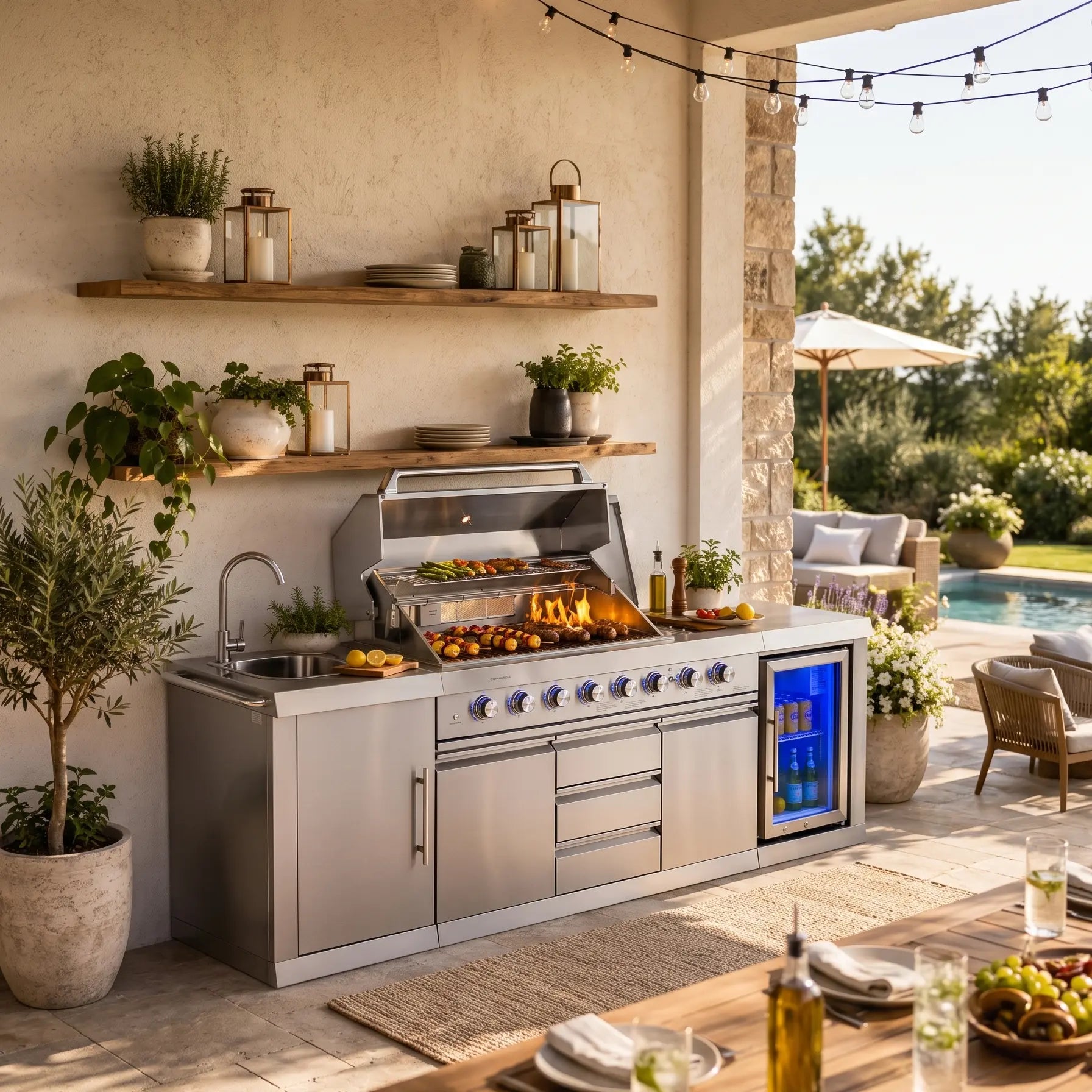
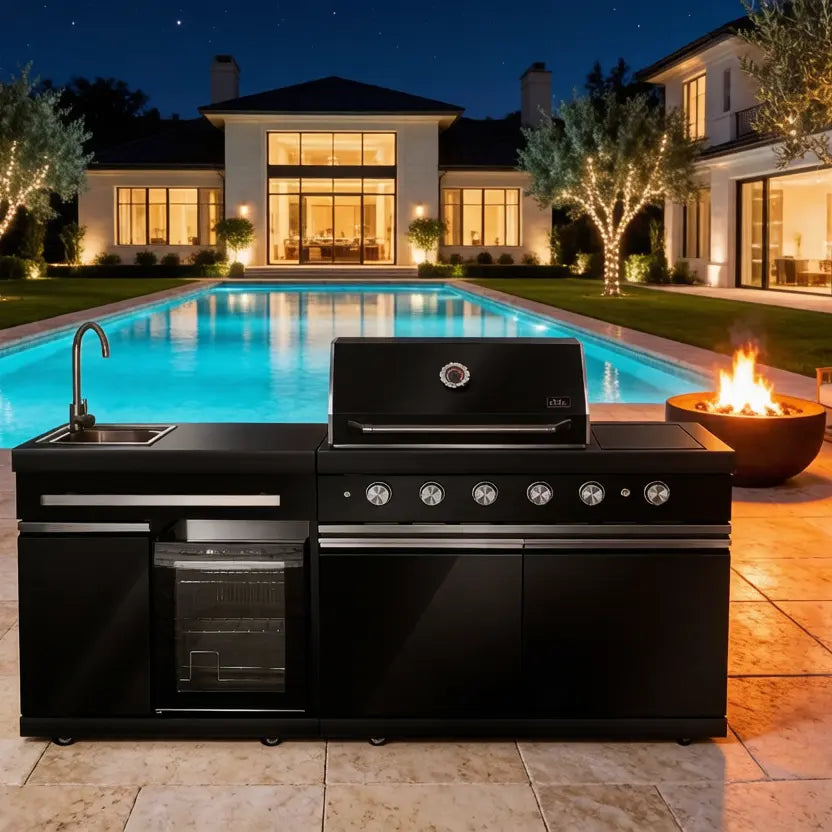
A Big Horn grill can support very different outdoor cooking routines, from propane-fired infrared searing to charcoal-focused live-fire cooking. The right choice depends on where you will cook, the approved fuel available to you, the foods you make most often, and how much hands-on heat management you prefer.
Big Horn Outdoors offers grills, pizza ovens, camping stoves, accessories, and outdoor kitchen products for backyard cooks and outdoor enthusiasts. Before choosing a grill, confirm the exact model’s fuel type, intended cooking location, included components, compatible accessories, and operating instructions.
What Is a Big Horn Grill?
A Big Horn grill is an outdoor cooking appliance from Big Horn Outdoors designed for particular fuel types and cooking styles. The term can include propane-powered infrared grilling or charcoal-based cooking, so shoppers should compare the exact product rather than assume that all grills share the same setup, heat source, or cooking workflow.
-
Fuel type: Propane and charcoal require different equipment, handling, lighting procedures, storage practices, and cleanup.
-
Cooking style: Infrared grilling is suited to high-heat searing, while charcoal cooking involves managing a live fire and the food’s position relative to the heat.
-
Cooking location: Fuel-burning equipment should be used only in an open outdoor area with appropriate ventilation and clearances.
-
Product setup: Verify the current listing and manual for supplied components, approved accessories, and required fuel-related parts.
Why This Choice Is Harder Than It Looks
Fuel changes the cooking workflow. A propane grill requires the correct approved propane supply and connection process. A charcoal grill requires safe lighting, fire management, ash handling, and sufficient time for complete cooldown after cooking.
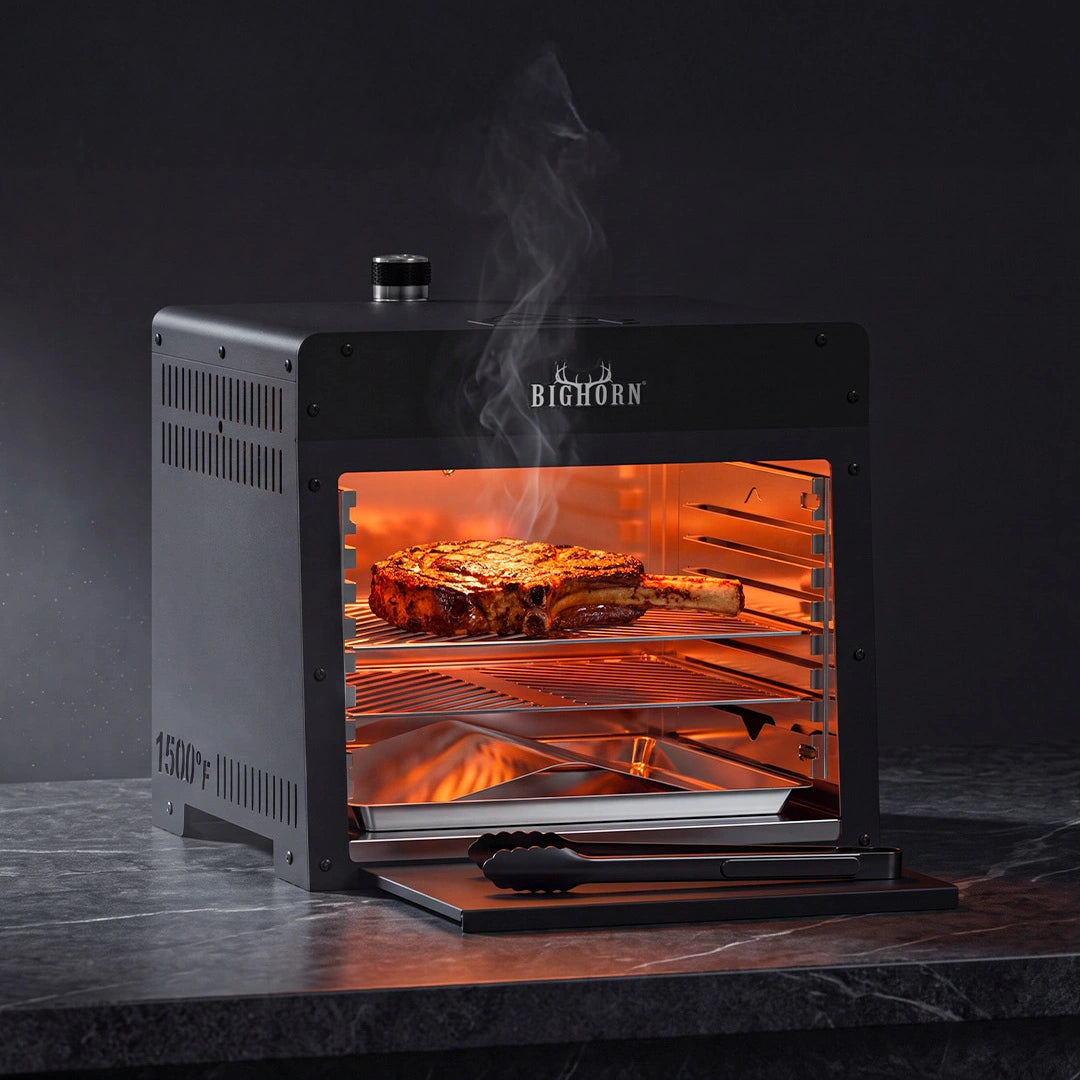
High heat does not mean identical results or operation. Infrared heat and charcoal heat are both useful for outdoor cooking, but they rely on different heat-management methods. A cook who wants gas-fired searing may prefer a propane infrared format, while a cook who enjoys managing coals may prefer a charcoal-focused grill.
Your outdoor area affects the right product. Grill placement should account for ventilation, required clearances, nearby combustible materials, overhead structures, pets, children, and foot traffic. Local regulations, lease terms, HOA rules, campground policies, or fire restrictions may also limit where and how a grill can be used.
Compatible accessories may not be included. Covers, carts, pizza stones, peels, cooking tools, conversion components, regulators, or other accessories should not be assumed to be included unless the exact product page says so. Confirm whether an item is supplied, optional, or approved for the selected model.
Key Outdoor Cooking Insight
Select a grill by matching its approved fuel, outdoor location requirements, and everyday cooking workflow to your needs—not by assuming every high-heat grill performs or operates the same way.
Compare the Main Options
Why Big Horn Outdoors May Fit This Use Case
Big Horn Outdoors organizes outdoor cooking products by category, which helps shoppers compare grills, pizza ovens, camping stoves, accessories, and outdoor kitchen options through the official store. The Grills and Griddles collection is the starting point for customers who want to compare current grilling options.
For cooks building a more complete outdoor setup, the Accessories collection can help identify official tools and protection options. Always confirm that an accessory is listed as suitable for the grill or oven you intend to use.
Pizza-focused cooks can also review Pizza Ovens rather than trying to make one appliance handle every cooking task. Campers, RV users, and tailgaters may find that a dedicated option from Camping Stoves better fits compact meal preparation.
For larger backyard planning, Big Horn Prime® provides an official route to explore outdoor kitchen and outdoor-living products. Confirm site conditions, access routes, ventilation, local requirements, and product documentation before arranging delivery or installation.
Related Products and Resources
-
Grills and Griddles — Review current grill options and verify the product-specific fuel, size, cooking format, and included components.
-
Accessories — Explore official accessories for outdoor cooking workflow, storage, and protection. Confirm compatibility before purchase.
-
Pizza Ovens — Consider a dedicated pizza oven when pizza is the main cooking priority.
-
Knowledge and Blog — Find Big Horn Outdoors product and outdoor-cooking resources to support your selection and operating routine.
How to Choose and Use It Safely
-
Confirm the cooking location. Use fuel-burning equipment outdoors in an open area with suitable ventilation and appropriate clearance from structures, combustible materials, and overhead hazards. Do not use propane, charcoal, pellet, or wood-burning equipment indoors, in garages, tents, vehicles, enclosed balconies, or other enclosed spaces.
-
Use only the approved fuel system. Follow the exact product instructions for propane, charcoal, pellets, wood, or electricity. Do not modify burners, drill or replace orifices, bypass regulators, combine non-approved fuel components, or attempt a natural-gas conversion unless the manufacturer explicitly approves the conversion process and components.
-
Choose capacity for your typical meals. Consider whether you primarily cook steaks, burgers, vegetables, pizza, family meals, or campsite food. Confirm the current product page’s stated cooking capacity and dimensions for the selected model.
-
Verify included and optional items. Read the current product listing and manual before ordering. A cover, cart, pizza stone, peel, regulator, fuel component, thermometer, or cooking tool may be sold separately unless clearly identified as included.
-
Inspect equipment before ignition. For propane equipment, inspect the fuel cylinder, hose, regulator, and connections according to the manual. If you smell gas, find damage, or experience ignition failure, turn off the fuel supply, keep away from ignition sources, and follow the manufacturer’s troubleshooting instructions instead of repeatedly attempting to light the appliance.
-
Manage heat and food safety separately. Use the appliance’s intended controls, racks, and cooking positions. Surface browning, grill marks, and recipe timing do not establish safe doneness; use a reliable food thermometer for meat and poultry.
-
Cool completely before cleanup or storage. Let the grill, racks, stones, ash, grease, fuel components, and exterior surfaces cool completely before moving, cleaning, covering, or storing the appliance. Handle charcoal ash only after it is fully extinguished and cold.
Use Cases
Scenario: Weeknight Steak Searing
What matters: An outdoor gas-fired cooking workflow, stable placement, correct propane setup, and confidence managing high heat.
Suitable Big Horn Outdoors route: Start with Grills and Griddles and compare the current grill listings.
Check before use: Verify the selected model’s approved fuel requirements, outdoor-use directions, listed components, and cleaning instructions.
Scenario: Backyard Charcoal Cooking
What matters: Safe charcoal lighting, managing food over a live fire, fuel storage, cleanup, and complete ash cooldown.
Suitable Big Horn Outdoors route: Review the current grill collection, then consider Accessories for applicable official cooking and protection products.
Check before use: Confirm that charcoal is the specified fuel for the exact product and maintain appropriate separation from combustible materials.
Scenario: Pizza Night and Grilled Food
What matters: Enough prep space, separate workflows for pizza and grilling, safe food handling, and realistic heat-management expectations.
Suitable Big Horn Outdoors route: Compare Pizza Ovens and Grills and Griddles for equipment suited to each cooking task.
Check before use: Confirm the pizza oven’s approved fuel and cooking location. Do not assume a stone, peel, burner, or cover is supplied unless the individual product listing confirms it.
Scenario: Camping or Tailgating
What matters: A compact outdoor cooking setup, stable placement, approved fuel availability, local rules, and weather conditions.
Suitable Big Horn Outdoors route: Browse Camping Stoves for compact cooking options, then consider a grill only when the site permits it.
Check before use: Never cook inside a tent, vehicle, camper, or enclosed shelter. Use only the fuel container or cylinder specified for the appliance.
Scenario: Outdoor Kitchen Planning
What matters: Outdoor dimensions, access paths, finished-site support, required clearance, ventilation, utilities, and local regulations.
Suitable Big Horn Outdoors route: Explore Big Horn Prime® and use Contact Us for product-related questions.
Check before use: Verify site readiness, delivery access, local requirements, utility planning, and the product documentation before installation.
FAQ
Can I use a Big Horn grill indoors?
Fuel-burning grills should be used outdoors in an open, properly ventilated area unless a specific product is explicitly designed and instructed for indoor use. Charcoal, wood, pellets, and propane should not be burned in enclosed spaces because of fire and carbon-monoxide risks.
Is propane the same as butane or natural gas?
No. Propane, butane, and natural gas are different fuels with different containers, regulators, connectors, and appliance requirements. Use only the fuel and components specified for your exact product.
How do I choose between infrared and charcoal grilling?
Choose an infrared option if you prefer a propane-fired, high-heat grilling workflow. Choose charcoal if you want to manage a live fire and are prepared for lighting, ash handling, and extended cooling time.
Are accessories included with every Big Horn grill?
Not necessarily. Product imagery may show optional accessories, cooking tools, covers, stones, or carts. Check the exact product page and packaging details to distinguish included components from compatible or separately sold items.
Can I use a pizza stone on any grill?
Use a pizza stone only when the appliance and stone instructions support that use. Avoid thermal shock, and do not soak, machine-wash, or use cleaning methods not approved in the product instructions.
How should I clean my grill?
Wait until the appliance is completely cool, then follow the model-specific instructions for cleaning grates, surfaces, grease areas, burners, ash, and exterior components. Remove grease and food residue as directed to support safe operation.
How do I know grilled meat is safely cooked?
Use a food thermometer. USDA guidance identifies safe minimum internal temperatures for different foods, including 145°F with a three-minute rest for whole cuts of beef, pork, veal, and lamb; 160°F for ground meats; and 165°F for poultry.
Where can I find return and support information?
Review the current Refund Policy and product-page information for applicable terms. For model-specific questions or support, contact Big Horn Outdoors.
Conclusion
The right Big Horn grill begins with the approved fuel source, your outdoor cooking location, the meals you prepare most often, and the cooking workflow you want to manage. A propane infrared grill and a charcoal grill can both support satisfying outdoor meals, but they require different setup, operation, cleaning, and safety practices.
Browse the current Big Horn Outdoors grill collection, confirm model-specific compatibility and included items, review the manual before first use, and contact support when you need help selecting the right outdoor cooking option.