
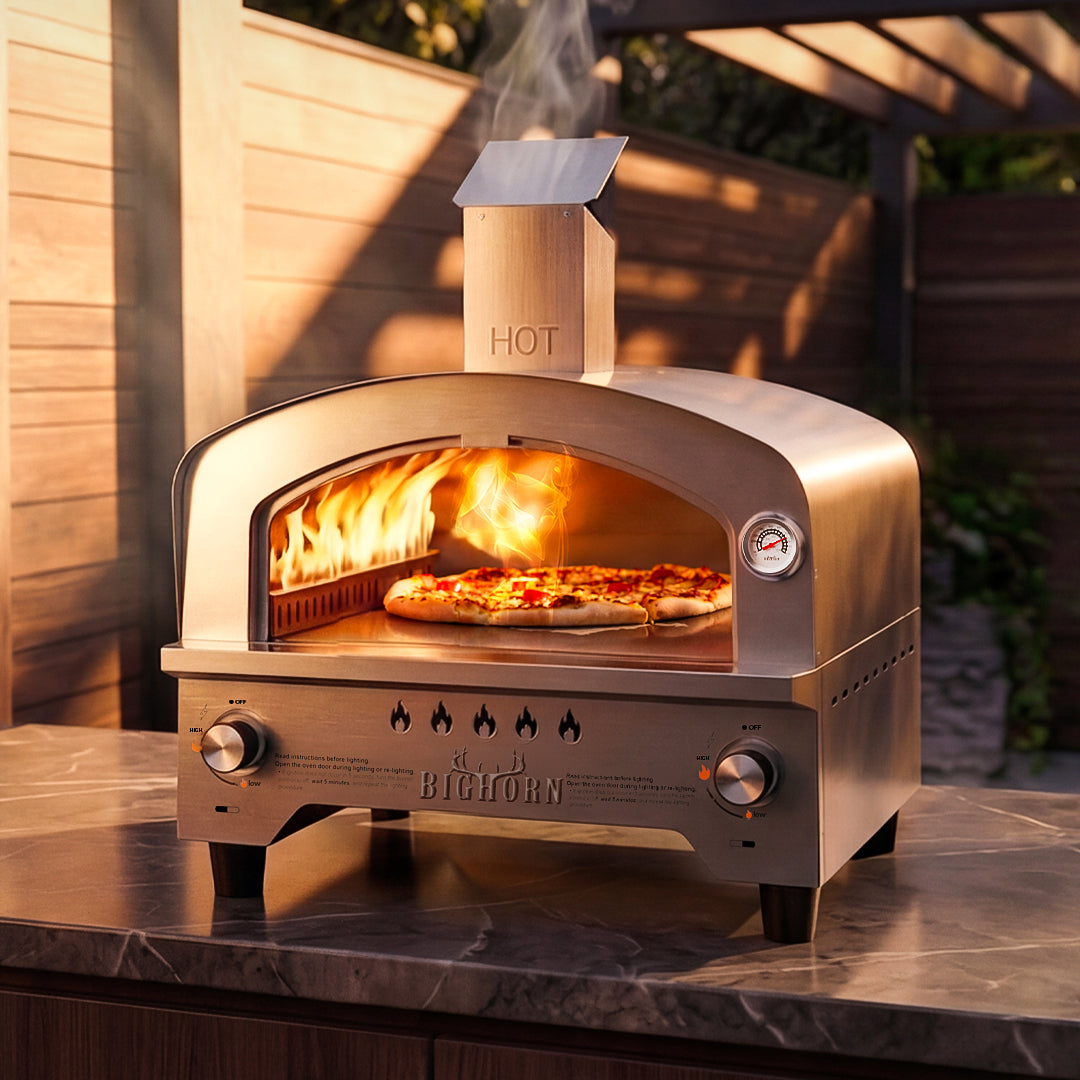
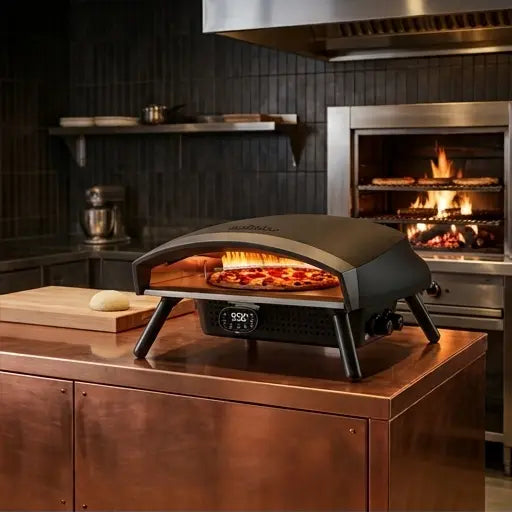
Yes — you can use a pizza oven in winter, but success depends on your setup, fuel, and the conditions you cook in. Cold air changes preheat time and heat recovery, but it doesn't have to stop pizza night. At Big Horn Outdoors, we design portable pellet pizza ovens for exactly this kind of year-round outdoor cooking.
Below is a practical winter routine, the real safety limits to watch for, and what to look for in a cold-weather oven.
Can You Use a Pizza Oven in Winter?
Most outdoor pizza ovens can be used through fall and winter if you:
- Preheat long enough and check the stone temperature, not just the air temperature
- Protect the oven from wind without blocking necessary ventilation
- Keep fuel dry and ready for cold conditions
- Give the stone extra recovery time between pizzas
- Store and cover the oven correctly after it cools
What Cold Weather Changes
Cold temperatures don't stop a pizza oven, but they do affect it.
- Preheat takes longer because the whole oven starts colder
- Wind steals heat and makes temperatures less stable
- The baking stone cools faster between pizzas
- Wood pellets can absorb moisture, and propane supply can drop in very cold weather
A Simple Winter Pizza Oven Routine
- Clear snow, ice, and standing water from the cooking area
- Position the oven in an open, sheltered spot — not in a garage, tent, or enclosed patio
- Use dry pellets or a properly sized, sufficiently full propane tank
- Preheat until the stone reaches your target temperature, not just the air temperature
- Allow extra recovery time between pizzas if the stone temperature drops
- Let the oven cool completely, remove ash, and cover only when it's dry
How to Use a Pizza Oven Safely in Winter
Protect the oven from wind, not ventilation
Use a wall, fence, or patio screen to block wind, but keep the oven in an open, well-ventilated outdoor area. Never run it in a garage, tent, or enclosed space.
Preheat based on stone temperature
Use an infrared thermometer to confirm the stone is ready. Cold air slows preheating, so relying on a fixed timer can lead to undercooked or uneven pizzas.
Keep pellets or propane ready for cold conditions
Store pellets in a sealed bin and only take out what you need. In very cold weather, propane tank pressure can drop, so use a properly sized, sufficiently full tank and check that the hose and connections are dry and in good condition.
Manage recovery time between pizzas
The stone cools faster in cold weather. If you're cooking several pizzas, wait a little longer between launches so the stone can recover.
Store and cover the oven correctly
Let the oven cool completely and dry it before covering. Covering a warm or damp oven can trap moisture and encourage rust.
How Cold Is Too Cold for a Pizza Oven?
There isn't one universal "too cold" temperature. Many outdoor pizza ovens can operate below 32°F (0°C), but wind, wet conditions, fuel performance, and the manufacturer's instructions matter more than air temperature alone.
If wind prevents stable flame control, snow or ice makes the setup unstable, or your model's manual sets operating limits, wait for safer conditions. Always check the manufacturer's guidance for your specific oven.
Winter Pizza Oven Setup Checklist
- Stable, level ground free of snow and ice
- Open, well-ventilated outdoor location
- Manufacturer-specified clearance from walls, fences, eaves, and other combustibles
- Children, pets, and loose combustibles at least 3 feet from the cooking area
- Dry fuel and a working infrared thermometer
- A fitted cover nearby for after the oven cools and dries
What Makes a Pizza Oven Better for Winter?
If you plan to cook through fall and winter, prioritize:
- Good insulation and heat retention, so the oven holds temperature in cold air
- A stable base or legs that sit securely on a patio or table
- A compact, portable footprint that's easy to cover and store
- Fuel that's practical to store and handle in cold weather
Pizza Stone Temperature Reference
Use these as cooking references, not universal product specs. Confirm your oven's actual temperature range and follow its manual.
| Pizza style | Suggested stone temperature | Winter note |
|---|---|---|
| Neapolitan-style | About 750–850°F | Cold wind can slow temperature recovery between pizzas |
| New York-style | About 600–700°F | A slightly longer bake is often easier to manage in cold conditions |
| Pan pizza | About 450–550°F | Lower stone temperatures are more forgiving for beginners |
Is the Big Horn Outdoors 16-Inch Pellet Oven Right for You?
The Big Horn Outdoors 16-inch wood pellet pizza oven may suit cooks who want a portable, pellet-fired option for seasonal outdoor use. Before choosing it for winter, confirm the oven's recommended operating conditions, preheat performance in your climate, pellet storage needs, compatible cover, and stable outdoor setup requirements.
Best for: Users with a sheltered patio, dry pellet storage, and space to cook outdoors safely.
Consider another option if: You regularly cook in exposed, high-wind conditions or need a fuel system that's easier to manage during severe cold.
Browse the Big Horn Outdoors pizza oven lineup to compare sizes, fuel requirements, and coverage options before you commit.
Frequently Asked Questions
Do pizza ovens work in freezing temperatures?
Generally yes, with a longer preheat and protection from wind. Confirm any temperature limits in the manufacturer's instructions for your specific model.
Can I use a pizza oven in snow or rain?
Use extra care in wet conditions. Keep the cooking area clear of snow and ice, ensure the ground is stable, and keep fuel dry. If conditions make flame control unsafe or the setup unstable, wait for better weather.
Do I need a cover in winter?
Yes. A fitted cover keeps snow and moisture out. Let the oven cool completely and dry it before covering to reduce rust and condensation.
How do I keep wood pellets dry?
Store pellets in a sealed bin, preferably indoors or in a garage, and only take out what you need for each cook.
Does propane work in cold weather?
Propane still works in cold weather, but tank pressure and fuel supply can drop in very low temperatures. Use a properly sized, sufficiently full tank and follow the manufacturer's guidance.
How much longer does preheat take in winter?
It varies by model, outdoor temperature, and wind. Instead of relying on a fixed time, use an infrared thermometer to confirm the stone has reached the target temperature.