
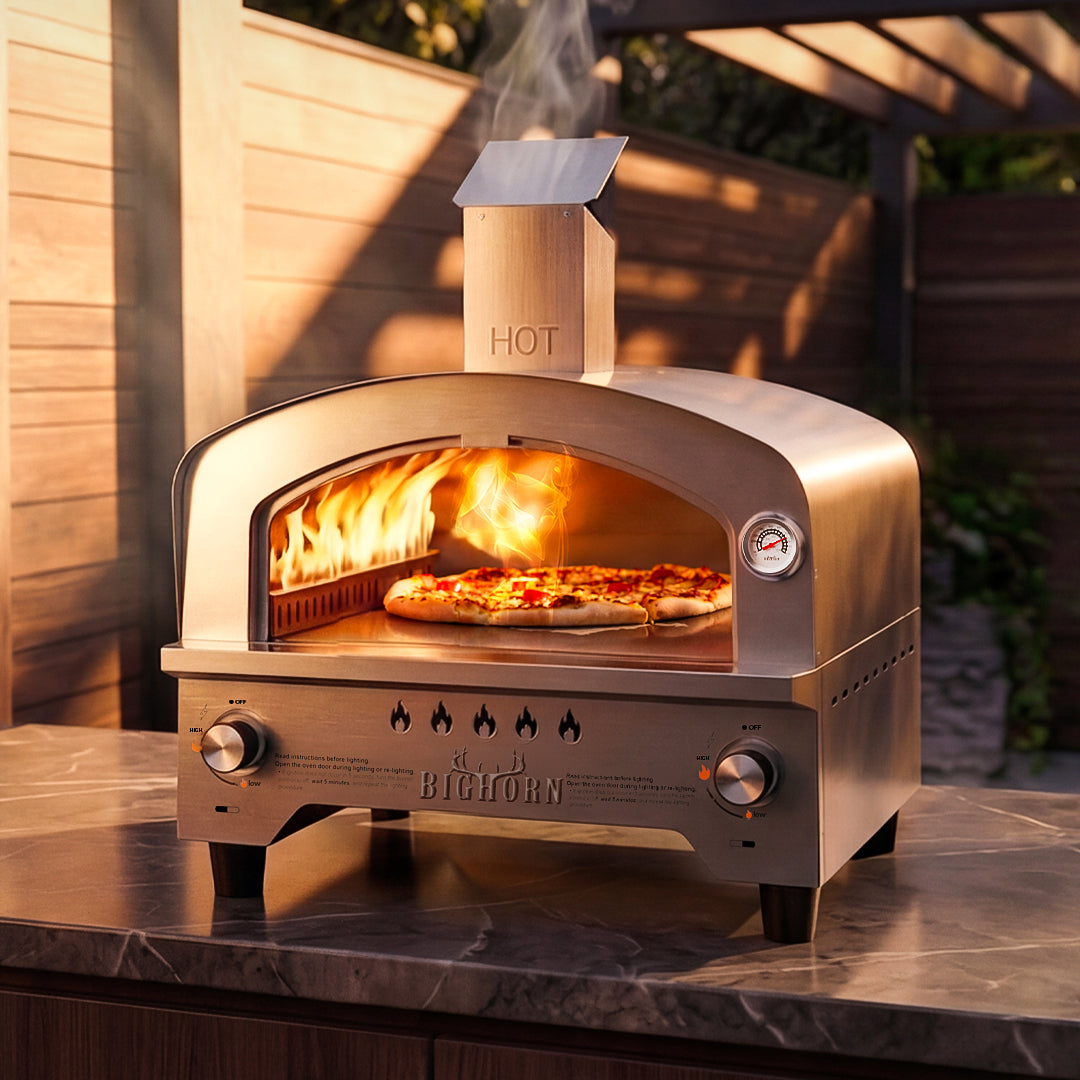
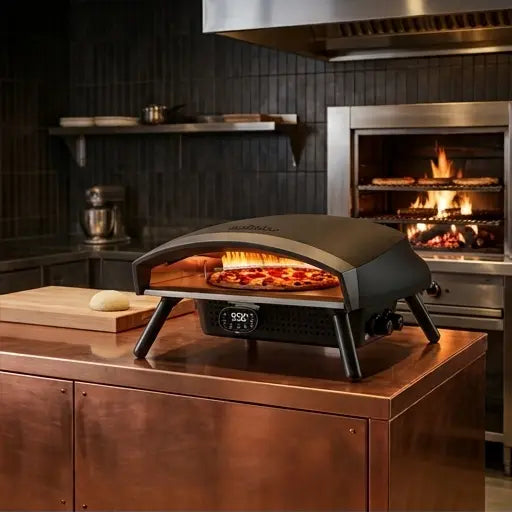
Choosing an outdoor pizza oven is a decision process, not a spec comparison. This framework walks you through five steps in order — budget, fuel, size, space and setup, then heat and recovery — so the choice follows the constraints of your patio and habits rather than a marketing number. Used as a method, it works for any oven at any price: the steps pin down the requirements first, and the final selection becomes an exercise in matching, not guessing.
Step 1: Set the budget and total cost
Begin with the oven price, then add the real cost of ownership: fuel, accessories like a peel and cover, and potential delivery or replacement parts. A slightly higher-priced unit with a good stone and fast preheat can cost less over two seasons than a cheap oven with poor recovery and a fragile deck. Set a realistic total, not just the sticker price.
Step 2: Pick the fuel by habit, not hype
Fuel is the biggest lifestyle decision. Gas ignites fast and holds steady heat — the lowest effort. Wood pellet adds smoke flavor and ritual with a 15–20 minute preheat. Electric is plug-and-play and indoor-friendly but has a lower ceiling. Match the fuel to your existing setup and patience: a gas-grill household usually fits gas best, while a smoker enthusiast often prefers pellet.
Step 3: Size the deck to your guests
Size the cooking deck to the pizzas you will serve. A 12-inch deck suits couples and small households; a 14–16 inch deck fits family pies and gives more turning room. Larger decks preheat slower and cost more, so buy the size for your regular guest count, not the biggest option. Turning room is worth more than the headline diameter on the box.

Step 4: Confirm space and setup
Measure the patio, confirm a stable non-combustible surface, and check fuel or outlet access before buying. Gas needs propane or a line; pellet needs dry fuel storage; electric needs a suitable outlet with enough draw. Clearance from walls and overhangs and a logical place for the hose or tank complete the check — an oven that does not fit your space is wrong regardless of specs.
Step 5: Verify heat and recovery
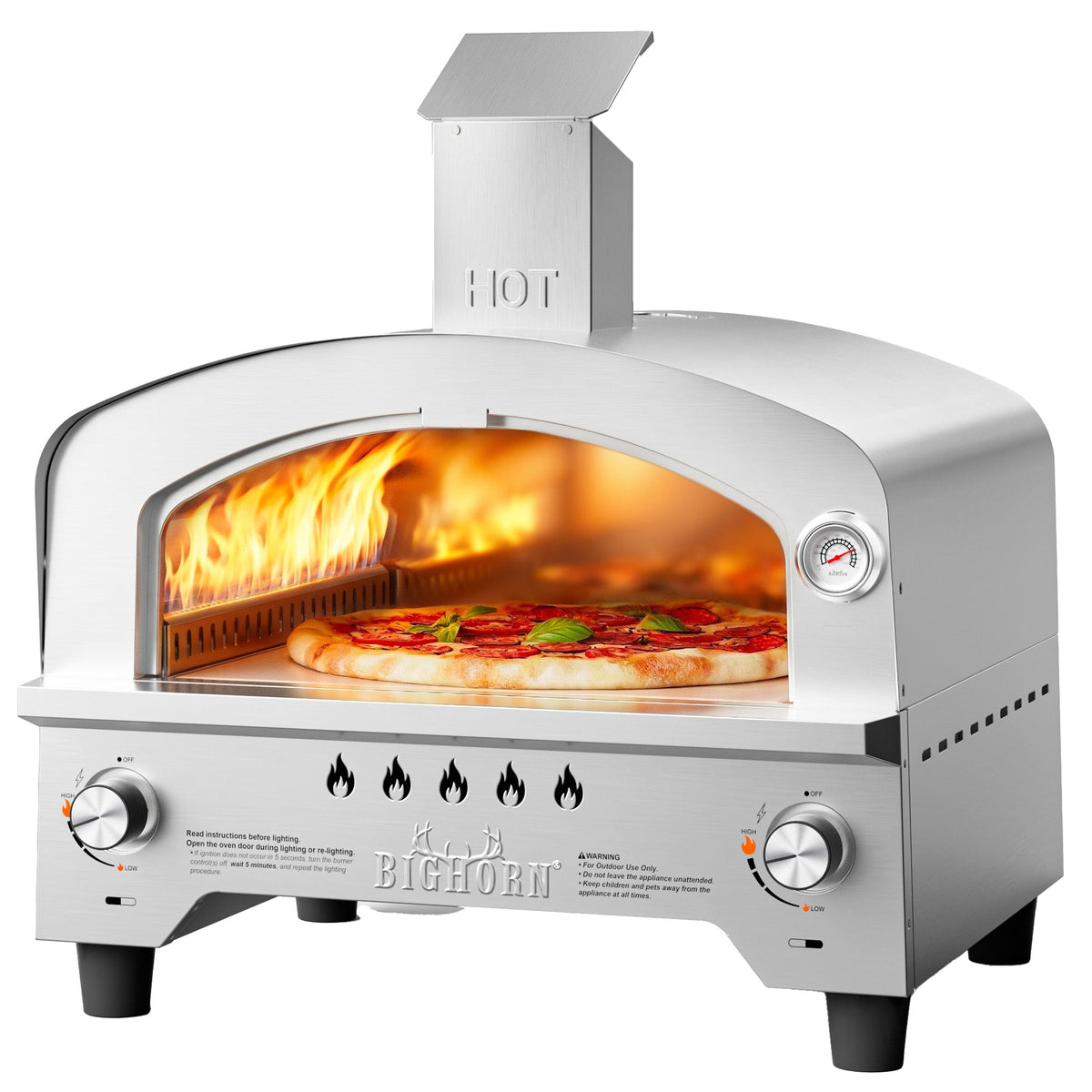
Finally, compare peak heat, preheat time, and recovery across the shortlist. For pizza, the numbers that matter are a sustained 750–900 °F, a thick stone, and fast recovery between consecutive pies. A high peak that drops badly between bakes slows every session; a steady oven that recovers well keeps a whole evening smooth.
What is the biggest buying mistake?
Choosing on peak temperature or brand alone, then discovering the real gap — preheat patience, stone recovery, or fuel fit — after purchase. Match the oven to your fuel, space, and cooking frequency, and the spec that matters is the one that fits your routine.
How do I compare a few shortlisted ovens?
Hold fuel and deck size constant, then compare preheat, recovery, and included accessories. That isolates the specs that change results. Use the product pages to confirm each, then pick the one with the strongest fundamentals for your budget.
Is a bigger deck always better?
No — a larger deck preheats slower and costs more. Buy the size for the pizzas you regularly serve. If you mostly bake for a couple, a 12-inch oven is the better value than a 16-inch you rarely fill.
How important are accessories in the decision?
Accessories matter for immediate usability more than long-term quality: a peel, a stone, and a cover make the first sessions easier, while the oven’s heat and recovery decide the results. Check what ships in the box so you can budget for the missing essentials, and weigh included accessories when comparing similar units.
Should you buy the biggest oven you can afford?
No — buy the size that matches your regular guest count. A bigger deck preheats slower and costs more; a 12-inch oven that gets used every week beats a 16-inch that sits idle. Capacity only pays off when you regularly cook for a group.
How do you apply the framework to a real budget?
Set the ceiling first, then let the steps filter options within it. If a fuel or size exceeds the budget, drop to the next tier rather than stretching for a premium you cannot afford. The framework keeps the decision inside your constraints: budget narrows the field, then fuel, size, and setup rank the survivors, and heat and recovery break the tie.
What is the most common regret and how do you avoid it?
The most common regret is buying an oven that does not fit the patio or the cooking frequency — a large unit for a small space, or a pellet oven for a cook who wants fast weeknights. Avoid it by measuring the space and counting your real sessions before buying. Match the oven to the constraints you have, not the ones you wish for.
How long should you expect an oven to last?
A well-built stainless oven with regular care lasts many seasons. The stone and some parts may need replacement over time, but the body and burners hold up if covered and cleaned. Treat the purchase as a long-term tool: the framework helps you pick one that will still fit in a few years, not just this month.
What should you test before buying?
If possible, confirm the two specs that most affect daily use: preheat time and stone recovery. Both show up in reviews and demos more reliably than peak temperature. Also check the practical fit — deck size against the pizzas you make, and the footprint against your patio. Testing those three before buying prevents the typical post-purchase surprises.
How does the framework handle a tight budget?
A tight budget does not change the order of the steps; it just thins the field faster. Set the ceiling, then let fuel and size trade-offs decide what remains — a smaller gas oven is often the strongest value, while a large pellet unit may fall out of range. The framework keeps quality from being sacrificed silently to a lower price.
What accessories do you need from day one?
A peel, a turning peel, a cover, and a thermometer are the practical minimums that change daily usability. The peel improves launching, the turning peel improves browning, a cover protects the stone and shell, and a thermometer removes preheat guesswork. Budget for these along with the oven so the first session is smooth.
How do you validate the framework against your own kitchen?
Run your own numbers through each step: the budget you are comfortable with, the fuel your setup supports, the deck size for your guest count, the space you can measure, and the heat/recovery you need. Where a step has no clear answer, research it for that one decision and move on. The framework works because every step produces a concrete constraint that narrows the final choice.
Purchase decision FAQs
Should I start with the cheapest option?
Only if it has the fundamentals — real heat and a good stone. A cheap oven without those disappoints; a modest oven with both beats a flashy one that cannot cook.
How do I compare ovens fairly?
Hold fuel and deck size constant, then compare preheat, recovery, and included accessories. That isolates the specs that change results.
Is one fuel clearly the best?
No — gas, pellet, and electric each suit a different lifestyle. The framework exists to find the match, not to crown a winner.
To apply the framework, compare the current range in the pizza oven collection and confirm the specs that fit your space.