







Pavers crack. Decks scorch. Grass kills leave a bald ring. The question can you put a fire pit on a deck or pavers is really about heat transfer, embers, and what sits under the bowl.
Match surface to fuel and protection. When in doubt, build a non-combustible pad and keep the pit there.
The short answer by surface
Wood and many composite decks are the riskiest without a rated barrier and manual approval. Pavers and concrete are better but can spall. Grass works only with a proper apron and acceptance that turf will suffer.
Always read the fire-pit manual for approved surfaces. Brand-agnostic blog advice loses to the listing for your model.

Wood and composite decks: heat and embers
Wood burns. Composites can melt, warp, or void warranties under fire features. Embers find gaps between boards and smolder out of sight.
If a manufacturer allows deck use only with a specific heat shield, that shield is mandatory—not optional décor. Without such approval, keep pits off the deck.
Elevated decks also complicate extinguishing water runoff and escape routes. Review outdoor fire safety themes from the CPSC before you roll a bowl onto boards.
Pavers, concrete and stone: spalling risk
Hardscape is the usual right answer, yet trapped moisture in pavers can pop surfaces under intense heat. Use thicker pads, proper base prep, and air gaps if the manual calls for them.
Avoid thin decorative tiles that crack into sharp edges under chairs. A dedicated fire pad sized beyond the bowl looks intentional and cleans easily.
Grass and soil
Grass under a pit dies from heat and smothering. More importantly, dry grass feeds escaped embers. Cut an apron of dirt, sand, or gravel larger than the bowl.
On slopes, level the pit so fuel and water behave. Wobbly bowls spill more than stories admit.
Heat shields and fire pit pads: what they do
Pads and shields block radiant heat and catch ash. They must overhang the fire footprint and be made of suitable materials. A cookie sheet is not a hearth pad.
Airflow under some pits matters; burying feet in sand can change combustion. Follow the model diagram.
Raising the pit and airflow
Legs and stands reduce direct conduction into surfaces and make ash cleanup easier. Ensure raises are stable and rated for the bowl weight when filled.
Do not block vent holes designed into gas pits. Restricted airflow makes yellow flames and soot.
Checklist before you light
- Surface allowed by manual
- Pad or shield in place if required
- Hose and cylinder paths clear (gas)
- Hose or water source ready (wood)
- Overhead and side clearances checked
- Wind within reason; bans checked
Household fire readiness from Ready.gov pairs with this checklist for family briefings.
How much weight can a wooden deck hold?
It depends on joist size, span, species, condition, and how the load is concentrated. There is no universal number for every DIY deck.
Ask a qualified contractor or engineer before placing heavy stone pits, full propane cylinders, and a circle of adults on an older deck. When the answer is fuzzy, move the fire feature to grade-level hardscape.
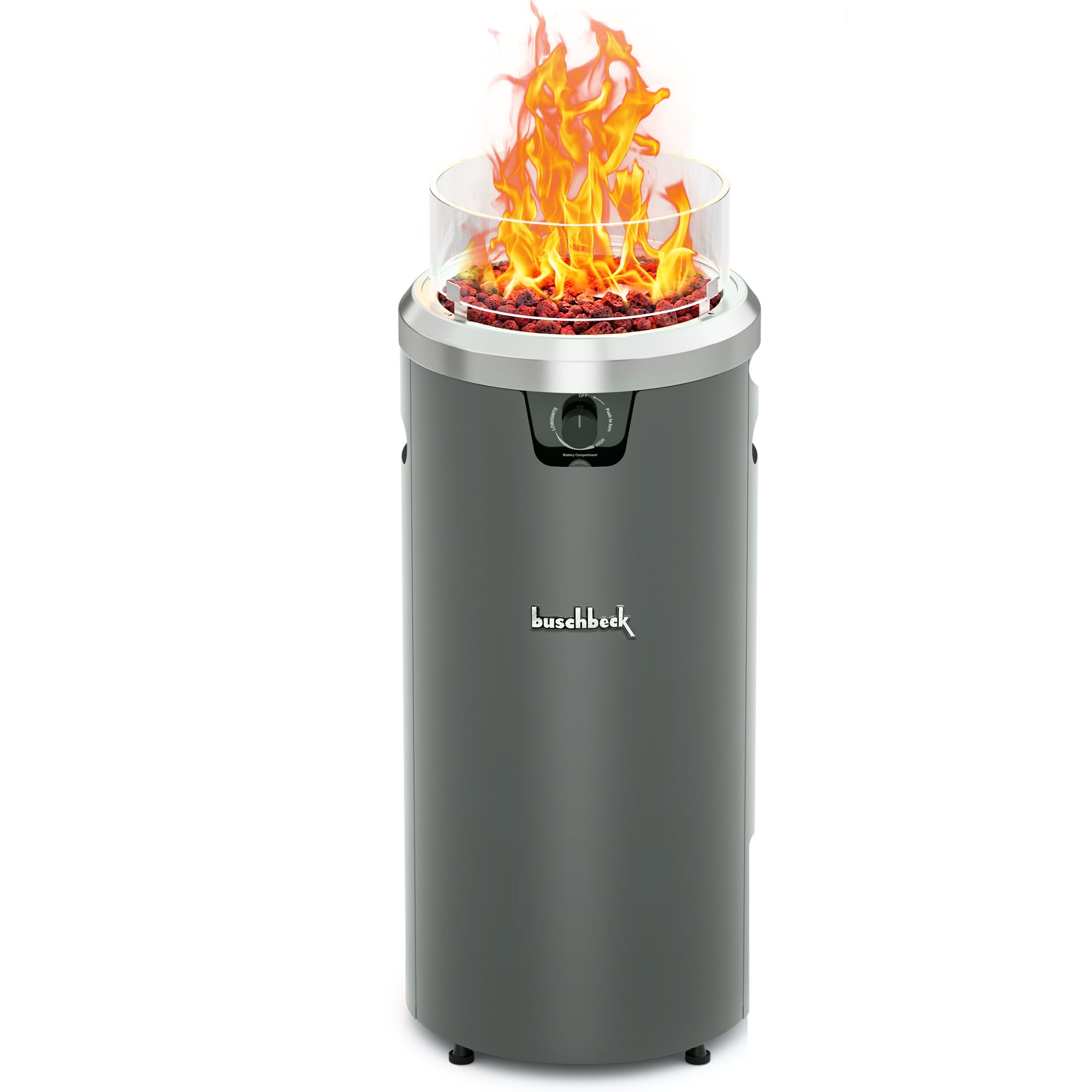
Product choices like the corten fire pit with grill or a lighter propane column pit still need that structural honesty first.
Keep mulch, cushions, and stacked wood outside the apron. Decorative fuel piles beside a lit pit are how small fires become insurance calls. Ember awareness messaging from NPS fire safety translates cleanly from campsites to suburbs.
If you cook on a pit grate, grease management becomes part of surface care—use pans where appropriate and clean pads so stains do not become permanent skid hazards.
Composite warranty and HOA paperwork
Composite deck brands often exclude damage from grills and fire pits in warranty language. Read that PDF before you buy a stylish bowl that quietly voids coverage. HOAs may separately ban open flame on elevated surfaces even when ground-level pits are fine.
Get approvals in writing. Screenshots of old handbook pages are weaker than a dated architectural review letter.
Ember patrol and shutdown
Wood fires need a literal patrol for the first hour after “out.” Walk the apron with a light. Embers hide in cracks. Propane shutdown is faster but still needs valve discipline and leak awareness.
Never bury a fire with sand and walk away assuming it is cold. Sand insulates heat. Drown, stir, drown again when wood was used.
Keep cushions, broom bristles, and plastic décor outside the heat radius. Melting plastic smells tell you the surface choice was already a compromise.
If your only flat space is a deck that failed every test above, entertain with a propane fire table that the manufacturer lists for that use—or take fire gatherings to a park with designated rings. Pride in a forced backyard install is not worth a claim.
For hardscape installs you can trust, size the pad beyond the bowl and choose a pit with clear manual language, such as Big Horn Outdoors options including the corten fire pit and propane column pit.
Pair surface choices with the clearance habits in related siting guidance and with extinguisher practice from Ready.gov so the whole household responds the same way when wind shifts.
Surface choices still sit under outdoor fire awareness from NFPA, CPSC, and EPA Burn Wise on smoke. Propane pits need hose discipline from propane safety guides. Compare footprints for hardscape pads using the corten fire pit and propane column pit, and consider a fireplace with grill when a wall-oriented feature fits better than a deck experiment.
Conclusion
Put fire pits on surfaces that tolerate heat and catch embers, with pads when required and turf pulled back. Decks demand extra skepticism; hardscape pads at grade solve most arguments.
Choose a fire feature that fits your patio surface from Big Horn Outdoors, starting with the corten pit and propane column pit.
FAQ
Is it okay to have a fire pit on a wood deck?
Only when the pit manufacturer explicitly allows it with the required heat protection, and when the deck structure and local rules agree. Many wood and composite decks are poor candidates even with a mat. When documentation is unclear, place the pit on ground-level hardscape instead.
How much weight can a wooden deck hold?
Capacity varies widely by design and condition. Concentrated loads from stone pits and groups of people differ from scattered lounge chairs. Have a qualified professional evaluate older or unknown decks rather than guessing from online rules of thumb.
Can you put a fire pit directly on pavers?
Often yes if the manual allows it, but intense heat can still spall some pavers. Use a proper base, consider a dedicated pad, and avoid thin decorative tile. Watch for uneven settling that tips the bowl.
Where not to put a fire pit?
Avoid enclosed porches, low overhanging trees, dry grass without an apron, wooden decks without approval, and spots that block exits. Also avoid placing pits where wind routinely drives smoke into bedroom windows. When a location fails clearances, move it—do not “just this once” light it.
Explore more in the Fire Pit Cooking & Safety Guides.
