







Pizza Oven Ownership: Cost
You bought the oven. Now you are staring at a wood deck wondering if one spark or a hot foot ruins the weekend. The honest answer to can you put a pizza oven on a wooden deck is: only with manufacturer clearances, a non-combustible buffer, and habits that treat heat as a system—not a single pad under the feet.
This page is planning guidance, not a substitute for your oven manual, local code, insurer, or HOA rules. When documents disagree, the stricter rule wins.
The direct answer and the manufacturer-clearance rule
Follow your oven manual’s clearance and surface rules first. Those numbers are written for your exact firebox, legs, and fuel type.
As a planning mindset, treat wood and many composite boards as combustible surfaces that need a listed heat shield, pizza-oven table, or non-combustible pad—plus side and overhead clearances. Never invent a distance from a blog when the manual specifies one.
General outdoor cooking fire prevention from the NFPA and U.S. CPSC still applies: keep children clear, have an extinguisher plan, and shut fuel off if anything looks wrong.
How heat travels through a pizza oven base
Ovens shed heat downward through legs and radiant warmth, sideways from the shell, and upward from the chimney or open mouth. Decking fails from radiated heat and trapped warmth under a low base as often as from a visible ember.
Gas ovens remove ember risk but still create hot feet and grease drips. Pellet and wood-capable setups add ash and spark considerations. Electric units change the fuel story but not the “hot appliance on combustible flooring” problem if the underside runs hot.
Feel the deck near the feet after a short test burn with water nearby and someone watching. If boards are uncomfortably hot, you need more isolation before a dinner party.
Wood vs composite vs paver decks
Wood can char, dry, and ignite. Composite varies by brand—some tolerate more heat than others, but melting, warping, and warranty exclusions are common if you ignore the deck maker’s guidance. Pavers and concrete are non-combustible yet can spall if heat cycles are extreme and moisture is trapped.
Ask three manuals to agree: oven, decking, and any heat-shield product. If your composite warranty voids outdoor cooking appliances, move the oven to a patio pad.
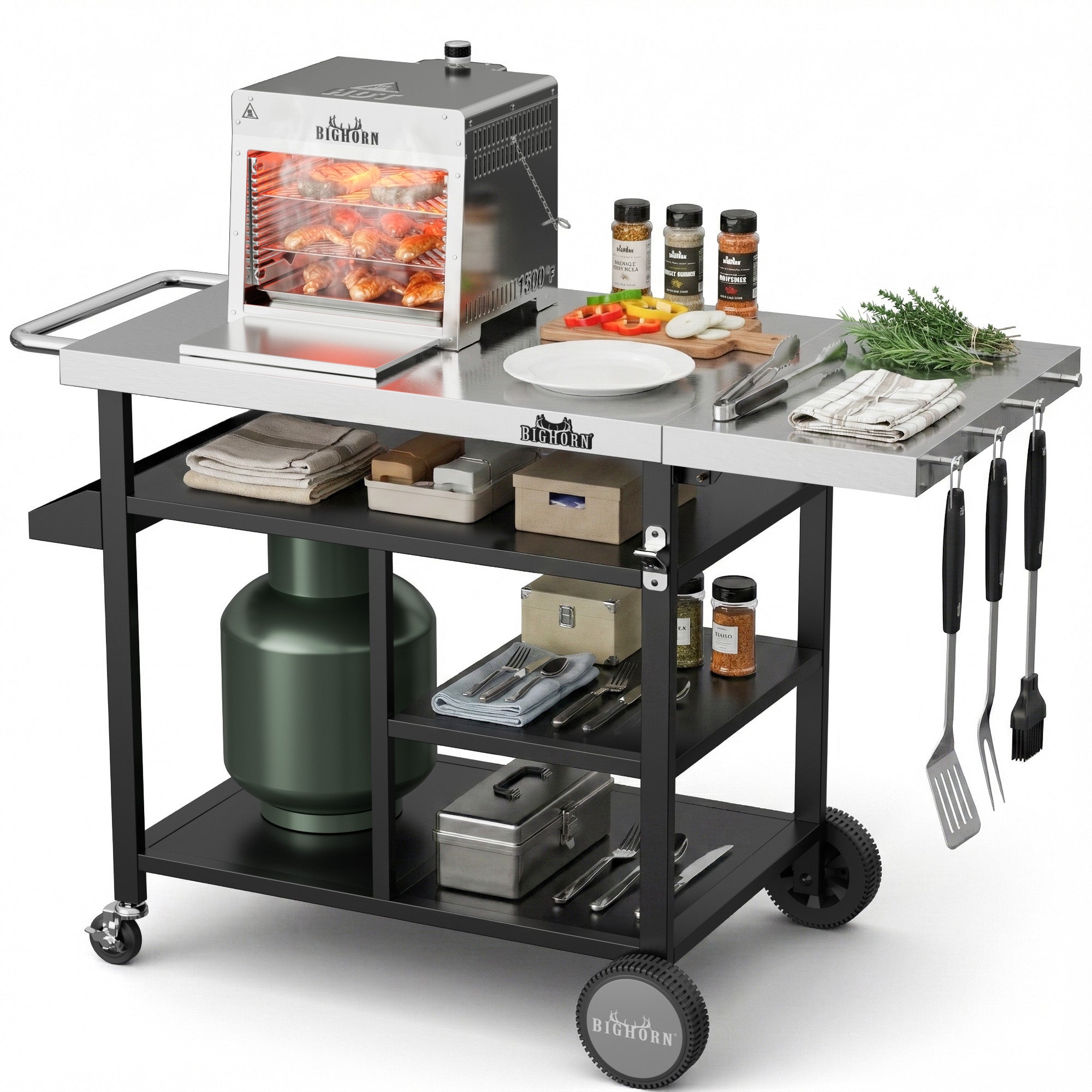
For freestanding backyard cooking layouts, many households park ovens on carts over hardscape rather than on the deck boards themselves. Browse sturdy stands in products like the stainless steel pizza oven table when elevated placement is allowed.

Heat shields, pads and non-combustible bases
Heat shields and hearth pads are meant to block radiant heat and catch drips. They are not magic; they must be sized beyond the oven footprint and used as the maker directs.
Airflow under the oven matters. Sitting a shell flat on a board with no air gap can trap heat. Legs and carts exist partly to create that gap.
Choose materials rated for the temperatures your oven can produce. Hardware-store tile without a rated assembly can crack and mislead you into a false sense of safety.
Table vs cart vs ground-level placement
A manufacturer-approved cart keeps the oven at working height and off the deck surface if clearances are met. Ground-level pads on soil or gravel beside the deck often solve HOA and heat issues better than forcing the oven onto boards.
Check weight ratings for any table. Ovens plus fuel plus stone are heavier than they look when you slide them. Level the stand so oil and dough behave and so fuel systems stay stable.
Compare oven sizes in the pizza oven collection before you buy a cart that is too small for the footprint.
Embers, grease and fire watch
Grease fires spread faster than people expect. Keep a metal peel, lid habits that match your model, and a Class B/C or multi-purpose extinguisher rated for your fuel types within reach—know how to use it before you need it.
Never hose a grease fire with a panic spray of water. For broader home-fire readiness, review Ready.gov home fire guidance.
Stay outside with a lit oven. A quick trip indoors for music is how deck boards get overlooked until smoke appears.
Insurance, HOA and local rules to check
Call your insurer if you add permanent outdoor cooking structures. Some policies ask about open flame on decks. HOAs may ban charcoal or wood fuels even when gas is allowed.
Local fire codes can restrict grilling on balconies and multifamily decks. The NFPA discussion of grill location rules illustrates how codes treat outdoor cooking appliances—your jurisdiction adopts specific editions.
Do you oil a pizza stone before using it?
No—do not oil a pizza stone the way you season cast iron. Oil burns into sticky carbon and smoke.
Heat the stone with the oven, keep it dry, and scrape cooled debris. If food sticks, use more semolina on the peel and verify full preheat rather than oiling the stone.
This stone question shows up beside deck searches because new owners unpack ovens and accessories together; treat stone care and deck safety as separate checklists.
Propane oven carts still need upright cylinder habits from propane safety resources and outdoor cooking clearances discussed in NFPA grill location guidance. Keep a home fire plan per Ready.gov when decks limit exits. Compare oven sizes in the gas pizza oven collection before committing to a cart footprint.
Conclusion
You can site a pizza oven near outdoor living spaces when the manual, a proper heat buffer, and local rules line up. If the deck is the weak link, move the oven to hardscape—do not negotiate with fire.
Shop outdoor-ready setups in the Big Horn Outdoors pizza oven collection and pair with a grill cart / pizza oven table when elevated placement fits your manual.
FAQ
What type of wood is best for a pizza oven?
If your question is fuel wood, use only fuels your manual lists—often kiln-dried hardwoods for wood-fired chambers, never treated lumber. If your question is deck wood under the oven, no deck species makes open-flame appliances automatically safe; you still need clearances and shields. Keep the two meanings separate when you shop.
Can a pizza box go in the oven at 350 degrees?
No. Cardboard pizza boxes are not baking vessels and can scorch or catch fire. Reheat pizza on a pan, stone, or skillet. Keep packaging away from outdoor oven mouths and grill fireboxes.
What can I put my pizza oven on?
Use a manufacturer-approved stand, cart, or non-combustible hearth pad with the clearances listed in your manual. Pavers or concrete pads beside a deck are common solutions when boards cannot take the heat. Avoid thin folding tables that tip or sit too close to rails.
Do you oil a pizza stone before using it?
Do not oil a pizza stone. Oil polymerizes into smoke and sticky residue. Preheat the stone, keep it dry, and manage sticking with peel technique and flour or semolina. Replace a cracked stone rather than sealing it with oil.
Explore more in the Pizza Oven Cooking Guides.
More to Read
Fireproof Grill Mat Under Pizza Ovens and Infrared Grills
Place a fireproof grill mat to catch grease and sparks under ovens and grills. Confirm the live 48-by-30-inch claims, and use a cart when you need ...
No Oven Spring on a High-Heat Pie: Dough Temp, Launch and Floor
Diagnose no oven spring on a high-heat pizza by checking dough temperature, launch handling, and floor heat before you spend another mix changing t...
Heat-Resistant BBQ Gloves: Temperature Ratings and Wet-Grip Limits
Read a 1472°F glove rating as a short, dry, instant figure. Wet or oily conditions change grip, so let long peels reach into hot ovens and grills.
