
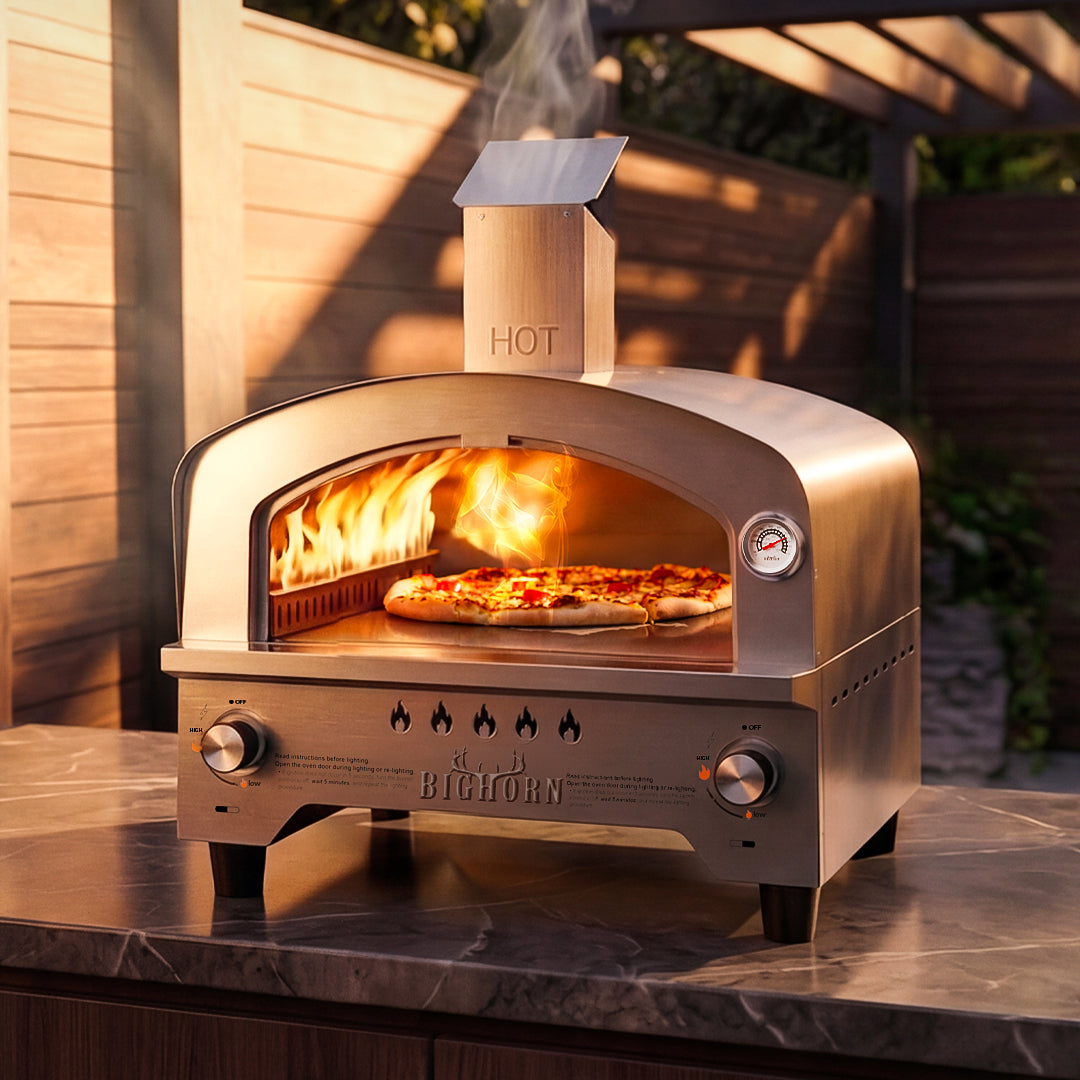
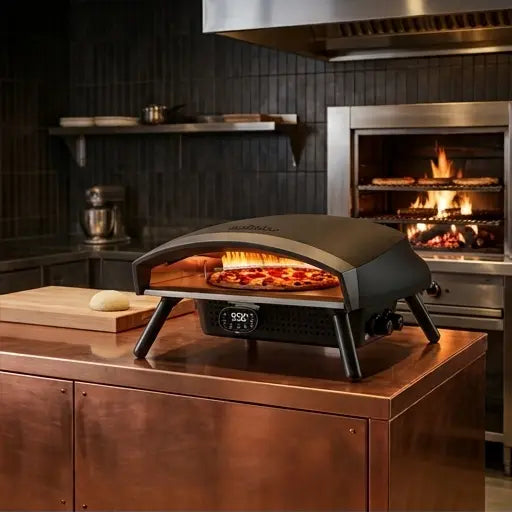
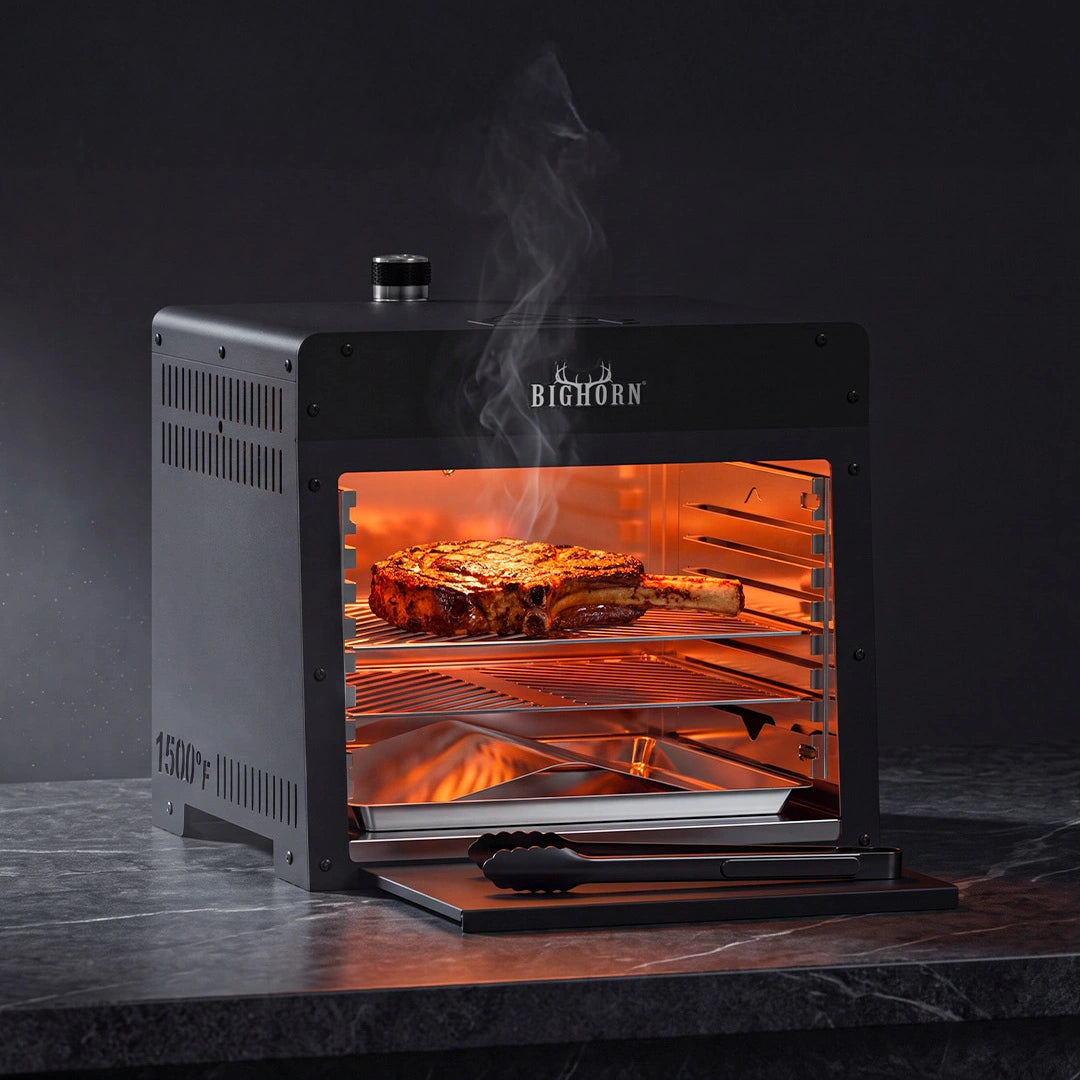
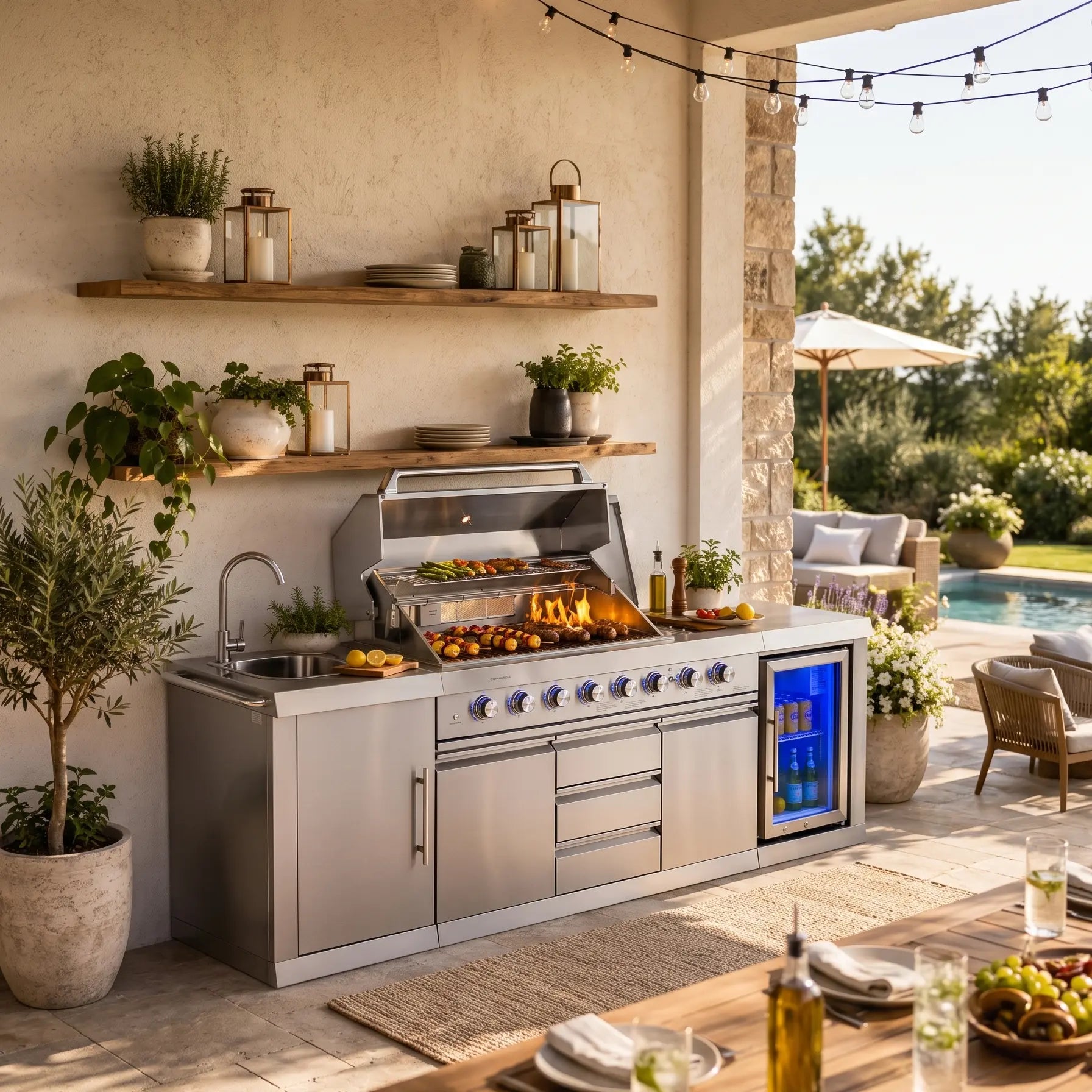
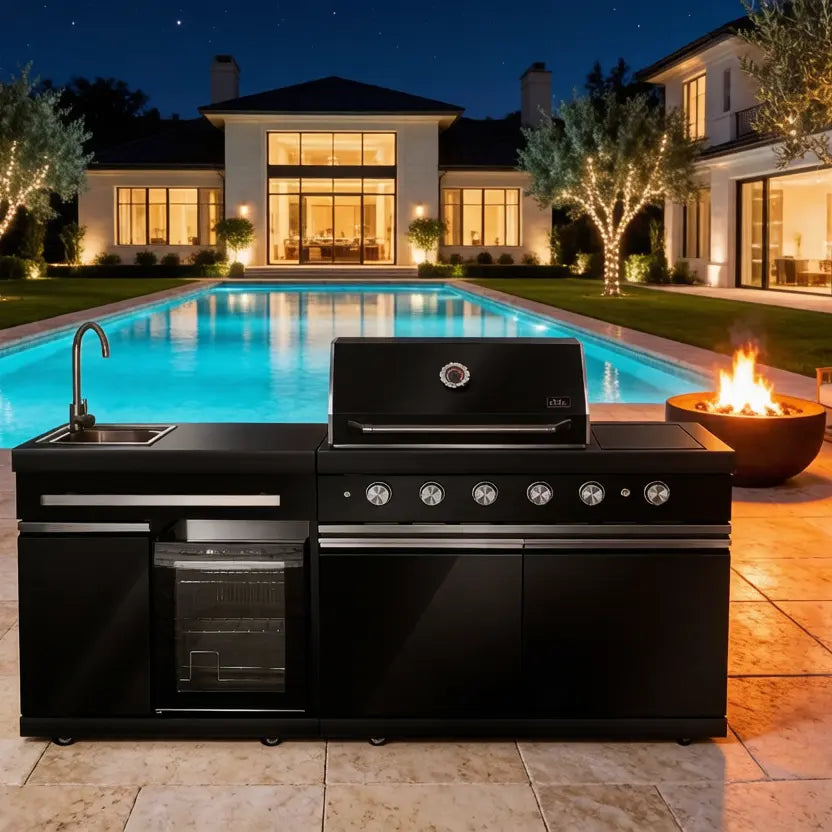
The answer depends on the fuel, not on the word "infrared." A propane-fired or charcoal-fired infrared grill burns fuel and produces exhaust, so it belongs outdoors — never inside a home, garage, breezeway or carport. Whether you can use one on a balcony is a separate question controlled by your lease, your building's rules and your local fire code. Only electric infrared cookers built for indoor use belong in a kitchen, and even then only if the appliance itself is rated for it.
This page explains why the rules exist, what to check for a balcony, and how to confirm the answer for your address. It is practical guidance, not legal advice.
Why an infrared heat source does not change the indoor rule
Infrared grills heat food with radiant energy, which is why they sear fast and get very hot. That design changes how heat reaches the steak, but it does not change the fuel system underneath. A propane infrared grill still burns propane; a charcoal model still burns charcoal. Both consume oxygen and give off combustion products, including carbon monoxide, which is colorless and odorless.
The U.S. Consumer Product Safety Commission is explicit about this: use grills outside only in a well-ventilated area, and never use a grill indoors or in a garage, breezeway, carport, porch or under a surface that will burn. Gas and charcoal grills present a risk of fire and of carbon monoxide poisoning that can result in injury or death, according to the agency's grilling safety guidance. For charcoal specifically, the CPSC has warned for decades that charcoal should never be burned indoors — even with ventilation — because it produces carbon monoxide until it is completely extinguished.
The short answer for indoor use
If the grill connects to a propane tank or burns charcoal, the answer is no for any indoor space, including:
- kitchens and dining rooms;
- garages, even with the door open;
- basements, breezeways and enclosed porches;
- tents, campers, RVs, sheds or any partially enclosed structure.
Ventilation is not a workaround. Opening a window or running a fan does not remove enough carbon monoxide from a confined space, and the CPSC's charcoal guidance says so directly. The same logic applies to propane: the flame looks clean, but incomplete combustion and wind can push carbon monoxide into the space faster than it disperses.
Storage follows the same spirit. Do not keep a grill indoors with freshly used coals, and do not store propane tanks or canisters inside living spaces; check where your building allows tank storage before you bring anything inside.

Where each type of grill can go
The fuel type sets the hard limits; the building and fire code set the rest. This table summarizes the difference, and it is a decision aid rather than a code summary:
| Equipment | Indoors | Open balcony | Enclosed or screened balcony |
|---|---|---|---|
| Propane or charcoal infrared grill | No — never | Only if the lease and local fire code allow it | Treat as not allowed unless the building and code explicitly permit it |
| Indoor-rated electric infrared cooker | Yes, per the manufacturer's manual | Yes, per the manual and building outlet rules | Yes if the building permits the appliance; check outlet and extension-cord rules in the manual |
Verify every "yes" and every "depends" against your own lease, building rules and fire code before you buy or light anything.
Balconies and apartments: what decides whether you can
A balcony is outdoors, but it is not the same as an open backyard. Four layers decide whether a grill can live there, and none of them can be skipped because the balcony "looks safe."
Your lease and building policy. Many leases ban grills, open flames or propane tanks on balconies outright. Even when local fire code permits a grill, a lease or building policy may impose stricter restrictions, and violating the lease can mean fines or eviction regardless of what the fire code allows.
HOA or condo rules. If you own the unit, the homeowners' or condo association rules can still restrict grills and fuel storage on balconies and common areas, so check those documents even when the lease does not mention grills.
Local fire code. Fire codes vary by city and state, and they change. The fire department's non-emergency line or the fire marshal's office can tell you whether propane grills are allowed on residential balconies in your jurisdiction and whether distance, size or sprinkler conditions apply. An online forum post from another city is not evidence.
The balcony's physical design. An open balcony with a railing behaves differently from a recessed balcony under the building above, and a balcony beside a stairwell door or building air intake is riskier than one facing open air. Whatever general advice you read, the grill's manual is the binding document for clearances: follow its required distances from walls, railings and anything that can burn, and do not treat generic suggestions as a substitute for those numbers.
Does an enclosed or screened balcony count as outdoors?
Usually not, in the way that matters for a fuel-burning grill. A screened balcony still traps smoke and exhaust far more than an open railing, and a balcony enclosed on three sides behaves like a porch: carbon monoxide can accumulate instead of dispersing, and grease smoke lingers against the building above. Check how your lease and fire code classify the space. If the balcony is screened or recessed, treat it like the "enclosed" column in the table above until written rules say otherwise. A carbon monoxide detector can alert you to a problem, as the U.S. Consumer Product Safety Commission's carbon monoxide guidance stresses, but it does not make the location permissible.
What actually drives the rules: fuel, enclosure and neighbors
The rules follow from practical risks, and each one shows up differently on a balcony.
Carbon monoxide. Propane and charcoal combustion produce carbon monoxide. In the open air it disperses; in an enclosed or semi-enclosed space it collects. Symptoms of exposure — headache, dizziness, nausea — are easy to mistake for something else, and people can be affected without realizing it.
Fire and heat. Infrared grills radiate intense heat from a small surface. On a wood deck or under a wooden overhang, that heat plus grease flare-ups is a fire hazard. Buildings with combustible construction, limited clearance or a sprinkler system may prohibit open-flame grills entirely for this reason.
Shared space. Smoke, heat and noise travel on balconies. Even where a grill is allowed, most leases and building rules cap how and when you can use one, because one resident's cookout becomes another resident's smoke alarm.
If you cannot grill where you live
Being told "no" does not mean giving up high-heat cooking. The practical alternatives depend on what you have access to:
- Electric countertop cookers rated for indoor use. These are a separate category from propane infrared grills: they do not burn fuel indoors and produce no combustion exhaust. Buy one only if the product and its manual explicitly say it is for indoor use.
- A shared or community grill area. Many apartment buildings and HOAs provide a gas grill in a common courtyard or rooftop area that complies with fire rules. Check whether you can reserve it.
- Parks, campgrounds and permitted sites. A portable propane grill is allowed at many public sites with designated grill areas. Confirm the site's rules on fuel and fire before you pack it.
- A friend's yard or a local indoor-outdoor restaurant. When your building says no, the simplest answer is often cooking somewhere the rules already permit it.
Do electric infrared cookers follow the same rules?
No. An electric countertop cooker that uses infrared heat but runs on a wall outlet produces no combustion exhaust, which is why manufacturers can rate them for kitchens. The safety question then shifts from carbon monoxide to heat, steam and electrical load: keep clearance from combustibles, use it on a stable surface, and follow the manual's outlet and extension-cord guidance.
If you already own a propane-fired portable grill, the product page and the manual are the first place to check its intended use. Big Horn's portable infrared grill collection, for example, is propane-fired — which places it in the "outdoor use, balcony rules apply" category rather than the indoor-electric category.
This article is about where you may place a grill. If your question is whether infrared cooking itself is safe for food — the heat, the propane and the high-temperature cooking — Big Horn's infrared grill safety guide addresses that separately.
How to verify the rules for your address
The answer for your address takes about ten minutes to confirm, and it should come from documents, not from memory:
- Read the lease or HOA rules and search them for "grill," "propane," "open flame" and "balcony."
- Email building management with the exact model and fuel type you plan to use, and ask for written confirmation.
- Call the local fire department's non-emergency line or the fire marshal's office and confirm whether propane grills are allowed on residential balconies in your jurisdiction.
- Check any posted building notices about fire safety or propane storage.
- Keep the written answers with your lease; if a rule changes later, you have the record.
One more check is worth doing before you buy: if you live in an apartment, confirm the grill you want can be legally stored and used where you live before the purchase, not after. A grill that cannot be used on your property is not a bargain at any price.
Safety and technical guidance here is general and educational: follow your product manual and local fire, building and electrical codes, which override general advice. Product details reflect official Big Horn Outdoors listings reviewed September 5, 2026; re-check prices and availability at checkout.