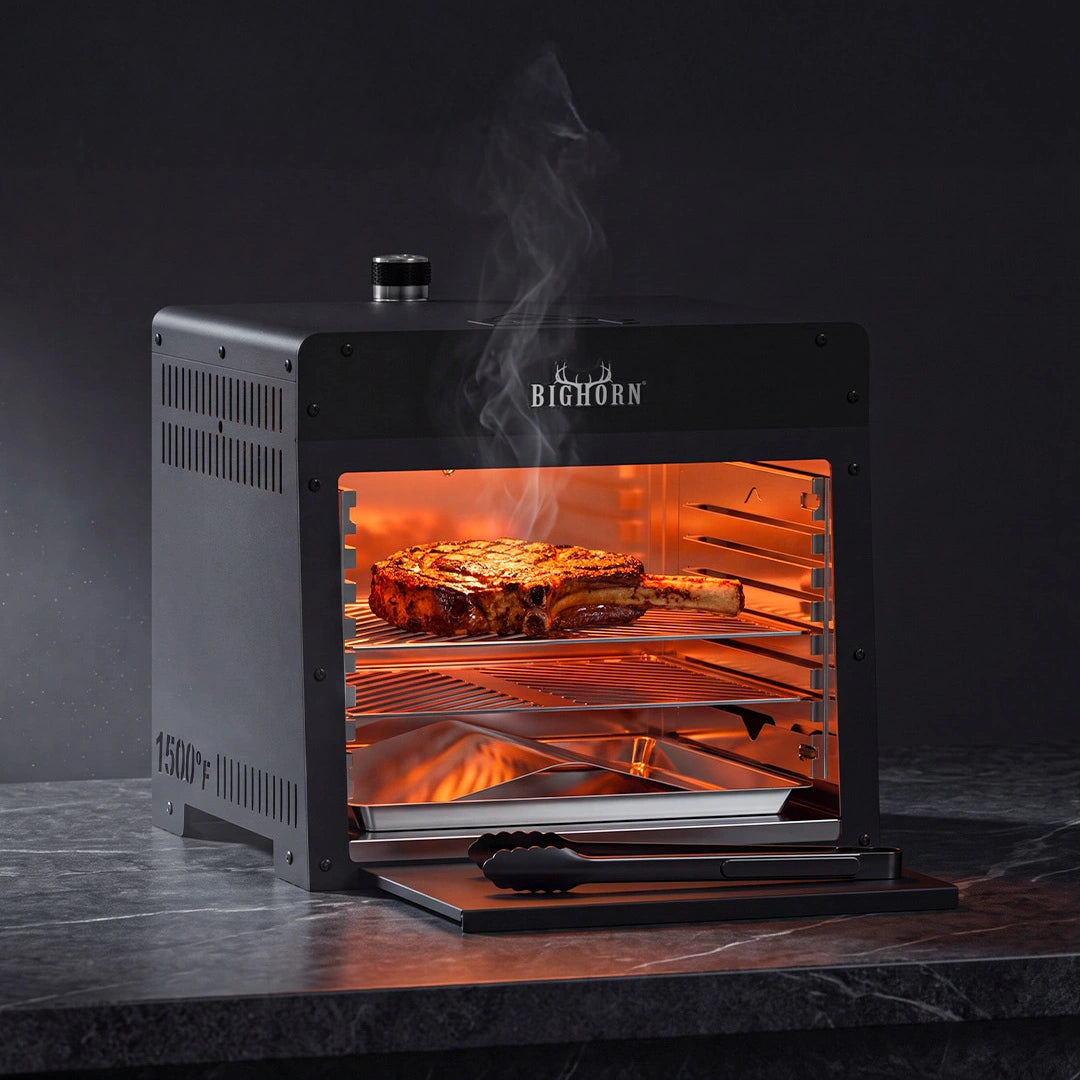
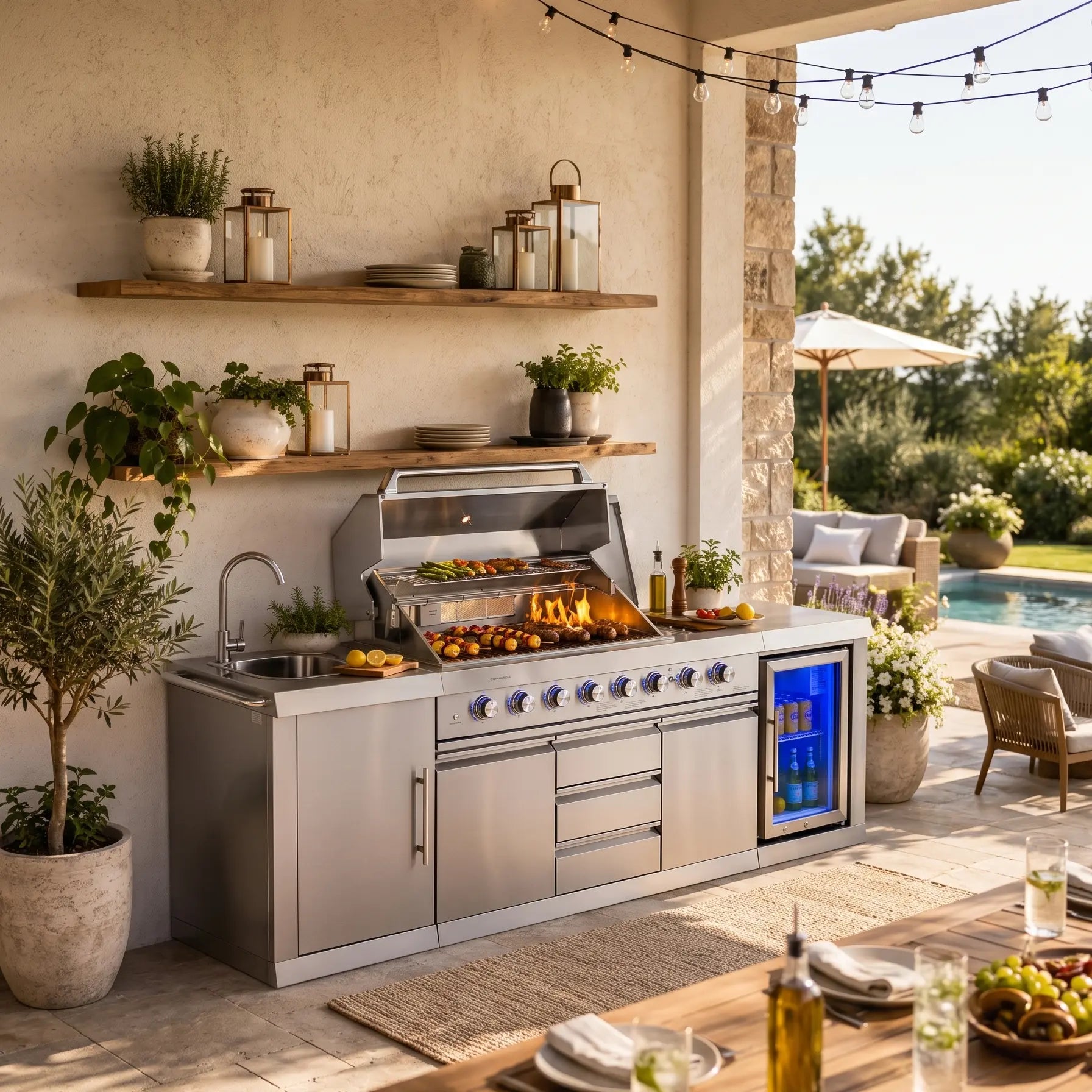
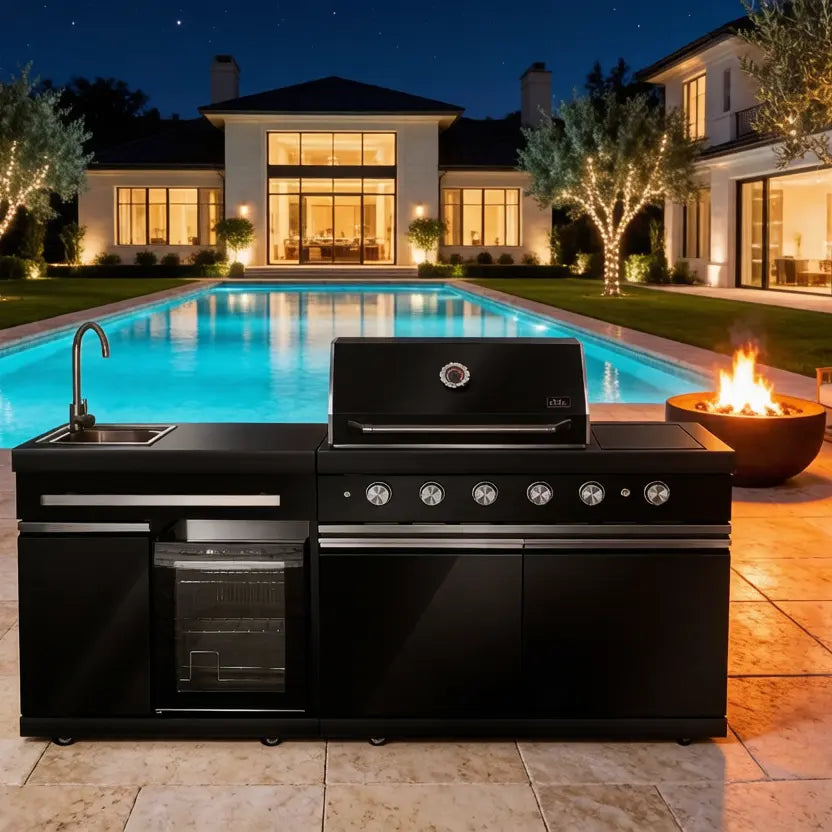
Yes, infrared grills are safe when used outdoors and handled properly. The food-safety considerations are the same as any high-heat cooking method: avoid heavy charring and use a thermometer to reach safe internal temperatures. The Big Horn Outdoors infrared broiler is a propane, outdoor-only appliance.
Are Infrared Grills Safe to Use?
An infrared grill is safe when it is used outdoors, on a stable surface, and according to the manufacturer's instructions. The main risks are the same as any propane grill: heat, fire, and carbon monoxide, which is why indoor use is not allowed.
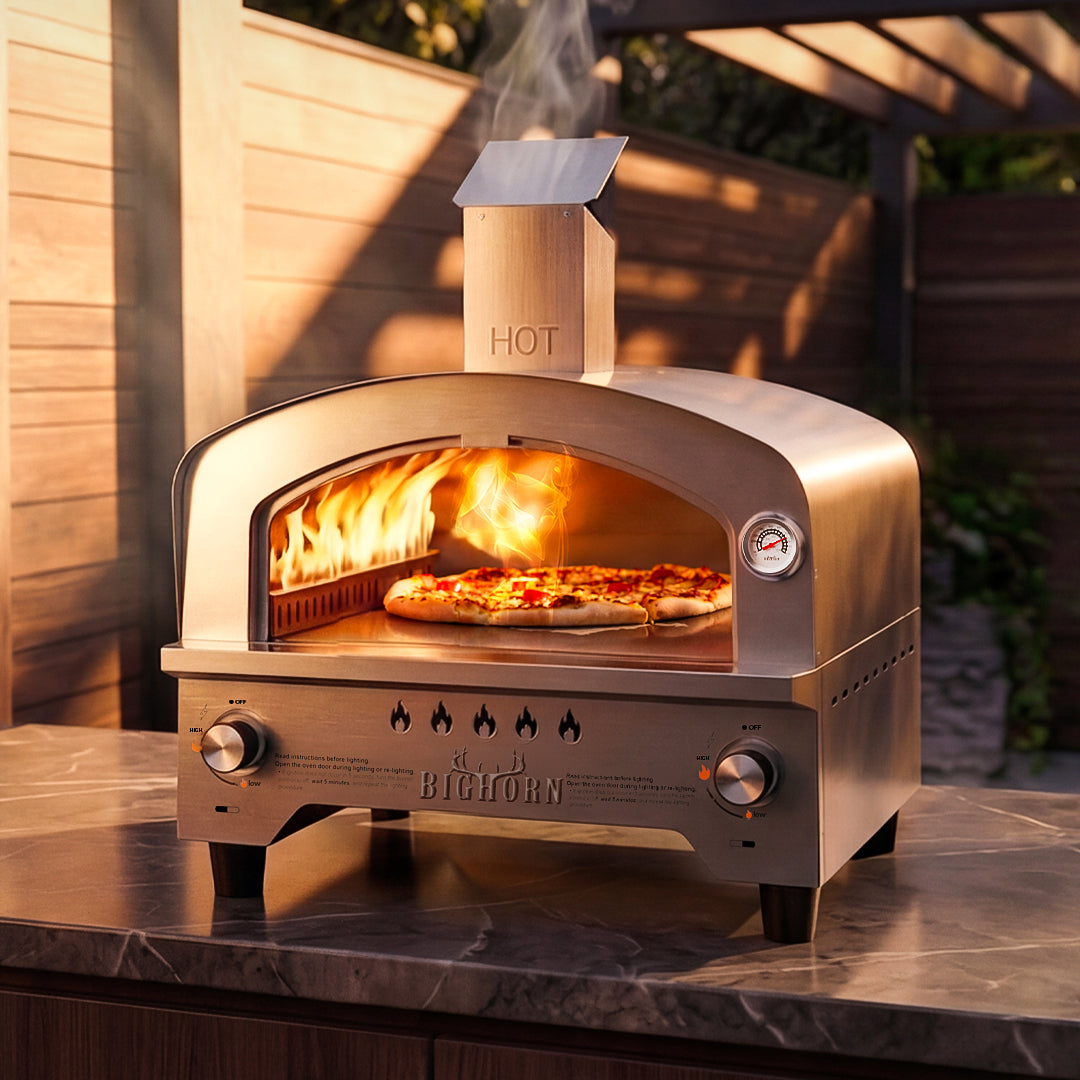
Infrared grills reach very high temperatures, so the primary safety rules are about placement and ventilation. Use the grill outdoors on a heat-safe surface with clearance from anything flammable, and never operate it in a garage, tent, or enclosed space. The Big Horn Outdoors infrared broiler is built for outdoor use and runs on propane. Following the same precautions you would for any gas grill keeps the risk low.
Does High-Heat Grilling Create Harmful Compounds?
High-heat cooking of meat can form compounds called HCAs and PAHs, especially when meat is heavily charred or cooked over direct flame. This is a general property of grilling meat, not something unique to infrared grills.
HCAs (heterocyclic amines) and PAHs (polycyclic aromatic hydrocarbons) can form when meat is cooked at very high temperatures or when fat drips onto a heat source and creates smoke. Infrared grills can reach high heat, so the same general guidance applies: avoid heavy charring, trim excess fat, and do not overcook meat. These compounds are a topic of ongoing research, and practical mitigation — not fear — is the right framing.
Does Infrared Grilling Cause More Char Than a Gas Grill?
Infrared grilling does not inherently cause more char than a conventional gas grill. In fact, its top-down radiant heat and reduced flare-ups can mean less burning of the surface when used correctly.
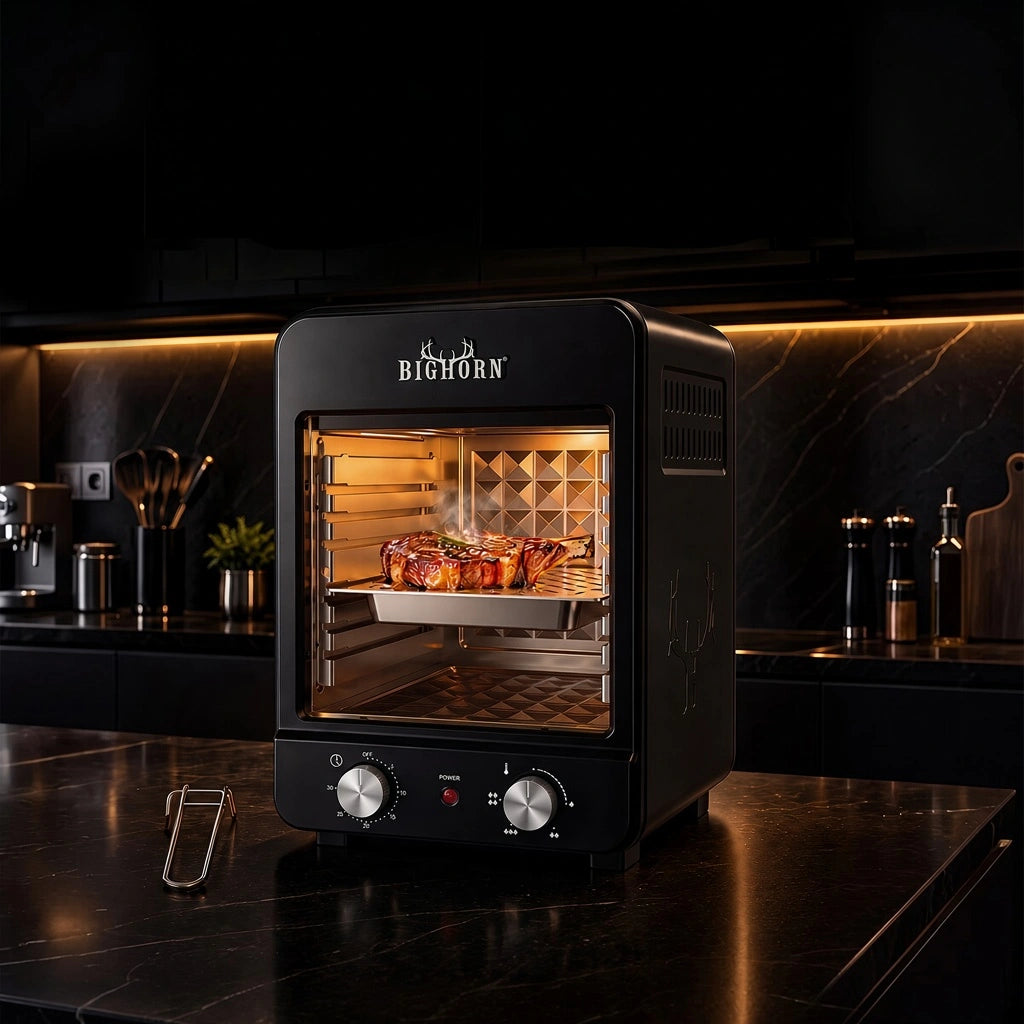
Char comes from overcooking or from flare-ups igniting fat. Because the Big Horn Outdoors infrared broiler delivers heat from above and keeps fat from dripping onto an open flame, it tends to produce fewer flare-ups than a conventional grill. The high heat does mean food can char quickly if left too close to the burner, so rack position and attention matter. Moderate heat management avoids heavy charring.
What Internal Temperatures Are Safe for Grilled Meat?
Use an instant-read thermometer to reach safe internal temperatures: 145°F for whole cuts of beef, pork, lamb, and fish, and 165°F for poultry. These are standard food-safety minimums rather than product-specific numbers.
Doneness and safety are related but not the same — USDA recommends cooking whole beef steaks to at least 145°F followed by a 3-minute rest; ground meat should reach 160°F and poultry 165°F. The table below lists common minimums.
| Food | Safe Minimum Internal Temperature |
|---|---|
| Beef, pork, lamb (whole cuts) | 145°F |
| Ground meats | 160°F |
| Poultry | 165°F |
| Fish | 145°F |
Are the Fumes From an Infrared Grill Harmful?
The fumes from a propane infrared grill are not harmful when it is used outdoors with ventilation. The real hazard is carbon monoxide, which is why the grill must never be used indoors.
Propane combustion produces carbon monoxide and water vapor, which disperse harmlessly outdoors. Indoors or in an enclosed space, carbon monoxide can build up and become dangerous, so outdoor use is a hard rule. The fumes themselves are not the concern — the ventilation is. Keep the grill in open air and away from windows and doors.
How to Use an Infrared Grill Safely Outdoors
Place the grill on a stable, heat-safe surface with clearance from anything flammable, keep the propane connection clear, and let the unit cool before moving or cleaning it. This model's stainless steel front panel helps protect the surface beneath it.
Safe use is mostly about placement and patience. Use the grill outdoors, away from overhangs and combustible materials, and never leave a lit grill unattended. Let the unit cool completely before touching the grates or moving it. Treat an infrared broiler with the same care you would any propane appliance.
Key Facts
Big Horn Outdoors lists the following specifications at a glance.
- Design: outdoor, propane, with a stainless steel front panel to protect nearby surfaces (Big Horn Outdoors' listed feature)
- Maximum temperature: up to 1,500°F (listed)
- Heat delivery: top-down, radiant (listed)
- Searing: steak finished in about 5 minutes (listed)
- Cleanup: detachable, dishwasher-safe components (listed)
When to Avoid Infrared Grilling
Avoid infrared grilling indoors, in enclosed spaces, or if you cannot keep the grill on a stable, heat-safe surface. It is also worth reconsidering if you want low-and-slow cooking rather than high-heat searing.
Infrared grills are built for intense, direct heat, so they are not the tool for gentle, prolonged cooking. The high heat also means you should not leave the grill unattended or use it near children without supervision. Use it for its intended purpose — fast, high-heat outdoor searing — and follow basic propane safety.
Big Horn Outdoors Product Team
"Our view on safety is that infrared grilling is no more dangerous than any propane grill when you follow the same rules: use it outdoors, on a stable surface, and with clearance around it. The high heat does demand attention, because food can char quickly, but the top-down design actually reduces flare-ups. We treat food safety separately, using a thermometer to hit safe internal temperatures rather than guessing."
Conclusion
Infrared grills are safe when used outdoors and handled like any propane appliance. The food-safety considerations — avoiding heavy charring and reaching safe internal temperatures — are the same as with any high-heat cooking method. Use the Big Horn Outdoors infrared broiler outdoors, manage the heat with the adjustable rack, and check doneness with a thermometer.
Key Takeaways
- Infrared grilling is safe when used outdoors. The rules match any propane grill: outdoor use, stable placement, and clearance.
- Avoid heavy charring. As with any high-heat method, moderate charring and trimming fat reduce HCA and PAH formation.
- Check internal temperatures with a thermometer. Whole beef, pork, lamb, and fish should reach 145°F; poultry 165°F.
- The top-down design reduces flare-ups. Heat from above means fewer grease flare-ups than a conventional grill.
Questions to Ask Before Buying
- Will I use it outdoors only? Indoor use is not allowed because propane produces carbon monoxide.
- Do I want low-and-slow cooking? Infrared is for fast, high-heat searing rather than gentle, prolonged heat.
- Can I supervise the cook? The high heat means you should not leave a lit grill unattended.
FAQs
Can I use an infrared grill indoors?
No. It is propane-fueled and must be used outdoors with proper ventilation.
Does infrared grilling cause cancer?
No single cooking method causes cancer. As with any high-heat grilling, avoid heavy charring and follow standard food-safety guidance.
What temperature is safe for steak?
USDA recommends cooking whole beef steaks to at least 145°F followed by a 3-minute rest. Medium-rare (about 130–135°F) is a doneness preference, not a food-safety minimum.
Do infrared grills produce harmful fumes?
Not when used outdoors. The hazard is carbon monoxide from indoor use, so outdoor ventilation is essential.
Sources
- USDA FSIS, Safe Minimum Internal Temperature Chart — USDA FSIS, Safe Minimum Internal Temperature Chart
- NFPA, Grilling Safety — NFPA, Grilling Safety
Explore more in the Infrared Grill Cooking Guides.