







Accessories
The cost of outdoor rust is usually not a dramatic replacement invoice you can quote in advance. It is a pan that needs a scrub and a reseason, a breakfast that sticks, and a weekend lost to repair. The counterintuitive part is timing. Cast iron rust outdoors is often an overnight problem, not a winter-only problem. A plate left on the grill "until tomorrow" can wake up orange in humid air or dew.
Outdoor air rusts cast iron between cooks, not just in winter
Outdoor air rusts cast iron between cooks, not just in winter. Dew, humidity, and a damp pan are enough. After each cook, wipe the food off, dry the iron, add a thin film of cooking oil, and store it dry. Do not leave a bare pan out overnight and expect the seasoning to protect it.
Winter storage still matters, but it is not the only season that taxes the pan. A humid summer night, a coastal evening, or a covered grill that still drips can do the same work. EPA guidance on moisture in the home and Weather.gov heat-safety guidance are about buildings and weather, not pans, yet they underline the obvious: outdoor air carries moisture. The pan needs a between-cook routine that assumes that.
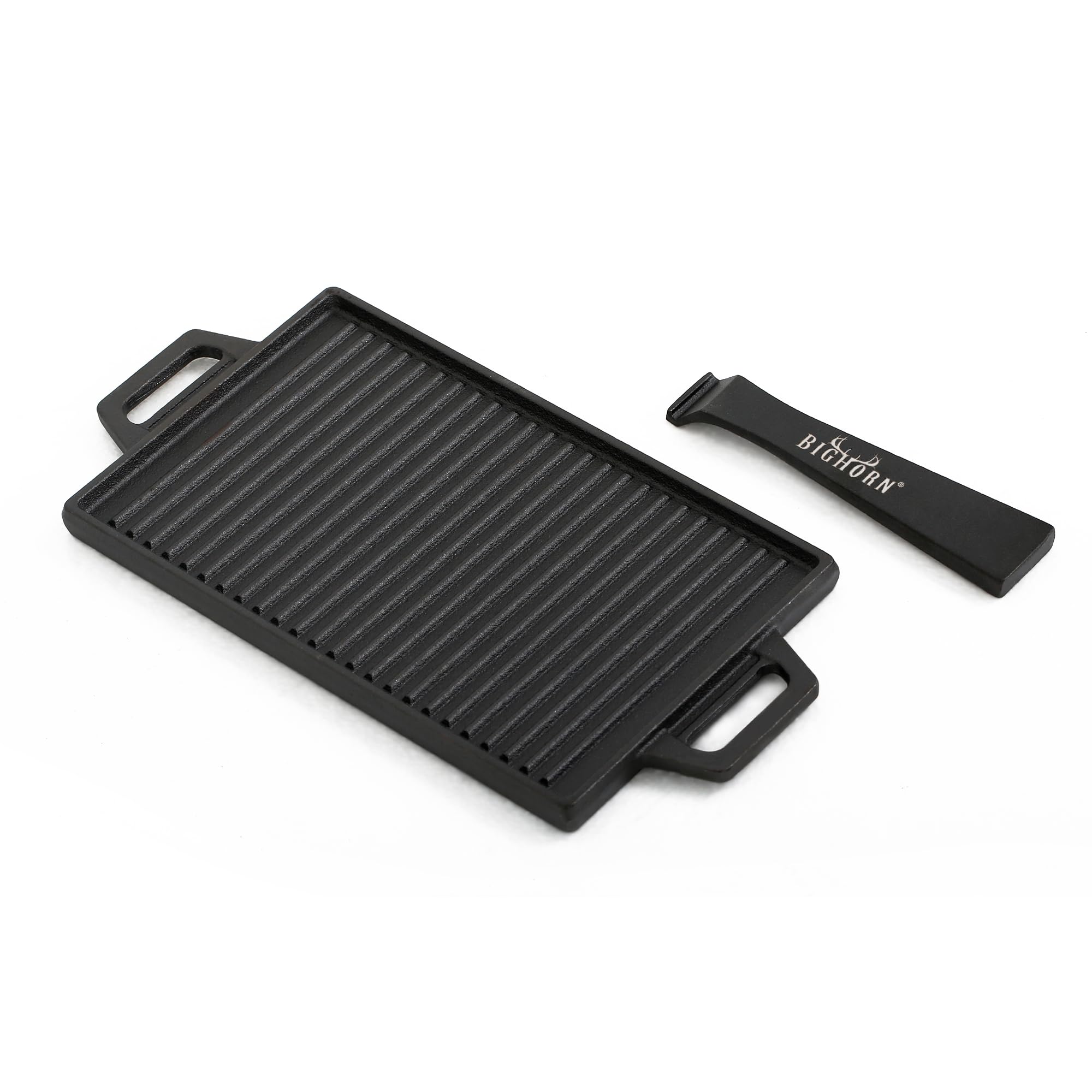
A between-cook wipe, oil and a dry store
While the pan is still warm, not scorching, wipe out food with a dry or slightly damp cloth or a pan scraper. Use a little water if you need it, then dry the iron immediately over low heat or with a towel until no moisture remains, including the corners and the underside. Add a very thin film of a cooking oil the maker accepts. The pan should look quietly sheened, not wet or sticky.
Store it in a dry indoor cabinet, a dry tote, or another dry place where air can move a little and water cannot pool. Do not seal a still-damp pan in plastic. FDA safe food-handling guidance, FDA kitchen food-safety guidance, and FDA advice on storing food safely are the official reminders to keep cookware clean and dry around food. They are not a seasoning recipe, and this page will not invent an oven temperature or a number of coats.
Overnight outside is the usual mistake
The usual mistake is leaving the griddle on the grill, on a picnic table, or in an open cart because the evening ran long. Overnight dew is enough to start rust on a surface that was stripped by a wet cook or a hard scrape. A grill lid can trap moisture as well as shed rain. "I will deal with it in the morning" is how a light orange film appears.
If you are camping, the same rule holds. A pan left in the grass, in a wet wash bin, or uncovered on a picnic table is in the weather, even if the sky looks clear. Bring it into the dry box, the kitchen, or a sealed dry tote after the wipe and oil.
Stripping a light rust without wrecking the seasoning
For a light rust film, a scrub with coarse salt or a non-metal brush, a full dry, and a fresh thin oil coat will often bring a pan back without a total strip. Work the rusted patches, then dry immediately. You are trying to remove the rust, not grind the pan to bare metal unless the rust is widespread.
If you use a mild vinegar wipe, rinse it off completely, dry the iron at once, and oil it. Do not leave acid sitting. A deep, pitted rust may mean the piece needs a more complete reseason, or that it is no longer worth using for food. This is a care path, not a restoration workshop, and it is not the same job as cooking technique on a cast-iron griddle on a camp stove.
How this differs from camp-stove griddle technique and plate-on-grill pages
How to cook on a camp-stove griddle, or how a plate behaves on a grill or an infrared cooker, is a technique question. You can read that in the griddle-use page above, in infrared grilling versus a cast-iron skillet, in outdoor infrared grilling tips, and in how to cook steak on an infrared grill. Those pages should not be turned into rust manuals.
This article owns the hours between cooks: humidity, overnight exposure, and the cheap (in time, not a quoted price) habit that prevents rust. Stove and fuel care stay on camp-stove maintenance and safe fuel storage. Link out, and come back here when the pan itself is the problem.
A humidity-season routine
In humid months, shorten the gap between cooking and storing. Wipe and oil the same evening. Check the pan the next day if the house is sticky. If you grill often, keep a small towel and a tiny oil bottle with the pan so the routine does not depend on walking back into a closed kitchen later.
| Situation | Between-cook move | Avoid |
|---|---|---|
| Dry, mild evening | Wipe, dry, thin oil, then a dry indoor store. | Leaving the pan on the grate "because the air feels fine." |
| Humid, coastal, or dewy night | Same routine, done before you go inside for the night. | A lid-only plan, or a pan left in a closed, damp grill. |
| After a wet or acidic cook | Clean sooner, dry thoroughly, and oil the same day. | Soaking the pan overnight in the sink or a wash bin. |
| Light rust already visible | Scrub the rust, dry at once, and re-oil; inspect the underside too. | Cooking on rust, or spraying a workshop lubricant as a finish. |
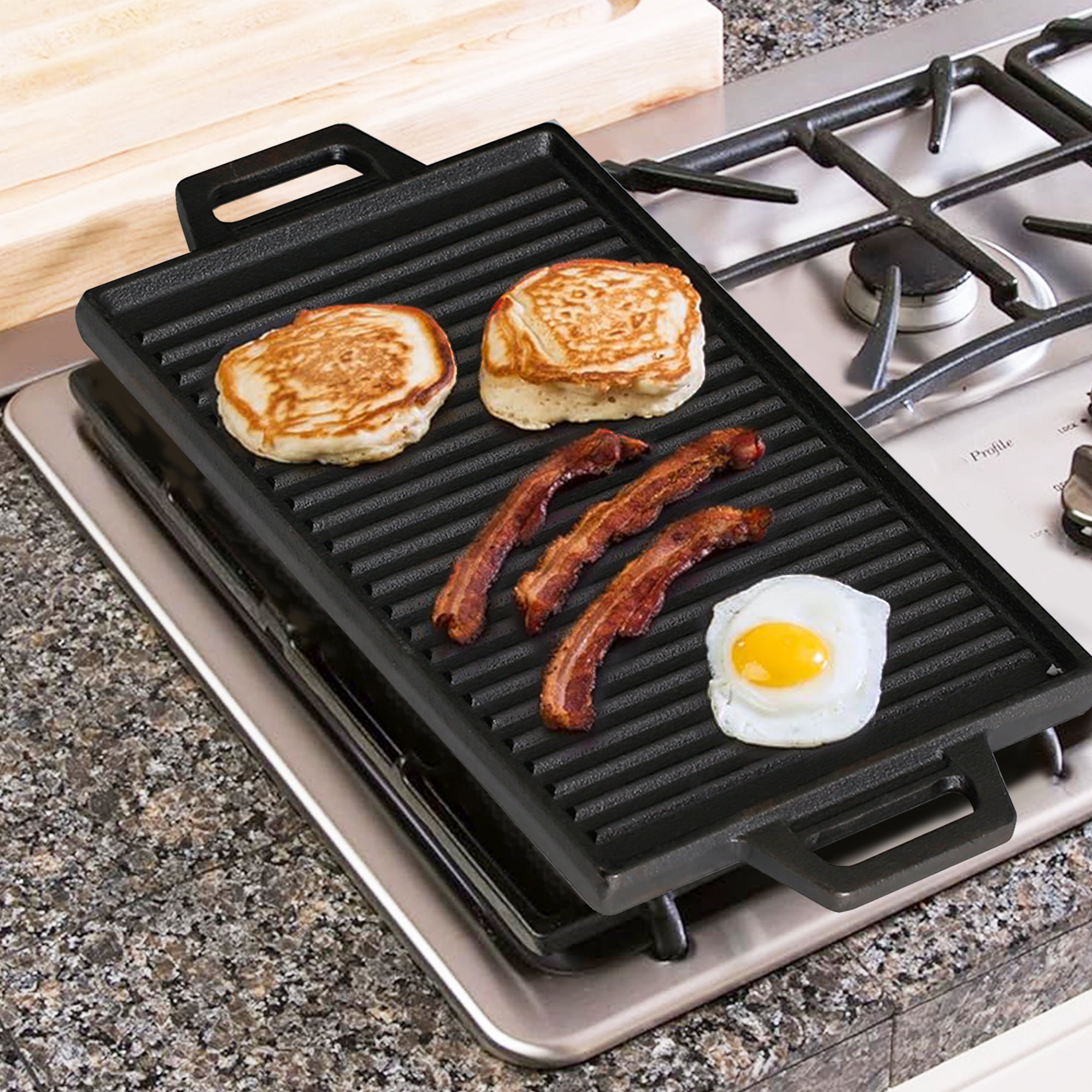
A paper-towel oil film that is thin enough not to go rancid
The film should be thin enough that a paper towel comes away with little oil and the pan does not feel greasy. A thick coat can get sticky, attract dust, and go rancid in a warm cabinet. Wipe the oil on, then wipe most of it off. Include the handle sockets and the underside, which rust just as readily as the cooking face.
If the pan smells off when you next open the cabinet, wash it, dry it, and apply a fresh thin film. Do not try to cook the rancid layer away as a shortcut. Ready.gov food-and-emergency guidance will not season a pan, but it supports inspecting what you store before you use it again.
A recap of who this method is for, and who should use a different cooker
This method is for someone who cooks on cast iron outdoors and wants to avoid overnight rust. The cost it saves is time, seasoning, and a pan that still cooks cleanly. It is not a camp-stove tutorial and not a steak-sear lesson.
If you cannot bring the pan inside or into a dry box after a cook, outdoor cast iron will keep punishing you. Use a different cooker with a grate you can leave, or change the storage plan. The iron can last a long time, but only if the hours between meals are dry.
If you cook on a reversible cast-iron griddle plate, treat the between-cook wipe, dry, and thin oil film as part of the meal, not as a chore you can leave until morning.
FAQ
Does cast iron rust if left outside?
Yes. Dew, rain, and humid air can rust bare or thinly seasoned iron, sometimes by the next morning. A lid or a grill hood is not always enough if the pan is still wet or if moist air sits on the surface. Bring the pan in, or store it fully dry in a dry place, after you wipe and oil it.
Can I use vinegar to remove rust?
A mild vinegar wipe is a common household method for light rust, followed by a thorough rinse, a complete dry, and a fresh oil seasoning. Do not soak a pan for a long, unattended bath as a first move, and do not leave acid on the iron. If rust is heavy or the pan is pitted through, consider whether the piece is still worth saving. Always wash off the acid before the pan goes near food again.
What should never be cooked in a cast iron pan?
There is no single food that is universally forbidden, but long, wet, acidic cooks can wear a thin seasoning and make rust more likely if you then store the pan damp. The larger outdoor problem is not one ingredient; it is leaving the pan wet or uncovered in humid air. After tomatoes, wine, or a saucy cook, clean, dry, and oil the pan the same day.
Does WD-40 really remove rust?
A rust-loosening spray is not a cooking-pan seasoning, and it is not a food-safe finish. If a non-food lubricant ever touches a pan, wash it off completely with soap and water, dry the iron, and reseason with a cooking oil the pan's maker accepts before you cook again. For light outdoor rust, start with a scrub, a full dry, and oil, not a workshop spray.
More to Read
Leftover Holiday Turkey on the Grill or in the Pizza Oven: Sandwiches, Tostadas and a White Pie
Give leftover turkey a second heat, not another roast: grill sandwiches or tostadas, or bake a white pie, after a safe leftover inventory the night...
Parrilla Taco Night: Carne, Salsas and Grate Space for a Crowd
Run taco night on a parrilla as a grate-space plan: carne, a second protein, a salsa station, and tortillas held soft, without one crowded fire.
Bone-In Lamb Leg or Shoulder on a Santa Maria or Gas Grill
Grill a bone-in lamb leg or shoulder as a roast: Santa Maria height or a gas two-zone fire, a USDA safety floor, and a probe that does not touch bone.
