
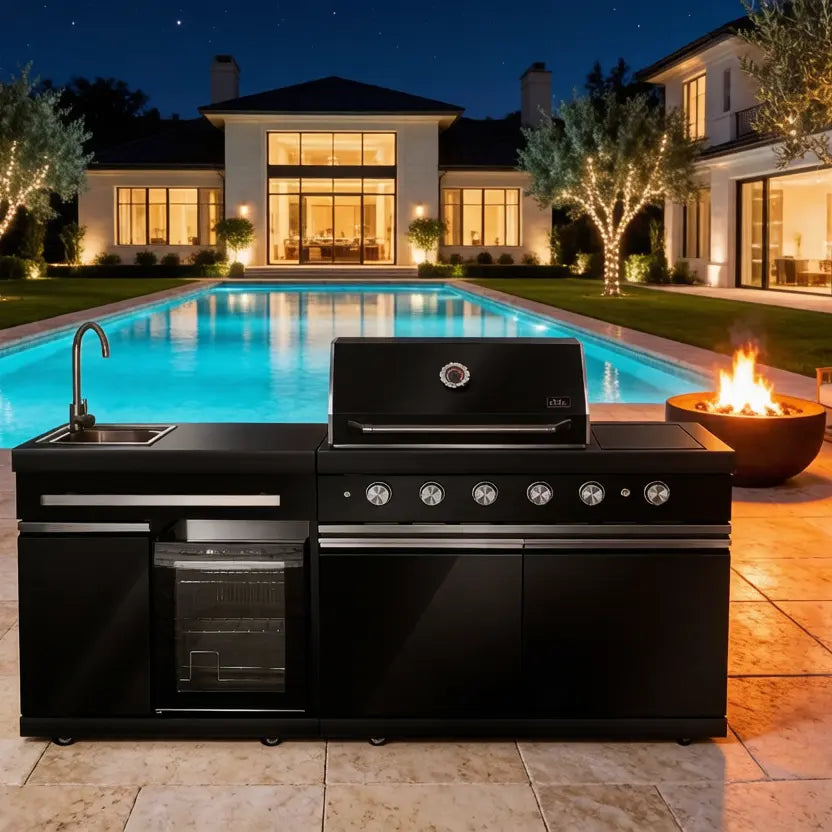
There is no single winner between an infrared grill and a cast iron skillet, because they sear through different physics and suit different settings. An infrared grill radiates intense heat from below and builds a crust fast over a live flame outdoors; a cast iron skillet holds heat in a thick pan and sears through direct contact on a stovetop or in an oven. This guide compares the two across crust, smoke, convenience, cleanup and flavor — with honest conditions — so you can pick the method for the steak you are cooking tonight.
How each method sears
Infrared grills cook with radiant heat: the burner heats an emitter that glows and radiates energy directly at the food, building a crust in seconds without relying on hot air. Cast iron sears through conduction: the pan absorbs heat and transfers it to the meat wherever the surfaces touch, which is why even contact matters and why a heavy pan holds its temperature when cold meat lands on it. Both can produce an excellent crust, but they achieve it differently — infrared from above the fire, cast iron from the pan itself — and each has strengths the other cannot match in the same way.

Crust and heat behavior
The crust differences show up in texture and speed. An infrared grill can reach higher surface temperatures faster, producing a deeply browned crust in a very short sear — useful for thick steaks where you want maximum crust with minimal interior cooking. Cast iron delivers a slightly different crust, often more even across the full surface because the pan's heat is uniform, but it relies on the pan staying hot; a thin or cold pan loses heat when the meat lands and steams instead of searing. For a single thick steak, both work; for consistent full-surface crust, cast iron's even contact has an edge, while infrared's speed has an edge for crust-before-center control.
Smoke, convenience and where you cook
The setting often decides the method. Infrared grills are outdoor propane appliances, so the smoke and searing happen outside with no indoor cleanup of spattered oil — but they need fuel, space and a preheat. Cast iron works indoors on any stove, needs no fuel beyond the heat source, and moves from stovetop to oven for a reverse-sear finish; the trade-off is indoor smoke, which means opening windows and running a vent. If your kitchen has weak ventilation, the outdoor infrared grill is the more pleasant sear; if you want to finish with butter basting or move straight into the oven, cast iron is the more versatile tool.
Cleanup and upkeep
Cleanup separates the two sharply. An infrared grill needs its grates brushed and its emitter cared for gently, with the burner cleaned on a schedule; a cast iron skillet needs no soap in the traditional method — wipe, scrape, re-oil and store — but it must be seasoned and kept dry to avoid rust. Neither is hard once it is routine, but they ask different habits: the grill rewards regular burn-off and gentle emitter care, while the skillet rewards oiling and dry storage. Choose the maintenance you will actually keep up with, because a neglected method performs poorly no matter how well it works when new.
Flavor and finish
Flavor differences come from the cooking environment more than the surface. Infrared grilling outdoors adds the character of live-fire cooking and open-air smoke; cast iron indoors delivers a clean sear with no added smoke flavor, and it excels when you baste with butter, garlic and herbs at the end — a finishing step that is awkward on an open grill grate. For a steak that tastes like a steakhouse grill, the infrared method fits; for a steak finished with a butter baste and served indoors, cast iron is the natural match. Neither makes the other wrong; they make different meals.
Infrared grill or cast iron for tonight's steak
| Priority | Better fit |
|---|---|
| Fastest crust on thick steak | Infrared grill |
| Even full-surface sear | Cast iron |
| Indoor cooking with venting | Cast iron |
| Outdoor, low-smoke-indoors cooking | Infrared grill |
| Butter-baste finish | Cast iron |
| Live-fire flavor | Infrared grill |
Run the matrix against tonight's meal: thick steak and good weather point to the infrared grill; a baste-and-finish steak in the kitchen points to cast iron. Many cooks own both and use them for different nights, which is a reasonable answer to "which wins" — the real question is which method fits the meal and the kitchen you are standing in.
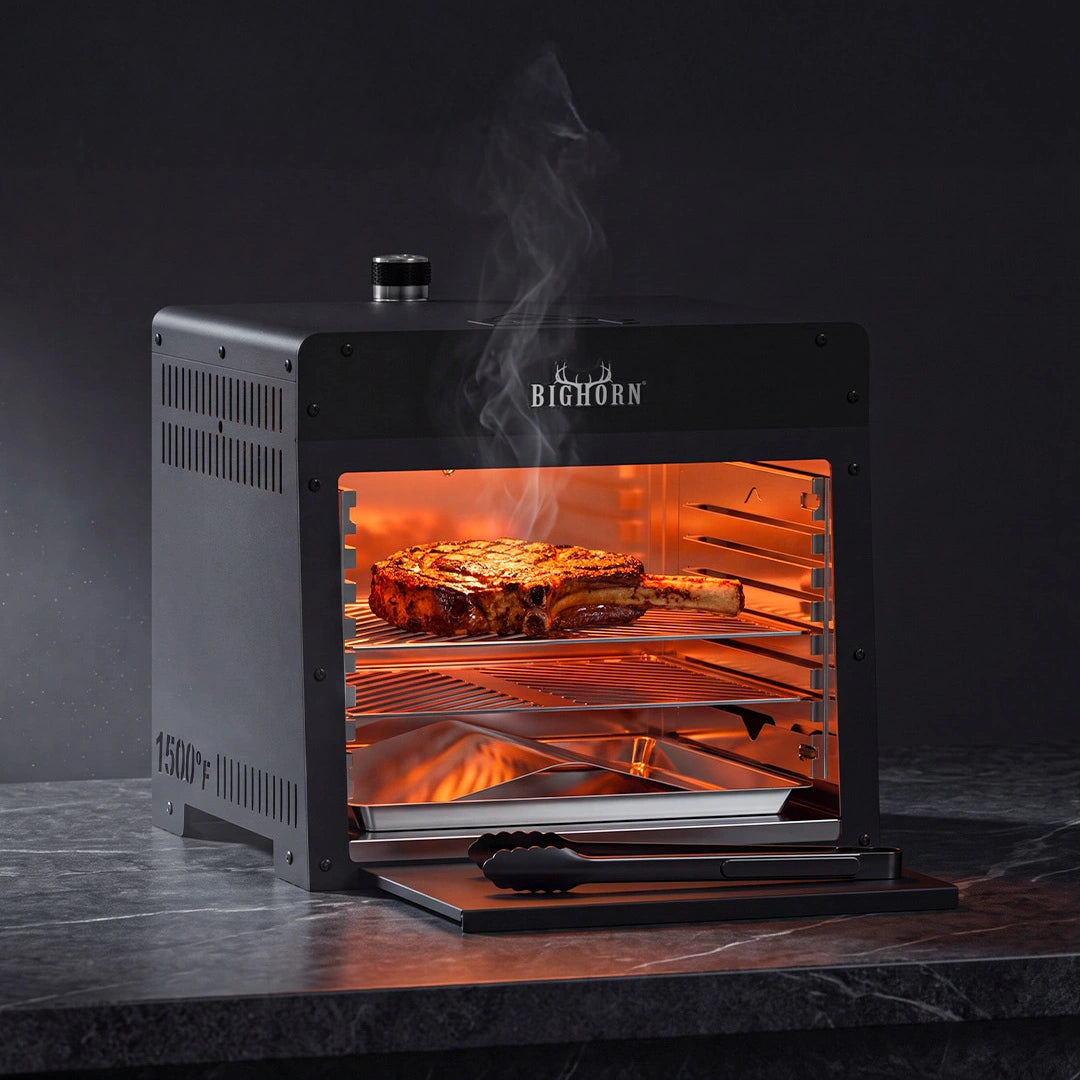
Big Horn's portable infrared steak grill is built for the radiant-sear side of this comparison, and the steak searing grill collection shows the range. Pair either method with the temperature chart and the reverse-sear guide, and the crust you want is a decision you can make with confidence.
Technique notes for each method
Each method has its own rhythm. On an infrared grill, preheat thoroughly, oil the grate, and sear in short bursts — the heat is intense enough that a steak can go from perfect to overdone in seconds, so pull at the target temperature and let carryover finish the cook. In a cast iron skillet, preheat the pan until it is hot enough that a drop of water dances, add a high-smoke-point oil, and place the steak without crowding; the pan's heat drops when the meat lands, so resist moving it until the crust releases. Practicing each rhythm once or twice teaches more than any description, because the feel of the heat is the real instruction.
Costs and practicalities
The cost comparison depends on what you already own. A good cast iron skillet is inexpensive and lasts for decades with care, and it needs no fuel beyond your stove. An infrared grill is a larger purchase that needs propane, outdoor space and a cover, but it adds live-fire capability beyond searing — grilling, pizza stones and outdoor cooking that a skillet cannot provide. If you already have a stove and want the simplest searing tool, cast iron is the lower-cost start; if you want outdoor live-fire cooking as part of the deal, the infrared grill earns its price. Neither is the "cheap" answer in every situation; the right answer follows the cooking you plan to do.
Combining both methods
Many cooks combine the two: sear the crust on the infrared grill for the live-fire character, then finish in a cast iron skillet with butter and herbs for a baste that open grates cannot hold. The reverse-sear version works too — cook the steak gently to near temperature, then finish with a hard sear on whichever surface you prefer. Combining methods lets each tool do what it does best and produces steaks that neither method alone quite matches. If you own both, the question is not which wins but which role each plays in the cook, and the answer changes with the meal.
Finally, let the occasion decide. A sunny weekend cook with friends calls for the outdoor ritual of the infrared grill; a quiet weeknight steak indoors calls for the skillet and the baste. Both methods produce excellent crust, and both reward practice. Choose by setting and finish, keep both available if your kitchen and patio allow, and the searing question stops being a contest and becomes a menu decision you make confidently.
Product details and prices in this guide were verified against official Big Horn Outdoors listings during the September 5, 2026 review; re-check prices and availability at checkout.