







Oven & Grill Ownership
Cold-weather grilling on an infrared or gas grill means a longer, more realistic preheat, a lid strategy that matches the burner you actually have, and a propane cylinder that stays outdoors in the cold. The grill still works in winter. Do not move the fire into a garage.
What fails is a summer preheat clock, an infrared grill treated like a closed kettle when the design wants air, or a temptation to move the cook into a garage. Rest the meat indoors if you need a warm counter, not the fire itself. Beginner grill-safety habits already live in grill safety rules for beginners. High-heat infrared food-safety context already lives in are infrared grills safe. This session is the winter companion: preheat, lid versus open infrared, and cold propane.

Preheat realism in the cold
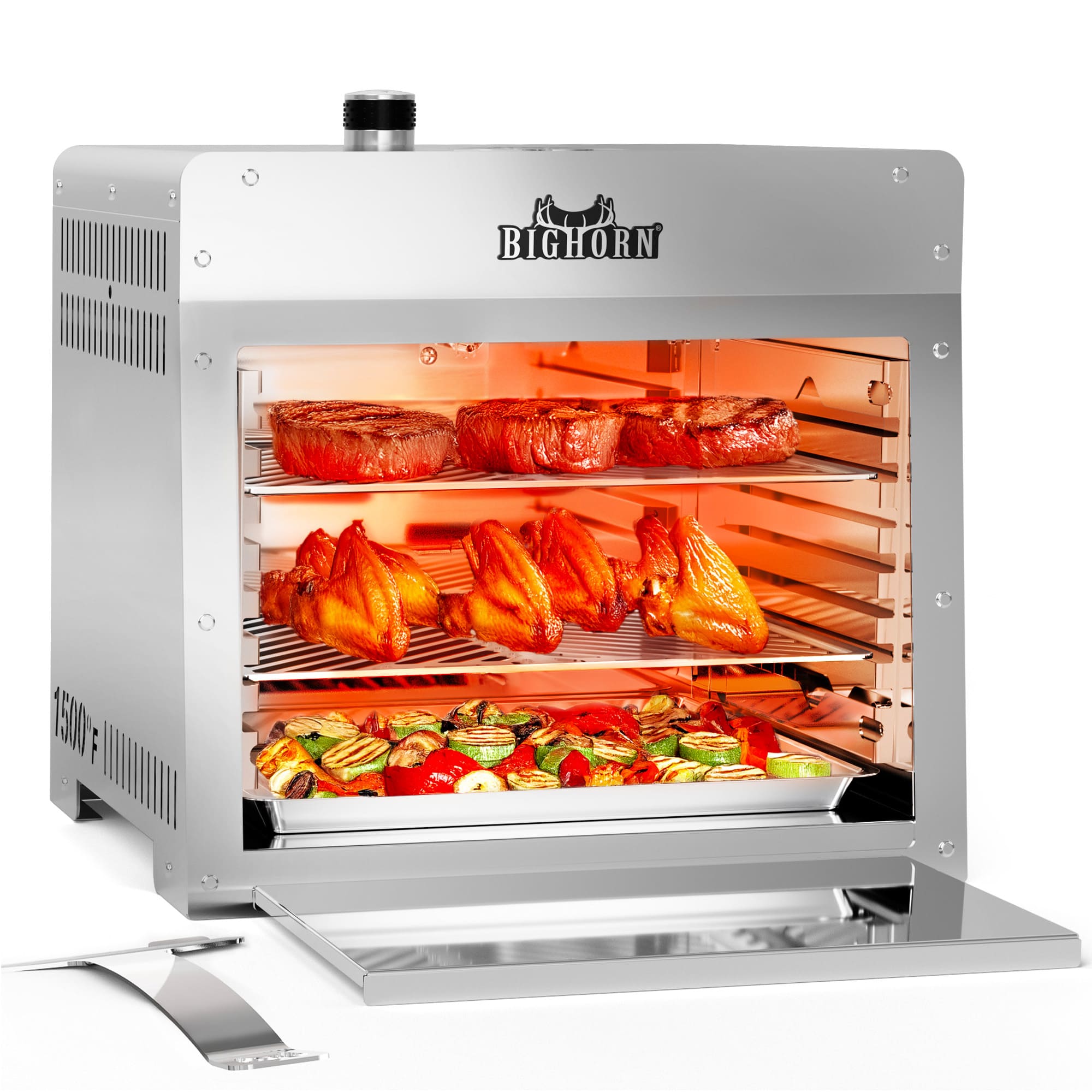
A cold grate, a cold housing, and a cold wind all steal heat. Give an infrared or gas grill more time than you do on a still July evening, then check the grate, not a guaranteed minute count from a product page. The current 16-inch portable infrared steak grill listing may publish marketing temperatures and preheat windows; confirm those figures on the live page, and do not treat them as a winter promise.
If the first steak is pale, the grill was not ready, or a gust is washing the heat away. National Weather Service wind safety and National Weather Service winter safety are the official weather pages. Keep the cook on a level, outdoor surface with clearance, following NFPA grilling safety and U.S. Fire Administration cooking-fire prevention.
Lid versus open infrared
Many portable infrared steak grills are used open, with intense top-down heat. Closing a lid that the design does not expect, or cooking as if the tool were a kettle grill, can give you a different, sometimes dirtier, result and will not automatically "make up for" winter air. Read the live listing and the manual for the model you own in the infrared grill collection. A conventional gas grill in the grills and griddles collection often uses a lid to stabilize the chamber; that is a different heat story.
The winter move is to match the lid habit to the tool, then be patient with the preheat, not to invent a universal "lids on in winter" rule. An open infrared burner in a wind may need a more sheltered outdoor pad, not a closed garage.
Propane pressure in the cold
Propane vapor pressure drops in the cold. A grill can start strong and then fade, or it can refuse to make its usual heat, especially if the cylinder is low or standing in a wind. Keep the cylinder upright, outdoors, and on a stable surface. Do not warm a tank with an open flame, and do not bring it into the house or garage to "help the pressure."
There is no official backyard chart in this article for how long a cylinder will last in January. If you want a summer baseline for a 20-pound tank on a grill, the existing how long a 20-lb propane tank lasts on a grill page is the place to start, then expect winter reality to be harsher. Recheck connections with a safe leak-check habit, not with a match.
Resting food indoors
The fire stays outside. The rest can happen on a warm indoor counter, away from pets and kids, with a thermometer still in charge. Official steak and poultry temperatures do not loosen because the cook was cold: FDA safe food handling and FDA food safety in your kitchen describe 145°F with a three-minute rest for whole-muscle steaks and 165°F for poultry. Ground beef remains 160°F. Carry food on a clean platter; do not wander through the house with a dripping, unsanitary board.
Ready.gov food guidance still applies to leftovers. A winter cookout is not a reason to leave meat out longer "because it's cold in the yard." The yard can still be in a messy middle temperature, and the table might be near a heater.
Session length
Plan a shorter menu if hands, footing, or fuel are getting worse. Preheat, cook, rest, and shut down with the same attention you would use in summer, plus a cleared, unfrozen standing area. Ice under a propane cylinder or a folding table is a tip-over risk. Treat winter storms as a footing and planning problem, not as a reason to cook indoors with a live flame.
Is it okay to grill in the garage? No. Combustion exhaust and carbon monoxide belong outdoors. EPA carbon monoxide information is the official indoor-air page, and it does not make an exception for a cold driveway. That answer also outranks any curiosity about "the best gas grills that don't flare up." Flare-ups are a fat-and-placement problem you manage with technique and attention, not with a ranking list in a winter article.
A winter grilling walk-around
Use the table as a pre-session check, not as a scorecard for buying a new grill.
| Check | Winter move |
|---|---|
| Footing and clearance | Level, outdoor, ice cleared; never a garage or closed shed |
| Preheat | Longer than in summer; trust the grate, not a copied minute count |
| Lid habit | Match the tool: open infrared if that is the design, a lid on a kettle-style gas grill if that is the design |
| Cylinder | Upright, outdoors, stable; do not warm it with flame or indoor heat |
Key takeaways
Cold-weather infrared and gas grilling needs a longer preheat, a lid habit that matches the burner, and a propane cylinder that stays outdoors. Do not grill in a garage. Rest food indoors if you want a warm counter, keep official meat temperatures, and treat marketing heat-up figures as claims to recheck, not as winter guarantees.
Confirm the current 16-inch portable infrared steak grill listing before you trust any published preheat window, and keep grill safety rules for beginners beside the winter walk-around.
FAQ
Is it okay to grill in the garage?
No. Combustion exhaust and carbon monoxide belong outdoors. A cold driveway is not an exception, and a garage is not a wind screen.
What are the top 10 things to grill?
This winter guide will not publish a ranked food list. Preheat honestly, cook the food you can finish safely, and use official temperatures for steak, ground meat, and poultry.
What are the best gas grills that don't flare up?
There is no ranking in this article. Flare-ups are mostly a fat-and-placement problem you manage with technique and attention, not a medal you buy. Match the lid habit to the grill you have.
What are common grilling mistakes to avoid?
Using a summer preheat clock, closing an infrared grill as if it were a kettle when the design wants air, warming a propane cylinder indoors, and moving the fire into a garage are the usual winter mistakes.
More to Read
Leftover Holiday Turkey on the Grill or in the Pizza Oven: Sandwiches, Tostadas and a White Pie
Give leftover turkey a second heat, not another roast: grill sandwiches or tostadas, or bake a white pie, after a safe leftover inventory the night...
Parrilla Taco Night: Carne, Salsas and Grate Space for a Crowd
Run taco night on a parrilla as a grate-space plan: carne, a second protein, a salsa station, and tortillas held soft, without one crowded fire.
Bone-In Lamb Leg or Shoulder on a Santa Maria or Gas Grill
Grill a bone-in lamb leg or shoulder as a roast: Santa Maria height or a gas two-zone fire, a USDA safety floor, and a probe that does not touch bone.
