Countertop pizza ovens have permanently closed the performance gap between domestic kitchens and commercial pizzerias. For decades, home cooks were trapped by the thermal limitations of standard kitchen ranges. Today, consumer demand for specialized high-heat appliances has accelerated a massive shift toward advanced indoor electric and ultra-portable outdoor hybrid-fuel technologies.
The modern countertop market is defined by precision engineering. Instead of waiting hours for a massive traditional brick assembly to saturate with heat, home chefs can now harness 1800-watt rapid heating elements, advanced PID (Proportional-Integral-Derivative) temperature algorithms, and dense cordierite thermal masses. These compact units mimic the exact thermodynamic behavior of artisan wood-fired decks, democratizing complex bakes like authentic Neapolitan, crispy New York style, and thick-crust Detroit style right on a standard kitchen counter or backyard picnic table.
Meet the Expert: Why Equipment Architecture Dictates Your Crust
About the Author: I’m Sean Kearney. My extensive background in commercial food service equipment sales and professional kitchen layouts has taught me that a great pizza is not just about a recipe—it is entirely dependent on thermal dynamics. I have helped dozens of commercial kitchens and hundreds of passionate home pizzaiolos select specialized baking decks that maximize recovery times, space efficiency, and thermal stability.
When analyzing countertop pizza ovens, we aren't evaluating general kitchen gadgets. We are evaluating dedicated thermal chambers. The ultimate goal of a high-heat pizza oven is to trigger the rapid expansion of gas bubbles within the dough while instantly searing the exterior. This process creates the iconic "leopard spotting" and airy, crisp-yet-chewy crumb profile demanded by true pizza gastronomy.
Technical Demystification: The Common Pitfalls of Home Baking
To understand why a dedicated countertop oven is essential, we must examine the common failures encountered when using standard kitchen appliances:
-
The 550°F Thermal Ceiling: Standard home ovens typically max out between 500°F and 550°F. At these lower thresholds, a raw pizza requires 8 to 10 minutes to cook. This prolonged exposure dries out the interior crumb, resulting in a tough, cracker-like, or overly chewy texture completely devoid of the classic Neapolitan "puff."
-
The Surface Conduction Deficit: Standard metal pans or thin baking sheets cannot hold sufficient thermal energy. When cold dough hits a low-density surface, the surface temperature plummets, causing an underbaked, soggy bottom crust even if the top cheese looks melted.
-
Massive Recovery Gaps: Cooking consecutive pizzas in a standard oven is highly inefficient. Once the first pizza absorbs the heat from the oven chamber, a standard range requires up to 20 minutes to recover its target temperature, stalling backyard gatherings or dinner services.
-
The Outdoor Safety Crisis: A critical danger point in the marketplace stems from users attempting to run gas-powered or wood-pellet outdoor ovens inside a home or garage. Outdoor portable ovens produce dangerous amounts of carbon monoxide and feature uninsulated open flames. True indoor operation demands strict, dedicated electrical safety certifications.
The Next Generation of Countertop Design: Deep Dive into Big Horn Outdoors
To solve these industry-wide pain points, Big Horn Outdoors has engineered a specialized fleet of indoor electric and outdoor portable countertop ovens. These units focus heavily on thermal efficiency, smart space utilization, and versatile fuel systems.
1. The Big Horn Outdoors 14" Indoor Electric Pizza Oven: The Space-Saving Powerhouse
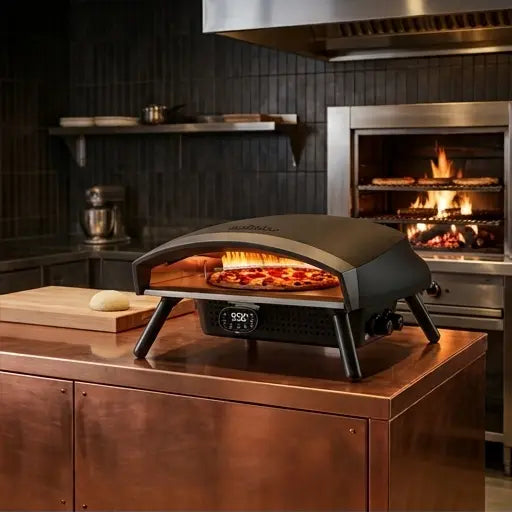
Engineered specifically for the modern kitchen counter, this 1800-watt heavy-duty appliance balances professional baking capacity with domestic architectural constraints.
-
The Magic Metric: Equipped with industrial-grade PID temperature controls, this deck smoothly scales from 220°F up to a blistering 850°F. It heats up in roughly 15 to 20 minutes, allowing users to execute a full, artisan thin-crust bake in under 3 minutes.
-
Architectural Space-Saving Innovation: Kitchen counter space is premium real estate. To solve this, this unit features a revolutionary flip-up mechanical architecture. Once the oven cools completely, the entire chassis lifts vertically to sit upright against your backsplash, instantly reducing its kitchen counter footprint by a massive 50%.
-
Smart Versatility & Low Maintenance: The oven includes 6 pre-programmed smart baking modes (Manual, Wood Fired, Frozen, New York, Thin & Crispy, and Deep Dish) to effortlessly handle everything from artisan baguettes to frozen snacks. The exterior is coated in a specialized wrinkle-black or high-grade stainless steel finish designed specifically to repel fingerprint oils and kitchen grease.
2. The Big Horn Outdoors 12" Portable Hybrid & Gas Ovens: Outdoor Mobility
For backyards, tailgates, and camping trips, portable external units focus on raw thermal performance and fuel flexibility.
-
The Dual-Fuel Advantage: The 12" hybrid model supports toolless switching between wood pellets and liquid propane gas. This allows chefs to choose between the authentic smoky profile of wood firing or the effortless, consistent temperature control of gas.
-
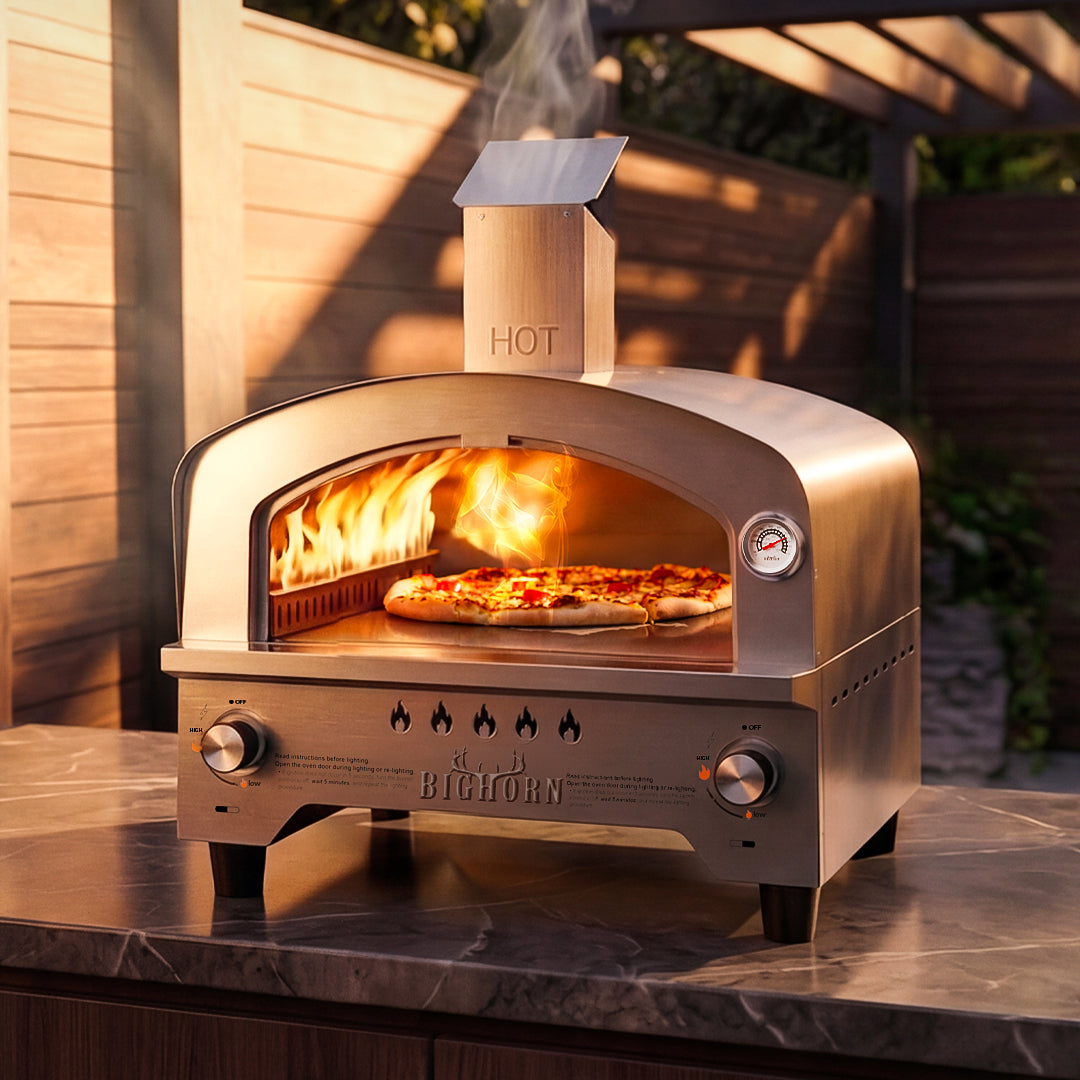
Rugged Portability: Built entirely from high-grade, weather-resilient stainless steel, these outdoor models feature robust foldable legs and wooden handle accents to maximize transportability without sacrificing thermal stability. They hit up to 660°F (350°C) rapidly, allowing outdoor Neapolitan-style bakes in under 2 minutes.
Head-to-Head Specification Matrix
| Model Line | Max Temperature | Preheat Time | Cooking Canvas | Power Source | Unique Architectural Feature | Location Suitability |
| Big Horn Outdoors 14" Electric | 850°F | 15–20 mins | 14-Inch Cordierite Stone | Indoor Electric (1800W) | 50% Space-Saving Flip-Up Design & PID Digital Control | Kitchen Countertops, Apartments |
| Big Horn Outdoors 12" Hybrid | 660°F+ | 15–20 mins | 12-Inch Cordierite Stone | Dual-Fuel (Gas / Wood Pellets) | Toolless Fuel Switching & Foldable Stabilizing Legs | Backyards, Camping, Tailgating |
| Traditional Home Oven | 500°F–550°F | 30+ mins | Varies (Metal Rack) | Electricity or Gas | Large Stationary Cavity; High Ambient Heat Loss | Indoor Kitchen Only |
Deep Dive: How Pizza Styles Dictate Oven Settings
To replicate your favorite regional style, your oven must match specific thermodynamic profiles mandated by professional culinary bodies like the Associazione Verace Pizza Napoletana (AVPN).
[Neapolitan Style] ----> Requires 800°F - 850°F+ ----> 90 - 120 Second Lightning Bake
[New York Style]  ----> Requires 600°F - 700°F  ----> 6 - 7 Minute Controlled Crisping
[Detroit Style]   ----> Requires 500°F - 550°F  ----> 12 - 15 Minute Deep-Pan Heat Saturation
Authentic Neapolitan
True Neapolitan pizza demands extreme ambient heat. Professional standards dictate cooking temperatures above 800°F for a lightning-fast bake. This flash-cooking method flash-boils the moisture in the dough instantly, generating giant, tender, char-spotted gas pockets while keeping toppings pristine. The Big Horn Outdoors 14" Electric (on Wood-Fired Mode) reaches 850°F to achieve this exact air-puffed crust structure.
New York Style
The classic New York slice requires a slightly lower, prolonged exposure ranging from 600°F to 700°F for a 6 to 7 minute duration. This gives the sugars in the dough ample time to caramelize uniformly, providing that iconic golden-brown, stiff, foldable under-crust. While a traditional home oven paired with a heavy pizza steel can eventually pull this off, a dedicated countertop unit preheats four times faster and consumes significantly less electricity.
Detroit Style
Characterized by its thick, rectangular profile and caramelized cheese walls, Detroit pizza relies on deep-pan conduction. The oven chamber must have sufficient interior height and width to easily accommodate a thick steel pan without scorching the top toppings. The spacious 14-inch interior of the Big Horn Electric provides the exact spatial clearances required for these heavy pans, fitting up to a full 10x14 Detroit steel pan.
Step-by-Step Blueprint: Operating Your High-Heat Oven
Baking at ultra-high temperatures introduces tight windows of error. Follow this precise sequence to guarantee flawless execution and avoid a ruined launch.
Real-World Comparative Scenarios
Scenario 1: Hosting a Large Social Gathering
-
The Traditional Route: Utilizing a standard kitchen range means preheating for 45 minutes, baking one pizza for 10 minutes, and then waiting another 15 minutes for the oven to recover its heat. Guests eat in awkward, staggered intervals while the kitchen becomes incredibly hot.
-
The Countertop Countermeasure: Deploying a specialized high-heat countertop oven allows you to crank out professional-grade personal pies every few minutes. The ultra-dense cordierite stone retains its base temperature effortlessly, transforming the cooking process into an interactive, fast-paced social centerpiece where everyone eats together.
Scenario 2: Small Kitchen Space Restrictions
-
The Traditional Route: Buying a massive, static specialty appliance means permanently sacrificing crucial counter space, rendering your kitchen cramped and unworkable for daily meal preparation.
-
The Countertop Countermeasure: Utilizing the vertical flip architecture of the Big Horn 14" Electric solves this dilemma. Once the appliance cools down, it flips upward out of the way, instantly restoring 50% of your usable workspace while its specialized finish keeps the unit looking pristine.
Frequently Asked Questions
Is investing in a dedicated indoor electric pizza oven actually worth it?
Yes. If your goal is to replicate authentic pizzeria crusts, a standard home oven is physically incapable of generating the ambient temperature or conductive heat required. Dedicated countertop units reach up to 850°F, cutting bake times down dramatically. Furthermore, they are highly insulated, preheating much faster and consuming significantly less energy than heating up a giant, traditional home range box.
Can an outdoor gas or wood-pellet oven be safely used indoors?
Absolutely not. Outdoor models that burn liquid propane, charcoal, or wood pellets produce dangerous amounts of carbon monoxide and feature uninsulated open flames. They present severe risks of asphyxiation and structural fires. Unless a unit is explicitly certified as an indoor electric appliance—like the Big Horn 14" Indoor Electric—it must remain strictly outdoors in a well-ventilated open yard or patio.
How do I clean a cordierite pizza stone without ruining it?
Never use dish soap, chemical detergents, or submerge a pizza stone in water. Cordierite is highly porous and will absorb chemical soap liquids, permanently ruining the flavor of all future pizzas. The correct method is to let the extreme heat of the oven carbonize food drippings into ash. Once the stone cools completely, slide it out and use a stiff, dry plastic brush or scraper to remove the loose debris.
Conclusion: The Final Slice
Bringing pizzeria-quality pizza into your home or outdoor kitchen has never been more accessible. By transitioning to purpose-built countertop technology, you bypass the heat limits of traditional appliances and unlock true, blistered crust performance.
For the modern home chef dealing with interior space limits, the Big Horn Outdoors 14" Indoor Electric Pizza Oven sets the standard for practicality, combining precision 850°F PID controls and a wide 14-inch cooking deck with an innovative 50% space-saving flip-up design. Meanwhile, for those who seek the open-air flexibility of flame-kissed flavors, the Big Horn Outdoors 12" Portable Hybrid and Gas lines deliver rugged, high-heat mobility wherever your culinary adventures take you.