







Pizza Oven Comparisons
A familiar weeknight failure looks like this: work runs late, the backyard oven needs a real preheat, the weather is sour, and dinner slips while someone waits for a fire that made sense on Saturday. The indoor countertop oven could have handled two pies and a short cleanup. Households that keep both appliances are not being greedy. They are assigning jobs. The trouble starts when both ovens are asked to do the same night, and neither is kept ready.
This is not a first-oven buying path. It is a two-oven household decision: when the pair makes sense, what you should not duplicate, and a keep-or-sell test for the countertop unit.
Two ovens can make sense — if they do different jobs
An indoor electric pizza oven and an outdoor fuel oven can live in the same house if they do different jobs: quick weeknight pies indoors, and hotter, guest-scale bakes outdoors on weekends. You do not need two of every tool or two dough systems. Sell the countertop unit if it duplicates the outdoor oven.
The useful rule is job split, not brand completion. Indoor electric covers speed, smaller batches, apartments, and nights you will not go outside. Outdoor fuel covers higher heat, more guests, and the social cook in the yard. When those jobs collapse into one, the second oven becomes clutter.
If you are still asking whether an indoor unit even fits the kitchen, start with whether your kitchen fits a countertop electric model and how to use a countertop electric pizza oven. Those pages own indoor fit and use. This one owns the pair.
Weeknight electric: speed, apartments and cleanup
The electric unit earns its keep when preheat and cleanup fit a weeknight. You stay inside, you are not lighting fuel, and you can often be eating before a backyard oven would have been ready. Apartments and houses with tight outdoor rules rely on this path more than backyard households do, but even a house with a patio can have Tuesdays that belong indoors.
Value questions for the indoor model already have their own pages: cost, results, and fit for home cooks, a shorter take on whether indoor electric pizza ovens are worth it, and a model-choice page, the countertop electric pizza oven buying guide. This section only asks whether that indoor job still exists after an outdoor oven arrives.
Keep indoor food-handling habits in view, including the FDA safe food-handling pages and food safety in the kitchen. An electric oven is still an oven, not a shortcut around cooked-food rules.
Weekend outdoor fuel: heat, guests and weather
The outdoor oven earns its keep when you want a hotter deck, a longer guest line, and a cook that is part of being in the yard. Fuel, weather, and a slightly longer ritual are acceptable on a Saturday. They are the reason the indoor unit should not try to host ten people from a kitchen counter.
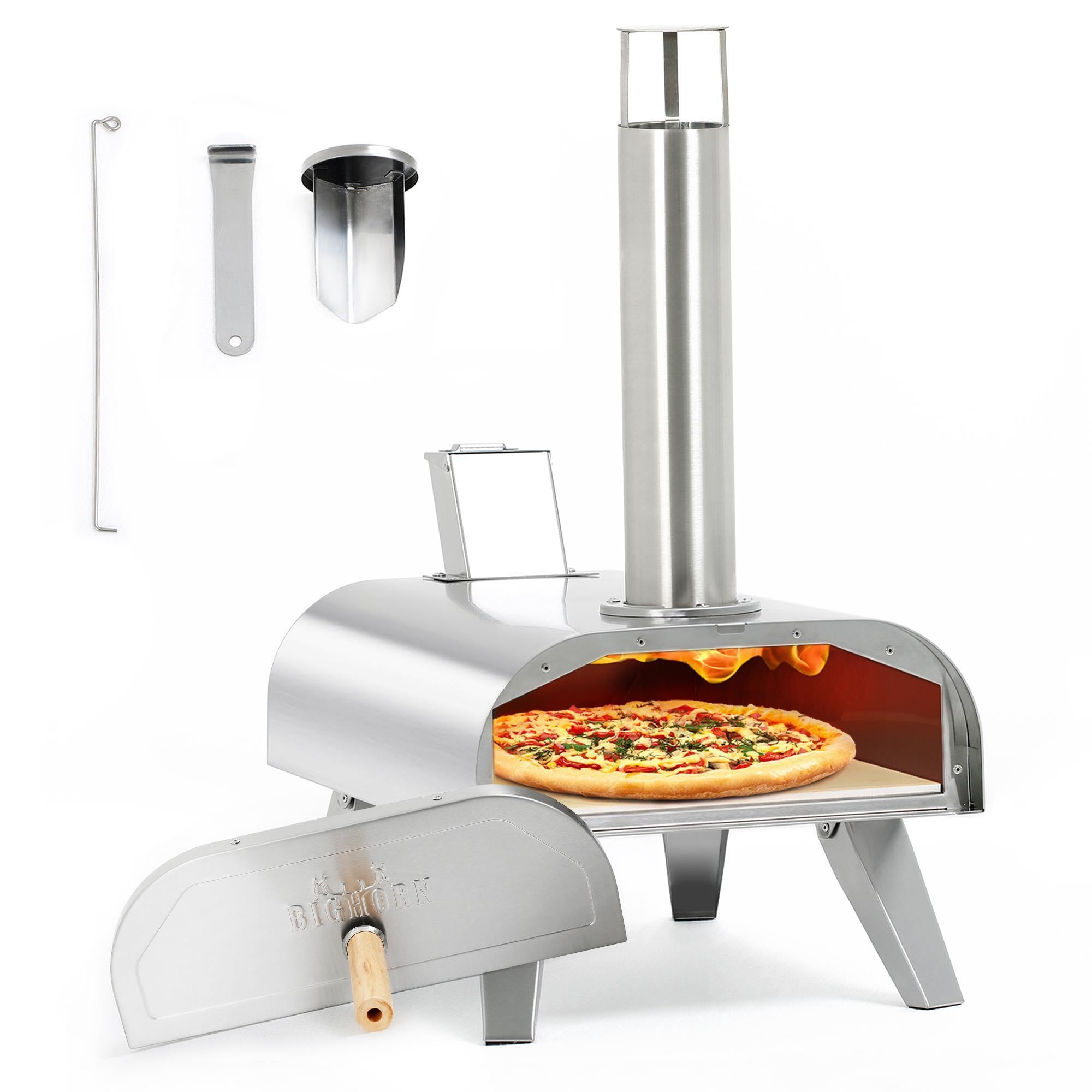
A portable outdoor model such as the 12-inch wood-pellet pizza oven is one example of that weekend tool, not a requirement that every household buy this size. Outdoor fire practice still applies: published guidance such as NFPA grilling safety, U.S. Fire Administration cooking-fire prevention, and Ready.gov home fires, plus ventilation cautions from the EPA on carbon monoxide if you are tempted to cheat the weather by cooking in a tight enclosure.
What you do not need two of
You do not need two dough formulas, two starter cultures, two full peel collections, or two explanations of fermentation. One dough can serve both ovens if you scale ball weight and watch launch timing. Share the cutter, the bowls, and the turner. Keep a surface with each oven only when moving a stone or steel every time would be the thing that stops you from cooking.
You also do not need two of every accessory advertised for pizza night. Duplicate the pieces that are annoying to carry, fragile, or tied to one appliance. Everything else should live in one drawer and travel on purpose.
Dough timing can stay shared as well. Mix once, divide the balls, and send some to a weeknight indoor bake and some to a weekend outdoor session if that matches how you actually eat. What usually fails is maintaining two ferment schedules that you then feel obliged to use, even on nights when only one oven will be lit. Let the calendar pick the oven, then take dough from the same batch or the same formula.
Weather weeks are when the pair is easiest to defend. A stretch of rain, smoke restrictions, or a heat wave that makes a fuel fire unappealing can send dinners indoors without cancelling pizza altogether. If your climate rarely creates those weeks, and you have easy, pleasant access to the yard most evenings, the indoor unit has to earn its keep some other way, or it will not.
A household decision table
Use the table to assign jobs, not to justify a purchase you will not use.
| Question | Keep both | Lean on one oven |
|---|---|---|
| Weeknight reality | You will actually bake midweek if the indoor unit is ready | You never cook pizza on weeknights anyway |
| Guest and heat needs | Weekends still want a hotter outdoor deck and more pies | The indoor unit already covers the guests you host |
| Space and storage | The countertop unit has a safe, permanent spot and gets wiped down | It is already in a closet, or the counter is too crowded |
| Tool overlap | You can share dough and most tools without friction | Two setups have become two neglected piles |
| Weather and housing | Some nights you cannot or should not cook outdoors | Outdoor access is easy almost every night you cook |

How this differs from a first-oven buying path
A first-oven path asks which single appliance to buy. This page assumes one oven already exists, or is about to, and asks whether a second job is real. If you do not yet have either oven, do not start by shopping for a pair. Buy the one that covers the nights you will cook in the next few months, then add the second only if a job is still sitting there undone.
Households that skip this distinction often end up with an indoor unit they used before the outdoor oven arrived, and a counter they now resent. The first-oven decision can wait for a dedicated buying guide. The two-oven decision is about habits after the unboxing.
A simple “keep or sell the countertop unit” test
Look at the last 60 days, not at the day you bought the indoor oven. If you used it on weeknights or in bad weather, keep it, and give it a cleaner parking spot. If you have not turned it on since the outdoor oven arrived, and the only reason it is still there is sunk cost, sell or store it. Storage is a pause, not a shrine. Put a date on the box and revisit it.
A unit that is dirty, unplugged, and in the way has already answered the test. Keeping it “just in case” only works if the case actually happens in a normal month.
Storage, counter space and the indoor unit you will actually keep clean
An indoor oven you keep must have a safe, reachable home, with clearance the manual requires, and a wipe-down habit you will maintain. A machine that lives under a pile of mail will not be a weeknight tool. If the only way to keep both ovens is to park the electric unit in a closet where you will not pull it out, you do not really have two ovens. You have one oven and a storage problem.
Be honest about counter space. The indoor unit should not evict the daily work of the kitchen unless you will use it enough to justify that trade. When the pair works, it is because each oven has a job and a place, and neither is waiting for a more organized season that never comes.
Give the indoor oven a short weekly reset if you keep it: empty crumbs, check the stone or pan, and make sure the cord and the clearances are still right. A machine that is ready on a Tuesday is a tool. A machine that needs a project before every use will lose to takeout. The outdoor oven can keep its own longer shutdown ritual; the indoor unit should be the one you can start without putting on shoes.
If the outdoor half of the pair is a portable fuel oven, confirm size and setup on a model page such as the 12-inch wood-pellet pizza oven, and keep the indoor unit only if it still earns a weeknight job.
FAQ
Should I keep a countertop electric pizza oven after I buy an outdoor oven?
Keep it if it still does a job the outdoor oven will not do on a weeknight: speed, an apartment or bad-weather bake, or a smaller cleanup. Sell or store it if you have not used it in months and it only repeats what the backyard oven already does. The keep-or-sell test is about actual use, not about owning two appliances for the sake of a complete set.
Can one household use an indoor electric oven and an outdoor fuel oven together?
Yes, if the two ovens have different jobs. A common split is indoor electric for weeknights and outdoor fuel for weekends and guests. The arrangement fails when both ovens fight for the same dough, the same counter, and the same meal, and you end up maintaining two tools for one habit. Give each oven a clear night and a clear task.
Do I need two dough recipes and two sets of tools?
Usually no. One dough formula can feed both ovens if you adjust ball size and launch timing, and most peels, cutters, and pans can be shared. What you may want two of are surfaces that stay with each oven, such as a stone that lives outdoors and a stone or steel that lives in the kitchen. Duplicate only the pieces that actually travel poorly.
When does a second pizza oven not make sense?
It does not make sense when storage is already tight, when you will not cook midweek anyway, or when the indoor unit is only there because you have not admitted the outdoor oven is your one real cooker. It also does not make sense if the indoor model cannot be vented or placed safely in your kitchen. One well-used oven beats two neglected ones.
More to Read
Al Pastor Pizza: Marinade, Pineapple Balance and High-Heat Timing
Make al pastor pizza at high heat with thin, safely cooked pork and drained pineapple. Finish with salsa after the bake, and do not invent taco cal...
Mixed Vegetables on a Gas Grill: Baskets, Skewers and Direct Heat
Grill mixed vegetables on a gas grill with a path for baskets, skewers, or a bare grate, plus oil, salt timing, and a cut-size rule so pieces finis...
Pizza al Taglio (Roman Tray Pizza) at Home Outdoors
Make pizza al taglio at home as a Roman tray pie: oil the pan, dimple relaxed dough, top modestly, bake thoroughly outdoors, and cut it into squares.
