



Elote-style corn after an infrared steak is a residual-heat habit, not a second main cook. The steaks want the fully preheated emitter. The ears want the heat that is still in the grate after those steaks come off. If you try to char corn and sear steak in the same minute on a compact cooker, one of them waits in the wrong place — usually the steak, or a husk that scorches while the cob stays raw.
This is not a reprint of the site’s infrared vegetables page for corn, asparagus and halloumi. That page is about vegetables as a course. This page is about a messy, dressed ear that follows the steak.
The short answer: finish the steaks first, then use residual infrared heat for the ears
Cook and rest the steaks first on a fully preheated infrared grill, then set the corn on the still-hot grate. Turn the ears until the kernels blister, and pull them before the husk burns. Coat mayo, cotija, chili, and lime on a board after the heat, not over the emitter.
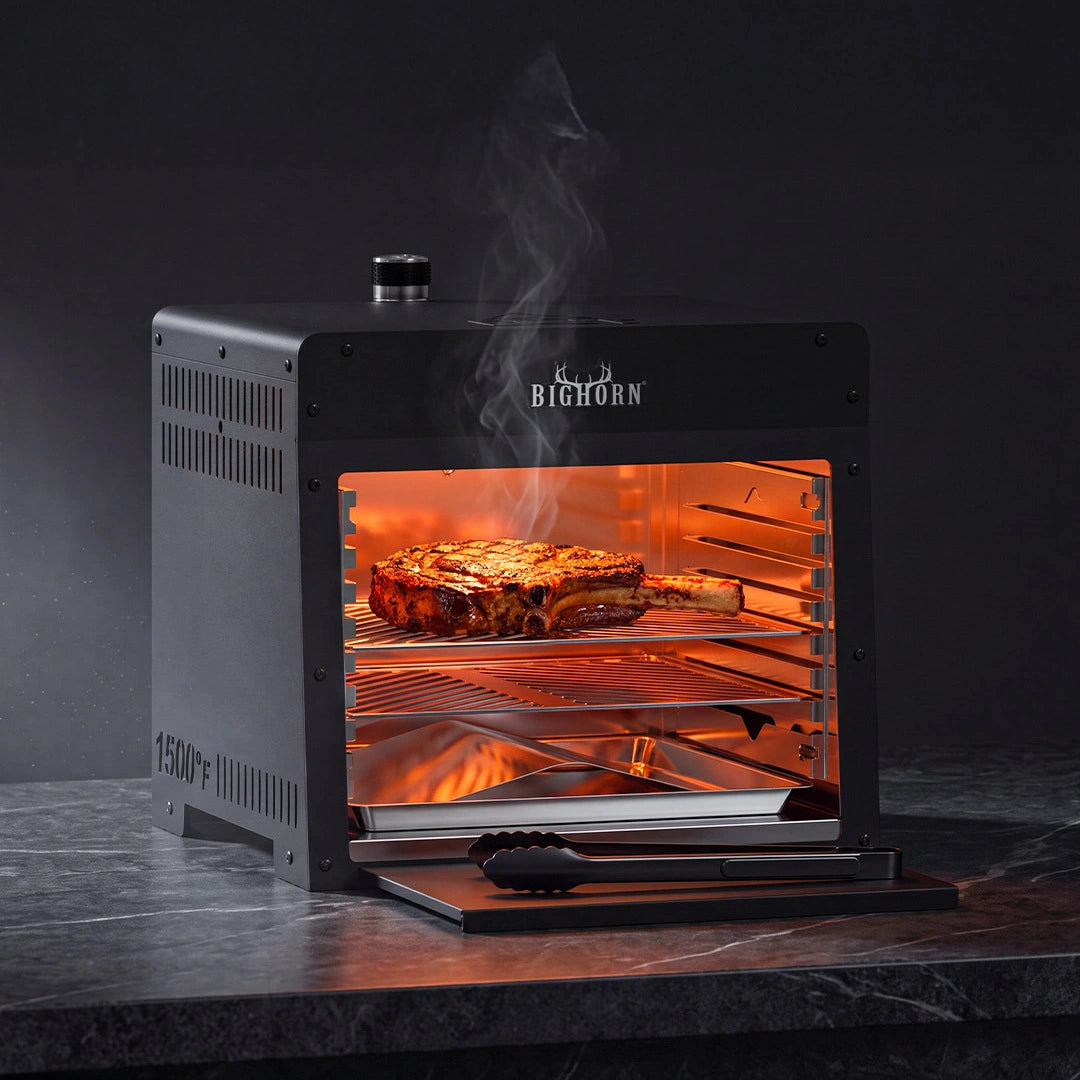
A 16-inch portable infrared steak grill is the right class of tool for this sequence if you accept a short corn window and a messy finish at the table.
How this differs from cooking corn as a main infrared vegetable course
When corn is the main vegetable course, you can give it the hottest part of the cook and a clock of its own. After a steak, the emitter may still be very hot, but your attention is also on resting meat, a cutting board, and guests. Residual heat is still serious heat. It is not a “walk away” warm. It is a slightly calmer, still-watched char so the steaks do not go cold while you start a second preheat. If you need a true two-zone steak method, the site already has a two-stage sear and finish on an infrared grill and a guide to dual infrared burner heat zones. Use those for the meat; use this page for the ears that follow.
Husk on, husk off, or a pre-steam: pick one path
Husk on gives the cob a little buffer and can steam the kernels as the outer leaves darken. Pull back the husk, remove the silk, and close it again if you want that buffer with fewer burnt threads. Husk off chars faster and looks more like street-style ears going onto the board. A brief pre-steam or a short boil can take the raw edge off before the grate, but it is optional and it is not a required step this page will invent a minute for. Pick one path for the batch so every ear is on the same clock.

A small table: ear count versus whether you need a second burner or a hold zone
| How many ears | On a compact infrared grate | If you need more capacity |
|---|---|---|
| Two to four ears after the steaks | A single layer, turned, on residual heat while the meat rests | Usually enough; hold dressed ears on a warm platter |
| A bigger family batch | Run two short rounds, or hold the first batch in a towel-lined bowl | A gas-grill side or a flat top is calmer than stacking ears |
| A crowd | Do not crowd a compact grate | Cook the corn elsewhere; keep infrared for the steaks |
Mayo, cotija and chili: coat after the heat, not over the emitter
The messy finish is the point of elote: mayonnaise or a similar creamy coat, crumbled cotija or another salty cheese, chili powder or a chili-lime sprinkle, and lime. Do that work on a board or in a shallow tray after the ears come off. A coat that hits a close infrared emitter will scorch, drip, and smoke, and it will not taste like the street-style finish you wanted. Have the bowl, the cheese, and the napkins ready before the corn comes off, because residual heat still moves quickly.

Common failures: a scorched husk and a still-raw cob
A black husk with a raw, starchy cob usually means the ear never turned, or you left one face on a still-raging emitter while the other side stayed pale. Residual heat is not the same as a dying fire. If the cooker is still at a steak-searing pitch, give the ears a little more distance or a shorter first pass, then turn. If the grate has already cooled too far, you will wait and steam instead of blister — that is when a brief return to a hotter setting, or a move to a gas-grill zone, is more honest than hoping. Stay with the cooker. NFPA grilling safety and CPSC gas-grill advice still apply to this second stage: clearance from the house, and no gas grill in a garage, breezeway, carport, or porch.
A serving board that sits next to sliced steak
Slice the rested steaks, then add the dressed ears to the same board or to a tray beside it. The corn will drip. Put a sheet of paper or a shallow pan under the ears, and keep the chili and extra cheese in small bowls so people can add more without painting the meat. Lime wedges belong on the board, not on the grate.
When a gas grill or a flat top is simply easier for a crowd
If you are feeding more people than a compact grate can hold in one layer, cook the corn on a gas grill or a flat top and keep the infrared cooker for the steaks. You will get a more even batch, and you will not delay the meat. Residual-heat elote is a small-batch pleasure, not a catering plan. Confirm a current listing in the infrared grill collection if you are buying a compact searing cooker for steak-first evenings like this.
Cleanup of a messy finish
Mayo and cheese on a board are easy if you clean them before they dry. The grate is a different problem if anyone brushed sauce over the emitter — try not to. Let the cooker cool, then clean the grate as you would after a steak cook, following the model booklet. Leftover dressed corn is perishable: USDA leftover guidance and FDA safe food handling say to refrigerate within two hours — one hour if the air is over 90°F — and to reheat leftovers to 165°F. FoodSafety.gov lists that leftover number next to its other safe minimums. AmeriGas cylinder guidance remains the right propane-cylinder check if you are packing the cooker away after a patio meal.
If you are searing steaks and then finishing a few ears of elote-style corn, confirm the current 16-inch 1500°F portable infrared steak grill with pizza stone listing, rest the meat first, and coat the corn on the board — not over the emitter.
FAQ
Can you cook elote on an infrared grill after the steaks come off?
Yes, and that residual-heat window is the point of this page. Pull the steaks to rest, then set the ears on the still-hot grate. You want blistered kernels, not a second steak-level blast. Coat mayo, cotija, and chili after the corn comes off, not over the emitter.
Should you leave the husk on for infrared corn?
You can leave the husk on, pull it back, or start with husked ears. Husk-on is a little more forgiving of a hot grate; husked ears char faster and need a closer watch. Pick one path and stay with it. A scorched husk with a raw cob usually means the ear never turned, or the heat was still too hard.
Do you put mayo and cotija on the corn while it is still on the grill?
No. Coat the ears after you pull them off the heat. Mayo, cotija, chili, and lime are a messy finish for the board, not a grill sauce. On infrared they can scorch, drip, and smoke. Have a tray, a brush or spoon, and napkins ready before the corn comes off.
How many ears can you finish on a compact infrared grill?
Only as many as will sit in a single layer with room to turn. A compact 16-inch grate is a small batch tool. If you are feeding a crowd, hold finished ears in a towel-lined bowl and run a second batch, or move the corn to a gas grill or a flat top and keep the infrared cooker for the steaks.