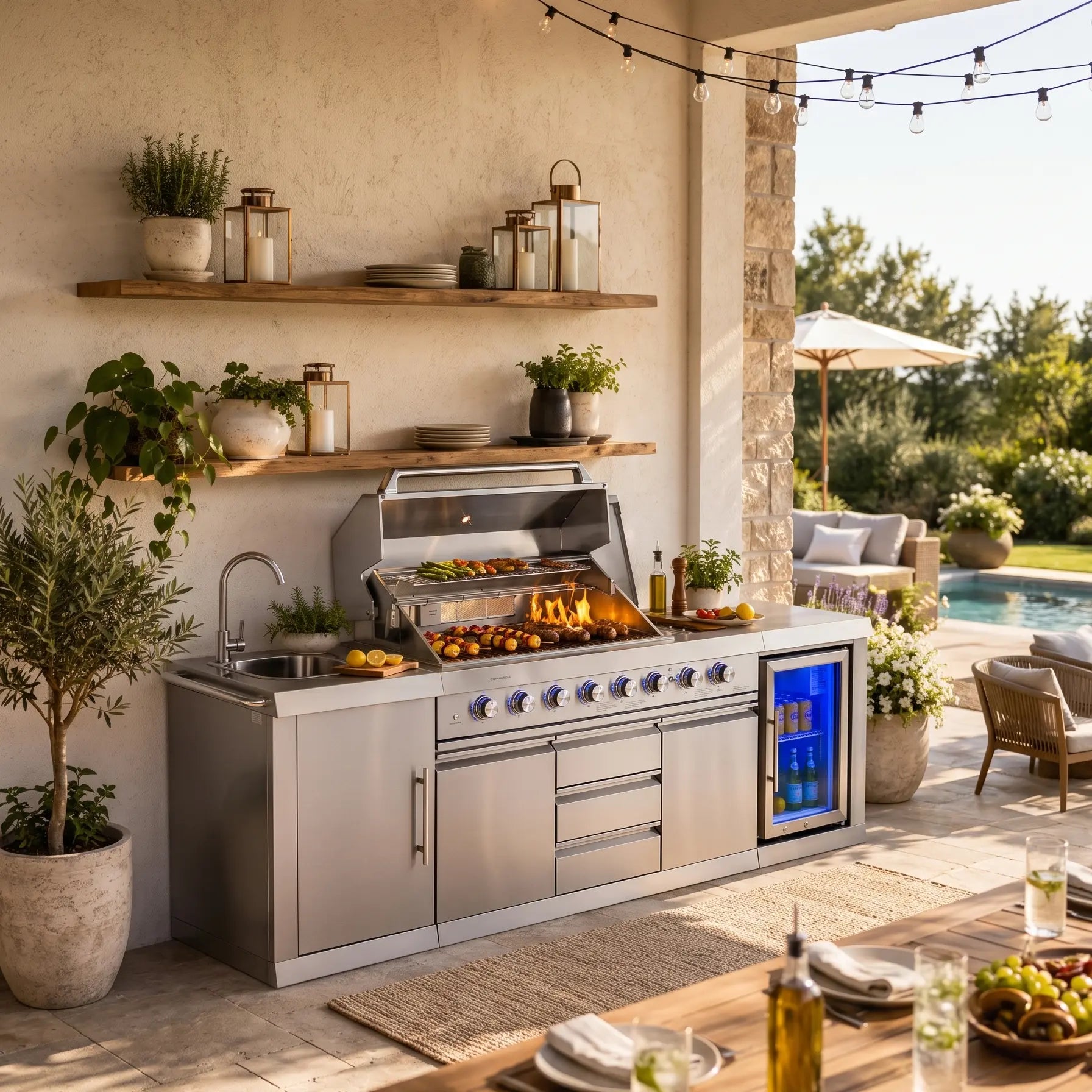
Gas grill flare-ups happen when fat, oil, or marinade drips onto hot burners, flame tamers, or accumulated grease and ignites into a burst of flame. They are normal with fatty cuts, but they are controllable: move the food to a cooler zone, close the lid to smother the flame, and prevent the cause with trimmed meat and a clean grill. This guide covers what causes flare-ups, how to manage one safely, and the habits that stop them before they start.
These are general gas-grill flare-up guidelines; follow your grill’s manual and never put water on a severe grease fire.
What actually causes a flare-up
Three things cause flare-ups on a gas grill: fat drippings from burgers, steaks, or chicken hitting hot surfaces; sugary sauces and oily marinades burning on contact with direct heat; and old grease buildup in the grill bottom or catch pan that ignites easily. Fatty cuts produce the most drips, and a grill that has not been cleaned in a while provides the fuel for a bigger flare-up. Knowing the cause tells you the fix.
How to manage a flare-up safely
When a flare-up starts, move the food with tongs to a two-zone cooler side or onto the warming rack until the flames settle, then close the lid to restrict oxygen and smother the flame. Never dump a large amount of water on a grease fire — it splatters hot oil and can damage the grill. For a severe grease fire, shut the gas off at the tank and let it cool; keep a fire extinguisher or baking soda nearby for emergencies.
Using two-zone heat to prevent flare-ups
The most effective prevention is two-zone cooking: run one side of the grill hot for the sear and keep the other side cooler as a safe spot. Sear over the hot zone to build a crust, then move the food to the cool zone to finish — drips that fall on the cool side do not hit hot burners, so flare-ups are much less likely. Multi-burner grills, like the Big Horn island grills, make this setup easy with independent burner controls.
Prevention habits that stop flare-ups
- Trim excess fat. Less fat on the meat means fewer drips onto the burners.
- Keep the grill clean. Brush the grates after each cook and clear grease from the bottom and catch pan.
- Use a drip pan. Catch drippings before they reach the burners or flame tamers.
- Skip sugary marinades on high heat. Sweet sauces burn fast; add them near the end of the cook.
- Preheat with the lid closed. A clean, fully preheated grill flares less than a cold, greasy one.
Common mistakes and how to avoid them
- Pouring water on a grease fire. It splatters hot oil; close the lid and move the food instead.
- Cooking over a dirty grill. Built-up grease is flare-up fuel; clean the grates and catch pan.
- Leaving fatty cuts unattended. Watch burgers and marinated chicken closely over the hot zone.
- Forgetting the cool zone. Without a two-zone setup, every drip hits a hot burner.
- Panicking and removing the food into the flames. Move food sideways to the cooler zone, not up into a bigger flame.
What to do when it does not go right
If flare-ups keep happening, check the cause: trim the meat, clean the grill, and use the two-zone setup. If a flare-up persists despite the habits, the grill may have heavy grease buildup — do a deeper clean of the bottom and catch pan per the manual. If flames get out of control, shut off the gas at the tank, close the lid, and let it cool before investigating.
Realistic expectations and results
Flare-ups are a normal part of grilling fatty food, but with two-zone heat, trimmed meat, and a clean grill they become rare and minor. Expect small bursts with fatty cuts that you handle by moving the food and closing the lid, not big fires. Prevention is the real answer — the flare-up that never starts is the one that is managed by setup and cleaning.
The takeaway in one paragraph
Gas grill flare-ups come from fat and grease hitting hot burners, and they are controlled by two-zone heat, a clean grill, and trimming the meat. When one starts, move the food to the cool zone, close the lid to smother it, and never use water on a grease fire. Match prevention to the cause — less drips and less buildup — and flare-ups become a minor, manageable part of grilling.
See the multi-burner grills that make two-zone easy. grills and griddles collection · outdoor kitchen island collection
FAQ
Why does my gas grill keep flaring up?
Repeated flare-ups usually mean too much fat or sugar dripping onto hot burners, or grease buildup in the grill. Trim the meat, use a two-zone setup with a cool side, and clean the grates and catch pan; less drips and less buildup mean fewer flare-ups.
What causes flare-ups on the grill?
Flare-ups are caused by fat, oil, or sugary marinades dripping onto hot burners or flame tamers, and by accumulated grease in the grill bottom or catch pan igniting. Fatty cuts and uncleaned grills are the common triggers.
How can I prevent a gas BBQ from flaring up?
Prevent flare-ups with two-zone heat (a hot side for the sear and a cool side to finish), trimmed meat, a clean grill and catch pan, a drip pan, and sugary sauces added near the end. Each habit removes a source of drips or buildup.
How to keep burgers from flaring up on a gas grill?
Keep burgers from flaring by starting with a clean grill, using leaner patties or trimming fat, cooking over two zones with a cool side, and avoiding sugary glazes until the end. A drip pan under the grate also catches the drippings.