

Yes, you can cook a frozen steak on an infrared grill — cooking from frozen is safe as long as the steak reaches a proper internal temperature, and an infrared grill’s intense heat is an advantage for the sear. The method is a two-stage cook: gently warm the frozen center away from direct heat (or lower the rack), then move to the hot infrared zone to build the crust, pulling on the probe at your target. This guide covers the food-safety facts, the infrared approach, and the step-by-step method.
These are general frozen-steak cooking guidelines; always use a probe thermometer and cook to a safe internal temperature.
What actually matters for this decision
- Safety. Frozen steak is safe to cook from frozen as long as it reaches a proper internal temperature; cook to at least the safe minimum for the cut.
- Thickness. Thick frozen steaks need the gentle-warm stage; thin ones may sear through quickly.
- Probe. A probe thermometer is the only reliable doneness check with a frozen center.
- Heat management. Infrared sears fast, so warming gently first prevents burnt exterior/cold center.
Understanding the infrared approach to frozen steak
Infrared heat changes the frozen-steak method in a useful way: the sear is fast and intense, so the outside browns before the frozen center warms much at all. That is both the advantage and the danger. On a conventional grill, a frozen steak often steams or chars unevenly; on an infrared grill, the crust forms quickly and cleanly, and the cook’s job becomes finishing the center without destroying the crust. The method is a controlled two-stage cook rather than a single blast.
Step 1: Warm the center gently
Set up the infrared grill with the frozen steak away from the direct high-heat zone, or lower the rack to a gentler position. The goal is to bring the frozen center up gradually without burning the surface — a gentle stage until the interior is near warm enough to finish. This is the stage that infrared cuts short: the sear is saved for later, not spent on a still-frozen center.
Step 2: Sear in the hot zone
Move the steak to the hot infrared zone and sear in short intervals, building the crust without overcooking the now-warm interior. Because infrared heat is intense, the sear takes tens of seconds per side, not minutes. Watch the steak closely and rest a moment between sear intervals so the heat penetrates, rather than blasting the surface until it burns.
Step 3: Finish and rest
Finish the steak to your target internal temperature using the probe — about 130–135°F for medium-rare — and remember the temperature climbs a few degrees while resting. Let the steak rest before slicing so the crust stays and the juices settle. A frozen steak cooked this way gives the same crust with a longer, more methodical cook than a thawed one.
Common mistakes and how to avoid them
- Skipping the gentle-warm stage. A frozen steak blasted on high sears outside and stays cold inside; warm it gently first.
- Ignoring the probe. With a frozen center, timing without a thermometer is guesswork.
- Burning the surface. Too many sear intervals without rest char the crust; use short bursts.
- Assuming thawed timing. A frozen steak cooks slower and needs the extra stage; adjust the plan.
- Not resting. Slicing immediately drains the juices; rest before cutting.
Realistic expectations and results
Cooking a frozen steak on an infrared grill adds time (the gentle-warm stage) but not difficulty, and the result is a proper crust with a safe, finished center. Expect a longer, methodical cook than a thawed steak, with the probe calling the finish. It is a genuine rescue technique for when the steak is still frozen at dinner time — and a good one, because infrared’s fast sear suits it.
The takeaway in one paragraph
You can cook a frozen steak on an infrared grill safely by cooking it to a proper internal temperature, using a two-stage method: warm the frozen center gently away from direct heat, then sear it in the hot infrared zone in short bursts, finishing on the probe. Infrared’s fast crust makes it a strong tool for frozen steak. Preheat fully, use a thermometer, and a frozen steak becomes a controlled, safe, crust-forward meal.
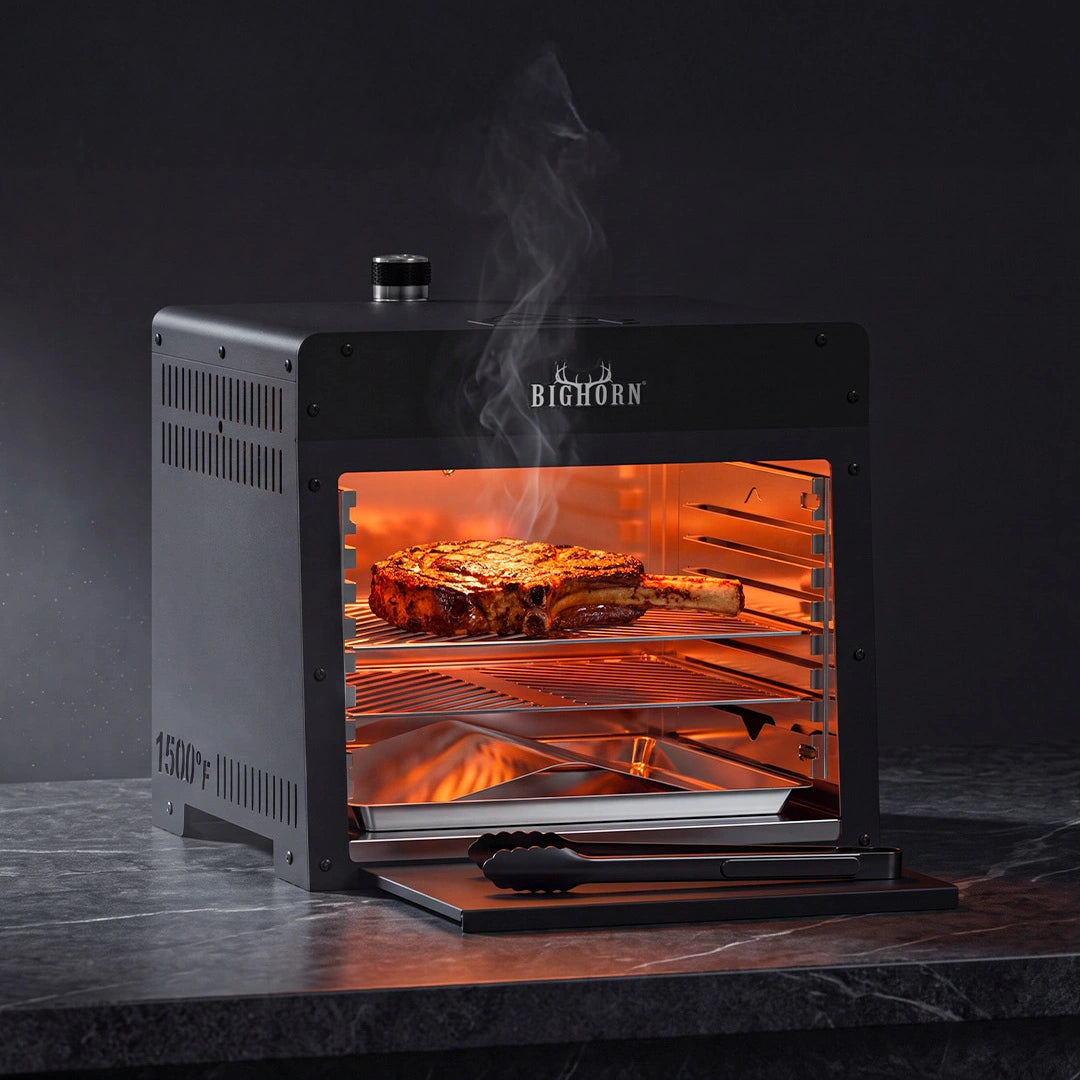
See the infrared grill and the steak chart. Big Horn portable infrared broiler · infrared grill collection
FAQ
How long to cook steak on an infrared grill?
Cooking time depends on thickness and doneness. After a full preheat, sear a thawed steak about 60–90 seconds per side for a crust, then finish to the probe target; a frozen steak adds a gentle-warm stage first so the interior can finish without burning the surface.
How long does it take to cook a frozen steak on a grill?
A frozen steak takes longer than a thawed one because the center starts cold. On an infrared grill, expect a gentle-warm stage followed by a fast sear — roughly 30–50% longer than thawed, depending on thickness. Let the probe decide when it is done, not a timer.
What happens if I put a frozen steak on the grill?
Putting a frozen steak directly on high heat sears the outside while the center stays cold — the crust can burn before the middle cooks. Cooking frozen is safe if it reaches a proper internal temperature, but the method must warm the center before the hard sear, or finish over gentler heat.
Which infrared grill is best for steaks?
The best infrared grill for steak preheats fast, sears close to the emitter, and offers a lower zone for finishing. The Big Horn 16-inch portable broiler fits with a 19,000 BTU ceramic burner and ten rack positions; the 21.2-inch dual-burner model adds a wider zone for thicker steaks.