







Accessories
The useful count is not a lab test. It is the number of pieces that would fall through a bare grate, plus the number of times you would have to flip a delicate fillet with a spatula. Asparagus, sliced peppers, shrimp, and a whole trout all change that count. A grill basket for vegetables and fish is the tool you buy when those numbers get annoying, not when you want another gadget on the hook.
Baskets win when food is small, delicate or prone to sticking
Baskets win when food is small, delicate, or likely to stick or fall through the grate. A grill basket for vegetables and fish lets you preheat, oil, and flip the basket instead of each item. Skewers still suit larger, even chunks. A bare grate still suits sturdy food that will not slip through.
Think of it as a rule of use, not a ranking of "gear you must own." If the piece is smaller than the gap between bars, or the skin of a fish will tear when you turn it, the basket is the more reliable tool. If the food is a thick steak or a firm vegetable plank, the basket is often extra metal you did not need.
Fish baskets vs vegetable baskets vs skewers
A fish basket is usually a hinged clamp that holds a fillet or a whole fish flat. A vegetable basket is often a mesh tray or a deeper hopper that can be shaken or turned. Some tools do both, but a shallow fish clamp can spill sliced vegetables, and a deep veg hopper can mark a trout poorly. Buy the shape that matches the food you actually grill.
Skewers remain the right rule when you want a kebab: larger cubes, a little space between pieces, and a turn you can do in one motion. They fail when the pieces are thin, uneven, or so small they spin and scorch. The live page on how to grill a whole fish covers fish technique on a grate; this page only adds when a basket should take over from that grate or from a skewer.
Preheat, oil and a flip that does not dump the food
Preheat the grill, and preheat the empty basket on the grate so the mesh is hot. Oil the mesh lightly, then add food in a single layer that can close or sit without a pile. If you fill a cold basket and then set it on the fire, the first side often steams and sticks, and the flip tears the food.
Flip the whole basket, not the contents with a fork, once the first side releases. A hard shake over the hottest gap is how dinner lands in the coals. NFPA grilling fire-safety guidance and U.S. Fire Administration cooking-fire prevention apply to this cook as much as to any other outdoor fire: stable grate, attended basket, and no loose tool left to roll off. FDA safe food-handling guidance and FDA kitchen food-safety guidance are the official reminders to cook fish and seafood to a safe internal temperature and to keep raw juices off ready food.
A use table for salmon, asparagus, peppers and shrimp
The table is a buying-and-use rule of thumb, not a timed recipe. Cut size, grill heat, and your particular basket will still change the cook. When the food is mixed, default to the more delicate item's tool.
| Food | Basket, skewers, or bare grate | Why |
|---|---|---|
| Salmon fillet or whole trout | Fish basket, unless you are already confident on a well-oiled grate. | The skin and flake tear easily when you chase the fish with a spatula. |
| Asparagus | Vegetable basket. | Spears roll and slip through typical grate gaps. |
| Sliced peppers or onions | Vegetable basket; large, even chunks can also go on skewers. | Thin slices fall through; big cubes can be kebabed. |
| Shrimp | Basket or skewers if the shrimp are large and even. | Small shrimp disappear on a bare grate; a cold mesh will stick. |
Mixed vegetables on a Santa Maria-style grill have their own page, how to grill vegetables on a Santa Maria grill. Use that for fire and grate method, and use this table when you are deciding whether a basket should join the cook.
How this supports mixed-veg grilling without repeating that page
A mixed-veg cook is often where a basket earns its hook: one load of peppers, onions, and smaller pieces, turned together, while larger items stay on the grate. This article does not repeat that vegetable method, and it does not tell you how much charcoal to lay for the fire; that is on how much charcoal to use in a grill.
Keep the jobs split. The vegetable page owns the mix and the fire. This page owns the tool choice and the preheat-and-flip habit that keeps that mix out of the coals.

Care and rust
A basket is a small iron or steel grate. Clean it after it cools enough to handle, dry it, and oil the mesh lightly if it is a metal that rusts. Do not soak a carbon-steel basket and then leave it wet in a garage. A stuck-on mess is easier to loosen after a preheat on a cool-to-the-touch, parked grill than with a long soak that invites rust.
Grate seasoning habits overlap with how to season a pizza stone and a grill grate, but a basket still needs its own wipe-down because food sits in the mesh corners. Store it dry. If you grill on a balcony, ventilation and building rules come first; that constraint is covered in whether you can use an infrared grill indoors or on a balcony, and it is not waived by using a basket.
A preheat-in-the-basket habit so food does not steam on a cold mesh
The habit is short: hot grill, hot oiled basket, then food. That order is what keeps shrimp and fish from steaming in their own moisture and then tearing. If you are assembling a large mixed load, preheat the basket while you cut, not after the food is already sitting in a cold mesh on the side table.
National Park Service campfire guidance and Smokey Bear campfire-safety guidance are reminders to keep an outdoor fire attended. A basket does not change that. Pull the basket to a platter to serve, and do not rest a still-hot mesh on a plastic tablecloth.
A recap of who this method is for, and who should use a different cooker
This method is for a cook deciding whether a grill basket or a fish basket will beat skewers or a bare grate for a specific food. It is a tool rule, not a mixed-vegetable recipe and not a charcoal lesson. If your food is already happy on the bars, you do not need the basket.
If you want pizza, use an oven and a peel, not a fish clamp. If you want kebabs, keep the skewers. Use the basket when the count of small or delicate pieces would otherwise make the grate a problem.
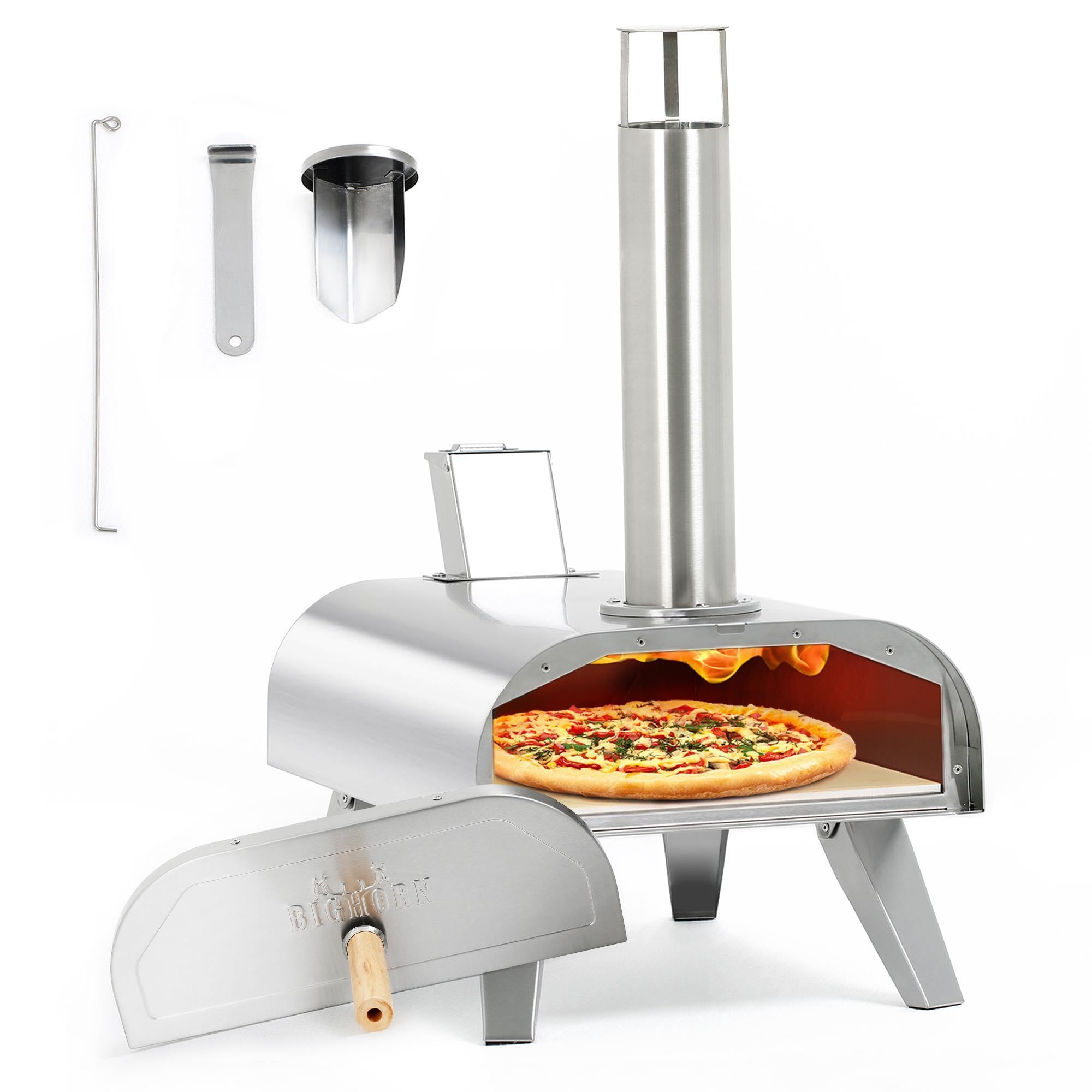
The photos in this article show a 12-inch wood-pellet pizza oven, because that is the product this plan can illustrate. A grill or fish basket is a grate tool; use one on the grill the food actually belongs on, not as a substitute oven deck.
FAQ
Is a grill basket better than skewers for vegetables?
A basket is the stronger tool when the pieces are small, uneven, or likely to fall through the grate. Skewers still make sense for larger, uniform chunks you can turn as a kebab. The choice is about the food's size and delicacy, not about a single winner for every cook. If you would spend the evening fishing peppers out of the fire, use a basket.
How do you use a fish basket on a gas grill?
Preheat the grill and the oiled fish basket, then clamp the fish so it is secure but not crushed. Set the basket over a clean, hot grate, cook it without poking the skin every minute, and flip the whole basket once the first side releases. Finish to a safe internal temperature, and move the basket to a platter before you open it. Do not force a stick from a cold mesh.
How do you stop vegetables falling through the grate?
Use a grill basket for small or sliced vegetables, or cut larger, more even pieces if you want to keep them on the bare grate or on skewers. Preheat and oil the basket so pieces do not weld to a cold mesh and then break when you turn them. A foil tray can also catch small items, but it steams more than a hot, open basket.
Do you have to oil a grill basket every time?
Oil the hot basket lightly before the food goes in, unless the maker says otherwise, especially with lean fish or uncoated vegetables. You do not need a puddle of oil. A thin coat on a preheated mesh is usually enough to reduce sticking. If food still tears, the basket may have been cold, overcrowded, or due for a clean.
More to Read
Leftover Holiday Turkey on the Grill or in the Pizza Oven: Sandwiches, Tostadas and a White Pie
Give leftover turkey a second heat, not another roast: grill sandwiches or tostadas, or bake a white pie, after a safe leftover inventory the night...
Parrilla Taco Night: Carne, Salsas and Grate Space for a Crowd
Run taco night on a parrilla as a grate-space plan: carne, a second protein, a salsa station, and tortillas held soft, without one crowded fire.
Bone-In Lamb Leg or Shoulder on a Santa Maria or Gas Grill
Grill a bone-in lamb leg or shoulder as a roast: Santa Maria height or a gas two-zone fire, a USDA safety floor, and a probe that does not touch bone.
