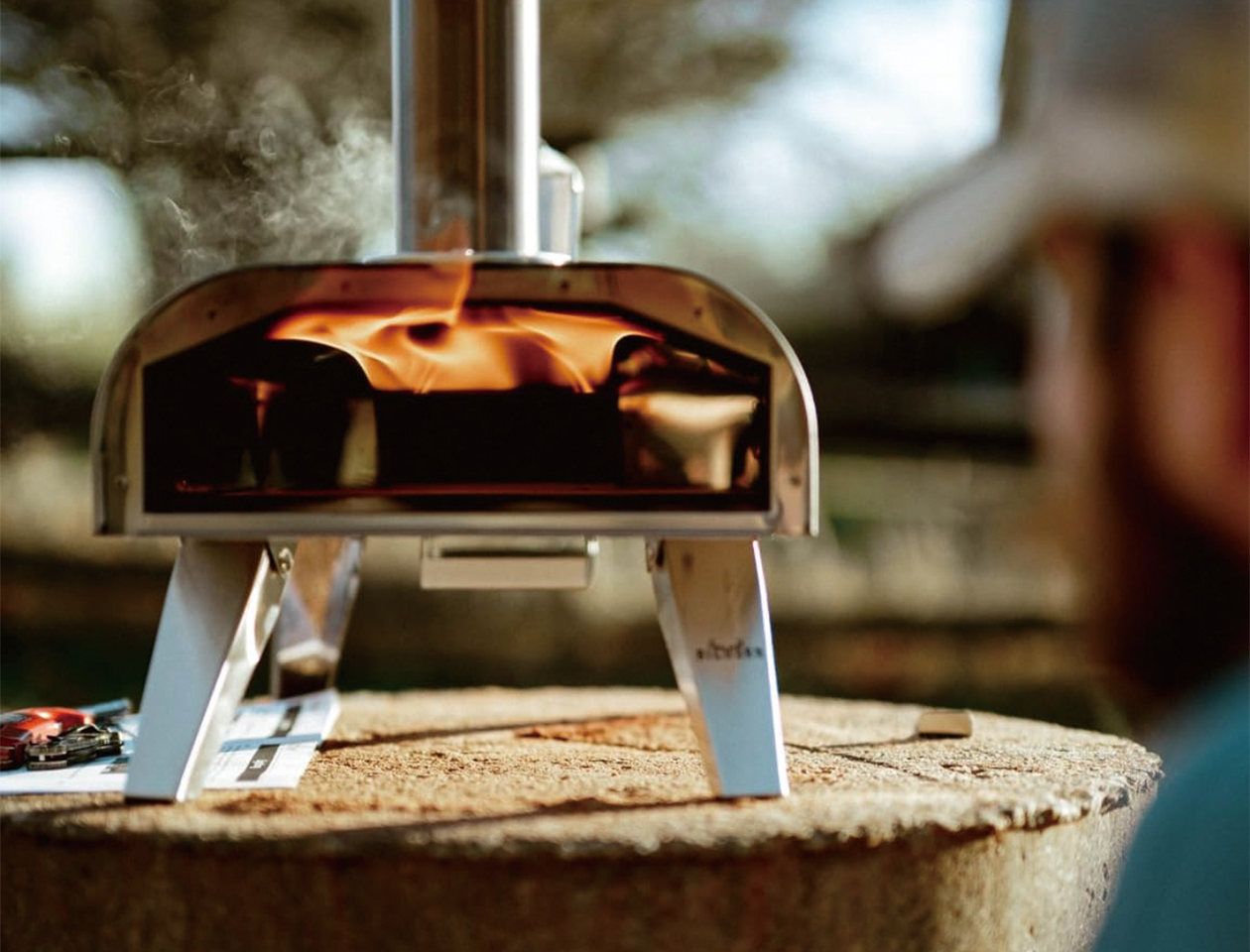
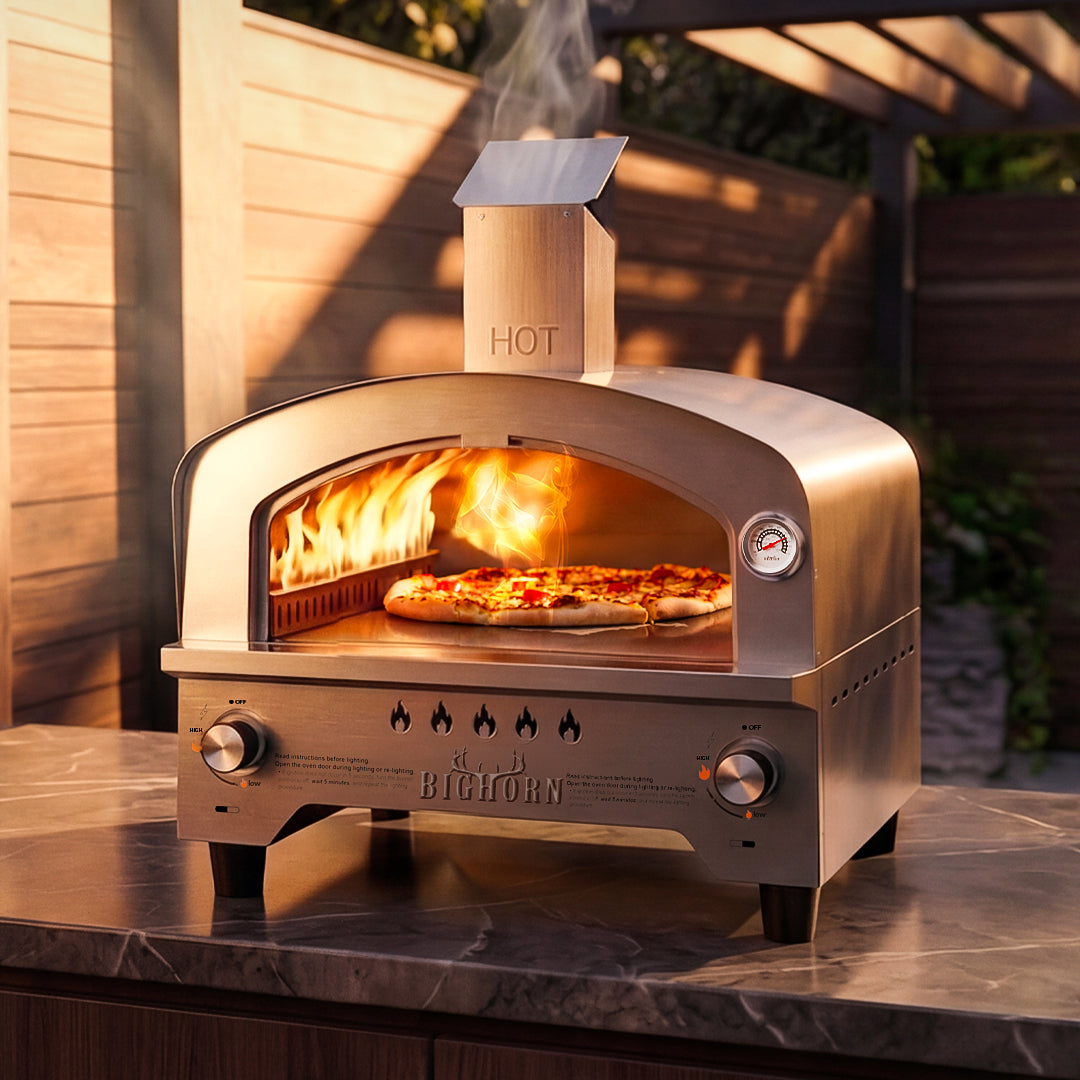
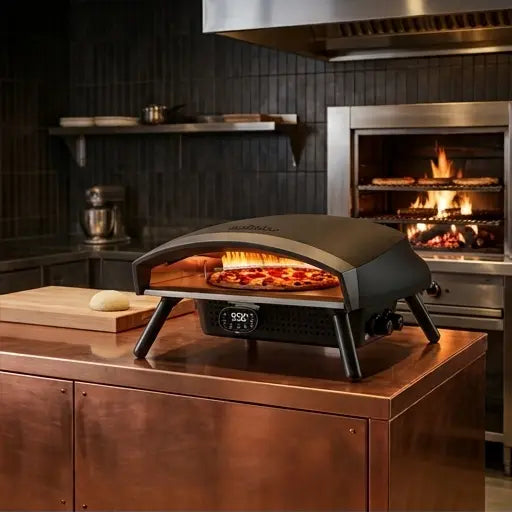
A backyard wood-fired pizza oven turns dinner into a live event, which is exactly why hosting can become chaotic. Guests gather near the flame, custom toppings multiply, prepared pizzas wait on peels, and the cook tries to manage fire recovery while answering questions. The oven may be performing perfectly while the service falls apart.
A six-pizza party needs three controls: a protected oven zone, a limited menu, and a pace based on actual heat recovery. Treat the evening as a sequence from chilled ingredients through final cold ash—not as six pizzas that must appear at once.
Set the Guest Promise Before the Menu
Tell guests that pizzas will be served one at a time for sharing. This matches the way a compact wood-fired oven works and keeps every pizza hot. Promising simultaneous individual pizzas creates pressure to launch before the floor recovers or to hold finished crusts until they soften.
For six pizzas, offer three planned combinations and make two of each. A simple menu might include:
- tomato, mozzarella, and basil;
- cooked mushrooms, onion, and cheese; and
- a pre-cooked meat option with restrained toppings.
Choose combinations with similar dough size and baking behavior. Drain wet cheese, cool pre-cooked toppings, and cut ingredients evenly. Raw sausage or other food that cannot safely finish during a very short bake must be cooked beforehand.
Custom pizza can be fun after the standard service works. For the first party, unlimited toppings are an operational risk: heavy pizzas stick, wet centers finish slowly, and the cook loses the useful baseline.
Calculate Dough and Ingredients With a Spare
Prepare seven dough balls for six planned pizzas. The extra ball covers a tear or failed launch and can serve as a floor-heat test. Keep every ball the same weight and label the box with mixing, balling, and planned use times.
| Item | Per pizza | Six pizzas plus test/spare | Prepared and chilled? |
|---|---|---|---|
| Dough ball | 7 units | ||
| Sauce | |||
| Cheese | |||
| Vegetable mix | |||
| Pre-cooked meat |
Weighing toppings during preparation is not restaurant theater. It prevents the later pizzas from becoming heavier after the popular ingredients run low, and it makes oven diagnosis possible because a pale center cannot be blamed on an unknown topping load.
Keep reserve ingredients at 40°F (4.4°C) or below until needed. USDA guidance limits ordinary room-temperature exposure to two hours, reduced to one hour above 90°F (32.2°C); put small working portions on the topping table and replenish from a refrigerator or well-managed cooler.
Build Three Physical Zones
The oven zone
Only the oven operator enters this area. It includes the opening, fire access, longest peel movement, fuel working supply, hot-tool rests, and receiving board. Use chairs, planters, cones, or another visible boundary outside the required clearances without creating a trip hazard.
The preparation zone
This holds covered dough, bench flour, measured toppings, and the launch peel. Place it close enough for a short transfer but outside smoke, sparks, and the turning path. Raw food tools never move to the cooked-pizza board.
The guest zone
Position seating where guests can see without standing behind the operator. Put drinks, plates, napkins, and conversation here so people do not enter the preparation table for supplies. Children and pets need active supervision by someone other than the oven operator.
Draw the layout before setting tables:
| Movement | Start | Destination | Must not cross |
|---|---|---|---|
| Topped pizza | Prep surface | Oven mouth | Guests, fuel, cords |
| Baked pizza | Oven | Clean board | Raw ingredients, dirty peel rest |
| Wood refill | Working holder | Fire | Serving board, guest route |
| Waste | Prep | Closed bin | Cooked-food surface |
Assign Roles That Do Not Overlap
For six pizzas, use at least two people.
The prep lead stretches, tops, keeps cold ingredients controlled, and confirms the pizza moves freely on the peel. The oven lead manages wood, checks the floor trend, launches, turns, removes, and declares when the next pizza may be topped.
A third person can cut, serve, and keep guests outside the oven zone. This person uses a clean board and cutter and does not handle raw meat or ash.
Use short handoffs:
- “Ready to top” means the oven is likely to accept the pizza within the safe peel-wait time.
- “Peel free” means the base slides before approaching the oven.
- “Board clear” means a clean receiving surface is waiting.
- “Recovering” pauses the next pizza before sauce is added.
The oven operator never leaves an active bake to fetch basil or explain the fire. A pizza can wait as dough; it should not wait fully topped on the launch peel.
Establish the Fire Before Guests Depend on It
Use dry untreated wood, the ignition method, door position, and fuel load allowed for the exact oven. Begin early enough for a clean fire and full heat soak without rushing, and sort the session’s fuel into small ignition pieces, medium build pieces, and cooking-size pieces before guests arrive. A visible flame is not proof that the cooking floor is ready.
If surface measurement is permitted, record the same center, near-fire, and far-side locations. Use the instrument consistently and treat readings as a repeatability tool, not a universal temperature prescription. Bake the test dough or spare only when the floor pattern and flame appear ready.
Evaluate that first result before pizza one:
- burned flour versus actual crust browning;
- top and bottom finishing together;
- the first-turn timing;
- the side that colors fastest; and
- the interval needed for the floor to recover.
Fix the process before guests receive the standard menu. One test pizza is cheaper than six alternating failures.
Run the Six-Pizza Clock by Events
Do not publish a rigid two-minute interval unless the oven has demonstrated it. Use events tied to recovery.
| Event | Prep action | Oven action | Quality check |
|---|---|---|---|
| Test bake | Hold toppings cold | Confirm fire and floor balance | Adjust one variable |
| Pizza 1 | Top only after release | Launch, turn, remove | Bottom/top/center |
| Recovery 1 | Stretch next dough | Small approved fuel action; wait for baseline | Declare ready |
| Pizza 2–5 | Repeat | Repeat measured rhythm | Log any drift |
| Pizza 6 | Use final standard portion | Finish without adding unnecessary late fuel | Start shutdown plan |
After removal, place the pizza on the clean board, cut, and serve promptly for sharing. Avoid stacking or tightly covering thin pizzas. The next pizza begins only when the oven lead has confirmed recovery and the launch peel is clean and dry.
If service slows, give guests a prepared cold appetizer rather than overloading the next pizza or throwing excessive wood onto the fire. The menu should absorb a delay without changing the oven routine.
Control the Launch
Stretch dough on the bench, transfer it to a dry peel, and top efficiently. Perform a gentle shake before entering the oven zone. If one edge sticks, lift and correct it at the prep table. Do not solve sticking by burying the peel in loose flour; flour can burn on the floor and contaminate later bases.
Keep sauce away from thin spots and avoid leaving dressed dough on the peel while the oven recovers. If a launch folds, do not reach into the chamber. The oven operator should use a properly sized long-handled tool to remove it if safe, restore the floor by the approved method, and use the spare ball.
Guests should not launch “for fun” unless the oven is cold and the activity is only a rehearsal. Live-fire timing and tool control belong to the designated operator.
Make Food Safety Visible
Use separate utensils for raw ingredients and finished pizza. Wash hands before dough handling and after touching raw food, waste, pets, phones, or fuel. Keep serving boards away from the wood holder and soot-bearing tools.
If the menu includes chicken, ground meat, or other temperature-sensitive toppings, pre-cook them to the applicable safe internal temperature and cool or hot-hold them safely. A rapid pizza bake cannot be assumed to cook a thick raw topping; use a food thermometer during preparation rather than judging by pizza browning. Raw sausage is best browned or cooked through in a skillet first, then cooled and portioned so the bake only reheats it.
Label dietary combinations and use separate clean tools where allergy management requires them. A shared flour-covered workstation and common peel cannot guarantee allergen-free pizza; communicate that limitation honestly.
Plan Shutdown Before the Final Pizza
Decide who supervises the oven after dessert and how long the site remains active. Stop adding wood early enough to complete the manufacturer’s shutdown under observation. Do not close an unapproved door position, pour water into the oven, or leave embers because the meal has moved indoors.
Keep the visible boundary in place through the entire cooling period: the fire, ash, stone, chimney, tools, and oven body must all reach full cold before the boundary comes down. Remove cold ash by the prescribed method into an appropriate noncombustible container, then clean and cover only after cooling. A dark chamber can still retain dangerous heat, so check embers directly rather than judging by appearance.
The host should also return perishable food to refrigeration within safe time limits, discard contaminated leftovers, and separate clean serving items from soot and ash equipment.
Wood-Fired Party Safety Checklist
- Approved outdoor location with required clearances, ventilation, and current local fire permission.
- Visible no-traffic zone around the opening, fire access, fuel, and peel path; one sober adult supervising the fire continuously.
- Only permitted dry untreated wood, no liquid accelerant, and fuel sorted into ignition, build, and cooking sizes.
- Perishable toppings chilled at 40°F (4.4°C) or below; foods that cannot finish in the bake pre-cooked; raw-food tools separated from serving boards.
- Floor recovery, not guest pressure, sets the next launch; every pizza served promptly for sharing.
- Specified shutdown without water, and the boundary kept until wood, embers, ash, stone, chimney, tools, and body are fully cold.
Frequently Asked Questions
How many pizzas should I plan for a backyard party?
Base the count on pizza size, guest appetite, menu, and the oven’s tested recovery pace. Six shared pizzas are a manageable first service for many groups, but run a rehearsal and provide appetizers so timing is not pressured. Add a spare dough ball so a failed launch does not shorten the menu.
Should guests build their own pizzas?
Only within a controlled system. Set pizza size and topping limits, keep perishable ingredients cold, and let the oven operator decide when a pizza may be assembled. Unlimited heavy toppings create launch and doneness problems; a “build station” works better after the first two standard pizzas have established the pace.
How do I keep the first pizza from getting cold?
Serve each pizza immediately for sharing instead of holding all six. Prepare plates and guests before the first launch, use a clean nearby board, and keep the service interval aligned with floor recovery. If the first pizza must wait, keep it on a warm—not covered—rack and cut it just before serving.
Can raw sausage cook during a fast pizza bake?
Do not assume it will. Pre-cook sausage and other ingredients that need more time to a safe internal temperature, then cool or hot-hold them safely before topping. Browned sausage also releases less grease into the bake, which keeps the crust crisper and the oven cleaner.
Who should manage the fire during dinner?
One designated adult who understands the exact oven should handle ignition, fuel, launching, turning, and shutdown. That person should not simultaneously supervise children, serve drinks, or leave an active bake. A second adult can manage prep and a third can serve, so the fire operator stays focused through the last pizza and the cooling period.
Host the Workflow, Not Just the Fire
A successful backyard wood-fired pizza party is organized around a protected oven zone, a measured menu, clear roles, and the oven’s real recovery cycle. Prepare seven equal dough balls, portion toppings, run one calibration bake, and serve six pizzas one at a time. Then supervise shutdown as deliberately as ignition. Guests remember hot pizza and a relaxed host—not whether the oven was pushed to its maximum output.