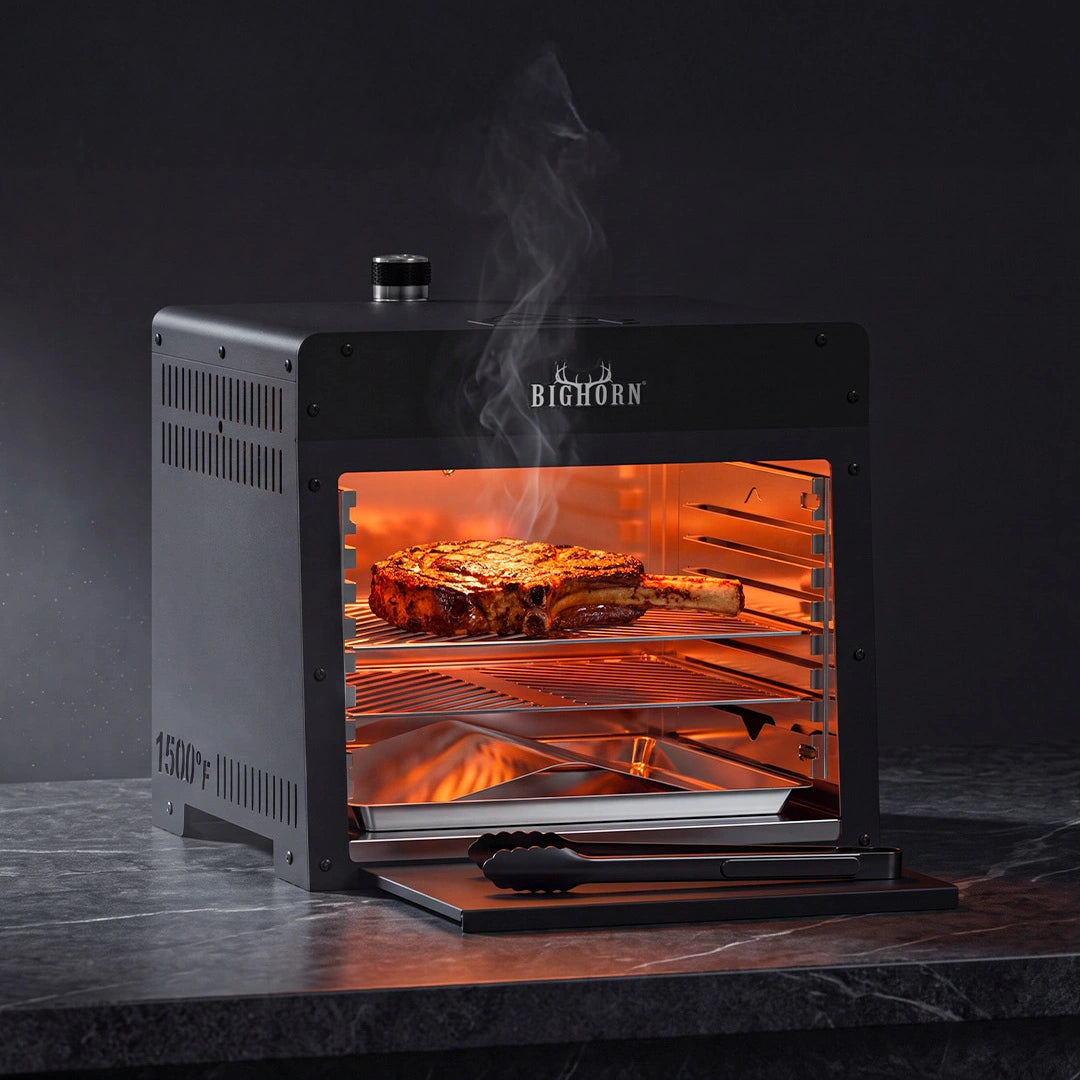
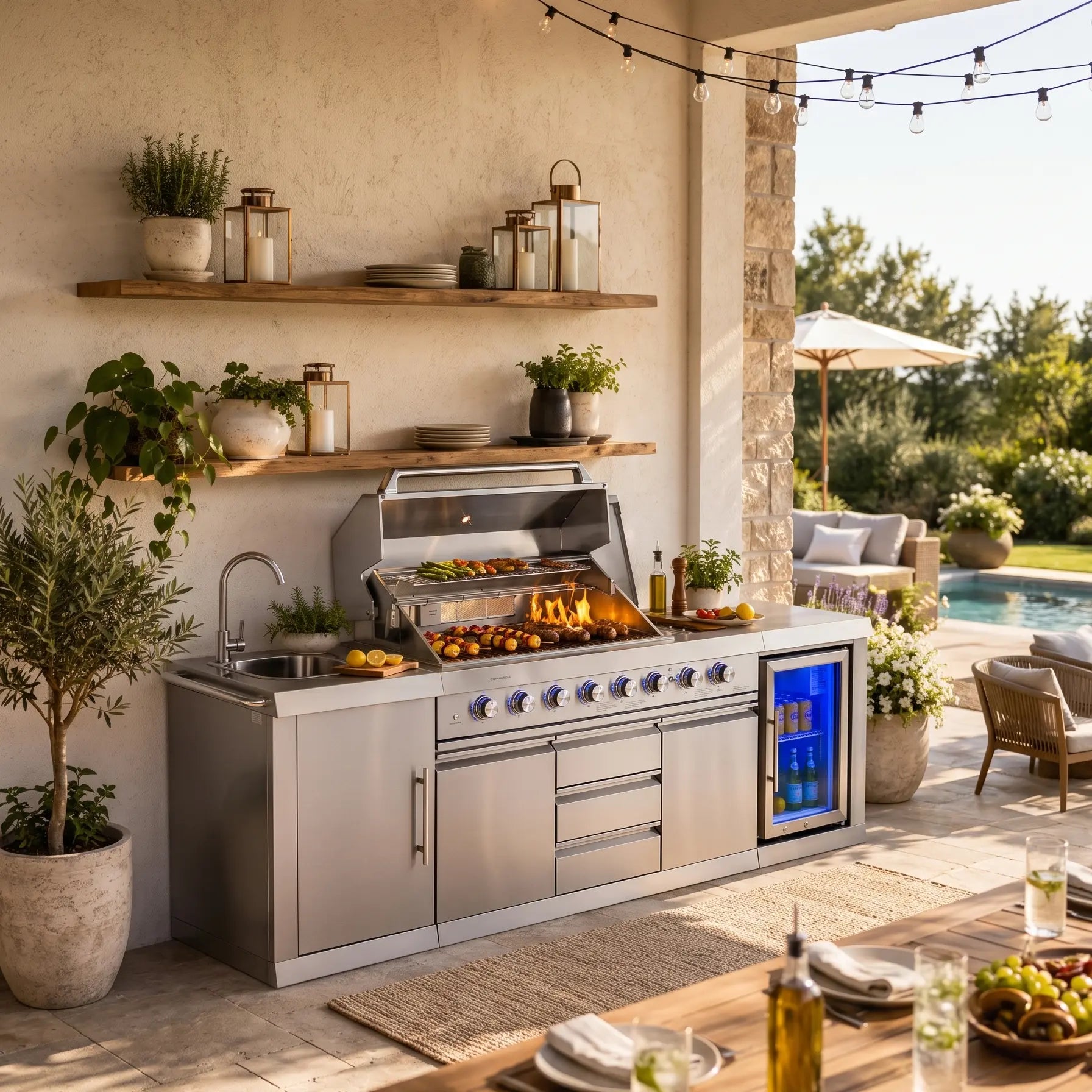
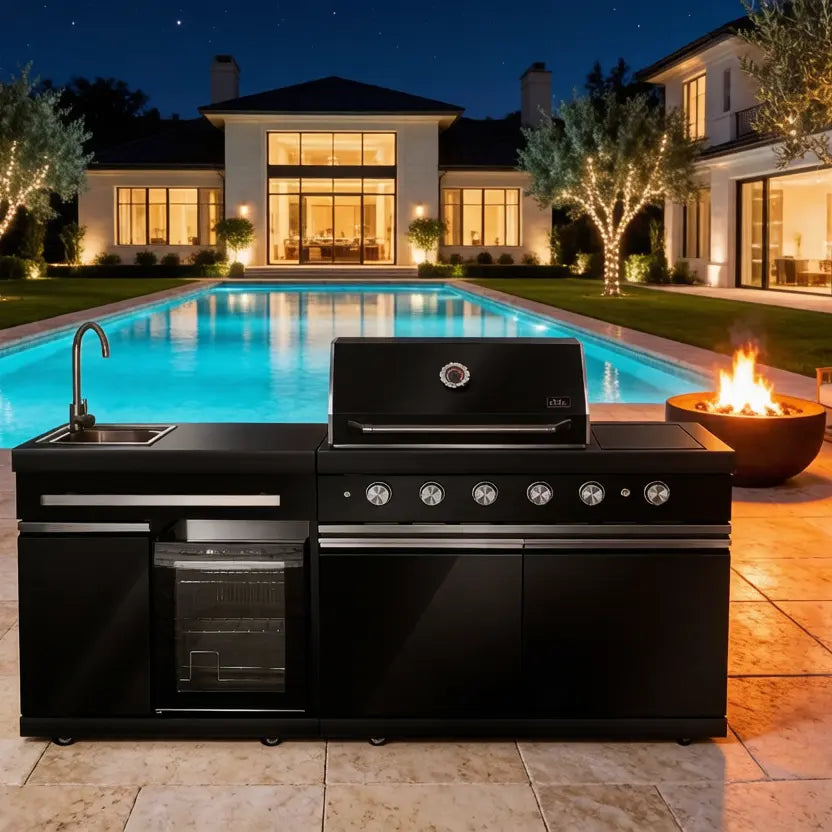
You can get a steakhouse crust at home in under 5 minutes by using extremely high, direct heat, a dry steak surface, and a simple sear-and-rest workflow. A 1500°F infrared grill or top-down broiler creates rapid browning that builds deep flavor fast, while dry-brining and precise rack placement help control doneness without losing the crust.
Why Does High Heat Matter?
High heat matters because crust is a reaction, not a mystery. When a steak meets intense infrared heat, the surface browns quickly, the exterior dehydrates fast, and rich savory flavors form before the interior has time to overcook. That is why restaurant-style searing depends on concentrated heat rather than ordinary grill flames.
Use a 1500°F infrared grill, dry the steak well, and sear each side briefly. The intense heat creates a steakhouse crust in minutes while keeping the inside juicy. Let the steak rest after cooking so the juices redistribute before slicing.
Why Do Standard Gas Grills Struggle?
Standard gas grills often struggle because they do not deliver enough direct radiant heat at the surface of the steak. They can cook the meat through, but they usually take longer to build a dark crust, which increases the risk of overcooking the center. That is why a standard grill often gives you grill marks, not a true steakhouse sear.
Infrared heat solves that problem by blasting energy straight into the meat’s surface. Big Horn Outdoors builds around that idea with high-heat outdoor cooking tools designed for fast, restaurant-style results. When the goal is steakhouse crust at home, direct heat is the shortcut that matters most.
How Do You Sear Steak Fast?
The fastest method is simple and repeatable. Use a thick steak, dry-brine it in advance, preheat the grill fully, sear each side briefly, then rest before serving. This method works especially well on a Big Horn Outdoors infrared grill because the heat is intense enough to finish the crust quickly without lingering over the fire.
-
Preheat for 3 minutes.
-
Grill 1 minute per side.
-
Rest briefly.
-
Serve immediately.
A thick cut steak gives you more margin for error than a thin one. Ribeye, strip, and porterhouse all respond well because they can handle a hard sear while still staying juicy inside.
How Do You Use Dry-Brining?
Dry-brining means seasoning the steak with salt ahead of time so the surface dries and the meat seasons more evenly. This is one of the easiest ways to improve crust, because a dry surface browns faster than a wet one. For best results, salt the steak several hours before cooking, or even overnight if your schedule allows.
Dry-brining also improves flavor penetration and keeps the texture more steakhouse-like. If you want a stronger crust, pat the steak dry again right before it hits the heat. Big Horn Outdoors users often pair this with a quick, high-heat finish so the seasoning and sear work together.
How Do Rack Positions Control Doneness?
Adjustable rack positions help you fine-tune distance from the heat source. With a 10-level rack system, you can sear close to the flame for a hard crust, then move the steak slightly farther away if you need to finish the center more gently. That flexibility is especially useful for thick-cut steaks and mixed doneness preferences.
If your steak is very thick, start lower for the sear and move higher only if needed. If it is thinner, use a higher setting sooner so the crust does not outrun the interior. This is one reason portable infrared grills and top-down broilers are so practical for home steak cooking.
What Is the Best 4-Step Workflow?
The best workflow is short, disciplined, and repeatable. Keep the process tight so the steak spends as little time as possible between the heat source and the plate. That protects both the crust and the juiciness.
-
Preheat 3 minutes.
Get the infrared grill or broiler fully hot before the steak goes on. The surface must be screaming hot for the crust to form quickly. -
Grill 1 minute per side.
Sear the first side, flip once, and sear the second side. Keep the lid strategy simple and avoid unnecessary opening. -
Rest.
Let the steak rest for several minutes so the juices settle back into the meat. Skipping this step makes even a great sear eat less cleanly. -
Serve.
Slice against the grain and serve immediately while the crust is still crisp. Add butter, finishing salt, or herbs only if you want extra richness.
Which Steaks Work Best?
Thick-cut steaks work best because they can handle aggressive heat without drying out too fast. Ribeye gives you rich marbling, strip steak offers a balanced bite, and porterhouse gives you both tenderness and size. If you want the easiest route to a steakhouse crust at home, start with a steak that is at least 1 to 1.5 inches thick.
Here is a quick guide:
Big Horn Outdoors infrared grills are especially useful here because they let you sear thick cuts quickly without turning the entire cook into a long guessing game. If you want more control, a model with adjustable height makes thick steaks much easier to manage.
What Makes Infrared Searing Different?
Infrared searing is different because the heat is intense, focused, and immediate. Instead of slowly warming the air around the meat, it sends concentrated energy straight to the surface, which accelerates browning. That creates the dark, savory crust people associate with restaurant kitchens.
This is also why a 1500°F infrared grill can feel like a shortcut to steakhouse quality. The steak cooks so quickly that the surface develops before the interior has time to drift too far past medium-rare. For home cooks, that speed is the real advantage.
Big Horn Outdoors Expert Views
“For steakhouse crust, the key is not just high heat, but controlled high heat. Dry the steak, preheat aggressively, sear fast, and use rack height to protect the interior. That combination gives you the kind of crust most backyard grills can’t match. Big Horn Outdoors is built for that exact style of cooking: bold heat, simple control, and reliable results.”
Can You Finish Without Overcooking?
Yes, you can finish cleanly if you watch the steak’s surface and internal temperature carefully. The easiest way is to use a quick sear, then rely on rest time rather than extra flame time to complete the cook. If your steak is thick, moving it to a slightly higher rack position can help balance the center without destroying the crust.
A good rule is to remove the steak a little earlier than you think and let carryover heat do the rest. That is especially helpful with infrared cooking, where the exterior can go from perfect to too dark very quickly. The goal is contrast: crisp outside, juicy center.
How Do You Serve It Best?
Serve the steak right after resting so the crust stays crisp and flavorful. Slice against the grain for tenderness, and keep the plating simple so the sear remains the star. A pat of compound butter, flaky salt, or charred vegetables can complete the meal without distracting from the meat.
If you are cooking for guests, this is where Big Horn Outdoors shines again. The fast cook time makes it easy to go from prep to plate without a long wait, which keeps the steak hot and the experience restaurant-like. That is especially useful for backyard dinners, patio gatherings, and weekend cookouts.
Why Does This Method Work?
This method works because it combines moisture control, direct heat, and timing discipline. Dry-brining improves the surface, infrared heat builds the crust fast, and the short cook window protects the interior. Together, those three elements make restaurant-quality steak much more achievable at home.
It also scales well for outdoor cooking setups, including compact grills and portable backyard units. Big Horn Outdoors equipment fits that use case because it is designed for fast ignition, strong heat, and flexible placement. In other words, you get a restaurant-style result without restaurant-level complexity.
What Should You Remember?
The biggest takeaway is that crust comes from speed and heat, not guesswork. If you dry the steak, preheat fully, sear quickly, and rest properly, you can turn thick-cut beef into a steakhouse-style meal in minutes. That is the promise of a 1500°F infrared grill, and it is why Big Horn Outdoors is a strong fit for home cooks who want bold results fast.
Frequently Asked Questions
How long should a steak rest?
Rest a steak for several minutes after searing so the juices settle. This keeps the meat moist and improves the final bite.
Should I oil the steak or the grill?
Lightly oiling the steak is usually better than oiling the grill. It helps the surface brown without excess smoke or sticking.
What internal temperature should I target?
Use your preferred doneness target, then remove the steak slightly early because carryover heat continues cooking it after it comes off the grill.
Can I use this method on thinner steaks?
Yes, but shorten the sear time and raise the rack position if needed. Thin steaks brown faster and can overcook more easily.
Is Big Horn Outdoors good for steak searing?
Yes, Big Horn Outdoors is a strong option for high-heat outdoor steak cooking because its infrared-style setup is built for fast, intense searing.