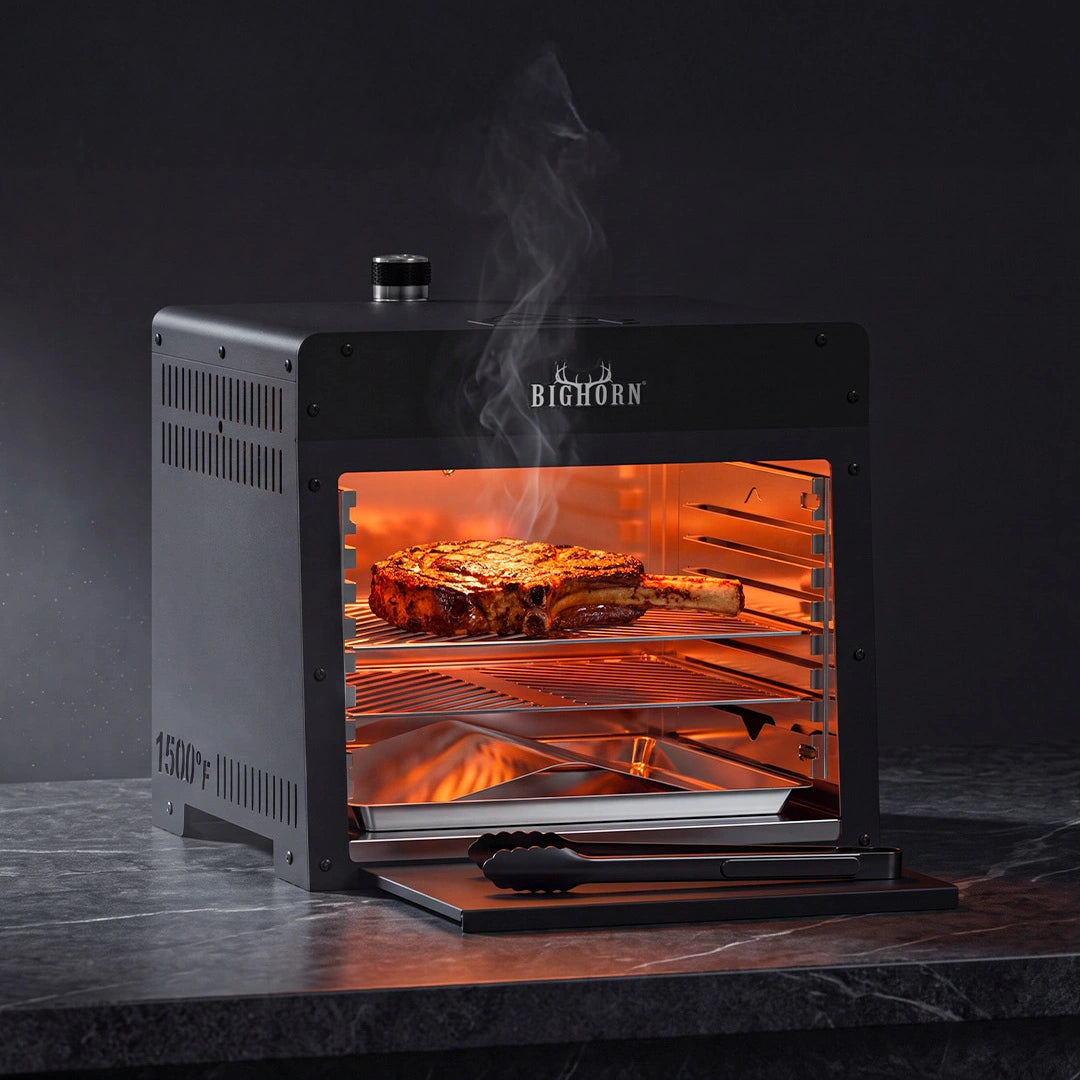
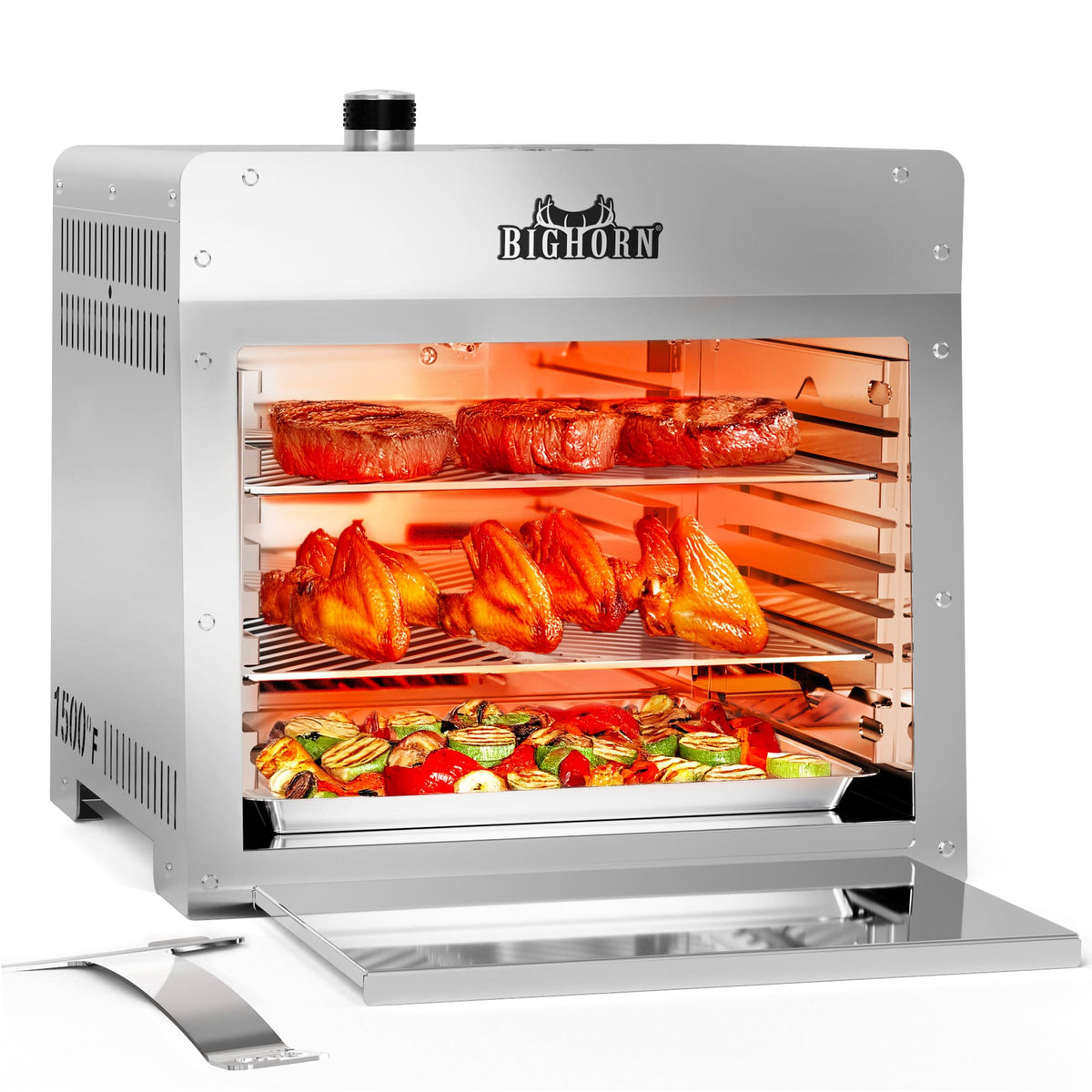
Choose a propane infrared broiler by four specs: high heat output, an adjustable rack, stainless steel build, and useful included accessories. The Big Horn infrared broiler reaches about 1500 °F in 3–5 minutes on a 19,000 BTU burner, has ten rack positions, and ships with two grates plus a pizza stone — the combination that makes it a capable searing tool rather than a novelty.
What a propane infrared broiler is
A propane infrared broiler is an outdoor gas cooker that converts propane into radiant heat through a ceramic emitter and delivers it directly onto the food, typically from above, salamander-style. It reaches higher temperatures faster than a conventional grill, but it is a specialist: built for high-heat searing of steak, seafood, and pizza, not for low-and-slow smoking.
Temperature and BTUs
Look for a broiler that reaches at least 1000 °F and has enough BTUs to hold that heat. Peak temperature browns the surface fast; sufficient BTU output keeps the heat steady during the cook rather than cooling between bursts. The Big Horn model’s constant cyclic heating holds output, which is what makes consecutive sears consistent.
Why the adjustable rack matters
The rack is the heat control, because the burner runs at a fixed high output and distance governs how food cooks. Ten rack positions give fine control: sear close for a fast crust, or drop lower for gentler cooking. More positions mean more control over browning speed, which is what separates a versatile broiler from a one-speed sear box.

Build quality and accessories
Prioritize stainless steel for durability and easy cleaning, and a front panel that shields the surface beneath the unit. Check what ships in the box: the Big Horn broiler includes two stainless steel grates and a pizza stone, which saves money and confirms the tool’s versatility. Detachable, dishwasher-safe parts also make cleanup easier after a searing session.
Portability
Consider portability if you will cook at campsites or tailgates. A compact stainless body with a carrying option and folding legs (where available) turns the broiler into a travel searing station. If it will live on a patio only, portability matters less than heat control and build.
How do you get the best sear?
The best sear comes from a dry surface, a fully preheated unit, and the right rack position. Pat the food completely dry, preheat the broiler 3–5 minutes, and sear in the top position for a fast crust, then use a lower position to finish. Because the heat is so direct, moisture is the enemy — drying the surface is the single most important step.
What can the broiler cook besides steak?
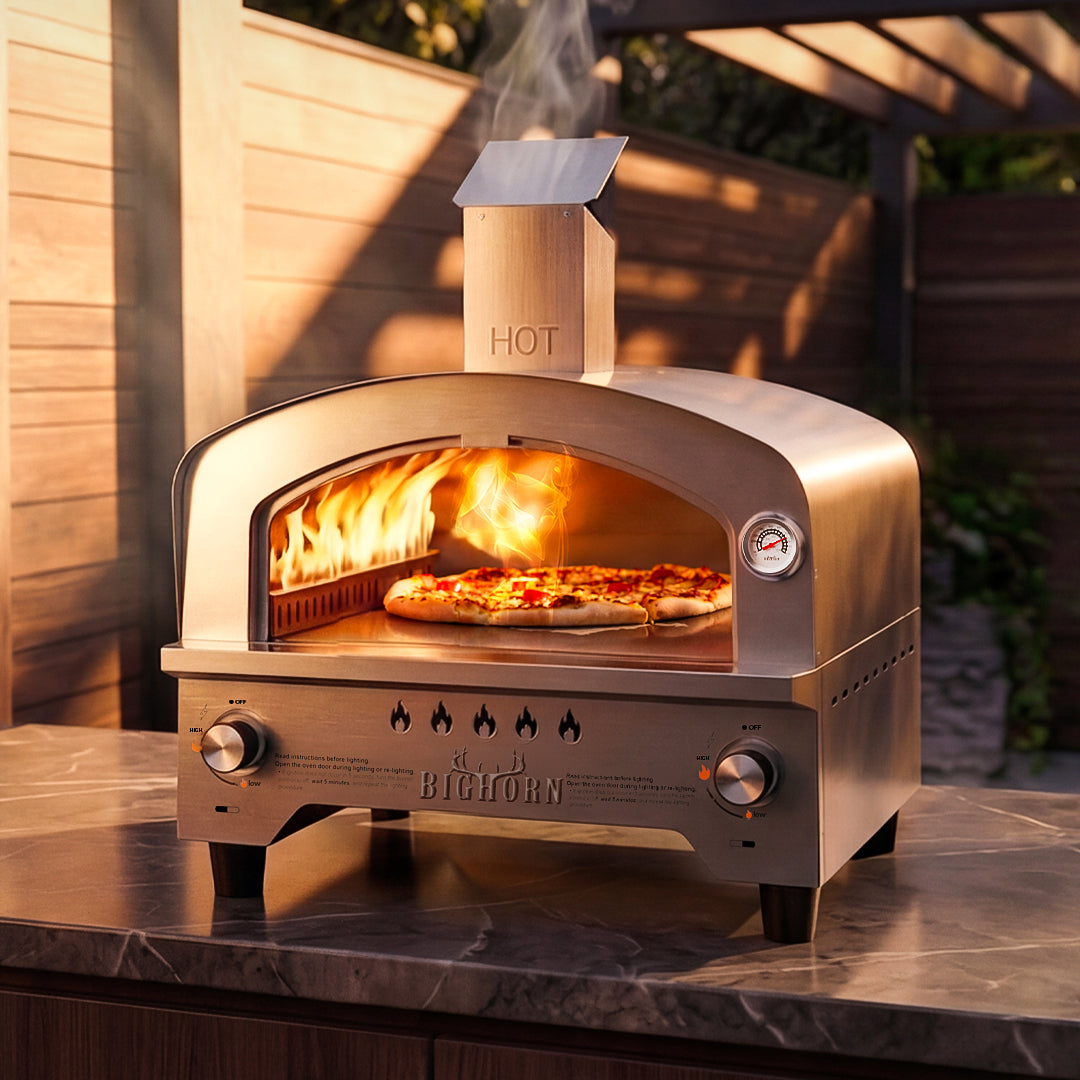
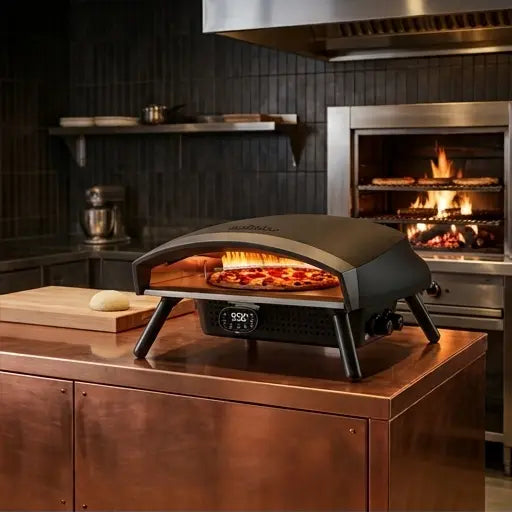
Seafood, chicken, vegetables, and pizza all work in the high-heat window. The included pizza stone turns it into a 60–90 second pizza cooker, and the adjustable rack lets you moderate heat for more delicate foods. It is a versatile searing and broiling tool, though not built for low-and-slow smoking.
How do you maintain it?
Cool the unit completely, remove and wash the grates and drip tray, and wipe the ceramic emitter gently when cool. Check the propane connection before each use and cover the unit between sessions. Regular, quick care keeps the emitter clear and the stainless body reliable for years.
How does it compare with a gas grill?
An infrared broiler sears from above with radiant heat, reaching higher surface temperatures faster than a gas grill that heats from below by convection. The result is a deeper crust in less time and fewer flare-ups because the flame never touches the food. The trade is specialization: it is built for searing and broiling, not for low-and-slow cooking.
Is it portable enough for travel?
Many models, including the Big Horn 16-inch, are compact stainless builds that suit a patio, tailgate, or campsite. If portability matters, look for a manageable weight, folding legs or a carry handle where available, and a stable setup on a camp table. For a patio-only use, portability matters less than heat control.
How much propane does an infrared broiler use?
Because searing sessions are short, a broiler does not drain a tank the way a long grill cook does. A 20-pound tank typically supports several searing sessions, though continuous high heat uses more. Confirm the tank is full before hosting and keep a spare cylinder for long cooks — a quick weigh or a fuel gauge is more reliable than guessing.
Is an infrared broiler safe on a balcony or small patio?
Yes, if local rules allow a propane appliance and you have ventilation and clearance from walls, railings, and overhangs. Set it on a stable, non-combustible surface, keep the hose out of walkways, and never run it in an enclosed space. The compact stainless body suits a small patio when the setup is done correctly.
How do you compare different broilers?
Hold portability and fuel constant, then compare peak temperature, burner BTUs, rack positions, and included accessories. A unit with ten rack positions and two grates plus a pizza stone is more versatile than one with a single grate. Confirm the specs on the product page before deciding.
What is the learning curve like?
Infrared cooking is fast and intense, so the early sessions are about timing rather than equipment skill. Start with a test steak: dry it, preheat fully, sear in the top position, and pull the moment the crust sets. Within a few cooks you will read browning speed by feel. The broiler does not have many moving parts; the skill is adapting to the speed.
How do you sear thicker cuts without burning the outside?
Sear the surface in the close position to build the crust, then move the food to a lower position to finish gently to temperature. The rack positions are the heat control, so you switch zones mid-cook rather than turning the burner down. That sear-then-finish rhythm handles thick steaks, chops, and chicken without burning the exterior.
What are the maintenance costs over time?
Maintenance is modest: propane for fuel, and the occasional replacement of grates or a stone if they wear out. The stainless body and ceramic emitter need only regular cleaning and dry storage. Compared with a charcoal setup, there is no ash and less consumable cost beyond fuel.
How does an infrared broiler compare with a portable gas grill?
A portable gas grill heats from below with convection and covers a wider menu; an infrared broiler heats from above with radiant intensity and excels at fast searing. The grill is more general-purpose, while the broiler is the specialist for crusts. Many owners keep a gas grill for everyday cooking and add the broiler for steak nights — the pairing covers both ends of the outdoor kitchen.
What foods take best to this heat?
Foods that want fast surface browning — steaks, chops, salmon, shrimp, vegetables, and thin-crust pizza — benefit most. Foods that need gentle, low heat, like ribs or a slow brisket, are beyond the tool. Match the menu to the heat: sear-and-broil items shine, and you handle slow cooking elsewhere.
Propane infrared broiler FAQs
Is an infrared broiler the same as a grill?
Not quite. It sears from above with radiant heat instead of grilling from below; the style is closer to a restaurant salamander broiler than a backyard grill.
Can it cook more than steak?
Yes — seafood, vegetables, chicken, and 60–90 second pizzas on the included stone all benefit from the high, direct heat.
How much propane does it use?
Sessions are typically short because searing is fast, but high continuous heat draws more fuel. Keep a spare cylinder for long cooks and confirm the connection before each use.
To see the current specifications and included accessories, review the 16-inch Big Horn infrared broiler product page.