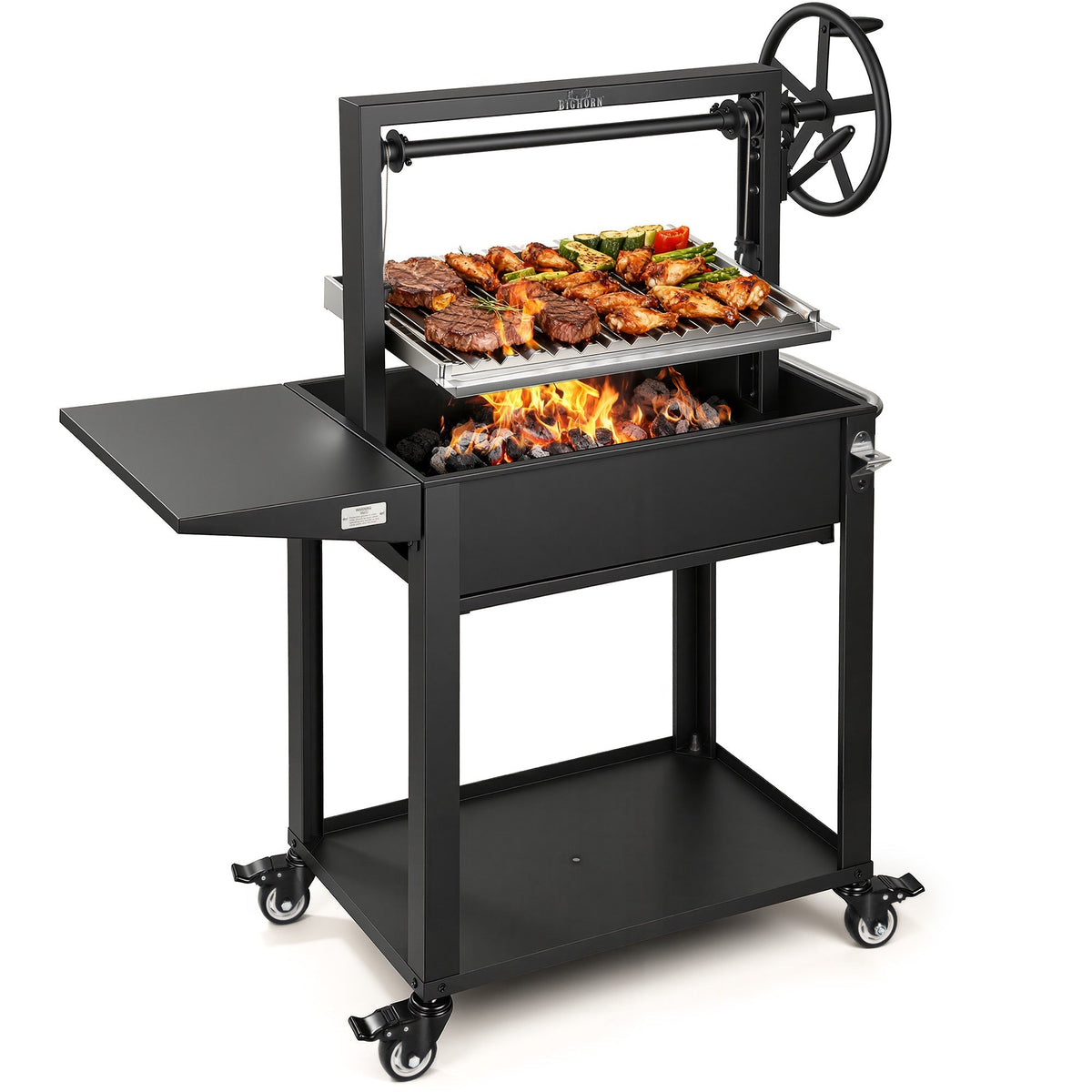
Cook Santa Maria tri-tip over live fire with a two-zone approach: sear the meat close to the coals to build a crust, then raise it and let gentle heat carry it to a medium-rare finish around 130–135 °F internal temperature. The Santa Maria–style grill’s adjustable grate is exactly what makes this work — you control heat by moving the meat, not the fire.
What makes tri-tip a Santa Maria classic
Tri-tip is a triangular cut from the bottom sirloin that became a California grilling staple largely because of the Santa Maria tradition of cooking over live oak coals with a height-adjustable grate. It is lean enough to dry out if mishandled and flavorful enough to reward attention: the crust from the live fire and the medium-rare center are the pairing that made the cut famous.
Preparing the meat
Season tri-tip simply before it reaches the fire — a dry rub of salt, black pepper, and a little garlic is the traditional baseline. Pat the surface dry first so it browns instead of steaming.
Setting up the fire and grate
Build a charcoal or hardwood fire and let it settle to a steady coal bed. The Big Horn Santa Maria grill’s oversized hand wheel and steel-cable system raise and lower the grate smoothly, which gives you the two-zone control: low for a hard sear, high for gentle finishing.

The sear-and-rise cook
Sear the tri-tip low over the coals for a few minutes per side to build the crust, then raise the grate and let the meat finish over gentle heat. Target about 130–135 °F for medium-rare, and pull the roast a few degrees before that point because carryover will continue to cook it while it rests. Use a thermometer rather than time — tri-tip’s leanness punishes guessing.
Santa Maria tri-tip details
What is the traditional Santa Maria seasoning?
The classic Santa Maria rub leans on salt, coarse black pepper, and often a little garlic, applied before the meat hits the fire. Some recipes add paprika or cayenne for depth, but restraint is the tradition: the live-fire smoke is the flavor base. Rub evenly and pat it in so the seasoning stays on during the sear.
How long does the whole cook take?
From lighting the fire to slicing, budget roughly 45–60 minutes: 20–30 minutes to build a settled coal bed, a few minutes per side for the sear, then 15–25 minutes of gentle finishing to temperature. The timing is flexible because you control it with grate height, which is what makes the format forgiving once the fire is steady.
Resting and slicing
Rest the tri-tip for 5–10 minutes, then slice against the grain. The cut changes direction partway through, so angle the knife to follow the grain where it shifts. Slice thin for the texture that defines a well-cooked tri-tip.
How do you manage flare-ups while searing?
Tri-tip is lean enough that heavy flare-ups are rare, but a little rendered fat still drips onto the coals. When a flare starts, raise the grate to pull the meat out of the flame while the flare settles, then lower it back to continue the sear. The quick-response grate is the best flare control you have on a Santa Maria grill — faster than rearranging coals and gentler on the meat.
What sides and sauces pair best?
The traditional Santa Maria meal pairs tri-tip with pinquito beans, grilled French bread, and a simple salad, and a chimichurri or salsa finishes the plate. Because the fire is already going, grilled vegetables make a natural second course. Keep the sides simple so the smoke and the meat stay the centerpiece of the plate.
Can you cook tri-tip over charcoal instead of wood?
Yes. Charcoal gives the same direct, settled heat and is easier to control at a consistent level; live wood adds a little extra smoke. For a beginner, start with lump charcoal, then add hardwood once the fire management feels natural.
Do you need to reverse-sear tri-tip indoors instead?
Reverse-searing in an indoor oven works and gives strong control, but it forgoes the live-fire crust and smoke that define the Santa Maria style. If weather or equipment forces indoor cooking, reverse-sear is a fine fallback; when the grill is available, the sear-and-rise method on a settled fire is the better match.
How do you judge doneness without a probe?
A thermometer is the reliable answer, but without one, learn the feel: medium-rare tri-tip is firm with a little give, and the surface springs back instead of squishing. Slicing a test corner early is better than overcooking the whole roast — cut into the thin end to check, then rest the rest.
How many people does one tri-tip feed?
A whole tri-tip weighs roughly 1.5–2.5 pounds and feeds four to six people when sliced thin. Plan one tri-tip for a small group, or scale by adding cuts of different sizes. Because it is lean, a single roast goes quickly when guests are hungry.
What if the outside cooks faster than the inside?
That is exactly what the adjustable grate solves: raise the meat to stop the outer crust from over-cooking while the center finishes. Move up a notch, wait, and check with a thermometer. The sear-and-rise method is designed so the crust and interior finish in the same window.
What is the difference between tri-tip and brisket?
Tri-tip is a lean, fast-cooking roast from the bottom sirloin; brisket is a tough cut that needs low, slow cooking to break down. They demand opposite methods — tri-tip rewards a hot sear and quick finish, while brisket needs hours of gentle heat. Confusing the two is the most common reason tri-tip gets overcooked.
Can you leave the grate in one position the whole cook?
Technically yes, if you choose the right height, but the sear-and-rise pattern gives better results: low to build the crust, higher to finish gently. Moving the grate is the whole point of the Santa Maria method, and it makes a lean cut like tri-tip forgiving.
What is the ideal fire for tri-tip?
Ideal is a settled, steady bed of coals — not a roaring flame. Let charcoal or hardwood burn down until the coals glow evenly and the flame has died back, then sear over that bed. A settled fire gives the even radiant heat that sears the crust without scorching, which is what the sear-and-rise method depends on.
Santa Maria tri-tip FAQs
Do I need an oak fire for authentic tri-tip?
Live oak is traditional, but any settled hardwood or charcoal fire gives the direct heat the cut needs. Use what your setup and local fuel allow.
What is the ideal doneness?
Medium-rare, about 130–135 °F, preserves the juiciness the cut is known for. Pull a few degrees early for carryover.
Can I cook tri-tip without a Santa Maria grill?
Yes — a standard grill with a two-zone fire works. The adjustable grate makes the sear-and-rise technique easier, but a hot-and-cool zone on any grill covers the method.
For the current specs, review the Argentine Santa Maria grill product page before you plan the cook.