For a party where pizza is the main meal, a useful starting point is about three standard slices per adult. If a large pizza is cut into eight slices, that works out to roughly four large pizzas for 10 adults, eight for 20, and twelve for 30. Adjust for children, side dishes, very hungry guests, and the actual diameter and slice count of the pizza you are serving.
Use Slices, Not “Pizzas Per Person”
The simplest planning method is to estimate how many slices the group will eat, then divide by the number of slices in each pizza. “Large” is not standardized, so check the diameter and cut before using a calculator.
| Guests | Light meal, ~2 slices | Main meal, ~3 slices | Hungry crowd, ~4 slices |
|---|---|---|---|
| 10 | 3 large pizzas | 4 | 5 |
| 20 | 5 | 8 | 10 |
| 30 | 8 | 12 | 15 |
| 40 | 10 | 15 | 20 |
| 50 | 13 | 19 | 25 |
Children and Side Dishes Change the Number Quickly
Younger children often eat fewer slices than adults, while teenagers may eat the same amount or more. Appetizers, salad, wings, desserts, and a second main dish reduce pizza demand. A long evening event can push it back up because guests return for another slice later.
For exactly 20 guests, the 20-person pizza guide breaks the estimate down by adult/child mix.
Ordering Pizza and Baking It Yourself Are Different Problems
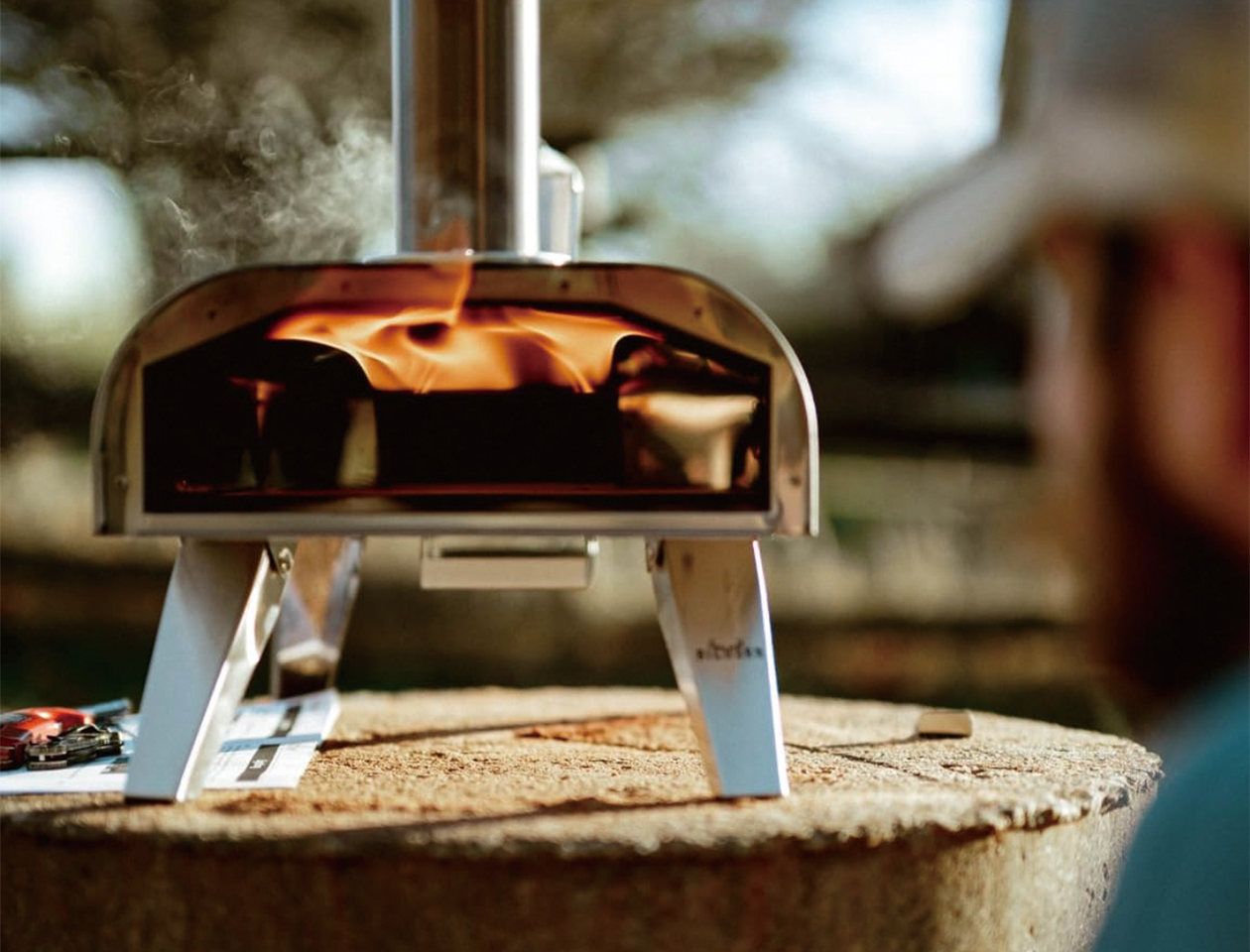
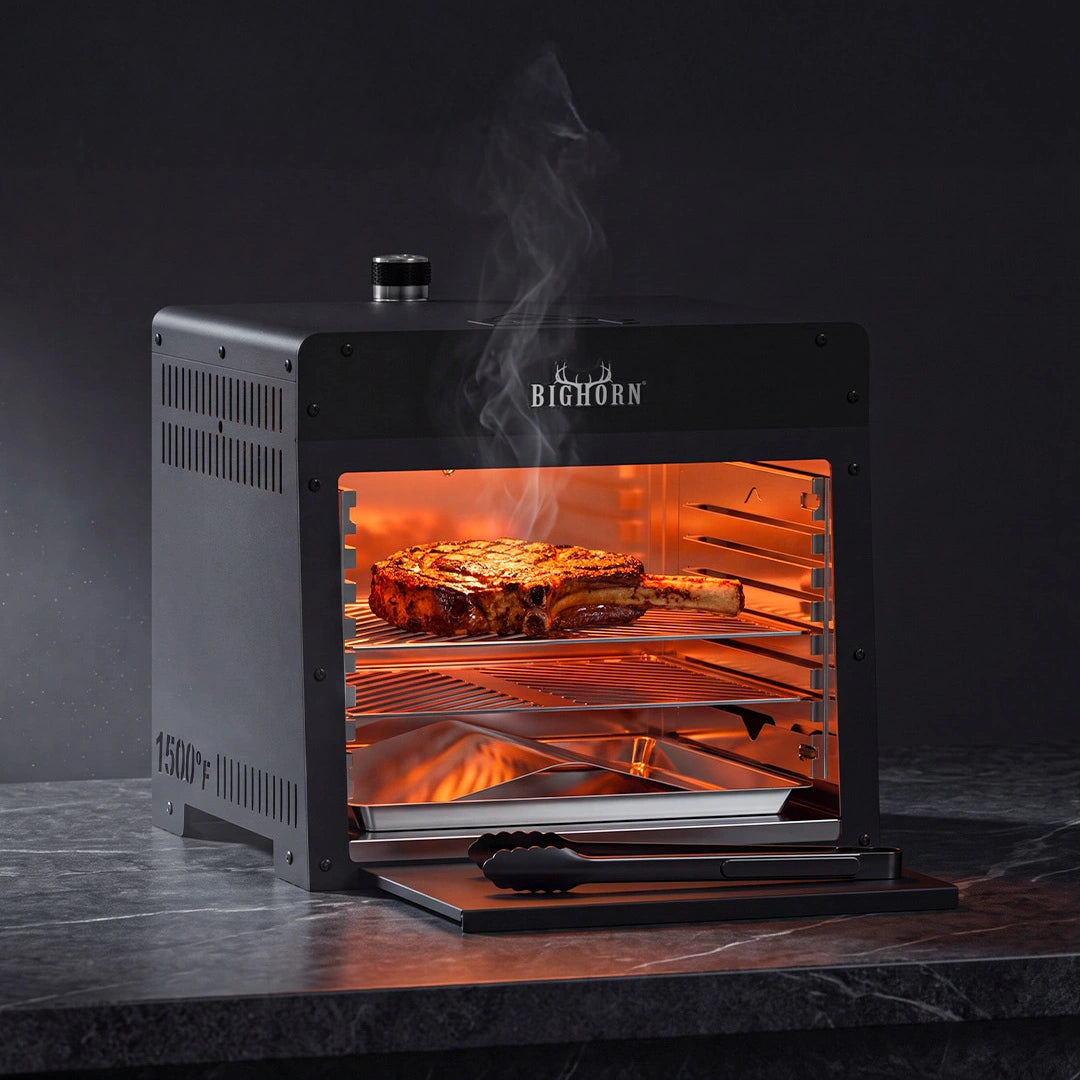
When you order from a restaurant, the main challenge is quantity. When you bake at home, throughput matters just as much. A compact outdoor oven usually cooks one pizza at a time, so eight pizzas are not eight simultaneous servings.
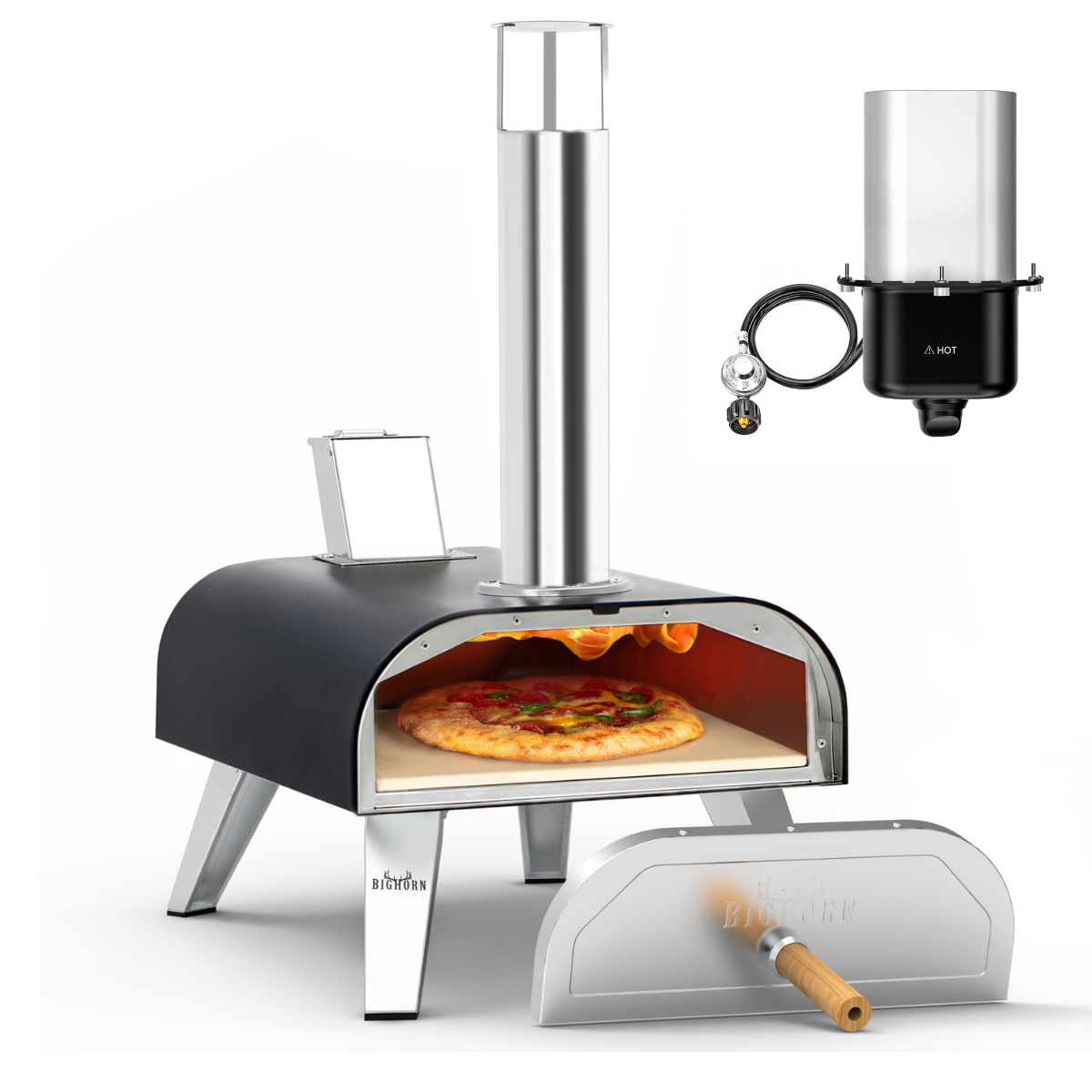
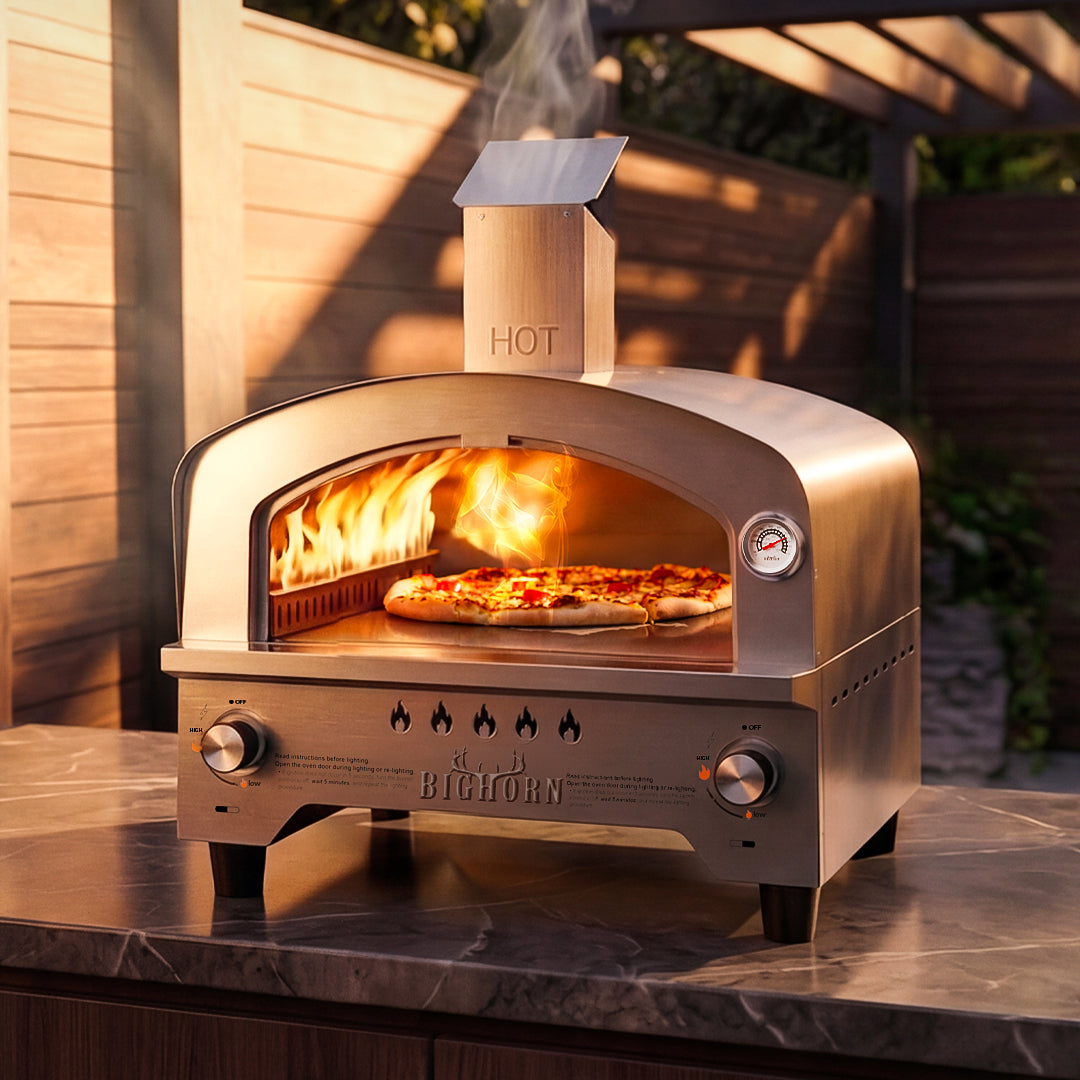
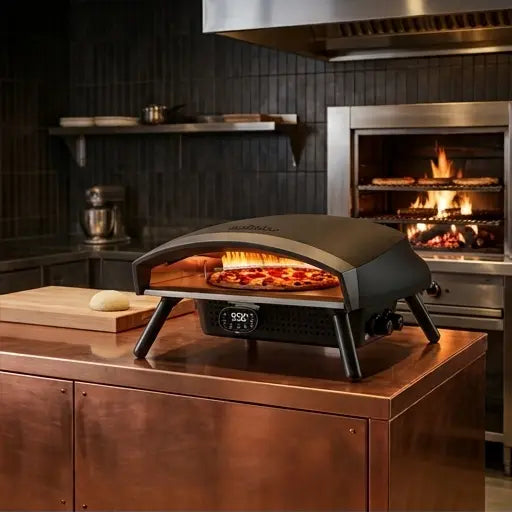
A 12-inch pellet and gas oven suits a hands-on party where guests are comfortable eating in rounds. A larger 15-inch gas oven gives more room for family-size pies, but it still needs stone recovery and a cook who can keep dough moving.
Prep Is What Keeps a Home Pizza Party Moving
Portion the dough before guests arrive, prepare toppings in shallow containers, keep the sauce station separate from the hot-oven zone, and build one or two pizzas at a time rather than topping a long line of dough rounds that can stick to the bench.
A peel and a turning tool should already fit the oven. If the setup still feels awkward, check the accessories collection for tools by task rather than adding gadgets mid-party.
Keep a Small Buffer Without Doubling the Order
Rounding up one pizza is usually more sensible than ordering far beyond the estimate, especially when there are sides. For a crowd with uncertain appetites, choose at least one broadly popular topping so the final pizza can serve as the buffer instead of becoming a specialty pie that only a few guests want.
Start with the slice calculation, then adjust for who is eating and how the food will be served. The best party estimate is not the biggest number; it is the number that matches the group and the service plan.