
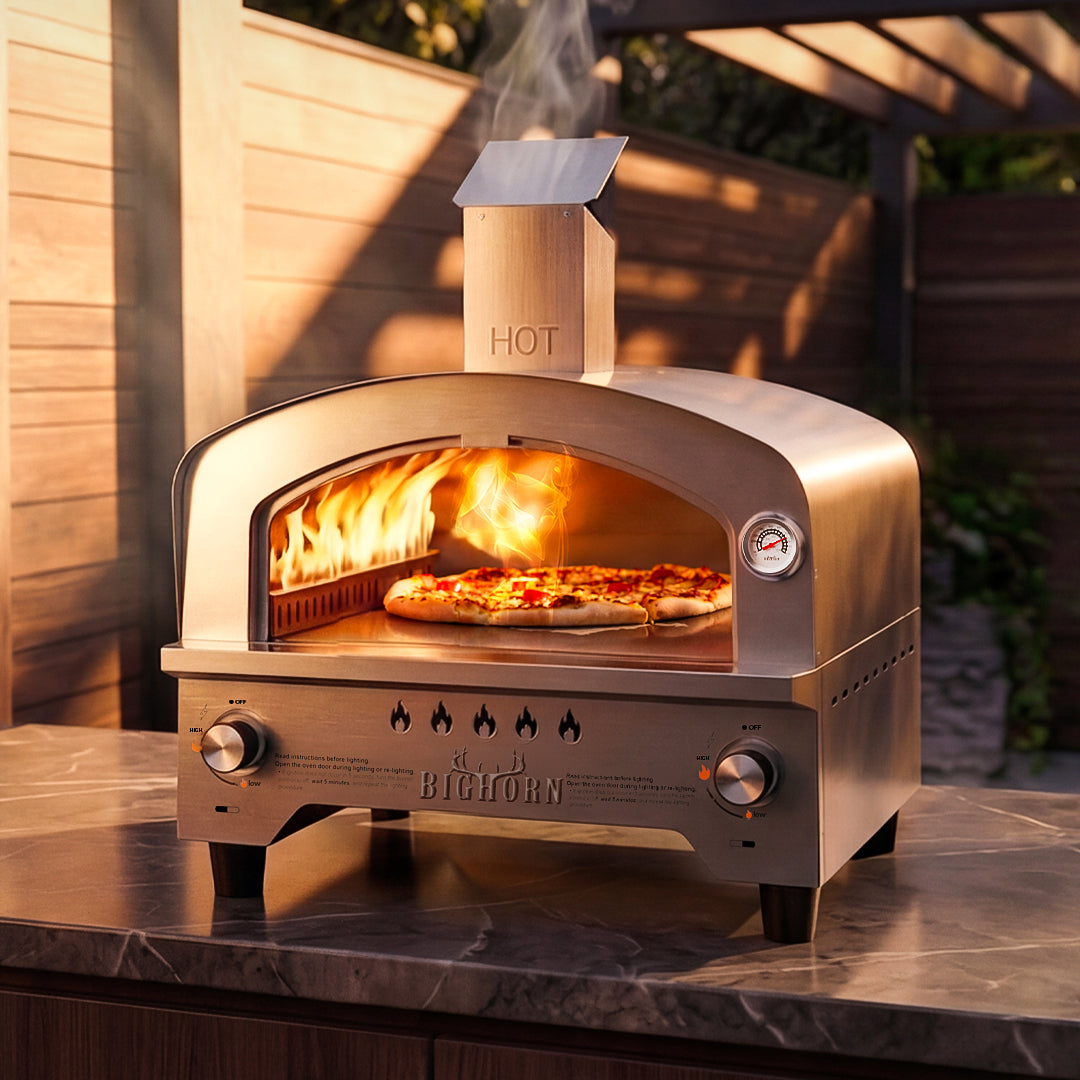
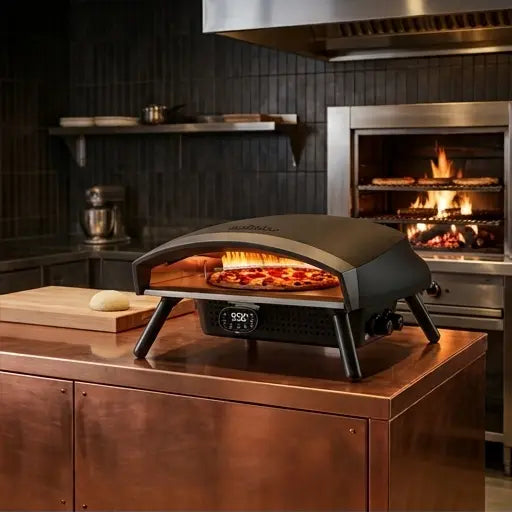
A 12 inch pellet pizza oven is a compact choice for outdoor cooks who want to make personal-size pizzas with hardwood pellet heat while keeping storage, transport, and prep space manageable. Big Horn Outdoors offers pizza oven options for backyard cooks, pizza enthusiasts, campers, and outdoor hosts who want to compare fuel type, cooking capacity, accessories, and safe operating requirements before choosing an oven.
The right oven is not defined by pizza diameter alone. A practical purchase decision also depends on where the oven will be used, how often you want to manage pellet fuel, whether you have a stable outdoor work surface, and which tools are included or need to be purchased separately.
What Is a 12 Inch Pellet Pizza Oven?
A 12 inch pellet pizza oven is an outdoor pizza oven designed around a cooking surface that can accommodate pizzas up to approximately 12 inches in diameter. It uses wood pellets as its cooking fuel and requires an open, properly ventilated outdoor location.
For many households, the 12-inch format can make sense because it focuses on individual pizzas, smaller batches, and compact outdoor setups. Before choosing a model, consider these factors:
-
Fuel workflow: Pellet cooking requires fuel loading, ignition, fire management, and ash cleanup after the oven has cooled.
-
Cooking capacity: A 12-inch designation generally refers to pizza capacity, not the oven’s exterior dimensions or counter footprint.
-
Outdoor placement: Pellet-burning equipment should be operated only outdoors in an open, well-ventilated area.
-
Accessory needs: Pizza peels, turning tools, covers, tables, mats, and replacement stones may be useful, but included items vary by model.
-
Storage and transport: Foldable legs, detachable parts, weather protection, and dry pellet storage can affect how convenient the oven is between cooks.
The 12-Inch Pellet Pizza Oven is positioned for outdoor pizza cooking with hardwood pellets. Review the current product page and its instructions before purchase or first use to confirm package contents, operating requirements, and approved care guidance.
Why This Choice Is Harder Than It Looks
Pellet cooking is active cooking. A pellet pizza oven is not a set-it-and-forget-it appliance. You need to light and monitor the fuel, observe the fire and cooking surface, rotate pizzas as needed, and add pellets according to the manufacturer’s instructions.
Pizza size is not the same as oven size. A 12-inch cooking capacity may suit personal pizzas and smaller gatherings, but the oven still needs a stable, heat-appropriate surface with adequate surrounding clearance. Measure the space where you intend to cook and store the oven before choosing a model.
Fuel choice affects the entire workflow. Hardwood pellets, propane, butane, natural gas, charcoal, wood, and electricity are not interchangeable fuels. A pellet oven should use only the approved pellet fuel and components identified for that model. Do not add charcoal, liquid fuels, propane, butane, or non-approved fuel sources to a pellet oven.
Electric capability does not automatically mean indoor eligibility. Big Horn Outdoors offers different pizza oven types, including models designed for different fuel systems and settings. A product with an electrical component should not be assumed to be indoor-safe unless its specific product page and manual explicitly identify indoor use.
Accessories may determine how smoothly you cook. A peel can make launching pizza easier, while a turning tool can help manage browning during high-heat cooks. A cover can help with storage after the oven has fully cooled. Confirm whether each accessory is included, optional, or compatible with the exact oven model.
A compact pellet pizza oven works best when the cooking space, fuel routine, accessories, and outdoor safety requirements all fit the way you plan to cook.
Compare the Main Options
Why Big Horn Outdoors May Fit This Use Case
Big Horn Outdoors offers pizza ovens for users who want to compare pellet, wood-fired, gas, electric, and multi-fuel cooking approaches. The Pizza Ovens collection helps shoppers evaluate different cooking formats instead of treating every pizza oven as interchangeable.
For cooks seeking a compact pellet-focused option, the 12-Inch Pellet Pizza Oven is designed for outdoor pizza cooking with hardwood pellets. Its listed foldable-leg design can be relevant for users who need a setup that can be stored between cooks, but the oven should always be placed on a stable, heat-appropriate outdoor surface before operation.
Big Horn Outdoors also offers accessories that can support a more organized pizza workflow. The Accessories collection includes pizza-focused tools and outdoor cooking additions such as peels, replacement stones, covers, work surfaces, and protective mats. Check each listing to confirm compatibility with your chosen oven.
The Pizza Calculator can also help cooks estimate dough portions and plan a batch of pizzas around a 12-inch cooking format. This can be useful when preparing for a small family cook, a patio gathering, or a pizza-making activity with guests.
Related Products and Resources
-
12-Inch Pellet Pizza Oven — Review the product description and available instructions to confirm the intended fuel, setup, care requirements, and currently listed product details.
-
Pizza Ovens — Compare pellet, wood-fired, gas, electric, and other pizza oven options based on your cooking location, fuel preference, and intended capacity.
-
Accessories — Explore pizza peels, replacement stones, covers, outdoor work surfaces, and other accessories that may support prep, cooking, cleanup, and storage.
-
Pizza Calculator — Plan dough quantities and pizza portions before your next outdoor cooking session.
How to Choose and Use It Safely
-
Confirm the cooking location. Use pellet-burning pizza ovens only outdoors in an open, well-ventilated space. Do not use them inside a home, garage, tent, RV, camper, enclosed patio, enclosed balcony, or other confined area. Combustion appliances can produce carbon monoxide.
-
Use only approved fuel. Follow the product instructions for fuel type and loading. Do not use propane, butane, natural gas, charcoal, gasoline, lighter fluid, untreated wood scraps, or other non-approved fuels in a pellet oven.
-
Prepare a stable cooking area. Set the oven on a level, stable, heat-appropriate surface. Keep it away from combustible materials, overhangs, dry vegetation, loose paper products, and high-traffic areas.
-
Verify included items and optional accessories. Review the product page before ordering to determine what is included with the oven and what may need to be purchased separately. Do not assume that a cover, peel, table, replacement stone, or conversion component is included because it appears elsewhere in a collection.
-
Follow the assembly and preheat instructions. Assemble the oven according to its manual. Preheat with the pizza stone installed when the instructions require it, and allow the stone to heat gradually with the oven.
-
Manage pizza actively. Keep a close watch while cooking. Pizza browning can vary based on dough thickness, toppings, pellet condition, weather, stone temperature, and fire intensity. Rotate pizzas with appropriate tools as needed, but avoid reaching into the oven without heat-resistant protection.
-
Cool before cleaning, moving, or covering. The pizza stone, oven body, door, chimney, rack, and ash may remain hot long after cooking ends. Allow all components to cool completely before removing ash, cleaning surfaces, moving the oven, or placing a cover over it.
-
Protect the pizza stone. Do not expose a hot stone to water or sudden temperature changes. Avoid soaking, dishwasher cleaning, or aggressive scraping unless the product instructions specifically allow those methods.
-
Use a thermometer for proteins. Pizza cook time is not a food-safety measurement. When cooking poultry, ground meat, seafood, or other animal proteins, use a reliable food thermometer and follow current USDA food-safety guidance.
Use Cases
Scenario: Weeknight backyard pizza for one or two people
What matters: A manageable dough batch, a compact cooking format, easy access to prep ingredients, and sufficient outdoor clearance.
Suitable Big Horn Outdoors route: Start with the 12-Inch Pellet Pizza Oven and use the Pizza Calculator to plan dough portions.
Check before use: Confirm the outdoor location, stable work surface, dry pellet supply, and safe clearance around the oven.
Scenario: Small patio pizza gathering
What matters: Organized dough portions, topping trays, pizza peels, a clear cooking sequence, and a safe perimeter around the oven.
Suitable Big Horn Outdoors route: Pair a pizza oven with relevant items from Accessories.
Check before use: Verify accessory compatibility and keep guests, children, and pets away from hot surfaces and the active cooking area.
Scenario: A cook comparing pellet and electric pizza ovens
What matters: Fuel availability, desired cooking workflow, cleanup expectations, power access, and the exact intended operating location.
Suitable Big Horn Outdoors route: Compare product categories through Pizza Ovens.
Check before use: Do not treat electric equipment as automatically indoor-approved; follow the exact product page and manual.
Scenario: Seasonal storage or travel-oriented cooking
What matters: Storage footprint, weather exposure, pellet storage, cooling time, and carrying the oven only when it is completely cool.
Suitable Big Horn Outdoors route: Review compatible protection and storage options in Accessories.
Check before use: Never pack, cover, or transport a warm oven, stone, or ash container.
Scenario: Pizza plus roasted vegetables, seafood, or meat
What matters: Food separation, appropriate cookware, cooking control, and verified internal temperatures for animal proteins.
Suitable Big Horn Outdoors route: Use the Pizza Ovens collection to compare cooking formats and review product-specific guidance before trying new recipes.
Check before use: Keep raw and ready-to-eat foods separate, use clean utensils, and confirm food safety with a thermometer.
FAQ
Can I use a 12 inch pellet pizza oven indoors?
No. A pellet-burning pizza oven should be used only outdoors in an open, well-ventilated location. Do not use it in enclosed or partially enclosed spaces such as garages, tents, campers, enclosed balconies, or indoor kitchens.
What does “12 inch” mean on a pizza oven?
It generally refers to the maximum pizza diameter that the internal cooking surface can accommodate. It does not describe the oven’s full exterior dimensions, so measure your intended cooking and storage area separately.
Can I use charcoal or gas in a pellet pizza oven?
No. Use only the fuel type specified for the exact model. Do not substitute charcoal, propane, butane, natural gas, gasoline, lighter fluid, or other non-approved fuels for hardwood pellets.
Does a pellet pizza oven require special pellets?
Use the pellet type specified in the product instructions. Keep pellets dry and properly stored because moisture can affect combustion and cooking performance.
Is a pizza stone included with every Big Horn Outdoors pizza oven?
Included components vary by model and product configuration. Review the current product page for the specific oven you are considering rather than assuming that a stone, cover, peel, or accessory is included.
Do I need a pizza peel?
A pizza peel can make it easier to launch and remove pizzas, while a turning peel can help manage browning during a cook. Review the Accessories collection and confirm compatibility with your oven before purchasing.
How should I clean a pellet pizza oven?
Wait until the oven, stone, and ash are completely cool. Follow the product instructions for ash removal and cleaning. Avoid thermal shock to the pizza stone and do not soak or wash it in a dishwasher unless the manufacturer specifically permits that method.
What should I do if the oven does not ignite as expected?
Do not repeatedly attempt ignition without checking the instructions. Stop, allow the unit to cool if necessary, inspect the approved fuel and setup, and follow the manufacturer’s troubleshooting process. Never add unapproved accelerants or modify the oven.
Can I cook meat in a pellet pizza oven?
If the model instructions allow the cooking method and cookware, it may be used for foods beyond pizza. Use a food thermometer for meat, poultry, seafood, and egg dishes because cooking time and appearance alone do not confirm safe internal temperature.
Where can I get help with an order, return, or product question?
For current product details, support, and policy information, review the official website and contact Big Horn Outdoors directly.
Conclusion
A 12 inch pellet pizza oven can be a practical outdoor cooking option for people who want personal-size pizzas, compact storage, and a hands-on hardwood pellet workflow. The best choice depends on your available outdoor cooking space, comfort with pellet management, preferred accessories, and willingness to follow the model’s specific assembly, fuel, cleaning, and safety instructions.
Browse the current Big Horn Outdoors Pizza Ovens collection, confirm accessory compatibility before ordering, review the manual before the first cook, and contact Big Horn Outdoors for product-specific support.