







Sparks travel. Heat radiates. Fences quietly scorch. Knowing how far should a fire pit be from the house starts with manufacturer rules and local fire guidance—not a single number from a social post.
Use this page to measure smarter and to know which questions to ask. It is not a permit, and it does not replace your manual.
The rule-of-thumb distances and why local code wins
People often repeat round numbers like 10 feet, but your manual and local fire authority win every time.
Measure from the outer edge of the fire bowl or screen to siding, windows, fences, and overhead branches. Photograph the tape for your own records.
Consumer fire-safety education from the CPSC and outdoor burning awareness materials help frame why structures and dry vegetation need space. When local ordinances disagree with a blog, obey the ordinance.
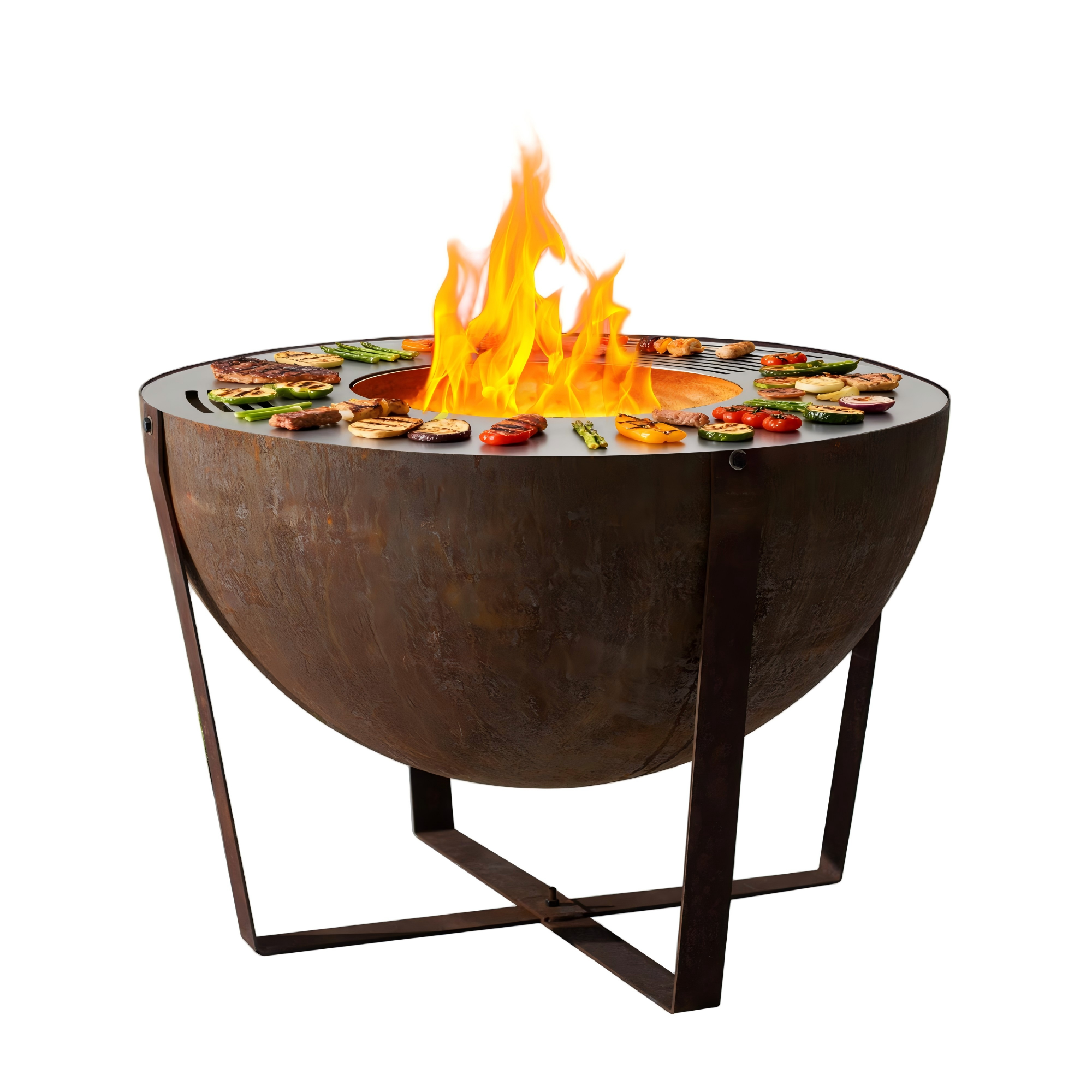
Wood vs propane fire pit distances
Wood pits throw embers; propane pits reduce ember travel but still radiate heat and need hose and cylinder clearances. Do not assume gas means you can snug a pit against a cedar fence.
Read both the fire-pit manual and any screen accessory instructions. Screens help with embers but do not erase radiant heat.
Compare styles such as the corten wood-ready pit and a propane column pit when ember behavior is a deciding factor.
Overhead clearance: trees, eaves, pergolas
Look up. Drying leaves and low pergola beams ignite or scorch more often than people expect. If branches overhang, cut them back or move the pit.
Eaves trap heat and smoke against attic vents. Even when wall distance looks fine, overhead can fail the setup.
Ready.gov home fire guidance is a plain reminder that outdoor fires still threaten structures when spacing is casual.
Fences, sheds and wind
Vinyl softens; dry wood fences char; sheds store fuel you do not want near sparks. Wind turns a safe evening into a spark thrower—have a lid or extinguish plan and cancel on high-wind warnings.
Keep water or an extinguisher rated for your fuel type within steps, not across the yard.
Measuring your yard step by step
- Mark the proposed center with chalk
- Confirm bowl diameter and any spark screen width
- Tape measure to house, fence, and nearest tree canopy
- Sit in planned chairs and check radiant comfort
- Test wind on a similar evening before locking a pad
If any measurement fights the manual, move the pit—do not argue with heat.
Small-patio options
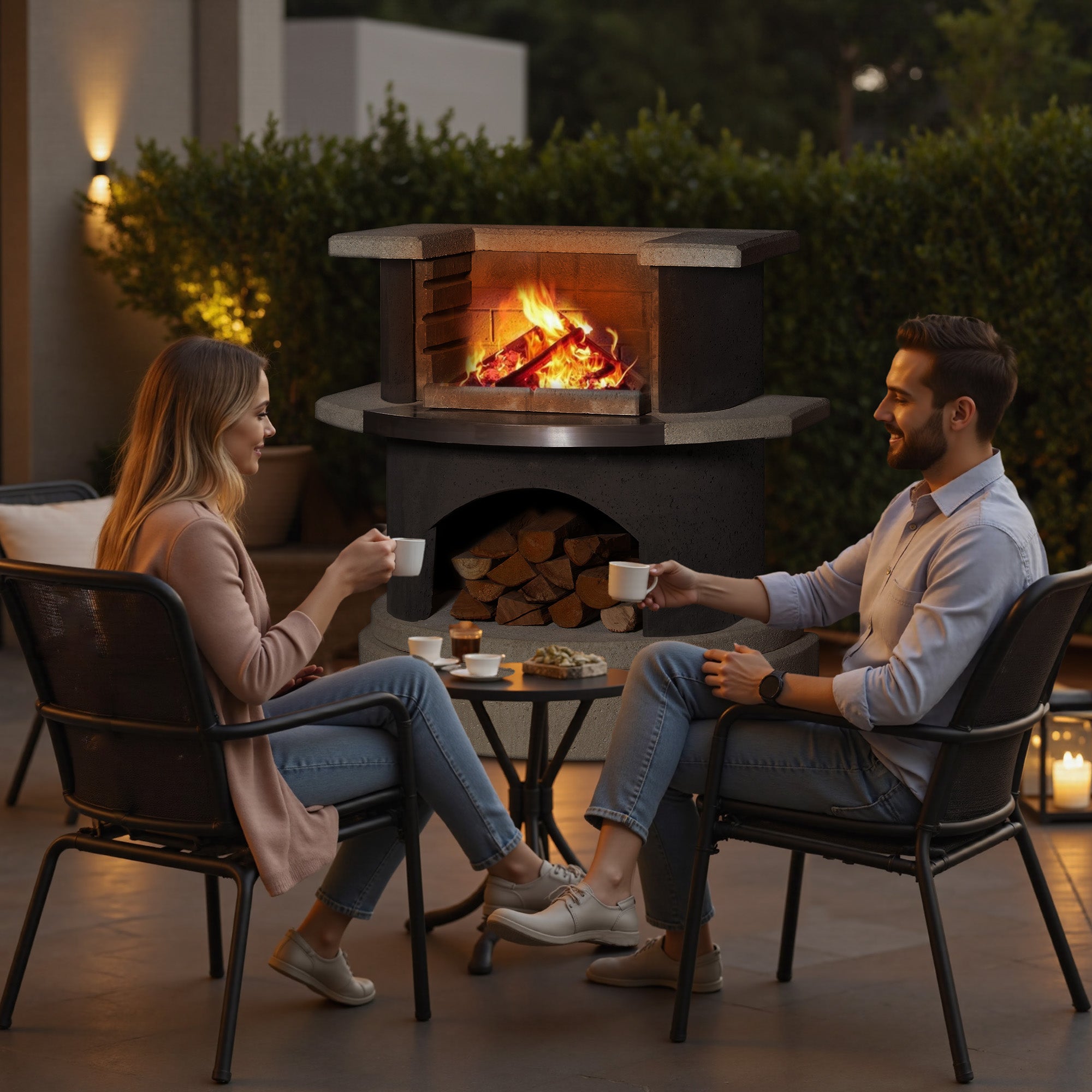
On small patios, choose smaller bowls, propane features, or skip wood entirely. Wall-mounted outdoor fireplaces change the geometry; they still need listed clearances. See taller options like the concrete outdoor fireplace with grill only if the wall system is approved for that install.
Portable pits you can relocate away from guests sometimes beat a permanent install in the wrong spot.
Common mistakes and how to fix them
Common failures: pits under trees, against fences, on wooden decks without protection, and unattended fires. Fixes are relocation, fuel change, or adding rated heat shields—not hoping weather stays calm.
Ash buckets left on decks start fires hours later. Drown ash, stir, and store metal bins away from structures.
What is the ideal size for a firepit area?
Size the apron for chairs, walking space, and clearances—not only the bowl diameter. A small pit with a generous non-combustible apron beats a huge pit jammed into a corner.
Think about how many chairs you actually use weekly. Designing for twelve and seating four leaves a barren pad.
How long will a 20lb propane tank last in a fire pit?
Runtime depends on BTU input and flame setting. A high ornamental flame drains a cylinder faster than a low lounge setting. Track your first tank hours rather than trusting a universal claim.
Keep a spare cylinder upright outdoors if evenings matter. Inspect connections with soapy water checks as taught in propane safety guides.
National fire-prevention habits around outdoor burning also show up in park and wildland messaging such as NPS fire safety—ember awareness travels from campsite to backyard.
Deck edges, railings and second-story windows
Pits near deck railings invite people to perch drinks on rails above flame—bad physics. Keep the pit far enough that rails are not a casual lean zone over heat.
Second-story windows above a patio can draft smoke indoors even when ground-floor siding clearances look fine. Ask household members on upper floors how evenings smell during a test fire.
Screens on windows help only a little; moving the pit helps more.
Dry grass, mulch and landscaping fuels
Mulch rings are landscaping language for kindling when embers escape. Use non-combustible aprons—gravel, pavers, or dirt—around the pit before ornamental bark begins.
Dead ornamental grasses catch easily. Trim back in fire season. Local burn rules may already forbid open burning when wildfire risk is high; check before weekend plans.
EPA Burn Wise guidance on cleaner burns pairs well with backyard etiquette: dry wood, smaller fires, and respect for air quality alerts.
Insurance and HOA paperwork should list the fuel type honestly. Surprise wood pits on a propane-only approval create conflict when smoke drifts.
When you are ready to pick a footprint that fits your measured clearances, compare Big Horn Outdoors fire features starting with the 32-inch corten pit and propane options like the column fire pit.
Structure-fire readiness from Ready.gov and outdoor cooking messages from NFPA complement pit-specific manuals. For fireplace-style heat that faces seating differently than a low bowl, review the concrete outdoor fireplace with grill footprint before digging footings.
Conclusion
Give the pit the space your manual and local rules demand, then add comfort distance for chairs and wind. If the yard cannot offer that, choose a smaller or gas feature—or enjoy fire at a park that is built for it.
Compare backyard fire options at Big Horn Outdoors, including the corten fire pit and propane column fire pit.
FAQ
What is the ideal size for a firepit area?
Plan enough non-combustible apron for the pit, chairs, and walking space while meeting manual clearances. Many households underestimate chair depth and end up with knees too close to the flame. Tape the full furniture layout before installing a permanent pad.
How long will a 20lb propane tank last in a fire pit?
It varies with the pit’s BTU rating and how high you run the flame. Lounge settings last longer than decorative high flames. Time your first cylinder and keep a spare outdoors upright if you host often.
Does having a fire pit increase your insurance?
Sometimes insurers ask about fire features or may have rules about open flame. Call your agent with the fuel type and setup details. Do not assume a portable pit is invisible to policy language.
How much clearance do you need above a gas fire pit?
Use the overhead clearance in your specific manual—especially under pergolas and eaves. Gas reduces embers but not radiant heat. If overhead structures are too close, move the pit to open sky.
Explore more in the Fire Pit Cooking & Safety Guides.
