







You packed two small cylinders “just in case,” then watched breakfast devour the first one. Knowing how long a 1 lb propane canister lasts on a camp stove turns guesswork into a packing list.
Runtime is fuel energy divided by burner demand. Cold wind and high flames shrink the number fast; simmering stretches it.
The short answer: hours at low, medium and high
A full 1 lb (about 16 oz) disposable propane cylinder typically runs a single camp-stove burner for roughly 1.5 to 4+ hours depending on output.
High flame for a rolling boil drains a canister quickly. Medium heat for sautéing sits in the middle. Low simmer for soups and freeze-dried meals stretches the same cylinder across more meals.
Two-burner breakfasts that light both sides at once can cut clock time nearly in half compared with one-burner dinners. Plan per burner-hour, not per calendar day.
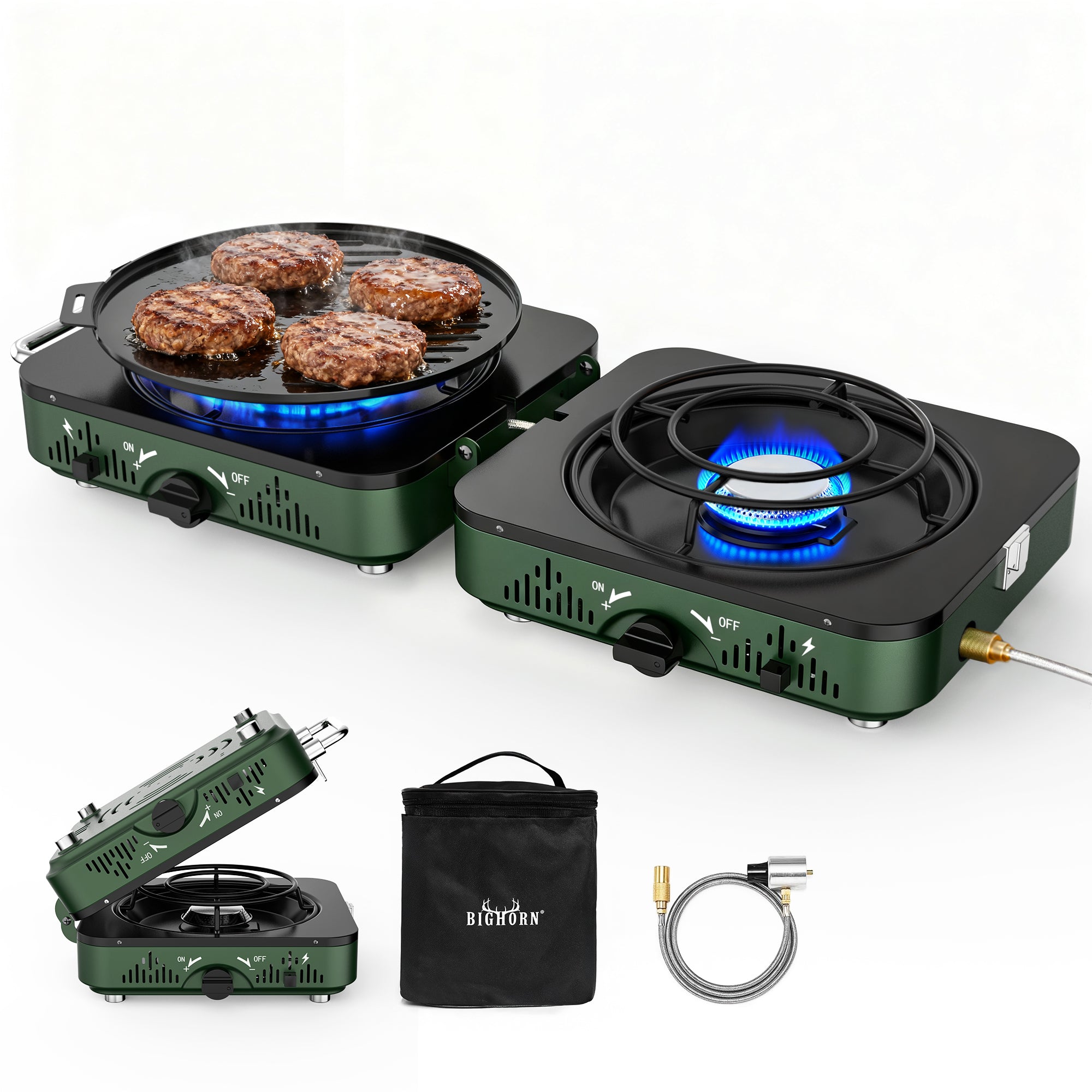
Burn-time table for 1- and 2-burner stoves
Disposable 1 lb cylinders hold a limited amount of propane energy. Retail fuel guides such as Ferrellgas BTU explainers help frame how burner output relates to runtime, even though exact hours depend on your stove’s rating plate.
| Setup | Heat level | Ballpark runtime per 1 lb cylinder |
|---|---|---|
| 1 burner | Low / simmer | About 3–5 hours |
| 1 burner | Medium | About 2–3.5 hours |
| 1 burner | High | About 1.5–2.5 hours |
| 2 burners together | Medium | About 1–2 hours |
Treat the table as planning ranges. Check your stove manual for BTU/hour ratings if listed, then adjust. Browse propane camping stoves when you are matching burner layout to trip style.
How to plan canisters by trip length
Count hot meals and hot drinks, not nights. A weekend with six cooked meals and morning coffee can use more fuel than a three-night trip of mostly cold lunches.
Estimate burner-hours, add a 30–50% buffer for wind and mistakes, then divide by your realistic hours-per-canister. Round up. Sharing a two-burner stove among four people usually means more simultaneous burners—and more cylinders.
Car campers can pack spares easily; backpackers may prefer a single-burner mentality. See the wider camping stove collection if you are still choosing stove format.
Cold weather and wind: why runtime drops
Propane pressure falls in the cold, so flames weaken unless you shield the stove and keep canisters off ice-cold ground when safe to do so.
Wind strips heat from pots, forcing higher flames and longer boil times. A simple windscreen (used per your stove maker’s guidance) can save more fuel than shaving ounces elsewhere.
Never warm a cylinder over an open flame. If performance drops sharply in freezing weather, plan more fuel or switch cooking style rather than improvising heat on the canister.

Tips that stretch a canister
Lid on, thawed food, and measured water beat heroic high-flame boils. Precook at home when the menu allows, and favor one-pot meals.
Boil only the water you need. On a two-burner stove, run one burner hard and use the second only when the timeline requires it.
Keep the stove level and the connections snug. Outdoor cooking still needs common-sense fire awareness—review NFPA grilling fire safety habits adapted to camp: clear ground, supervised flame, extinguish fully.
Tracking how much is left
Shake-and-guess is unreliable. Weigh canisters on a small luggage scale and log the starting weight; the difference after meals shows consumption.
Mark near-empty cylinders clearly so nobody puts a featherweight can on breakfast duty. Pack at least one sealed spare for critical meals.
Store spares upright outdoors or in ventilated areas per typical propane safety practice, never in a sealed living space with a possible leak (NFPA carbon monoxide guidance reminds you why fuel and enclosed spaces do not mix).
Bulk tank options for car camping
Car and RV campers often move from 1 lb disposables to a 20 lb cylinder with a compatible hose and regulator. Cost per meal drops and mid-breakfast swaps become rare.
Only use adapters and hoses rated for your stove connection. Leak-test new fittings with soapy water before cooking. If your stove maker does not document bulk-tank use, stay on the fuel system it supports.
Compare portable two-burner propane camping stoves when you want the flexibility to cook real meals once fuel logistics are solved.
What is the 80/20 rule for propane?
Fill cylinders to about 80% liquid.
The remaining space lets propane expand safely with temperature changes so pressure does not spike dangerously in a 100% full shell.
Refill stations stop at the proper level for this reason; disposable camping canisters arrive prefilled by the manufacturer. Do not try to overfill or DIY-refill disposable cylinders that are not designed for it. Transport and storage rules still apply to any cylinder size—keep them upright and ventilated, and follow home fire readiness basics around fuel.
A simple weekend fuel worksheet
Write three columns: meal, burners used, estimated minutes. Multiply minutes by a rough burn factor (high = 1.0, medium = 0.6, low = 0.35) to compare meals on one scale, then convert to canister counts using your earlier hour ranges.
Example: Friday chili simmer 40 minutes on low, Saturday pancakes 25 minutes on medium with two burners, Sunday coffee water 15 minutes on high. The worksheet shows where dual-burner breakfasts dominate fuel use.
Snap a photo of the worksheet in your trip notes app so the next outing starts smarter. Adjust factors after you weigh a few empty canisters—your stove and climate will teach you faster than any generic chart.
Households that also use indoor fuel appliances should keep American Gas Association safety basics in mind whenever cylinders and people share travel space.
Conclusion
Plan 1 lb canisters in burner-hours, pad for wind and cold, and weigh spares instead of shaking them. One-burner simmering stretches fuel; dual-burner breakfasts spend it. When trips get longer, a properly adapted bulk tank often beats a duffel full of empties.
Pack a stove that matches your menu—start with Big Horn Outdoors propane camping stoves.
FAQ
Where to store a propane tank in summer?
Store cylinders upright outdoors in a shaded, ventilated spot away from exits and ignition sources. Do not leave them in a hot, sealed car interior for long periods. Keep valves closed when not in use and inspect for damage before reconnecting to a stove or grill.
How long does one bottle of propane last?
A 1 lb disposable bottle often lasts roughly one and a half to four hours on a single camp-stove burner, depending on flame height and wind. Larger 20 lb tanks last many times longer on the same stove. Your manual's burner rating is the best way to refine the estimate.
How to empty a propane tank safely?
Do not vent propane intentionally in a DIY fashion. Use fuel through normal cooking until the cylinder is spent, then follow local rules for disposing of or exchanging disposable canisters and for requalifying refillable tanks. If a cylinder is damaged or leaking, move it outdoors away from ignition and contact the supplier or emergency services as appropriate.
What is the 80/20 rule for propane?
Refillable propane cylinders are filled to about 80% capacity so liquid has room to expand as temperatures rise. The headspace is a safety feature, not wasted product. Leave filling to trained stations and never attempt to top off disposable camping canisters.
Explore more in the Pizza Oven Guides.
