An electric pizza oven typically takes somewhere in the range of ten to twenty-five minutes to preheat, but the honest answer for your oven depends on three things: the element's wattage, the mass of the stone, and the temperature of your kitchen. Many countertop models advertise a preheat time in that range, so check your manual for the number that applies to your unit — and treat "preheat done" as the moment the stone is ready, not the moment the indicator light first changes. This guide explains what drives preheat time, how to measure your own oven's number, and how to plan the warm-up so it never holds up dinner.
What determines preheat time
Three variables set the clock. Wattage is how fast the element can add heat; higher-wattage ovens generally preheat faster, though the relationship is not linear. Stone mass is how much material must absorb heat before the cooking surface is ready — a thick stone takes longer than a thin one, which is why the stone is usually the last thing to reach temperature. Ambient conditions matter too: a cold kitchen or a drafty spot makes the oven work harder, and the first preheat of the day always takes longer than a reheat while the oven is still warm. Understanding those three variables explains why the same oven can preheat faster on a warm afternoon than a cold morning.

Air temperature vs stone readiness
The most common preheat mistake is trusting the oven's signal. Most electric ovens show readiness when the air inside reaches the set temperature, but the stone lags behind the air — and the stone is what finishes the bottom crust. Launching as soon as the indicator changes gives you a pizza with a hot top and a pale, doughy bottom. The fix is simple: after the indicator changes, give the stone extra time to soak, and confirm readiness with an infrared thermometer aimed at the stone. The extra few minutes of stone soak are the difference between an okay pizza and a great one.
How to measure your own preheat
Because every oven is different, the useful number is the one you measure. Set the oven to your usual pizza temperature, start a timer, and check the stone with an infrared thermometer every few minutes after the air indicator changes. Note the time when the stone reaches the temperature your dough needs, and write that number down — it is your oven's real preheat time. After two or three sessions, you will know whether to start the oven twenty minutes or thirty minutes before you plan to launch, and the guesswork disappears from the routine.
Planning preheat into the meal
Preheat time only feels long when it is not planned. Start the oven first, before you stretch the dough or prep toppings; by the time the pizza is built, the stone will be close to ready. For a pizza party, turn the oven on before guests arrive and let the stone soak while people settle in — a hot, ready stone is the one part of the party that should never be rushed. If you bake several pizzas, the second and third benefit from the stone already being hot, so only the first pizza pays the full preheat price.
Troubleshooting a slow preheat
If your oven takes noticeably longer than the manual's number, work through the causes in order. Check that the oven is on a circuit that can deliver its wattage — a shared or overloaded circuit can starve the element. Confirm the door seal is intact, because heat escaping through a worn seal stretches every preheat. Clean the stone and interior, since residue insulates the stone and slows heat transfer. And give the oven a little extra time in cold weather. If the oven still preheats far slower than its rated time, contact support rather than assuming it is normal.
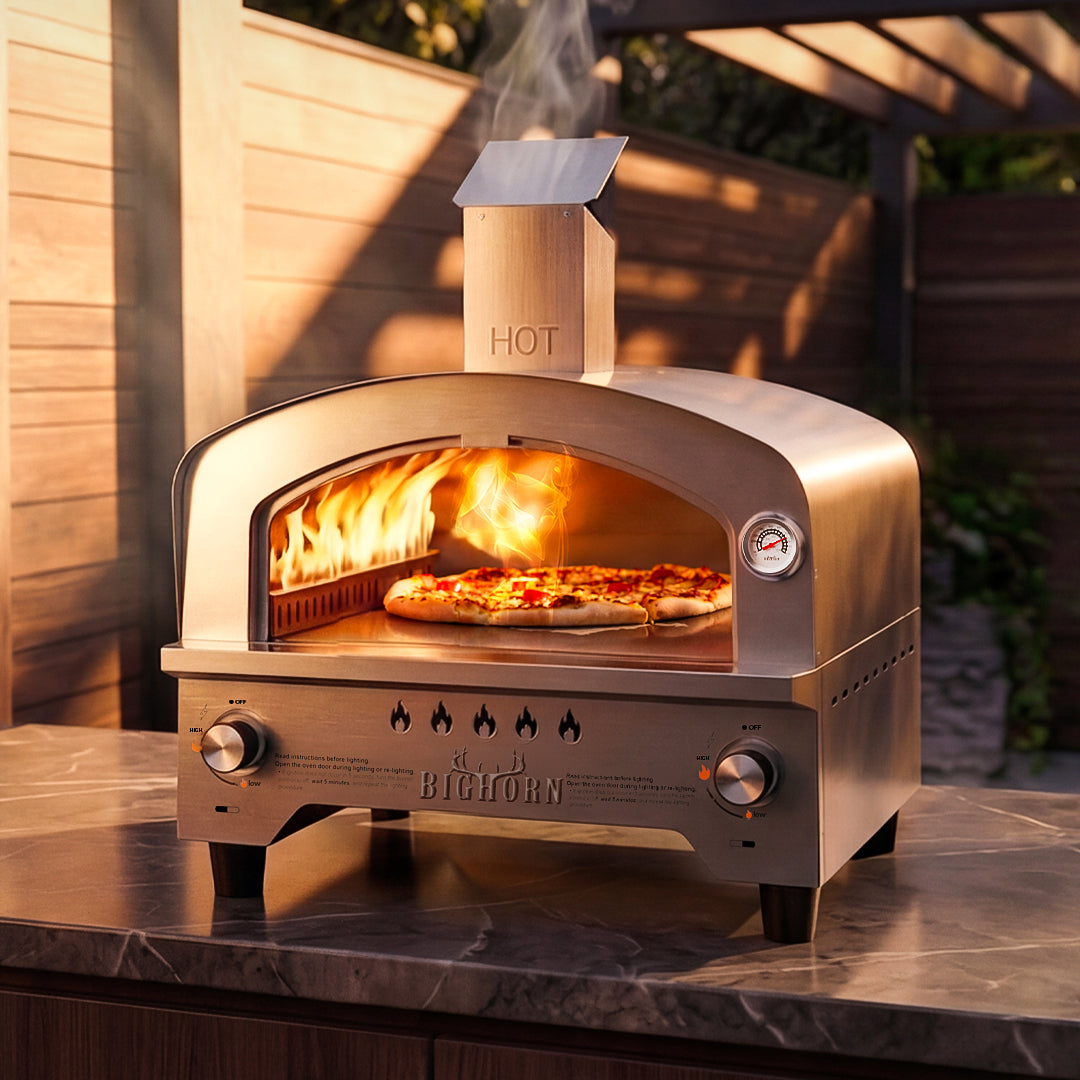
For a model like the Big Horn 14-inch electric countertop pizza oven, the manual is the first place to look for the rated preheat time, and the electric pizza oven collection keeps the current models together for comparison. Preheat is a planning problem more than a performance problem: measure your stone's real readiness time once, build it into the routine, and the oven will always be ready when the dough is.
First preheat and burn-in expectations
The first preheat of a new oven is not a fair test of its normal time. New ovens often carry manufacturing residue in the chamber and on the stone, so the first warm-up can smoke briefly and take longer as the oven burns clean. Run the first preheat per the manual's burn-in guidance, let the oven cool, and then measure the second or third preheat for your real baseline. If the first session smokes a little, that is normal and should not be mistaken for a fault. A clean, seasoned stone after the first few uses will preheat more predictably than a brand-new one.
Comparing preheat across models
When you compare electric pizza ovens, preheat time is a feature worth reading the manual for, because it varies with wattage and stone design. A faster preheat saves a few minutes per session, which adds up for weekly cooks; a slower preheat is often the price of a thicker stone that holds heat better through back-to-back bakes. Decide which matters more for your routine: if you bake one pizza at a time, preheat speed is the friendlier feature; if you bake several in a session, stone recovery may matter more than the first warm-up. The comparison belongs in your criteria, not in a headline.
Building a preheat habit
The most reliable way to never wait on preheat is to make it the first step of every pizza session. Start the oven, set out the ingredients, and weigh or shape the dough while the stone heats; by the time the pizza is built, the stone is usually ready or close to it. For a party, add ten minutes of buffer and check the stone with the thermometer before the first launch. If you use the oven for other foods, remember that different dishes want different stone temperatures — a vegetable roast may not need the full pizza preheat, and the stone will be ready sooner at a lower setting. Matching the preheat to the dish keeps the oven efficient without guesswork.
Finally, keep a one-line preheat record for your oven: the setting you use, the stone temperature you need, and how long it takes on a normal day. After a few sessions, that record tells you when a preheat is slower than usual, which is often the first sign of a door-seal issue, a dirty stone or a circuit problem. The record turns preheat from a daily guess into a measured baseline, and it makes the troubleshooting step faster when something changes.
A note on energy: preheat uses the most electricity of any part of the session, because the element runs continuously while the oven warms. Letting the stone fully soak adds a few minutes but makes the actual bake shorter and more reliable, so the total energy per pizza is often comparable. What wastes energy is repeatedly opening the oven to check or launching pizzas that need extra time because the stone was not ready. Preheat fully, bake once, and the oven's energy goes into the pizza rather than into a longer, less successful session.
These steps are general guidance, and models vary: follow the manual for your specific unit, and verify temperatures with a clean thermometer where the text calls for one. Product details reflect official Big Horn Outdoors listings reviewed September 5, 2026; re-check prices and availability at checkout.