
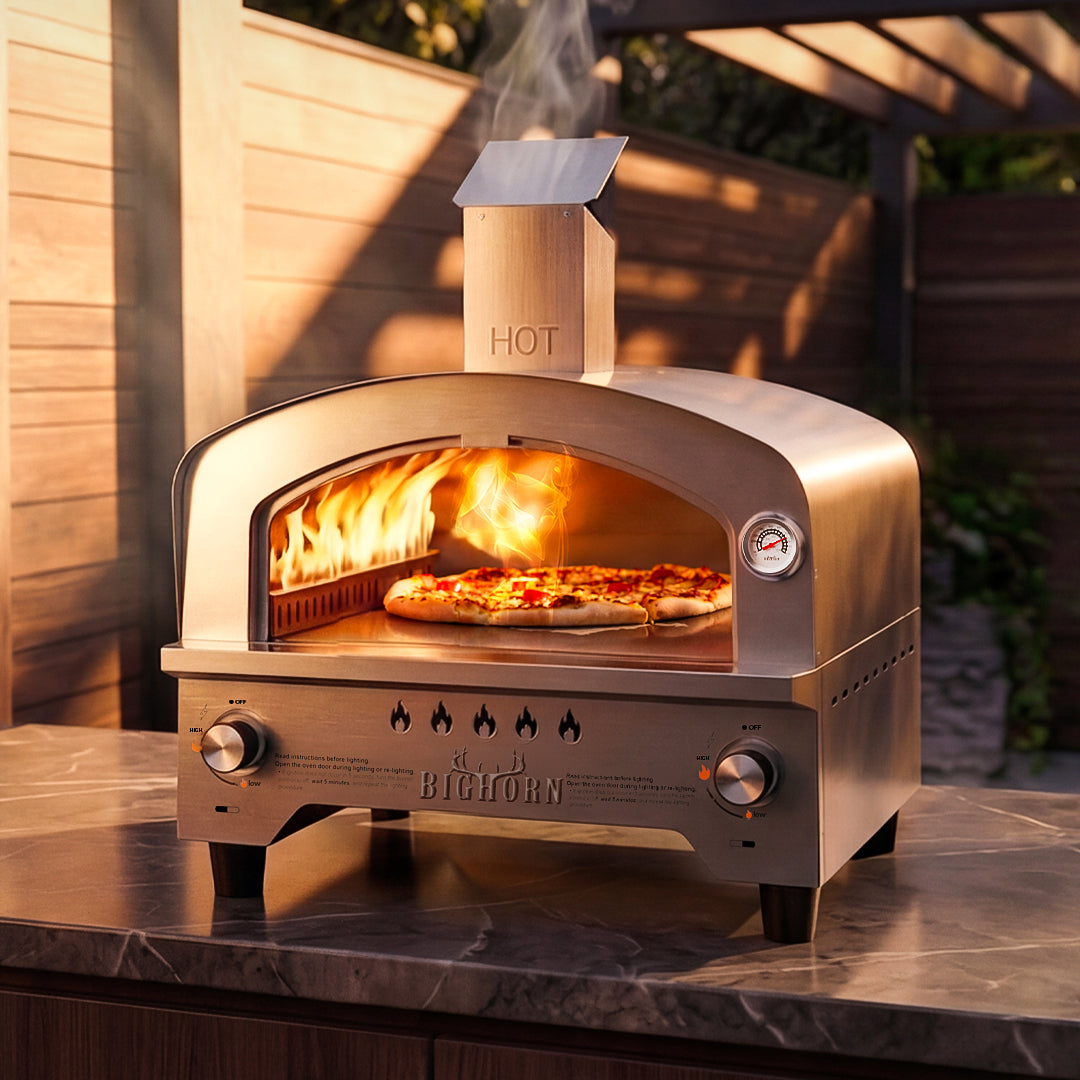
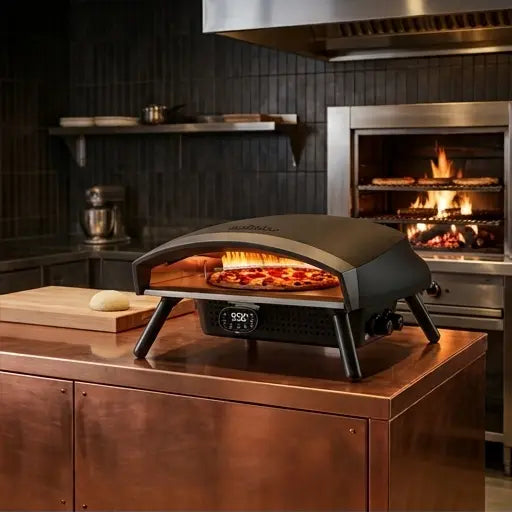
A pizza oven’s cost spans from a few hundred dollars for a compact electric or pellet unit to well over a thousand for a larger or multi-fuel model. The price is driven by fuel type, size, and features: electric and countertop pellet ovens are usually the most affordable, gas and multi-fuel ovens cost more, and size drives material and stone cost faster than almost anything else. Spend on heat and a good stone first; extras are secondary.
What drives the price
Three things set the range: fuel type, size, and features. Fuel affects cost because different fuels need different burners, chambers, and attachments — electric is simplest, gas adds a burner and regulator, and multi-fuel adds attachment purchases. Size drives material and stone cost, so a 16-inch oven costs more than a 12-inch. Features like a built-in thermometer, presets, or multi-fuel capability raise the price further.
How fuel type changes the budget
| Fuel | Typical price | Why |
|---|---|---|
| Electric countertop | Entry tier | Fewest fuel components; plug-in |
| Pellet | Entry–mid | Hopper and firebox, but simple chassis |
| Gas | Mid | Burners, regulator, and fuel plumbing |
| Multi-fuel | Premium | Base unit plus optional attachments |
Electric and pellet tend to cost less; gas and multi-fuel tend to cost more, because they carry more hardware even before you add accessories.
How size and features add up
Larger ovens cost more because a bigger chamber uses more material and a larger stone. A 12-inch pellet oven is less expensive than a 16-inch; the extra deck size is the main driver. Features stack on top: a built-in thermometer or presets add value and cost, and multi-fuel attachments raise the total for anyone who buys every mode. Skip the features you will not use and spend on the fundamentals.

The three cost tiers
Pizza ovens fall into three rough tiers. The entry tier is a simple single-fuel unit with high heat and a stone — the practical minimum for real pizza. The mid tier adds conveniences like a thermometer or presets. The premium tier offers larger sizes or multi-fuel flexibility. Choose the tier that matches your cooking; a basic oven that reaches high heat and has a good stone beat a feature-packed unit that cannot cook well.
How to get the best value
Prioritize heat and a stone over extras. A basic oven that reaches 750–900 °F and holds a decent deck will make far better pizza than a cheaper unit that cannot hold temperature. Confirm the price includes the essentials you need — stone, peel, maybe a cover — and buy the fuel and size that fit your setup. That purchasing discipline gets the most value for the money.
What hidden costs should you expect?
Beyond the oven price, budget for essentials and logistics. A decent peel, a cover, replacement stones, and fuel (pellets or propane) add to the total, as does delivery on heavy or large units. If the oven needs assembly or a dedicated circuit, factor that in too. These extras are small individually, but they can add 10–20 percent to the real cost of ownership.
How do you compare price across fuel types?
Compare like for like: same deck size across fuel types, then look at heat output and features. An electric unit at a lower price may have a smaller temperature ceiling than a gas unit of the same size, which matters for the style of pizza you can make. Price per degree of usable heat and per inch of deck is a more honest comparison than the sticker price alone.
How much does a Big Horn pizza oven cost?
For exact pricing, check the pizza oven collection directly, since listed prices change with promotions and configuration. What you can rely on is the tier logic: a compact 12-inch pellet or 14-inch electric model sits at the entry of the range, and larger or dual-burner gas models sit higher. Use the collection to match a fuel and size to your budget, then confirm the current price on the product page before buying.
When is it worth spending more?
Spend more when the upgrade changes what you can cook, not just the badge. A larger deck, a thicker stone, or a real high-heat ceiling each changes results; a built-in light or a fancier handle does not. If you bake frequently or for guests, the mid tier is usually worth it; if you bake rarely, the entry tier is the honest buy. Pay for capability you will use within the first season.
Cost of ownership: fuel, stone, and upkeep
The purchase price is only the first number. Fuel adds up over a season: pellets and propane are ongoing, while electricity varies with use. A replacement stone and a cover are eventual costs on any wood-capable or outdoor unit. Budget for these so the purchase math is honest — a slightly pricier oven with better heat can cost less over two seasons than a cheap unit with poor fuel efficiency and a fragile stone.
How do you decide between a cheap and a mid-range oven?
Compare the two against the pizzas you will actually bake. If you make thin-crust or Neapolitan-style pies, the mid-range unit’s higher heat and thicker stone are worth the gap; if you mostly bake frozen or basic pizzas, the entry unit is enough. Look at the stone, the peak heat, and the recovery — those three decide results far more than the brand name. When in doubt, buy the simpler oven with the better stone and heat.
How much does a pizza oven cost?
Short answer: from a few hundred dollars for a compact electric or 12-inch pellet model up to $1,000+ for a large dual-burner gas or multi-fuel unit. For current big-name-normal pricing in the Big Horn range, check the pizza oven collection, because promotional pricing and configuration options change the exact figure. Use the tier logic in this guide to estimate your bracket, then confirm live.
Is it worth waiting for a sale?
A sale can reduce a mid-tier oven into the entry-tier price band, which is the rare case where waiting pays. If your budget is fixed and the model you want regularly goes on promotion, waiting a month can genuinely move the cost. The risk is supply: popular models sell out quickly at discount. If you need the oven now, buy now; if you can wait, watching for a promotion is a legitimate way to upgrade within budget.
Pizza oven cost FAQs
Why are gas pizza ovens more expensive than electric?
Gas adds burner hardware, a regulator, and propane plumbing, which raises manufacturing cost. Electric units are simpler and therefore cheaper at entry level.
Is a bigger oven always worth the extra cost?
Only if you bake larger pizzas or many in sequence. A larger deck helps throughput, but if you bake for a couple, a 12-inch oven is the better value.
What should I not cut corners on?
Heat output and the stone. They determine the pizza more than any accessory — cutting them saves little and costs the result.
To compare the Big Horn range across fuel and size options, review the pizza oven collection for current pricing and specs.