You need a real pizza oven when you want high-heat, fast bakes with a blistered crust; a pizza stone alone is enough when you are happy with a moderate upgrade over a baking sheet in a standard oven. The stone raises the base quality, but only a real oven reaches 700 °F+ and creates the puffy, charred rim that defines restaurant-style pizza.
What a pizza stone actually does
A pizza stone absorbs heat and transfers it directly to the dough, which crisps the base far better than a baking sheet. In a standard oven it improves the bottom crust noticeably, and it is a cheap, low-effort upgrade. But the oven’s air temperature still caps around 500 °F, so the rim puffs less and the top browns slower than a dedicated oven.
What a real pizza oven adds
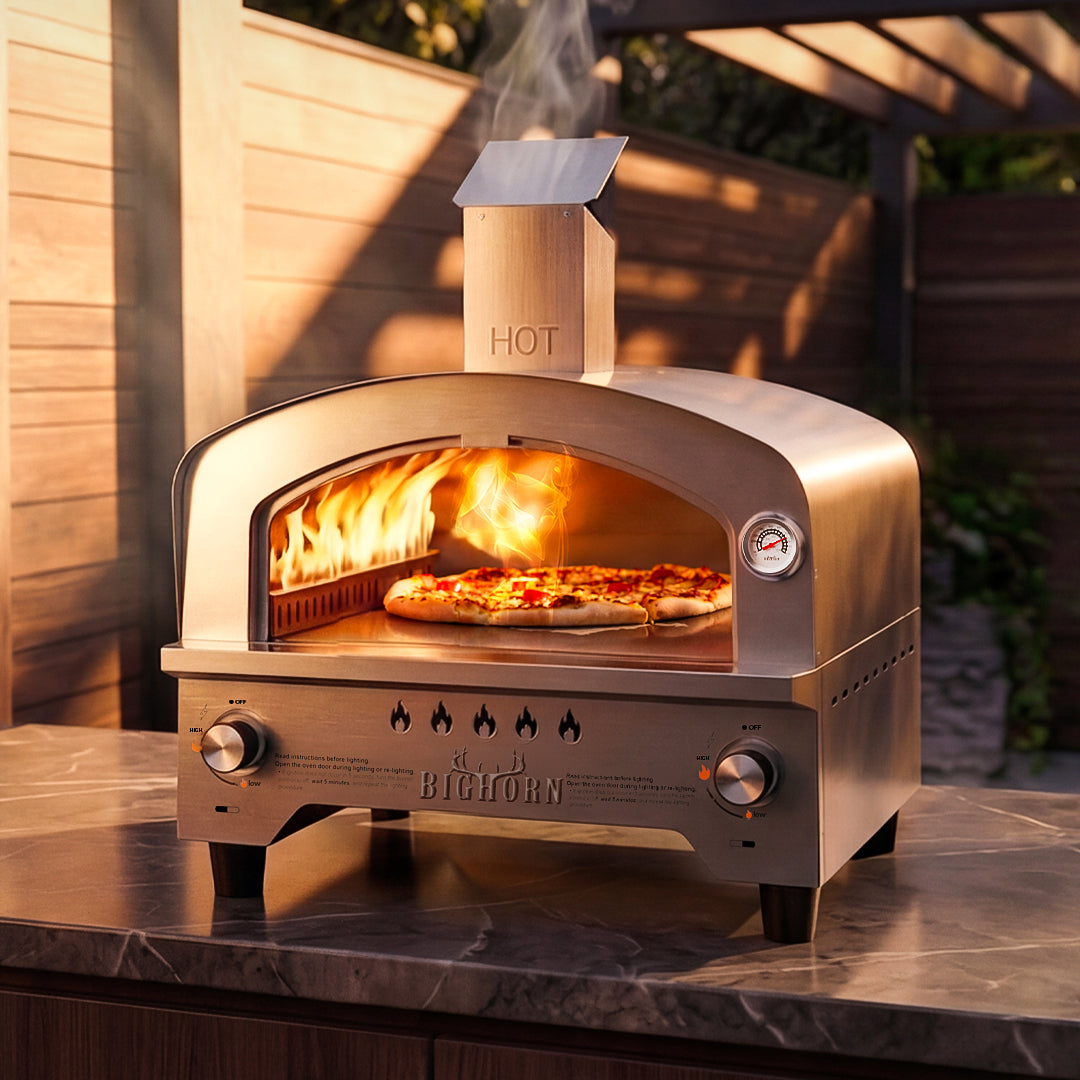
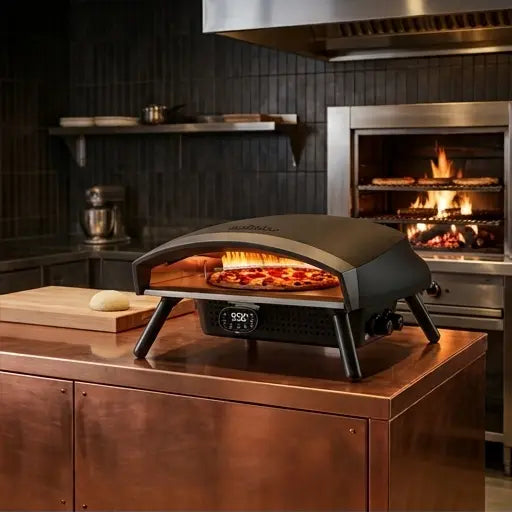
A dedicated pizza oven reaches 700–950 °F (or more on pellet and gas models), which changes the bake: the dough puffs in seconds, the rim blisters, and the base sets crisply in 60–90 seconds. That heat window is what creates the leopard spotting and chewy crust that a stone in a home oven cannot reproduce. The oven is the difference between a good homemade pizza and a restaurant-style one.
Cost and commitment
A stone costs little and needs no extra space; a real oven is a bigger purchase and takes room, fuel, or a countertop spot. If you make pizza occasionally and are happy with an improved base, a stone is the sensible spend. If pizza is a regular event and the blistered crust matters, the oven pays for itself in results.

How to decide
Ask how the outcome matters to you. If occasional pizza with a crisper base is the goal, a stone in your current oven covers it. If you want the puffy rim, leopard spotting, and 60–90 second bakes that define the craft, a real oven is the tool. The stone is the stepping stone; the oven is the upgrade that changes the result.
How much better is a real oven than a stone in a home oven?
Noticeably better on the rim and top: the high heat blisters the crust and browns the top fast, neither of which a 500 °F kitchen oven can do. The base improves with a stone; the overall pizza changes with a real oven.
Can a stone help inside a dedicated pizza oven?
Usually unnecessary because dedicated ovens ship with a stone. Adding one for extra thermal mass can help some models, but the built-in deck is normally sufficient — check the manual first.
Is it worth buying a stone before a full oven?
Yes, as a low-cost test. If a stone in your current oven makes you want better rims and faster bakes, that is a clear signal the full oven is worth the spend.
What is the best way to use a pizza stone?
Preheat the stone fully in your oven — at least 45–60 minutes — and launch the pizza onto the hot surface. A fully saturated stone is the difference between a crisp base and a pale one, even with a modest home oven. Let it cool slowly in the oven to avoid thermal shock.
Do pizza stones wear out?
Yes, over years of use a stone can darken, develop residue, or crack from thermal shock. Replace a cracked stone promptly; a clean, intact stone bakes consistently. Care for it gently and it will serve for a long time before needing replacement.
Can a stone improve other baking?
Yes — bread and flatbreads also bake better on a hot stone because the direct heat crisps the base. A pizza stone is effectively a small baking stone, so it earns its cabinet space beyond pizza.
How does dough impact the stone-vs-oven question?
Good dough helps either way, but the heat window decides the crust’s ceiling. A well-fermented dough on a hot stone in a home oven makes a decent pizza; the same dough in a 750 °F+ oven turns the crust puffy and blistered. Invest in dough no matter what, and let the oven determine how far the crust goes.
What should you buy first if on a strict budget?
A pizza stone and a thermometer are the lowest-cost upgrades with real impact — they fix the base and the preheat discipline at once. Use them in your home oven, and the results will tell you whether the full oven is worth saving for. The stone is the honest test of your pizza habit.
Can a pizza stone go on a grill?
Yes — a stone rated for grill heat can sit on a gas grill to create a high-heat pizza zone outdoors. It is a middle step between the home-oven approach and a dedicated pizza oven, adding outdoor heat without the full purchase.
The shortest answer: if the blistered rim and 60–90 second bake matter, buy the oven; if an improved base in your current kitchen is enough, the stone suffices. Start with the stone and let it tell you when the oven is worth it.
Decision FAQs
Can I get good pizza with just a stone?
Yes, noticeably better than a baking sheet — the base crisps well. The rim and top browning improve only modestly because the home oven cannot reach high heat.
Is a pizza oven worth it over a stone?
If you care about the blistered crust and bake often, yes. The oven’s high heat changes the pizza in ways a stone cannot, which is the whole point of the upgrade.
Can I use a stone in a pizza oven too?
Often not needed — dedicated ovens ship with a stone. If your model allows an extra stone, it adds thermal mass, but the built-in deck usually suffices.
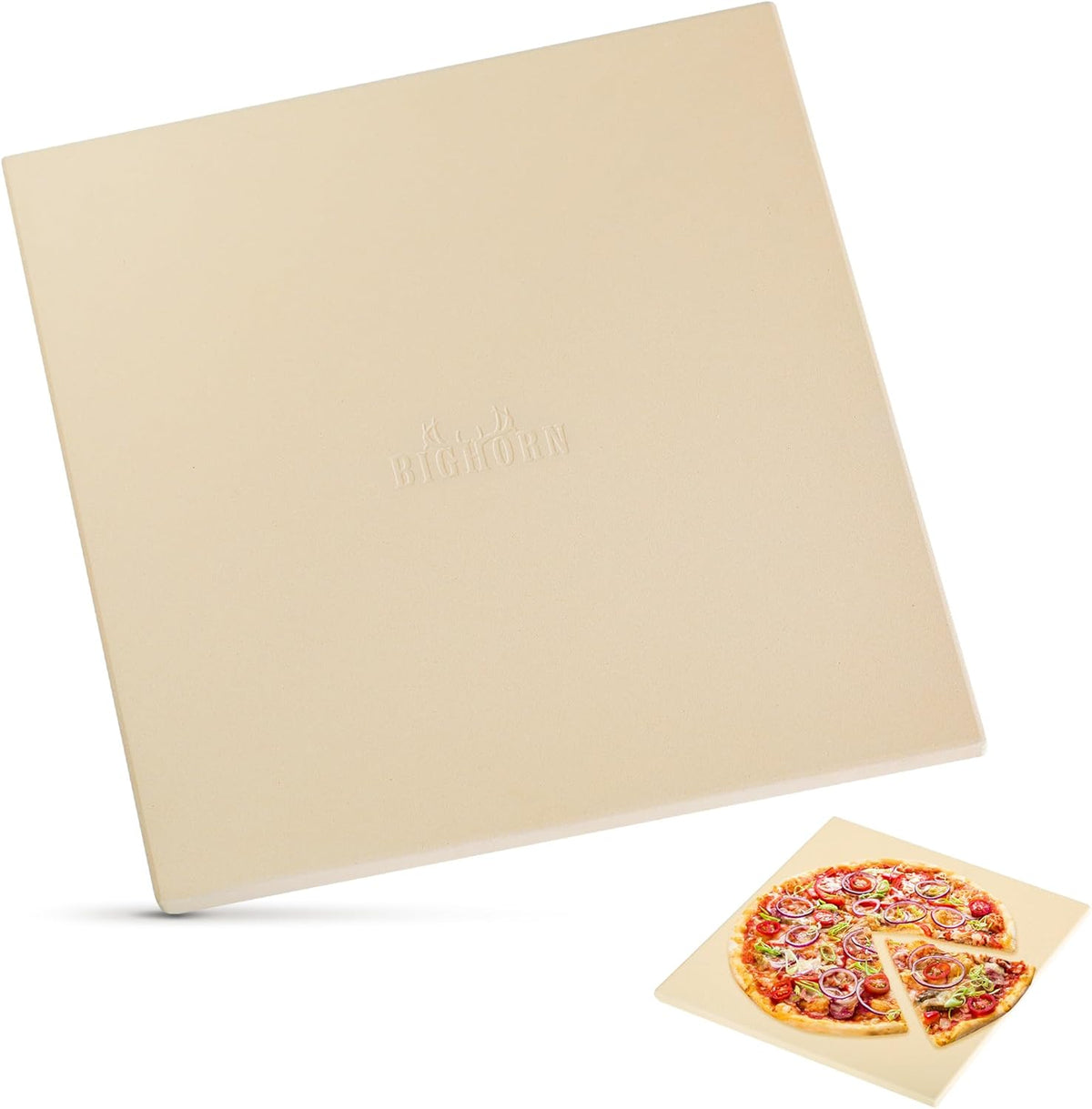
To start with a stone, review the Big Horn pizza stone; to compare real ovens, see the pizza oven collection.