

Clean a gas pizza oven in four zones: the stone, the interior walls, the burner and ports, and the exterior body — always with the oven cool and the gas off. The stone gets brushed after every cook and a deeper clean occasionally; the burner gets a gentle brush and port check so soot and debris never clog the flame; and the body and drip tray get wiped so grease does not smoke on the next preheat. This guide walks through the tools, the step-by-step routine, and the mistakes that damage a gas pizza oven.
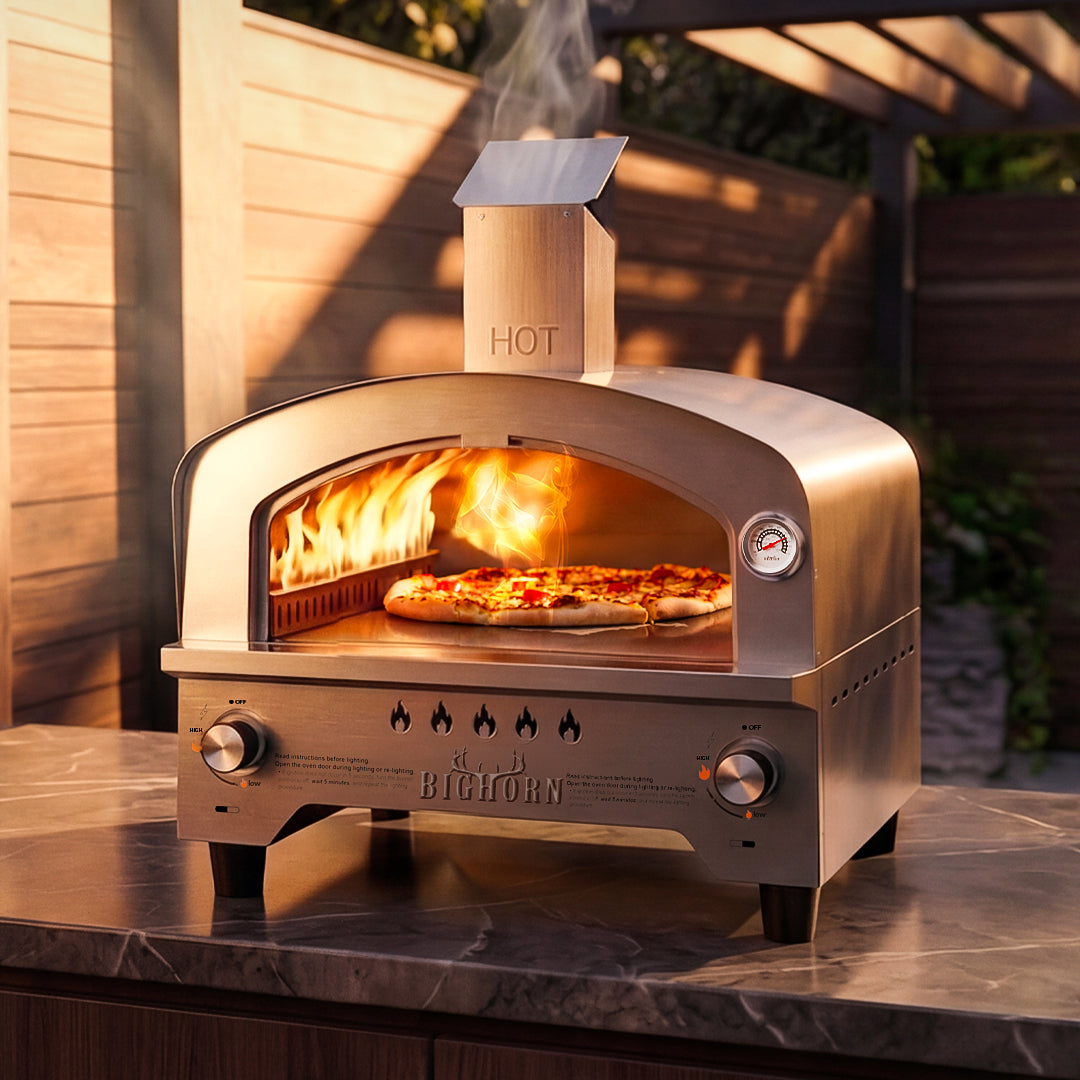
The steps here are the general method for a propane gas pizza oven like the Big Horn 15-inch dual-burner model; always defer to the manual that came with your oven for model-specific disassembly and care.
What you need before you start
- Soft brush for the burner surface and loose debris.
- Nylon or approved scraper / brush for the pizza stone — never metal scrapers that score the stone.
- Vacuum with a narrow nozzle for crumbs and ash in corners.
- Warm soapy water and a dry cloth for the body and non-porous parts.
- Approved port-cleaning tool (often a thin wire or pin the manual recommends) for the burner ports.
Understanding the burner before you decide
A gas pizza oven has the same cleaning jobs as any pizza oven — stone, interior, exterior — plus one set that belongs only to fuel-burning models: the burner, the ports, and the hose and regulator that feed them. Combustion leaves soot, ash, and debris around the burner, and if those are never cleaned they can clog the burner ports, causing uneven flames and uneven bakes. Burner care is a cleaning task, not just a repair task.
On a dual-burner model like the Big Horn 15-inch oven, two independently controlled burners share the deck heat. Keeping both burner surfaces clear keeps the heat balanced across the stone — a clogged port on one side is how a “hot side” develops.
The setup that makes or breaks the result
Clean only when the oven is fully cool and the gas is off. A warm stone is fragile and a warm burner can ignite cleaning residues. Lay out your tools before you start, and never take the burner apart beyond what the manual describes. Working cool and working in zones is what makes the job safe and quick.
Step 1: Preparation and setup
Turn off the gas at the tank, let the oven cool completely, and remove the stone, grates, and any drip tray the model has. Set them aside on a flat surface. Confirm the burner is cool to the touch and the propane connection is closed before you brush anything near the firebox.
Step 2: The core process (stone, interior, burner, body)
Clean the stone first: brush loose crumbs and ash with the approved brush after it cools; for stuck-on residue, follow the manual’s guidance — a paste or soak may be recommended, but never soak a porous stone that the manual warns against submerging. Vacuum crumbs from the interior corners. Then clean the burner: with the gas off and the burner cool, brush the surface gently to remove loose soot and debris and clear the ports with the tool the manual recommends. Wipe the interior walls and the exterior body with warm soapy water and a dry cloth, and empty and wash the drip tray.
Step 3: Timing, temperature, and signs of success
| Zone | Frequency | Sign it is clean |
|---|---|---|
| Stone | Brush after every cook; deeper clean occasionally | No crumbs or stuck residue |
| Interior walls | Wipe as needed | No loose ash or debris |
| Burner and ports | Check weekly or after heavy use | Even flame across all ports |
| Body and drip tray | After each session | No grease buildup |
Success looks like an even flame when you relight, a clean stone that bakes evenly, and no smoke from residual grease on the next preheat.
Common mistakes and how to avoid them
- Cleaning while warm. A warm stone cracks easily and a warm burner can ignite cleaning residue. Cool fully first.
- Scraping the stone with metal. Use a nylon or approved scraper; scoring the stone creates rough patches that catch dough.
- Soaking a porous stone. Follow the manual; many stones should be brushed dry, not submerged.
- Taking the burner apart too far. Disassemble only as far as the manual describes.
- Using harsh oven cleaners on the burner. Residue can flavor the next bake or damage the burner surface.
What to do when it does not go right
If the flame is uneven after cleaning, check the ports again for debris and confirm the gas connection is intact. If the stone still has residue, you may have used too aggressive a tool or skipped a deeper clean; follow the manual’s stone guidance. If the oven smokes on preheat, the drip tray or interior has grease left behind — wipe it and run the preheat again.
Pro tips for better results
- Clean the drip tray before it builds up. A quick empty after each session prevents smoking on the next preheat.
- Brush the stone while it is cool and dry. A dry brush removes most crumbs without water.
- Leak-test the connection after any disassembly. After cleaning around the gas system, run a soapy-water leak test before the next light.

See the oven and compatible care parts. 15-inch gas pizza oven · gas pizza oven collection
FAQ
How do you clean the inside of a pizza oven?
With the oven cool and gas off, brush crumbs and ash off the stone with an approved brush, vacuum the interior corners, and wipe the walls with warm soapy water. Never scrape a porous stone with metal and never clean while warm. Check the manual for model-specific steps.
What is the best way to clean the inside of a gas oven?
The best way is zone by zone with the oven cool: brush the stone, vacuum corners, gently brush the burner and clear its ports with the manual’s tool, and wipe the interior and exterior body. The burner and ports are the parts that make a gas oven different from an electric one.
How do I clean the stone in my pizza oven?
Brush the stone with a nylon or approved brush after it cools, and follow the manual for stuck-on residue — many stones should be brushed dry rather than soaked. Avoid metal scrapers, which score the surface, and never submerge a stone the manual warns against soaking.
Is it safe to clean a gas oven with baking soda and vinegar?
A baking soda and vinegar paste can work on non-porous surfaces like the body and interior walls, but do not use it on the burner, ports, or a porous pizza stone, and never use harsh oven cleaners on burner parts. When in doubt, follow the manual.