







Your eyes water, your jacket smells like a campfire, and guests keep shifting chairs. Learning how to stop a fire pit from smoking starts with diagnosing three culprits: wet fuel, weak airflow, and a poor fire layout.
Most backyard smoke problems are fixable without buying a new pit. When wood fires still fail you on weeknights, a propane column can be the practical backup rather than a moral failure.
The three smoke causes: wet fuel, low airflow, wrong layout
Smoke means incomplete combustion. Water in the wood, too little oxygen, or logs stacked so tightly that heat cannot climb will all make a fire smolder instead of flame.
Wet fuel is the most common backyard issue after rain or poorly stored piles. Low airflow shows up in deep bowls with ash buildup or grates clogged with debris. Wrong layout looks like a pyramid of huge rounds with no kindling path.
Fix causes in that order before you blame the steel. Clean-burning guidance from EPA Burn Wise lines up with what experienced fire builders already know: dry fuel and air first.
Fuel fixes (dry hardwood, size, spacing)
Switch to dry hardwood splits sized for your pit—usually wrist-to-forearm thickness—not whole rounds that charcoal on the outside and steam inside.
Space pieces so flame can wrap each face. If wood hisses or beads water on the cut end, it is too wet for a clean fire. Mix in smaller dry kindling until the bed is hot, then add larger splits.
Keep a covered rack so tonight’s fuel stays dry. For cook-ready pits, a round corten fire pit with grill rewards a disciplined wood pile because you will want usable coals, not smoke.

Airflow and design fixes
Ash that buries the grate chokes air from below. Scoop ash when it is fully cold, and keep drainage holes clear on designs that include them.
If your pit sits on a solid patio with no under-bowl air, raise the wood on a grate so oxygen can feed the fire. Screens help with sparks but can trap smoke if they are clogged with creosote or if you overload the pit.
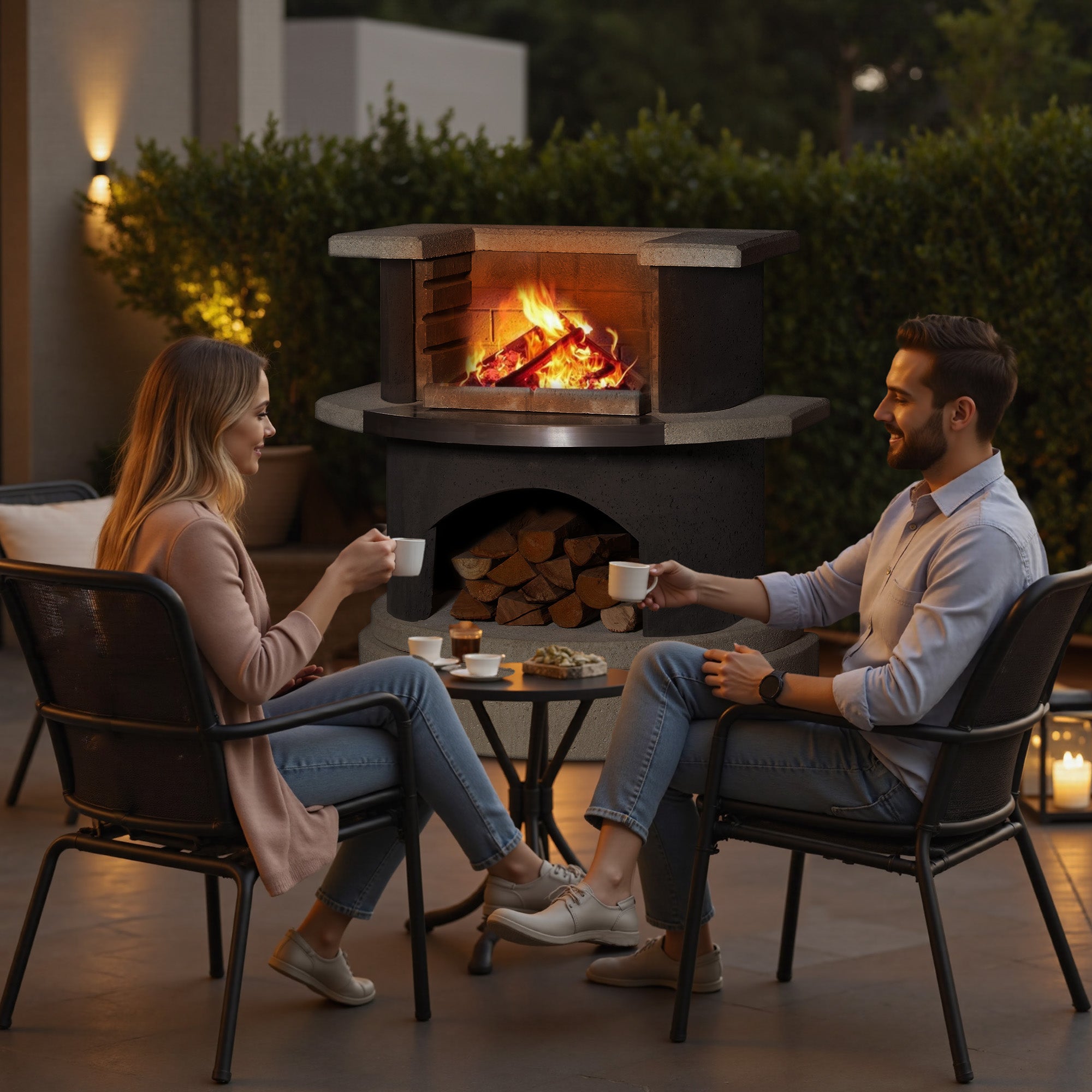
Chimney-style fireplaces pull smoke upward when the flue is warm. A concrete outdoor fireplace with grill can be easier on seating circles than a low bowl on still nights—once the fire is established.
How to build a hot, clean fire
Start small and hot. Crumple dry starter material, add pencil-thick sticks, then finger-thick pieces, then your main splits once flames are steady.
Top-down or log-cabin layouts often smoke less than a random dump of wood. Keep the first ten minutes focused on establishing flame rather than roasting marshmallows over white smoke.
Never use gasoline, lighter fluid meant for charcoal only when appropriate, or mystery accelerants in a wood pit. Smokey Bear campfire guidance stresses controlled starts and full extinguishing—both cut runaway smoke and risk.
Wind and seating position
Even a clean fire drifts. Place chairs upwind and leave a clear path so people are not trapped in the plume when the breeze shifts.
On gusty evenings, a lower, hotter coal bed usually beats a tall, flame-heavy stack that throws sparks. Check local burn bans before you light anything outdoors; drought and wind change the rules overnight (Ready.gov wildfire tips).
If smoke still hugs the patio on calm, humid nights, shorten the burn or switch fuels rather than forcing a smoky social hour.
When propane is the real fix
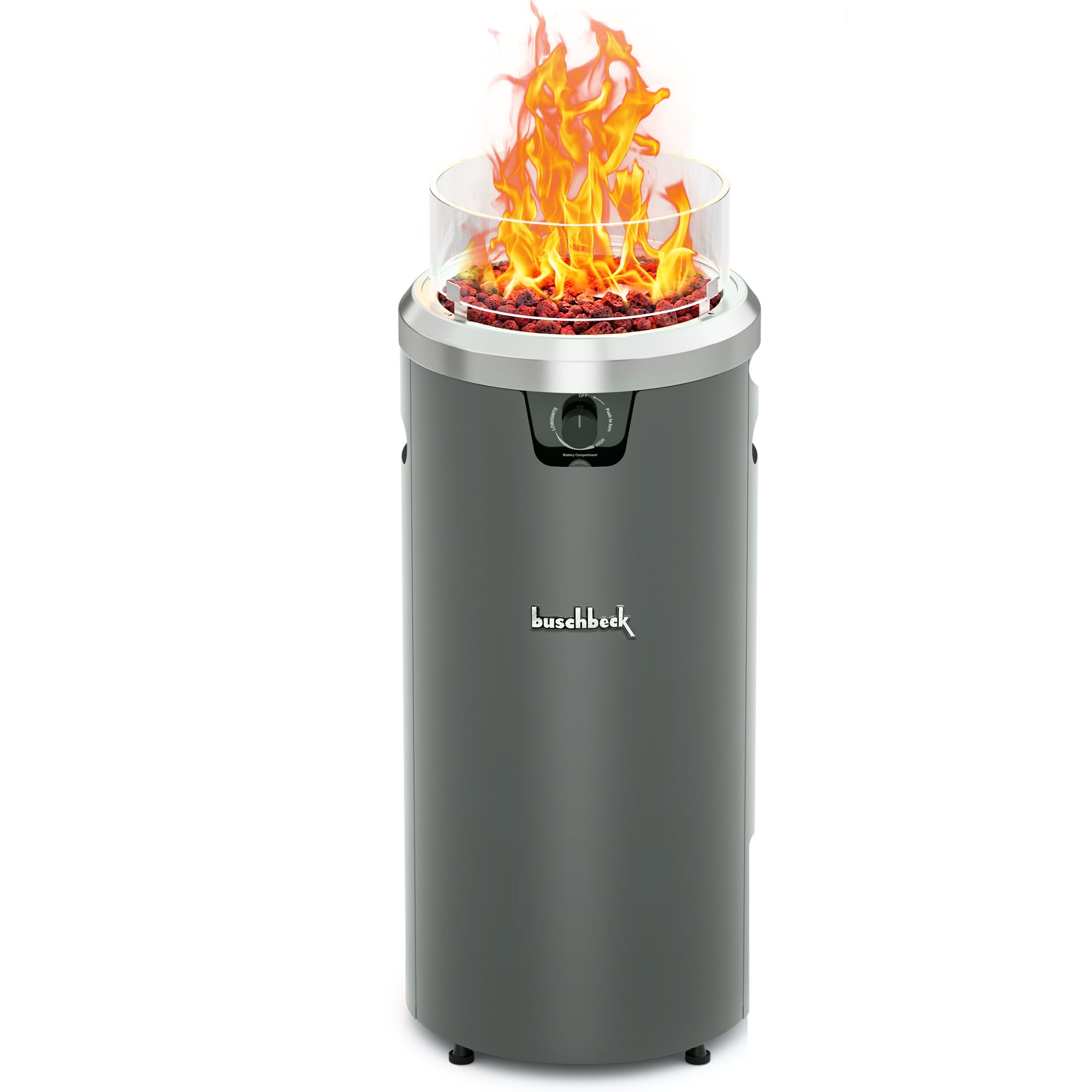
Propane fire features trade wood crackle for push-button flame and near-zero wood smoke. They shine for weeknight ambiance, HOA limits, or guests who are sensitive to wood smoke.
You still need outdoor siting, leak checks, and upright cylinder habits. Propane is not “smokeless” in every sense—food grease on a grill insert can still smoke—but it removes the wet-wood problem entirely.
Compare a column-style propane fire pit when wood management is the part of fire-pit life you never enjoy. Keep wood tools for weekends when you want coals and flavor.
When to stop and contact support or a professional
Stop the fire if you smell chemical fumes, see unusual flare from unknown fuel, or cannot extinguish it with water and stirring. Call emergency services when a fire spreads beyond the pit.
If a manufactured fire feature is damaged, leaking (propane), or missing parts, contact the manufacturer or a qualified technician rather than improvising repairs. After-sales questions for Big Horn Outdoors purchases can go to aftersales@bighornoutdoor.com during published business hours.
For general home-fire readiness around outdoor burning, review Ready.gov home fire guidance and keep an extinguisher rated for outdoor use within reach.
Habits that keep smoke from coming back
Once you fix tonight’s fire, change the habits that recreate the problem. Bring only dry splits to the ring, scoop cold ash weekly, and refuse to burn yard waste “just to get rid of it.”
Keep a covered rack dedicated to fire-pit wood so rain does not undo seasoning. If guests toss damp sticks onto a clean fire, appoint one person as fuel lead—polite but firm.
On still, humid nights, shorten the burn or switch to propane ambiance instead of forcing a smoky social hour. Clean-burning outdoor fires are easier when you treat fuel prep as part of hosting, not an afterthought.
For wider outdoor fire readiness beyond the patio, skim Ready.gov home fire guidance and keep water or an extinguisher within reach before you light anything.
Also bookmark NFPA grilling fire safety for open-flame evenings that share a yard with propane appliances.
Conclusion
Dry hardwood, clear airflow, and a hot, staged build solve most smoking fire pits. Move seats upwind, respect burn bans, and treat propane as a legitimate tool when wood nights keep ending in smoke. A clean fire is a managed fire—not a bigger pile of wood.
Compare wood and propane backyard options in the Big Horn Outdoors fire pit with grill and propane fire pit lineup.
FAQ
Can I make my fire pit smokeless?
You can greatly reduce smoke with dry hardwood, good airflow, and a hot fire layout, but a true zero-smoke wood fire is unrealistic outdoors. Propane fire features remove wood smoke for ambiance use. Grease from cooking can still create smoke on any fuel, so keep grates clean.
Why is my fire pit smoking?
The usual causes are wet wood, ash blocking airflow, or logs stacked too tightly to burn cleanly. Cold starts and calm, humid air make smoke linger around seating. Fix fuel and air before replacing the pit.
Is it bad to inhale smoke from a fire pit?
Wood smoke is an irritant and can bother lungs, eyes, and people with asthma or heart conditions. Sit upwind, keep the fire burning cleanly, and avoid prolonged exposure in heavy smoke. If anyone feels dizzy or short of breath, move away and extinguish or reduce the fire.
What can I burn in a fire pit that is smokeless?
No wood fuel is perfectly smokeless, but dry hardwood is the cleanest common choice. Propane fire pits avoid wood smoke for decorative flame. Never burn trash, treated lumber, or accelerants in an attempt to reduce smoke.
Explore more in the Fire Pit Cooking & Safety Guides.
