
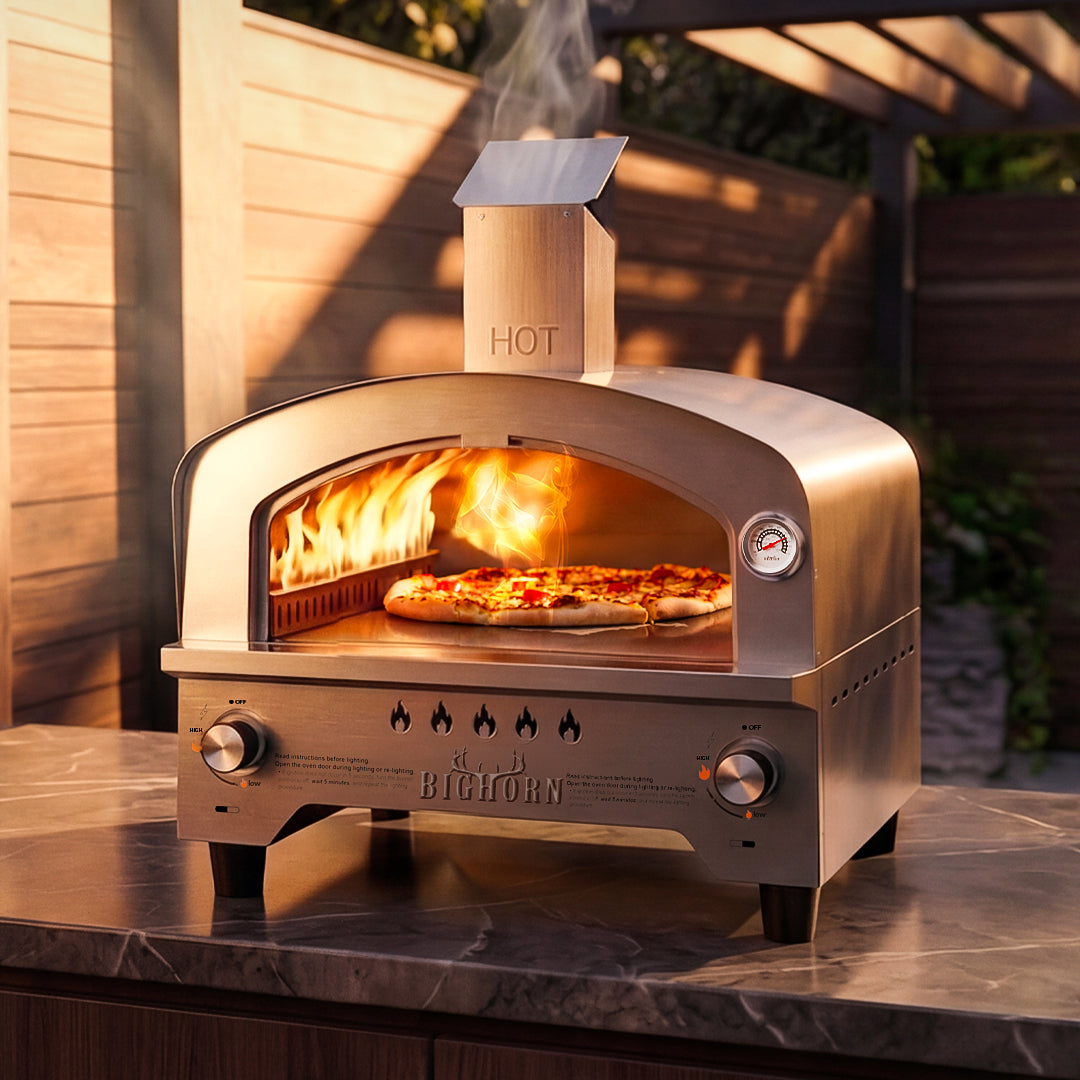
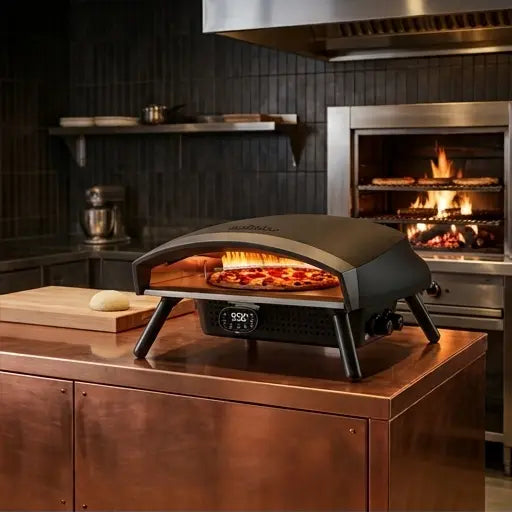
The best portable pizza oven for camping is one that is light enough to carry, folds down for packing, and runs on fuel that travels easily — and it must still produce real pizza once you arrive. A 12-inch Big Horn pellet oven meets those three tests: it weighs around 25 pounds with folding legs, runs on compact dry hardwood pellets, and reaches about 887 °F (475 °C), which bakes a pizza in 60–90 seconds. That combination is what makes it a workable camping, RV, and tailgating oven rather than a novelty.
What actually makes a pizza oven portable
Three factors decide how well an oven travels: weight, packed size, and fuel convenience. A light body means you carry it from the car to the site; folding legs and compact dimensions mean it fits in a trunk or RV cabinet; and dense, dry pellet fuel is far easier to transport than firewood. If an oven fails on any one of those, it stops being portable in practice no matter how good it cooks.
The 12-inch pellet model hits all three. Its foldable legs and stainless body compact down for storage, and pellets are uniform, dense, and predictable — a sealed container of food-grade hardwood pellets takes a fraction of the space of a bag of firewood.
Packing list for a camping pizza cook
Building a camping pizza setup is mostly about the non-obvious extras. Beyond the oven and pellets, pack a stone-safe spatula or a peel, a cover or mat for the tabletop, a small thermometer for the stone, and aluminium foil or a tray for vegetables. Dry pellets go in a sealed container; anything wet or damp stays away from the fuel. If you plan pizzas at the site, bring dough balls or the ingredients to mix them, since shaping dough by feel at a campsite is easier with dough that has already rested.
A checklist approach keeps the cook smooth: stable surface, sheltered spot, dry fuel, full preheat, light toppings, and a peel you can shake. That routine turns a first camping bake into a repeatable one.
Choosing between pellet and gas for travel
The fuel decision shapes the whole trip. Pellets are dense, dry, and pack small, which is ideal when trunk space is tight, but the oven needs about 18–20 minutes to reach 887 °F. Gas ignites faster and gives dial control, at the cost of carrying a propane cylinder and regulators. If you already travel with propane for a camp stove, a gas-compatible oven may add no new gear; if not, pellet keeps the fuel simple. Weight your preference by what you already carry.
Which fuel should you pack?
Pack food-grade hardwood cooking pellets in a sealed, dry container. Pellets are the convenient camping fuel because they are compact and burn predictably, unlike bulky firewood or wet logs. Keep them dry — moisture is the most common reason a pellet bake fails on a trip, because damp pellets ignite poorly and can jam the feed.
If the oven supports a gas burner attachment, carrying a propane cylinder is another option where that is preferred; confirm the exact model’s fuel options on the product page before you pack. For a pure pellet setup, dry pellets in a sealed container are all the fuel you need.

Setting it up at a campsite or tailgate
Place the oven on a stable, heat-safe surface with clearance from tents, vehicles, and anything flammable, and shelter it from wind. Let it preheat for 18–20 minutes so the stone reaches baking temperature before the first launch. Camping cooks lose pizzas in two ways: they set up on an unstable surface, or they rush the preheat. A level, stable spot and a full warm-up fix both.
Keep the unit outside tents and enclosed spaces — pellet ovens produce carbon monoxide and are for open outdoor use only. Give the hot shell room to breathe, and let it cool fully before packing it away.
What to cook first
Start with a simple pizza — it cooks in 60–90 seconds once the oven is hot and shows off everything the oven can do. Keep the toppings light, use dough you have confidence stretching, and rotate the pie partway through for even browning. Vegetables and flatbreads are an easy second cook if you want to go beyond pizza.
For a group, cook in rounds: top several pizzas ahead, launch one every couple of minutes, and let the stone recover briefly between pies so the heat stays consistent for the whole batch.
Choosing the right portable oven
| Feature | Why it matters for camping |
|---|---|
| Low weight | Easy to carry from the vehicle to the site |
| Folding legs | Packs down for a trunk or RV cabinet |
| Pellet or simple fuel | Compact, dry, and predictable to transport |
| High heat (887°F+) | Real 60–90 s pizza instead of a compromise |
| Stainless steel | Survives outdoor conditions and transport |
Beyond the campsite: RV and tailgate use
The same portable strengths that suit a campsite transfer to RV and tailgate cooking. In an RV, folding legs and a compact footprint fit storage between trips, and pellet fuel travels well alongside other gear; set the oven up outside on a stable surface with clearance, never inside the vehicle. At a tailgate, the 60–90 second bake window lets you feed a small group in rounds, and the stainless body shrugs off parking-lot conditions. The one constant across all three settings is the same routine: dry fuel, stable surface, full preheat, and light toppings.
Camping pizza mistakes to avoid
The three most common failures are damp pellets, an unstable surface, and launching before the stone is hot. Damp pellets will not burn well, so keep them sealed and dry. An unstable surface risks a spill, so set the oven level and secure the legs. A cold stone gives a pale, chewy base, so wait out the full preheat. Each is a one-variable fix.
Is camping pizza worth the setup?
Yes, if you enjoy the process of live-fire cooking on a trip. The oven adds weight and a 30–40 minute warm-up, but it turns a campsite dinner into a centerpiece rather than a chore — and the portability trade is what makes it possible. If you camp primarily to eat fast and light, a simple camp stove is the easier call; if a wood-fired pizza at the site sounds like the trip, the 12-inch pellet oven earns its space in the gear.
Camping pizza oven FAQs
How much does a portable pellet oven weigh?
The 12-inch Big Horn model is advertised at roughly 25 pounds — heavy enough to feel solid, light enough to carry from the car to the site. Confirm the current listed weight on the product page, as specs can change.
Can I use a portable pizza oven at a campsite?
Yes, outdoors on a stable, heat-safe surface with clearance, and never inside a tent or enclosed space. Keep it away from tents and vehicles and shelter it from wind.
Is a pellet or gas portable oven better for camping?
Pellet is simpler to pack (dry pellets in a sealed container) and gives smoke flavor; gas is faster to light and control. Both work; choose based on whether you want the fire ritual or push-button convenience.
How long does it take to make pizza at a campsite?
Plan about 30–40 minutes from setup: 5–10 minutes to place and secure the oven, 18–20 minutes to preheat, then 60–90 seconds per pizza. It is not a fast dinner, but it is a great camp activity.
Pellet is simpler to pack (dry pellets in a sealed container) and gives smoke flavor; gas is faster to light and control. Both work; choose based on whether you want the fire ritual or push-button convenience.
To confirm current specs and fuel options, review the 12-inch Big Horn pellet pizza oven product page before you plan the trip.