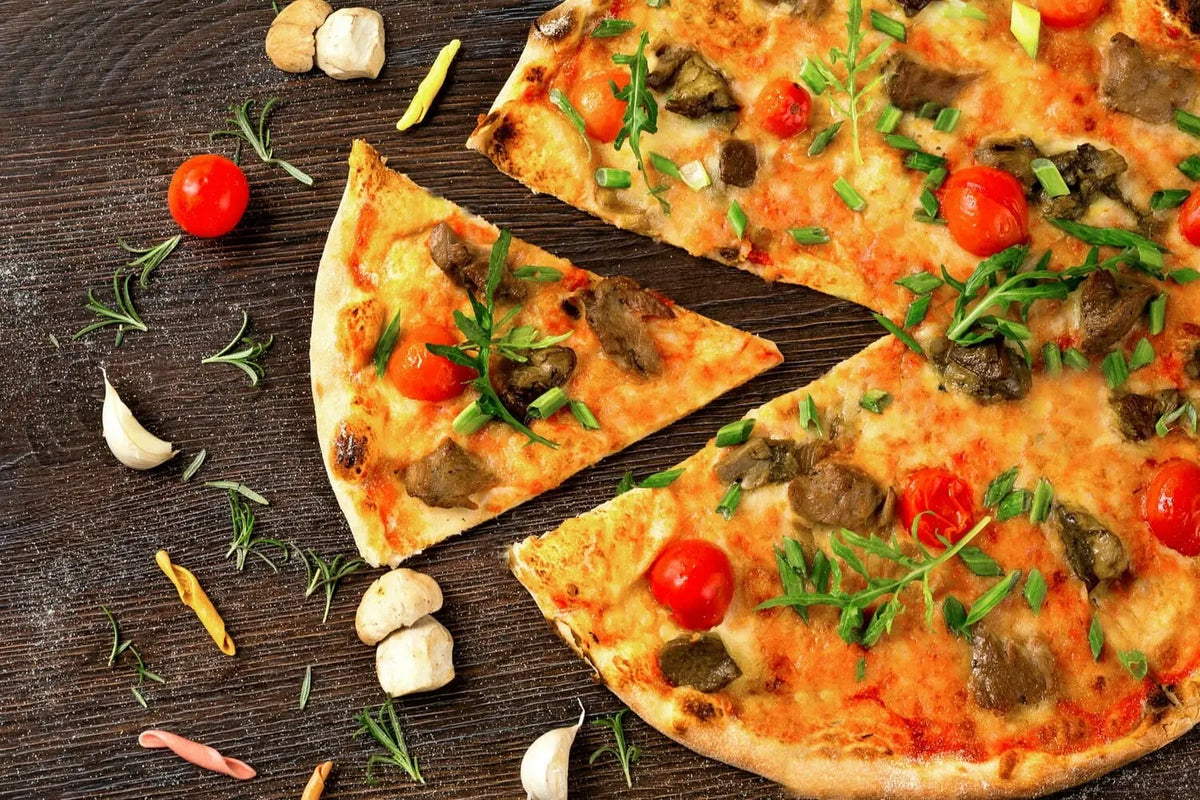
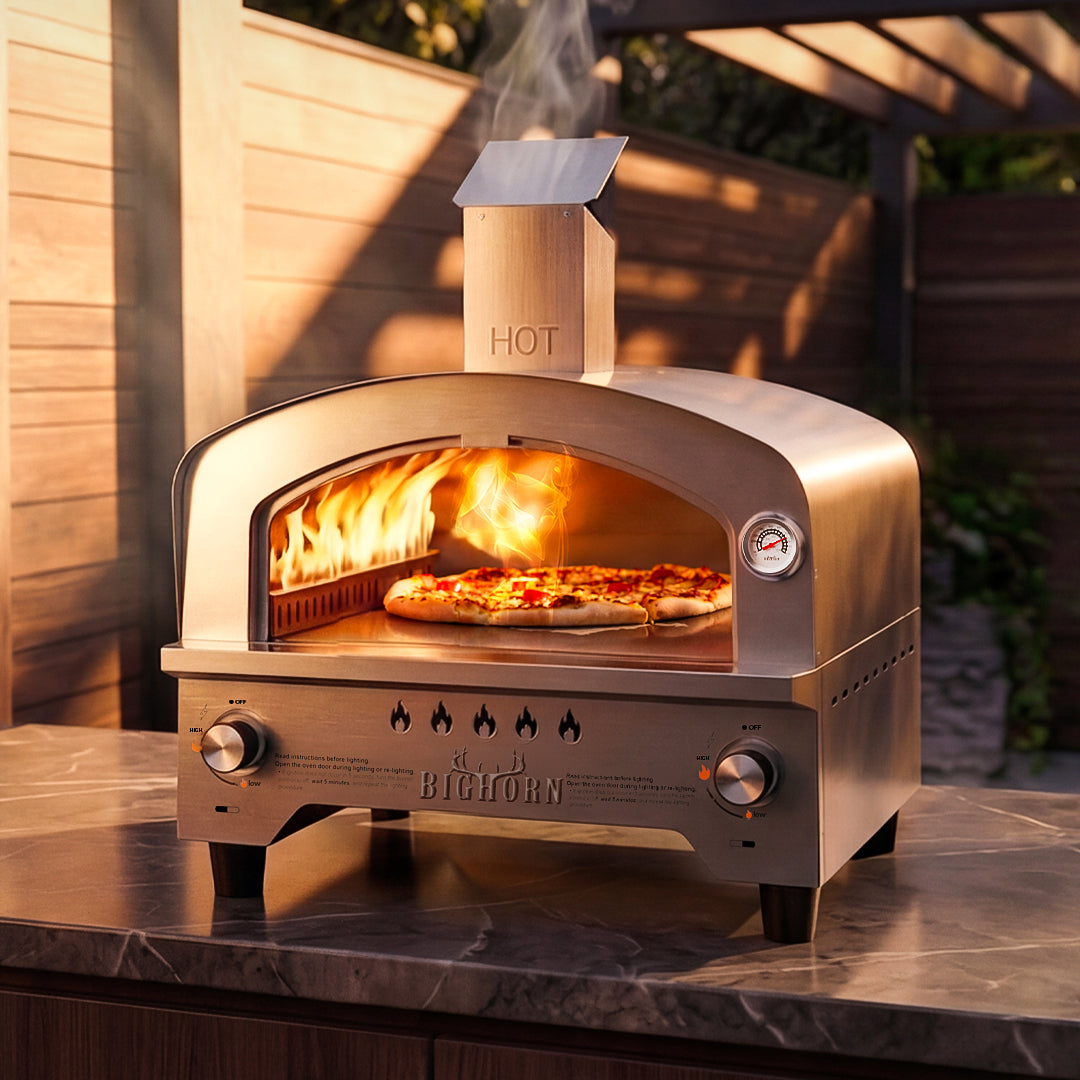
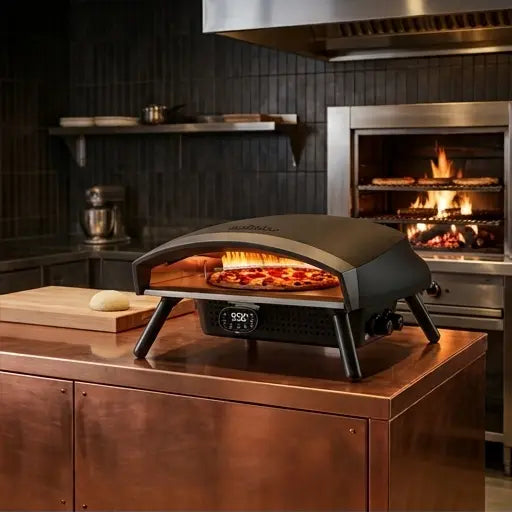
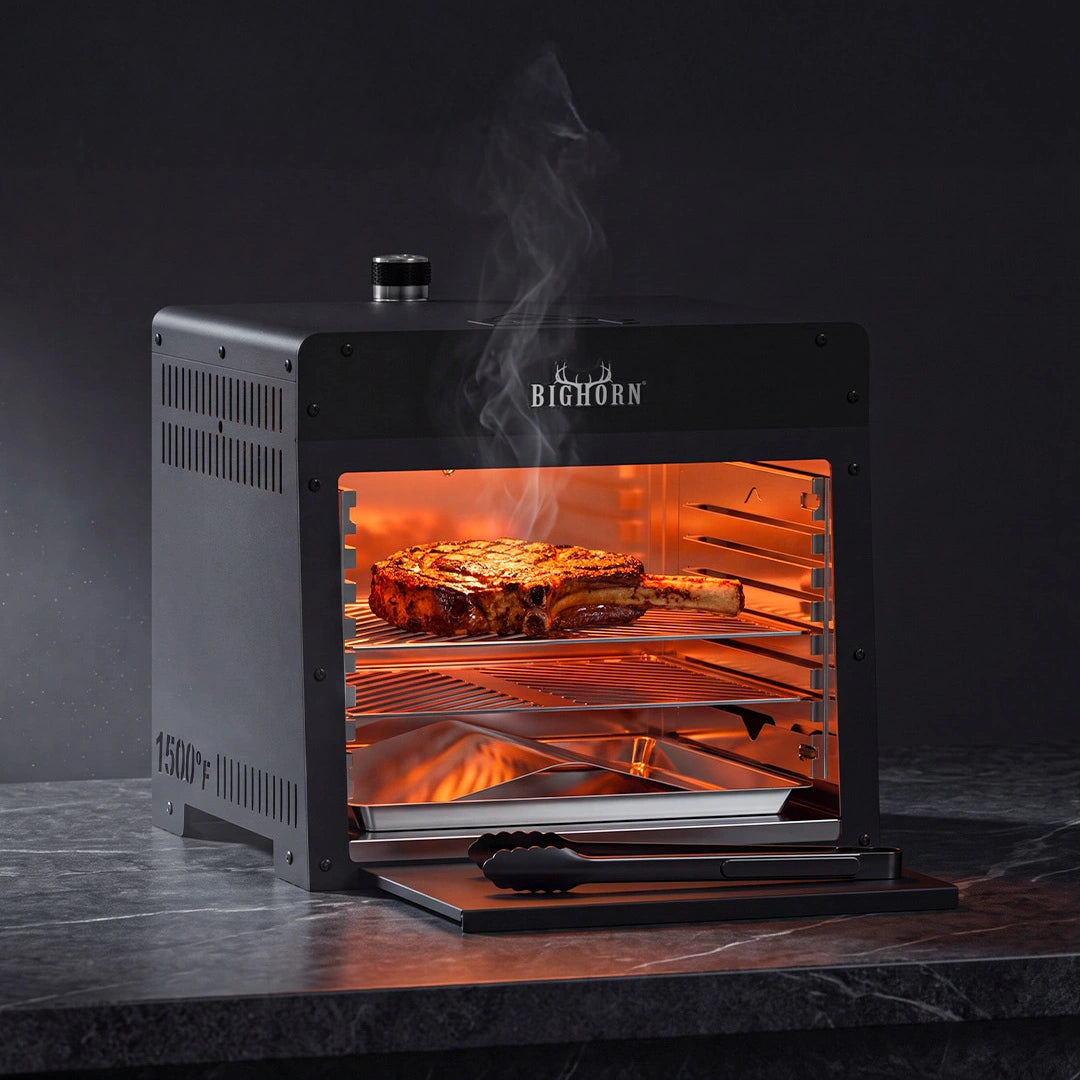
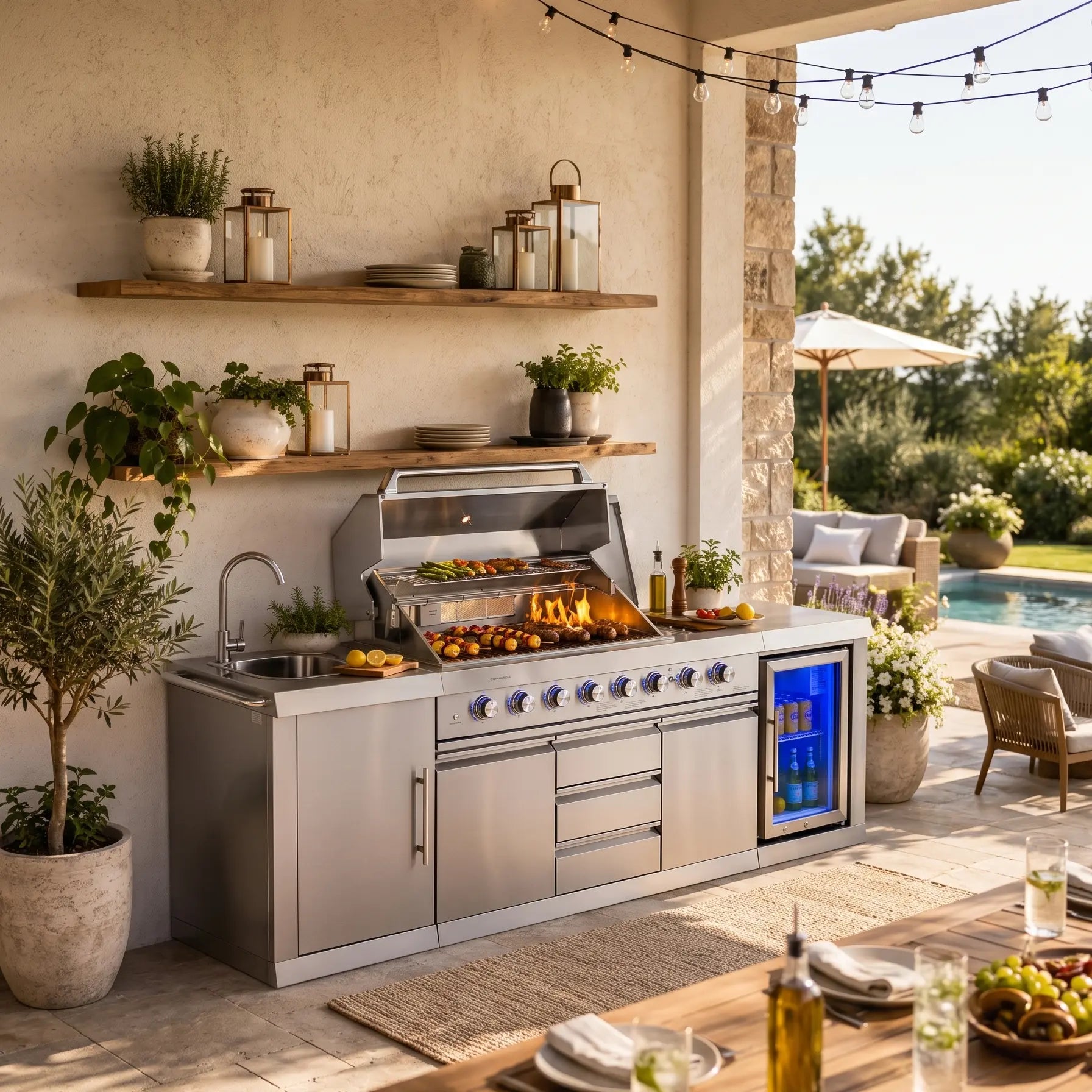
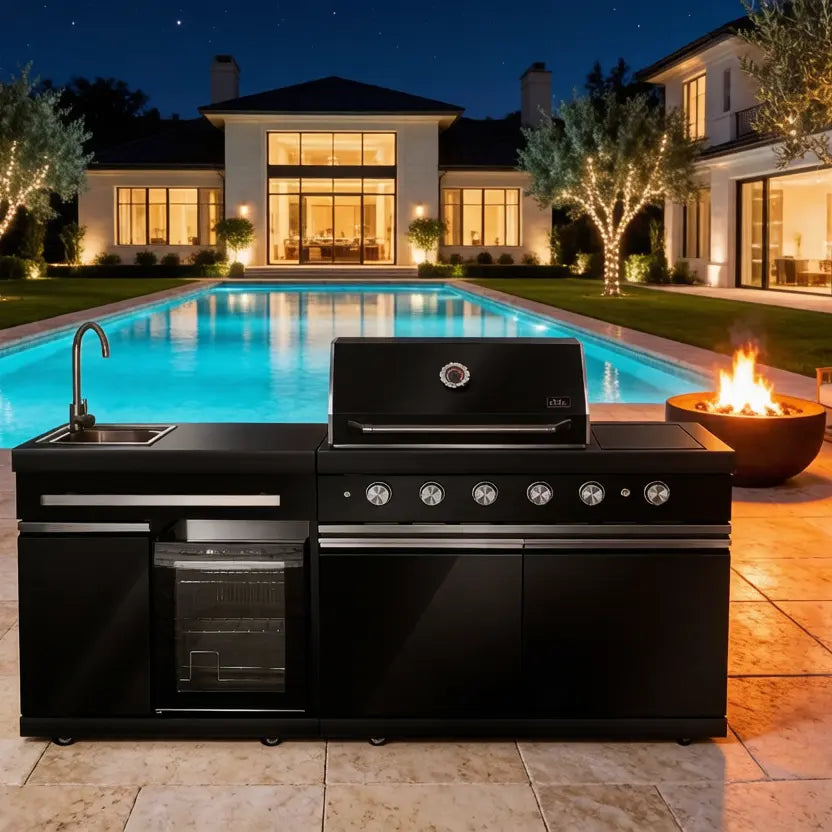
“Outdoor cooking oven” can describe anything from a pizza specialist to a compact roasting chamber. That broad label sounds useful, but it does not tell you whether the oven can handle the foods your household actually eats. The most reliable buying test is a short menu: flatbread, vegetables, chicken, and a skillet dessert. Those four dishes expose the limits of floor space, opening height, low-temperature control, grease management, and heat recovery far better than a long feature list.
The point is not to prove that one oven can imitate every appliance. It is to learn whether changing dishes feels natural or requires unsafe pans, blocked vents, constant fire rebuilding, or an hour of cleanup. A genuinely versatile oven should make at least three or four useful meals well with equipment you can lift, turn, and clean comfortably.
Start With the Pan, Not the Published Capacity
Cooking-floor dimensions rarely equal usable cookware space. A round skillet needs room for its handle; a roasting pan needs finger clearance; and an oven door or low roof can prevent a pan from entering even when its footprint fits on paper. Make cardboard templates of the pans you expect to use, including handles. Then compare them with the oven opening and internal shape.
Measure five things on the exact model:
- the narrowest width of the opening;
- opening height at the point where a rim or lid must pass;
- flat floor area that is not occupied by a burner, fuel tray, or flame path;
- turning clearance for a peel, tongs, or skillet handle; and
- the position of any temperature probe, door, chimney, or required air gap.
Do not assume a removable door creates extra cooking space. It may be intended only for preheating, or the manual may restrict when it can be fitted. Likewise, never solve a clearance problem by covering a vent, placing cookware against a burner guard, or leaving a heavy pan where it cannot be retrieved safely.
| Planned dish | Cookware or tool | Geometry that matters | A practical pass condition |
|---|---|---|---|
| Flatbread | Peel and bare cooking surface | Launch width and turning radius | Dough launches and rotates without contacting the roof or flame |
| Vegetables | Low-sided metal pan | Pan width plus tong access | Pan can be stirred and removed without tipping |
| Chicken | Roasting pan and food thermometer | Opening height, grease containment | Pan catches drippings and the probe can reach the thickest part |
| Skillet dessert | Oven-safe skillet | Handle length and lifting angle | Two-handed removal is possible with heat-resistant gloves |
This exercise often reveals that a slightly larger opening is more valuable than a higher advertised maximum temperature.
The Four-Dish Acceptance Test
Run the test over two or three sessions rather than forcing every dish through one fire. Record setup time, fuel or energy setting, floor and air temperature if the model supports those measurements, cooking time, turning frequency, and cleanup. The results become a personal capability map.
1. Flatbread tests fast heat and access
Use a familiar dough and a modest topping load. The goal is not a record-setting bake; it is to see whether the floor browns the base while the top finishes, and whether you can turn the bread without chasing it around the chamber. Note where the crust colors first. A consistent hot side can be managed with rotation. Random scorching suggests an unstable fire, excessive loose flour, or a floor that has not equalized.
2. Vegetables test moderate heat and handling
Choose vegetables that tolerate direct roasting, such as peppers, onions, squash, or cauliflower. Use a pan approved for the oven’s temperature range and avoid nonstick coatings unless the cookware manufacturer explicitly approves the expected heat. Observe whether the oven can reduce intensity after preheating, whether edges char before the center softens, and whether stirring is comfortable. This dish also exposes the difference between a useful door and one that merely traps too much top heat.
3. Chicken tests grease control and doneness
Chicken is not a surface-temperature test. It needs a stable roasting period, a pan that contains rendered fat, and a food thermometer. The USDA lists 165°F (73.9°C) as the safe minimum internal temperature for poultry; measure in the appropriate thick area without touching bone. If the exterior darkens long before the center approaches doneness, the oven may lack the lower, steadier heat your menu needs. A rack inside the pan can reduce contact with hot drippings, but it does not replace temperature verification.
4. A skillet dessert tests residual heat
A fruit crisp, cobbler, or similar skillet dessert is a useful final test because it can use declining heat after the main dish. Watch for a burned base, pale center, or scorched rim. If the floor remains far hotter than the chamber, place the skillet only on an accessory or heat buffer permitted by the manufacturer. Improvised bricks, stacked stones, or unknown tiles can crack, trap heat, or damage the oven.
Sequence the Menu Around Stored Heat
An outdoor oven does not change temperature like a kitchen dial. The flame or element changes first; the floor and walls respond later. Plan around that delay. A common sequence is high-heat flatbread, then roasting vegetables or protein as the fire settles, followed by a covered or skillet dish during the decline. However, the exact order depends on burner design, insulation, door rules, and the ability to lower the heat source.
Use a recovery log instead of guessing:
| Time | Control or fuel change | Floor reading location | Chamber reading | Food loaded | Result |
|---|---|---|---|---|---|
| Preheat complete | Baseline | Center / left / right | If available | None | Note hot zones |
| After dish 1 | No change | Same three points | Same method | Vegetables | Record recovery time |
| Before protein | Reduced heat | Same three points | Same method | Chicken | Note browning rate |
| Residual-heat stage | Fire declining | Center | If available | Dessert | Check base early |
An infrared thermometer measures a surface, not the air and not the inside of food. Take readings from the same locations and distance each time so the trend is useful. For meat and poultry, use an appropriate food thermometer and the safe minimum temperatures relevant to that food.
Low Heat Is a Feature You Must Test
Maximum-temperature claims dominate pizza-oven marketing, yet versatility often depends on the minimum stable output. Ask what happens when the control is turned down or the pellet charge becomes smaller. Does the flame remain clean? Does the burner cycle predictably? Can the door be used at that setting? Does the floor continue to overcook the bottom because it stored too much heat during preheat?
A useful low-heat trial begins from cold. Bring the oven only to the level needed for a roasting dish, rather than heating it to its maximum and waiting. Record whether the oven holds a workable range for 20 to 30 minutes. This is more revealing than testing low heat immediately after a full pizza preheat, when the stone can dominate the result.
If the oven has only coarse fuel control, versatility may come from menu planning rather than precise regulation. That can still be a good fit. The important question is whether the sequence is repeatable and compatible with your preferred foods.
Grease Separates Theory From Practical Use
Pizza leaves flour, cheese, and occasional sauce. Meat and oil-rich vegetables can release much more grease. Before roasting, locate the protected pan area and learn how drippings are removed after cooling. Flames contacting excess fat can flare, while grease that reaches insulation, burners, or inaccessible seams can create smoke at the next cook.
Use pans with enough headroom for bubbling liquids. Do not fill a hot pan with water, pour grease onto the ground, or pull a flimsy foil tray across a rough stone. If the oven has no safe path for a loaded roasting pan, it is not a suitable roaster for that dish, regardless of chamber temperature.
Cleanup belongs in the acceptance test. Once everything is completely cool, time how long it takes to remove ash or crumbs, wipe accessible metal, clean the pan, and return the oven to storage condition. Note any screws, sharp edges, or narrow channels that collect food. An appliance used twice a week must be easy to reset, not merely exciting on its first night.
Build a Menu-Based Scorecard
Score only features that change your cooking. A household that mostly makes flatbread and vegetables may accept limited door height. A cook who wants whole chicken or deep casseroles cannot.
| Criterion | Weight for your menu | Score, 1–5 | Evidence |
|---|---|---|---|
| Pan and handle clearance | Cardboard template or physical trial | ||
| Stable moderate heat | 30-minute cold-start roasting test | ||
| High-heat balance | Flatbread top and bottom finish together | ||
| Grease containment | Approved pan fits and can be removed safely | ||
| Recovery between dishes | Logged time under a repeatable fuel setting | ||
| Cold cleanup | Timed reset with normal tools |
Multiply weight by score. More importantly, mark any non-negotiable failure. A perfect pizza score cannot compensate for a pan that cannot be removed without tilting hot grease.
A Compact Safety Note
Operate the oven only in locations approved by its manufacturer; a combustion appliance labeled for outdoor use does not become indoor-safe because a door or window is open. Keep required clearances and ventilation paths unobstructed, stabilize the oven on a suitable surface, and keep children and traffic away from the hot zone. Use cookware rated for the expected heat and tools that let your hands remain outside the chamber. Confirm poultry and other proteins with a food thermometer, not crust color. Allow the oven, stone, ash, and cookware to cool fully before cleaning, covering, moving, or storing them.
Frequently Asked Questions
Can every pizza oven roast meat?
No. The chamber must physically accept a grease-containing pan, the manual must permit that cookware and cooking method, and the oven must sustain an appropriate roasting range. Meat doneness must still be checked with a food thermometer. If drippings can reach an exposed flame or inaccessible part of the oven, choose another method.
Is cast iron always suitable for an outdoor oven?
Cast iron tolerates high heat, but the complete setup may still be unsuitable. Check skillet diameter, handle clearance, lifting weight, seasoning limits, and the oven manufacturer’s cookware guidance. A long handle can block the opening or become dangerously hot. Never assume the pan’s heat resistance makes its position safe.
Does a door make an oven more versatile?
It can improve heat retention for some dishes, but only when the manual permits its use in that operating mode. Some doors must remain open or off during active combustion. Treat the door as a model-specific control, not a universal roasting accessory.
What temperature should I use for non-pizza dishes?
Follow the recipe, cookware limits, and the exact oven instructions. Surface readings help you reproduce heat conditions, while internal food temperatures establish doneness for meat, poultry, and fish. There is no single “outdoor oven” setting that safely covers every food.
The Verdict: Versatility Is a Repeatable Menu
The best outdoor cooking oven is not the model with the longest list of possible dishes. It is the one that accepts your real pans, moves from intense to moderate heat predictably, contains grease, and can be cleaned without dismantling the cooking station. Run the flatbread, vegetable, chicken, and skillet-dessert test. If three or four results are genuinely good—and the entire process remains comfortable from setup through cold cleanup—you have evidence of useful versatility rather than a marketing promise.